

The world of contemporary art has lost one of its most vibrant luminaries. Following the passing of David Hockney at 88, we reflect not just on an artist, but on a relentless innovator who redefined how we perceive light, color, and space. From the shimmering, turquoise depths of his quintessential Los Angeles swimming pools to his pioneering experiments with Polaroid collages and digital iPad paintings, Hockney’s career was a constant evolution of medium. He never succumbed to the comfort of a single style, instead choosing to challenge the boundaries of his craft until his very last days.
While the headlines focus on the monumental loss of a cultural icon, his true legacy lies in his experimental spirit—a drive to master new technologies and reinterpret the physical world through a unique, disciplined lens. As we mourn his passing just weeks before his 89th birthday, we find ourselves looking for ways to carry forward that same dedication to precision and creativity. This is an invitation to explore the profound depth of his work and discover how his multidisciplinary approach can serve as a catalyst for your own creative journey.
A Visionary Lost: Remembering David Hockney (1937–2026)
The global art community is in mourning following the passing of David Hockney on June 11, 2026. At 88 years old, the legendary British artist leaves behind a monumental legacy that redefined the parameters of contemporary art. His death, confirmed by his publicist, comes just one month shy of what would have been his 89th birthday, marking the end of an extraordinary creative odyssey that spanned over six decades. From the sun-drenched swimming pools of Los Angeles to his pioneering experiments with digital tablets, Hockney remained an unstoppable force of innovation, curiosity, and chromatic brilliance until his final days.
Tributes from major global media outlets, arts organizations, and admirers across social platforms have highlighted the profound impact of his career. Sources including The New York Times, Artnet News, and USA Today have memorialized the artist as a “chromatic genius” whose “warm irreverence” and distinct personal style endeared him to generations. His influence extended far beyond the gallery walls, shaping modern color theory and even influencing contemporary men’s fashion. As the art world reflects on his storied journey, it is clear that Hockney transformed how we perceive the intersection of traditional painting and experimental technology.
A Legacy of Constant Evolution
The outpouring of grief underscores the magnitude of the loss, with many focusing on the specific qualities that set the artist apart:
- Boundary-Pushing Innovation: His seamless transition from traditional canvas and photography to iPad paintings demonstrated a fearless embrace of new mediums that challenged the status quo.
- A Master of Light and Color: His iconic depictions of the California landscape and swimming pools remain defining images of the 20th and 21st centuries.
- Enduring Artistic Versatility: Hockney consistently adapted his perspective, ensuring his work remained relevant to younger audiences while retaining the technical precision that solidified his status as a master.
While we mourn the loss of a titan, the work of David Hockney stands as a permanent fixture in the modern canon. By bridging the gap between historical painting techniques and the digital frontier, he ensured that his artistic trajectory would continue to inspire future creators for years to come.
The Evolution of Medium: From Canvas to iPad
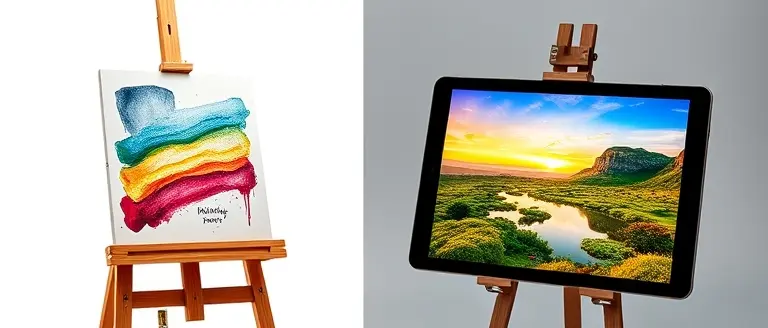
Throughout his storied career, David Hockney remained a restless innovator who refused to be tethered to a single aesthetic or tool. His artistic trajectory is a masterclass in curiosity, demonstrating a lifelong commitment to exploring how we perceive the world. While he first gained international acclaim in the 1960s for his vibrant, sun-drenched swimming pool series—works that captured the shimmering tension of Los Angeles life with acrylic paint—he never viewed traditional mediums as the final frontier. Hockney’s philosophy was clear: he treated every new technological advancement as a fresh set of brushes, ready to be mastered with the same rigor he applied to canvas.
From Polaroid Collages to Digital Mastery
By the 1980s, Hockney began experimenting with photographic collages, or “joiners,” which broke down the rigid constraints of a single perspective. This phase paved the way for his boldest shift in the digital era. Embracing the iPad as a legitimate artistic instrument, he challenged the traditional art world’s skepticism toward digital painting. His transition to mobile devices allowed for a immediacy that traditional oils could not provide, enabling him to capture light and color in real-time, even during his travels.
Key stages in his technical evolution included:
- Early Pop Art: Utilizing acrylics to define the distinct, flat, and saturated aesthetic of the California dream.
- The “Joiners” Phase: Reconstructing reality through dozens of overlapping Polaroid photos to create a Cubist-inspired experience of space.
- Digital Impressionism: Using specialized apps on the iPad to create expansive, luminous landscapes that echoed his love for nature but utilized a modern, illuminated screen as his canvas.
Ultimately, Hockney proved that the soul of art lies in the eye of the observer and the hand of the creator, not in the antiquity of the tools. His ability to seamlessly blend historical techniques with cutting-edge digital media cemented his legacy as a true visionary who reshaped the landscape of contemporary art.
Hockney’s Enduring Influence on Modern Aesthetics

The visual language pioneered by David Hockney serves as a foundational pillar for contemporary digital design and modern aesthetics. Long before the rise of high-resolution tablets, Hockney challenged traditional perceptions of space through his mastery of color theory and flattened perspective. Today, UI/UX designers and graphic illustrators frequently mirror his bold, high-contrast palettes—specifically his iconic use of cerulean, acid green, and vibrant magenta—to create interfaces that feel both human and energized. His ability to distill complex landscapes into clean, geometric forms has become a blueprint for modern minimalism, proving that his artistic intuition remains as relevant in the digital age as it was in the mid-20th century.
Bridging Traditional Art and Digital UX
The transition of Hockney into digital media via his iPad paintings validated the tablet as a legitimate creative tool, effectively legitimizing the intersection of fine art and tech. Designers today draw direct inspiration from his non-traditional viewpoints and playful approach to shadows. By rejecting the rigid rules of linear perspective, he encouraged a fluidity that defines modern creative software and interactive media. Key elements of his influence include:
- Non-Conventional Color Palettes: His fearless application of unexpected, saturated colors is now a standard reference point for accessibility-focused design systems that aim to maximize visual impact.
- Flattened Compositions: His method of stripping away excessive detail to emphasize core forms has deeply informed the “flat design” movement that dominates mobile app interfaces.
- Experimental Medium Adaptation: His late-career embrace of digital canvases remains the gold standard for how artists can pivot, scale, and innovate within an increasingly technological landscape.
Ultimately, the legacy of Hockney is one of constant evolution. By merging his keen eye for light with the infinite potential of digital pixels, he provided a roadmap for modern creators to navigate the blurred lines between classical art and contemporary digital expression. His work continues to remind the industry that technology is merely a medium, while a singular, daring vision remains the true catalyst for aesthetic innovation.
The Experimental Spirit: Lessons for Future Generations

The passing of David Hockney marks the end of an era, but his career provides a masterclass in intellectual agility and relentless curiosity. Throughout his life, Hockney proved that an artist’s greatest asset is not a specific technique or medium, but an uncompromising willingness to adapt. From his early explorations in the 1960s to his revolutionary adoption of the iPad in his final years, he demonstrated that technology is merely another brush in the hand of a visionary. For future generations, his work stands as a testament to the idea that tools—whether charcoal, acrylic paint, or a tablet—are subservient to the artist’s unique perspective.
Bridging the Analog and Digital Divide
The most enduring lesson from the life of Hockney is that one need not choose between traditional craftsmanship and technological innovation. While many contemporaries viewed digital painting with skepticism, he leaned into it, using the iPad to capture landscapes and portraits with a vibrant, luminous quality that felt both modern and profoundly human. His ability to translate his signature “hand”—the deliberate, expressive mark of the creator—into a digital format offers a roadmap for modern digital artists.
To emulate this experimental spirit, aspiring creatives should consider his approach to modern media:
- Embrace Playfulness: Never allow technical mastery to stifle the joy of discovery; treat every new tool as a sandbox rather than a limitation.
- Prioritize Perspective: Focus on how you see the world rather than focusing on the limitations of your medium.
- Reject Stagnation: Like Hockney, allow your style to evolve in response to the environment around you, whether that is the shifting light of Los Angeles or the constraints of a software interface.
By refusing to be defined by his past successes, David Hockney remained a relevant force in the art world for decades. His legacy is not just a collection of iconic swimming pool paintings, but a perpetual invitation to look, see, and experiment with unabashed courage.
From Artistic Inspiration to Your Personal Masterpiece
David Hockney’s life was a testament to the idea that a true creator never stops evolving. From his early, sun-drenched canvases in Los Angeles to the groundbreaking digital brushstrokes he mastered on an iPad in his later years, Hockney proved that the medium is simply a vehicle for the imagination. He taught us that with enough curiosity and technical rigor, any vision—no matter how complex—can be translated into reality. His legacy isn’t just in the galleries; it is in the mindset of experimentation he leaves behind.
Just as Hockney constantly pushed the boundaries of his medium to bring his vibrant visions to life, you too can bridge the gap between artistic inspiration and physical creation in your own workshop. You don’t need to be a professional artist to possess the same meticulous structural planning that defined his iconic compositions; you only need the right tools to guide your hand. This is where your personal evolution of medium begins, allowing you to transform abstract inspiration into tangible, lasting beauty.
Ted’s Woodworking is the essential toolkit for those inspired by Hockney’s technical spirit. It eliminates the trial-and-error frustration of DIY projects, providing professional-grade plans that mirror the precision required in fine art. Whether you are a beginner or an experienced maker, this collection offers the perfect bridge to channel your creative energy into rewarding, high-quality projects. Start your creative legacy today by moving from passive appreciation to the hands-on satisfaction of the maker process.
 Start your own evolution of medium—explore the 16,000 project plans and bring your creative vision to life today.Start Building My Legacy Now!