
For over twenty-six years, the rugged, mist-covered expanse of Olympic National Park held a secret that defied conventional investigation. What began as a grim discovery in the year 2000 remained an impenetrable cold case, lost within the vast, mountainous terrain of the Pacific Northwest. However, a landmark forensic development on June 10-11, 2026, finally pierced through decades of uncertainty. The National Park Service confirmed the identity of the remains found so long ago as Joseph Louis Serrao, a man from Hawaii whose story had seemingly vanished into the wilderness.
This resolution was not a stroke of luck, but a triumph of modern science. The case highlights the revolutionary power of forensic genealogy, where advancements in DNA technology act as a digital thread connecting past mysteries to present-day answers. By examining how investigators utilized complex genomic data to bring closure to the Serrao family, we gain insight into a new era of wilderness cold cases—where the intersection of rugged landscapes and precise forensic methodology is rewriting the rules of missing persons investigations.
The Identification of Joseph Louis Serrao: Closing a 26-Year Cold Case

In June 2026, a significant forensic breakthrough provided long-awaited closure to a mystery that had persisted within the rugged terrain of Olympic National Park for over two decades. The National Park Service (NPS) officially announced the identification of human remains discovered in a remote, mountainous region of the park back in 2000. For over 26 years, these remains were categorized as an unidentified “John Doe,” representing a cold case that challenged investigators due to the sheer vastness and challenging topography of the Pacific Northwest wilderness. Following the application of cutting-edge forensic technology, the individual was positively identified as Joseph Louis Serrao, a man originally from Hawaii.
The resolution of this case underscores the transformative power of modern forensic genealogy and advancements in DNA testing. While traditional methods of identification had failed to produce leads for over a quarter-century, the persistent collaboration between law enforcement agencies and specialized forensic labs allowed investigators to bridge the gap between biological evidence and genealogical records. This scientific leap enabled experts to trace family lineages that eventually confirmed the identity of Serrao, offering his surviving family members a definitive conclusion to years of uncertainty and grief.
Key milestones in this resolution include:
- The Initial Discovery (2000): Human remains were recovered from a remote sector of Olympic National Park, initiating a decades-long investigation.
- Forensic Evolution: The transition from legacy investigative techniques to advanced DNA profiling and genetic genealogy proved to be the decisive factor in identifying the subject.
- National Impact: The announcement on June 10-11, 2026, serves as a poignant reminder of the effectiveness of cold-case task forces and the commitment of the NPS to resolving historic missing persons files.
By moving from a status of an unidentified decedent to a named individual, the case of Joseph Louis Serrao highlights the intersection of modern science and the preservation of human dignity, even in the most isolated wilderness environments. This development brings a sense of finality to a case that had long occupied a quiet, unresolved space in the records of Olympic National Park.
The Science Behind the Breakthrough: DNA and Forensic Genealogy

The recent identification of Joseph Louis Serrao, whose remains were discovered in Olympic National Park in 2000, marks a significant milestone in the intersection of wilderness search-and-rescue and modern forensic science. When the remains were first recovered nearly three decades ago, traditional forensic methods were often insufficient to bridge the gap between biological evidence and identity, particularly in remote or rugged environments. The breakthrough in this cold case was made possible through the sophisticated integration of DNA analysis and forensic genealogy, a technique that has revolutionized how law enforcement and the National Park Service (NPS) approach unidentified remains.
How Forensic Genealogy Solves Cold Cases
Forensic genealogy goes beyond standard DNA profiling by utilizing specialized labs that extract genetic data from highly degraded samples—a common issue for remains exposed to the elements in diverse terrains like those found within Olympic National Park. The process follows a precise, multi-step methodology:
- Sample Extraction: Advanced extraction techniques are used to isolate viable DNA from skeletal remains that have endured decades of environmental exposure.
- Genetic Mapping: Scientists generate a comprehensive genetic profile that is uploaded to public genetic databases.
- Genealogical Research: Forensic genealogists cross-reference these profiles with public family trees and historical records to identify living relatives who share significant amounts of DNA.
- Targeted Testing: Once potential candidates are narrowed down, the NPS and forensic partners reach out to family members for direct comparative testing to confirm the individual’s identity.
This procedural evolution represents a massive shift from the year 2000. While early forensic recovery methods were largely limited to dental records and basic physical anthropological analysis, the current reliance on forensic genealogy allows investigators to solve cases that were once deemed unsolvable. By leveraging these modern tools, the National Park Service continues to prioritize the closure of long-standing cases, ensuring that even in the vast, remote reaches of protected wilderness, forensic science can provide answers to families waiting for decades.
Modern Forensic Applications in National Park Investigations

The recent identification of Joseph Louis Serrao in Olympic National Park highlights a transformative era in how the National Park Service (NPS) handles long-standing missing persons files. For decades, investigations into remains discovered in rugged, remote terrain were often stalled by the degradation of biological evidence and the lack of comprehensive criminal databases. In the year 2000, when these remains were first recovered, forensic capabilities were limited to standard DNA profiling, which required a direct match within the existing CODIS system. If the individual was not already in the system, the case effectively went cold.
The Rise of Investigative Genetic Genealogy (IGG)
The shift toward investigative genetic genealogy (IGG) has fundamentally altered the landscape of wilderness cold cases. Unlike traditional DNA testing, IGG utilizes advanced sequencing to compare forensic samples against public genealogical databases. This allows investigators to build complex family trees and identify distant relatives, eventually narrowing down the identity of the deceased even when no prior criminal record exists. This breakthrough technology is now a primary tool for NPS investigators managing files that have remained dormant for over 26 years.
Key advancements driving these successful identifications include:
- Next-Generation Sequencing (NGS): High-throughput technology that can extract usable genetic data from highly compromised or degraded samples often found in harsh environmental conditions.
- Public Genealogy Databases: Access to massive genealogical records that provide the genetic “connective tissue” needed to solve identity mysteries.
- Inter-agency Collaboration: Increased coordination between the NPS, forensic laboratories, and medical examiners to prioritize the processing of historical cold cases using modern, specialized funding.
As forensic science continues to evolve, the ability to provide closure to families of those lost in places like Olympic National Park grows stronger. These procedural improvements demonstrate a significant commitment by federal agencies to reconcile past mysteries, ensuring that the vast, untamed beauty of America’s protected lands does not permanently obscure the truth behind missing persons cases.
Safety and Preparedness: Exploring Olympic National Park Responsibly
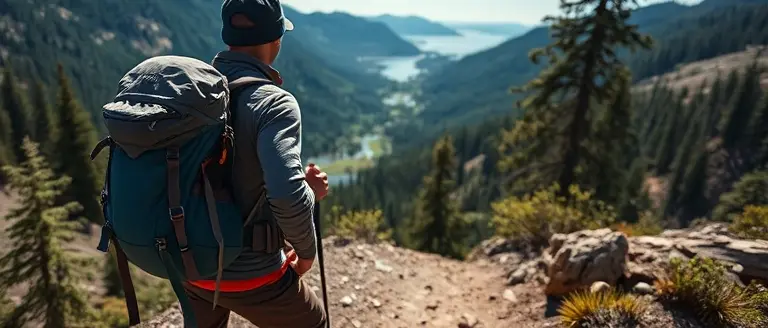
While recent forensic breakthroughs involving the identification of Joseph Louis Serrao have brought renewed attention to the mysteries hidden within the wilderness of Olympic National Park, it serves as a sobering reminder of the inherent risks associated with remote exploration. Spanning nearly one million acres, the park’s rugged terrain, dense temperate rainforests, and high-alpine peaks demand extreme respect and meticulous preparation. To ensure your visit remains safe and memorable, visitors must prioritize self-reliance and proactive risk management when venturing beyond high-traffic trailheads.
Essential Wilderness Safety Protocols
To mitigate the risks of becoming lost or injured in this vast environment, explorers should adhere to the following best practices:
- File a Detailed Itinerary: Always leave your hiking route and expected return time with a trusted person outside of the park. If your plans change, update them whenever possible.
- Leverage Modern Technology: Carry a reliable satellite messenger or personal locator beacon (PLB). Because cell service is non-existent throughout much of the Olympic National Park interior, these devices are critical for triggering an emergency response.
- Travel in Groups: Whenever possible, hike with at least one other person. Having a partner significantly increases your ability to handle emergencies, such as navigating changing weather or managing minor injuries.
- Master Navigation: Do not rely solely on GPS apps. Always carry a physical topographic map and a compass, and ensure you possess the skills to navigate without electronic assistance.
Responsible exploration also dictates strict adherence to Leave No Trace principles. By packing out all waste, staying on marked trails, and properly storing food to deter wildlife, you protect both the fragile ecosystem and your own safety. The sheer scale of Olympic National Park makes it a world-class destination for adventure, but the difference between a successful journey and an emergency situation often comes down to the quality of your preparation and your situational awareness while in the field.
The Science of Unlocking Hidden Truths
The successful identification of Joseph Louis Serrao in Olympic National Park serves as a powerful reminder of how modern forensic genealogy acts as a beacon of truth, turning decades-old wilderness mysteries into resolved chapters of history. This breakthrough underscores the tireless commitment of investigators who process vast, fragmented data to provide closure to families who have waited for nearly thirty years. It is a testament to the fact that with enough analytical precision, no secret remains buried forever in the remote reaches of the wilderness.
Much like these forensic experts, the modern intellectual faces an endless sea of complex information that requires sustained focus and deep cognitive clarity to navigate. Whether you are piecing together historical events or mastering new scientific concepts, your brain is the most vital tool in your arsenal. The Brain Song is designed to bridge the gap between curiosity and mastery, using neuroscience-based auditory stimulation to help you maintain the mental edge needed for high-level problem solving and analytical endurance.
By cultivating your cognitive resilience, you ensure that you are always ready to engage with the world’s most demanding mysteries. Unlock your potential today and see how the right focus can transform your perspective on the most complex challenges. Embrace the clarity required to uncover truths in your own life and professional endeavors by integrating the latest in cognitive support into your daily routine.
 Unlock your brain’s full potential and sharpen your analytical focus—try The Brain Song today to stay as sharp as the forensic experts solving today’s biggest mysteries.Transform My Mental Clarity Today!