

As the 2026 grass-court season accelerates, the tennis world is witnessing a fascinating transformation in Daniil Medvedev’s approach. Moving beyond the baseline grind that defined his early career, Medvedev is recalibrating his game to handle the rapid-fire nature of faster surfaces, balancing his signature deep-court resilience with proactive, aggressive court positioning. Against a surging wave of young talent, Medvedev is proving that sustained dominance is not just about raw athleticism, but about a refined tactical intelligence that allows him to anticipate shifts in rhythm before they materialize.
This ongoing evolution, particularly visible in recent duels against the ATP’s next generation, highlights a critical reality of elite sports: the need for relentless cognitive processing. As Medvedev proves, staying at the top requires more than physical training; it demands the mental agility to make split-second decisions under the immense pressure of high-stakes competition. For the modern competitor, mastering this mental workspace is the ultimate separator between potential and peak performance.
Daniil Medvedev at the 2026 Libéma Open: A Mid-Season Status Report
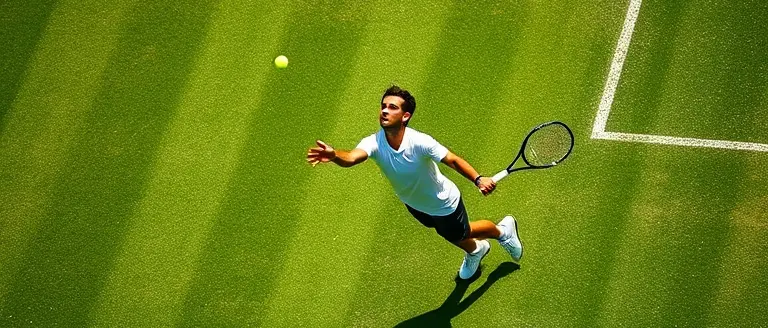
The 2026 grass-court swing has once again highlighted Daniil Medvedev as a benchmark for professional consistency in an increasingly crowded ATP field. His performance at the Libéma Open serves as a vital case study in tactical preservation and adaptation. While the tournament surface remains notoriously difficult for baseline-oriented players, Medvedev has demonstrated a refined ability to truncate points, balancing his trademark defensive depth with a more aggressive approach to net approaches. Recent match data, including his competitive encounters against rising talents like Thijs Boogaard, underscores a shift in his gameplay: rather than relying solely on attrition, he is utilizing flatter groundstrokes to neutralize the unpredictable bounces characteristic of the early grass-court season.
Tactical Resilience Against the New Wave
As the ’90s-born generation faces pressure from a surge of young, high-velocity players, Medvedev’s status remains secure due to his elite court coverage and tactical IQ. His ability to weather early-round upsets—often the downfall of veteran seeds against tour newcomers—is rooted in his superior understanding of match geometry. Key observations from the 2026 circuit include:
- Shot Selection: A noticeable increase in down-the-line backhands to open the court early in rallies.
- Service Efficiency: Maintaining a high percentage of first-serve points won under pressure, which is critical against aggressive returners.
- Adaptation Speed: Medvedev is shifting his court positioning closer to the baseline, allowing him to take time away from opponents who thrive on rhythm and lengthy baseline exchanges.
By prioritizing efficiency over pure power, Daniil Medvedev continues to position himself as a top-tier contender. Even as new entrants challenge the established hierarchy, Medvedev’s transition to the faster grass courts suggests he is not merely defending his ranking, but actively evolving his game to survive the demands of the modern, hyper-athletic ATP Tour.
Medvedev vs. The New Wave: Sustaining Dominance Against Rising Stars
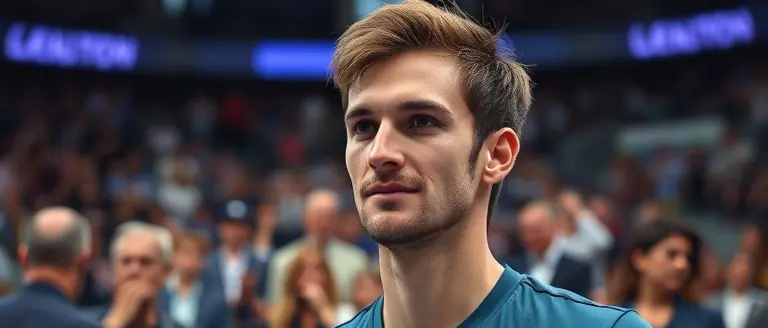
As the 2026 tennis season progresses, Daniil Medvedev continues to serve as a high-level gatekeeper for the rising generation of ATP talent. His recent encounters, including competitive matches against emerging stars like Thijs Boogaard, highlight a recurring tactical pattern: the veteran’s ability to dismantle high-pace aggression with systematic, measured defense. While the newer wave of players often relies on raw power and high-velocity groundstrokes, Medvedev utilizes his trademark deep court positioning and lateral coverage to neutralize momentum. By absorbing pace rather than meeting it with equal force, the Russian star forces younger competitors into uncomfortable, extended rallies that frequently lead to unforced errors.
Tactical Neutralization of Aggressive Play
Medvedev’s approach to these high-stakes matchups centers on disrupting the rhythm that younger, aggressive baseline players crave. His tactical adjustments are particularly evident on the faster surfaces of the grass-court circuit, where he prioritizes point construction over pure winners. Key components of his defensive mastery include:
- Rhythm Disruption: Utilizing deep, flat strikes to push opponents back, preventing them from stepping into the court to dictate play.
- Court Geometry: Exploiting the margins of the court to make aggressive players move horizontally, often forcing them to hit from awkward defensive positions.
- Patience Under Pressure: Instead of chasing quick points, Medvedev remains disciplined in his shot selection, waiting for the inevitable fatigue or frustration that sets in when a younger player’s offensive barrage fails to find a winner.
By maintaining this high-percentage game plan, Daniil Medvedev effectively tests the mental and physical limits of the next generation. For fans tracking his trajectory, the data suggests that Medvedev’s longevity is rooted in his technical adaptability; he is not simply playing the game, he is managing the opponent’s desire to over-hit. As he navigates the mid-2026 tournament cycle, his consistency remains the definitive benchmark for any young player hoping to claim a spot in the top tier of the ATP Tour.
The Evolution of Tactical Play: Why Medvedev Remains a Baseline Wall

In the 2026 season, Daniil Medvedev has once again demonstrated why he remains one of the most formidable forces on the professional ATP tour. Despite the increasing pace of grass-court surfaces and the rise of high-velocity younger competitors, Medvedev’s tactical blueprint has shifted from simple attrition to a more calculated, proactive style of play. By refining his signature deep-court positioning, he forces opponents to hit an improbable number of extra balls, effectively neutralizing the power-hitting advantage often seen in the modern game.
Mastering the Baseline and Net Transitions
Evidence from recent matchups, such as his encounters during the Libéma Open, highlights a subtle but critical improvement in his transition game. While he remains a “baseline wall,” Medvedev has begun closing the distance to the net with greater frequency and technical precision. This tactical adaptation serves two purposes: it shortens rallies against high-energy opponents and prevents rising stars from dictating the point tempo.
Key elements of his 2026 tactical evolution include:
- Aggressive Depth Control: Medvedev is now consistently landing shots deeper into the court, which pushes opponents back and creates the necessary space for his preferred low-margin winners.
- Net-Transition Efficiency: He has improved his approach shot selection, opting for controlled, slice-heavy shots that stay low, making it difficult for opponents to pass him.
- Defensive Resetting: Even when forced behind the baseline, his ability to track down aggressive angles and reset the rally with heavy topspin remains the gold standard for defensive tennis.
By marrying his established defensive resilience with these modernized net approaches, Daniil Medvedev ensures his longevity at the top of the rankings. As newer players continue to test their explosive power, Medvedev’s ability to “solve” matches tactically rather than just physically marks him as a master of the court, proving that, even in a changing era, his unique brand of tennis remains highly effective.
H2H Trends: Decoding the Statistical Edge
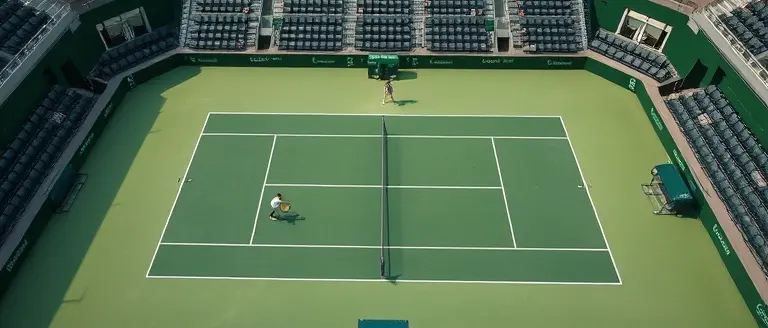
As the 2026 grass-court season accelerates, the statistical profile of Daniil Medvedev reveals a calculated evolution in his approach to professional tennis. Analyzing his H2H trends against emerging talent and established peers indicates that Medvedev is no longer relying solely on deep-court attrition. Instead, he has significantly adjusted his baseline positioning to minimize the time opponents have to react on quicker surfaces like the Libéma Open courts. By tightening his court coverage, Medvedev is successfully neutralizing the aggressive serve-and-volley tactics often employed by the next generation of ATP players.
Key Performance Metrics
Data-driven insights from the 2026 season highlight specific technical pillars that maintain his standing in the top tier:
- First-Serve Efficiency: Medvedev’s ability to sustain a high first-serve percentage under pressure remains his primary defensive anchor, allowing him to dictate rallies even on surfaces that favor attackers.
- Break-Point Conversion: His clinical efficiency in high-leverage moments remains a standout metric. When compared to younger entrants like Thijs Boogaard, Medvedev demonstrates superior patience, often outlasting opponents in extended rallies until a forced error occurs.
- Tactical Defensive Pressure: Evidence suggests that his lateral movement is being optimized to force deep, heavy returns, which effectively stifles the momentum of faster, younger baseline strikers.
These statistical markers illustrate that while the game is evolving, Daniil Medvedev is not merely reacting to the “new wave” of talent; he is actively engineering his game to expose their lack of consistency in high-stakes environments. His longevity is rooted in these micro-adjustments, ensuring that even as tournament conditions become increasingly unpredictable, his fundamental metrics for break-point survival and service dominance keep him a perennial favorite. For analysts and fans alike, these trends confirm that Medvedev’s tactical maturity is his greatest weapon against the raw athleticism of the upcoming generation.
Sharpen Your Focus for Peak Performance
Daniil Medvedev’s ability to remain a perennially top-tier contender lies in his rare capacity to manage mental fatigue while maintaining total tactical focus. By constantly refining his cognitive approach to the game, he manages to outmaneuver opponents who rely purely on pace. Just as Medvedev utilizes advanced tactical shifts to stay ahead, your own performance hinges on the quality of your mental clarity and your ability to maintain sharp focus under pressure.
In the same way elite athletes optimize their cognitive endurance, you can harness neuroscience-based tools to sharpen your own performance. The Brain Song is designed to help you achieve that same level of heightened mental acuity, providing a simple yet powerful auditory tool to improve processing speed and concentration. Whether you are aiming for professional excellence or simply seeking a mental edge in your daily life, integrating this routine is the natural next step in your own evolution.
Stop fighting through mental fog and start performing with the precision of a champion. Experience how the Brain Song can transform your daily focus and help you stay sharp, no matter the stakes.
 Unlock your peak cognitive performance and stay sharp under pressure—discover how the 12-minute Brain Song routine is helping fans and pros alike sharpen their focus.Yes, I Want This Now!