

As the 2026 FIFA World Cup approaches, the football world finds itself fixated not just on international glory, but on a seismic shift in the transfer market. Bernardo Silva, the heartbeat of Manchester City’s recent dominance, stands at the epicenter of this storm. Now a free agent, Silva has effectively turned the transfer window into his own private chessboard, with giants like Real Madrid and FC Barcelona locked in an escalating bidding war. While the rumor mill spins frantically, the real story lies in the tactical brilliance of his situation: he is not merely waiting for the highest bidder; he is orchestrating a move that will define the strategic landscape of European football for years to come.
This is not a typical transfer saga defined by quick decisions. By delaying his final commitment until the conclusion of Portugal’s World Cup campaign, Silva is leveraging the tournament as the ultimate showcase for his tactical versatility. For analysts and fans alike, deciphering where Silva fits—whether in the refined engine room of the Santiago Bernabéu or the tactical system of the Camp Nou—requires more than just surface-level news consumption. It demands a deep, analytical dive into the mechanics of elite football, where the margin between success and stagnation is often found in the finest details.
Bernardo Silva’s June 2026 Transfer Saga: The Current Landscape

As of June 11, 2026, the footballing world is fixated on the impending departure of Bernardo Silva from Manchester City. Following the expiration of his contract, the Portuguese playmaker has become the most coveted free agent in the global market. The situation escalated rapidly this week, with credible reports—including confirmations via Fabrizio Romano—highlighting that Real Madrid has already submitted a formal contract proposal to secure his services. This move positions Los Blancos as the current frontrunners in a high-stakes bidding war, though competitors like FC Barcelona and Atletico Madrid remain deeply interested in acquiring the versatile midfielder’s services for the upcoming European campaign.
The Strategic World Cup Deadline
The timing of this transfer saga is complicated by the start of the 2026 FIFA World Cup. For Silva, representing Portugal on the global stage is the immediate priority, and evidence suggests that he is intentionally delaying any definitive commitment to a new club. By postponing his final decision until after the tournament, Silva maintains maximum leverage while ensuring his focus remains entirely on international duties. This “waiting game” strategy is common for top-tier free agents, as it allows them to:
- Assess Project Stability: Gauge the tactical requirements and long-term vision of potential suitors after witnessing their performances in the summer window.
- Maximize Personal Valuation: Use a strong World Cup performance to reinforce his status as an elite European talent, potentially strengthening his hand in final wage and bonus negotiations.
- Minimize Distractions: Isolate himself from the chaotic speculation surrounding his move to ensure peak physical and mental readiness for Portugal’s pursuit of the trophy.
Until the final whistle blows on Portugal’s campaign, the transfer market will likely see only preliminary discussions, despite the formal pressure being applied by major clubs like Real Madrid. For now, the narrative remains a delicate balance between club-level ambition and the immediate prestige of the World Cup stage.
The Strategic Value of the Window’s Top Tactical Free Agent

As the 2026 summer window progresses, Bernardo Silva has emerged as the premier free agent in global football, transcending the status of a traditional transfer target to become a foundational pillar for any elite system. Unlike standard signings, Silva offers a rare combination of elite-level football IQ, positional flexibility, and a proven track record in high-intensity tactical setups. His impending departure from Manchester City has triggered a sophisticated bidding war, with powerhouses like Real Madrid—who have reportedly already submitted a formal contract proposal—recognizing that acquiring a player of his caliber without a transfer fee represents a massive strategic advantage in an increasingly regulated financial market.
Versatility as a Strategic Weapon
Silva’s ability to thrive in both possession-heavy architectures and rapid transition phases makes him an invaluable asset for managers seeking to bridge the gap between defense and attack. His technical proficiency allows him to operate effectively as an inverted winger, a roaming playmaker, or even as a deep-lying central midfielder. Clubs like FC Barcelona and Real Madrid view him not merely as a luxury addition to bolster their squad depth, but as a primary engine capable of dictating the tempo of high-stakes encounters.
The tactical utility of Bernardo Silva is defined by three core traits:
- Elite Pressing Intelligence: His disciplined work rate off the ball makes him perfect for high-pressing systems that require constant defensive contribution from attacking players.
- Positional Fluidity: Silva rarely operates in a vacuum; his spatial awareness allows him to drift into half-spaces, destabilizing opposition defensive blocks and creating overloads that simplify the creation of scoring chances.
- Big-Game Reliability: Having competed at the highest level for over a decade, his composure under pressure is a critical, intangible asset for clubs aiming for Champions League success.
As the 2026 FIFA World Cup approaches, Silva’s performance on the international stage will likely serve as the ultimate showcase for his remaining elite years. By delaying his final decision until after the tournament, Silva is playing a calculated game, ensuring that his next destination aligns perfectly with his desire for a legacy-defining role. For any suitor, securing his signature is not just a tactical boost; it is a statement of intent for the coming competitive cycle.
Real Madrid vs. FC Barcelona: A Pros and Cons Matrix
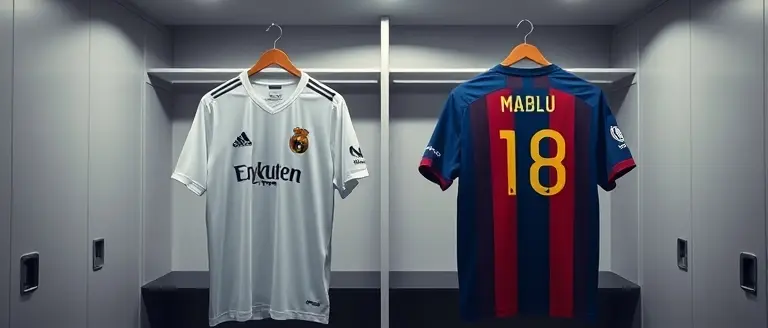
The choice facing Bernardo Silva as he departs Manchester City is arguably the most significant decision of his career. As a premier free agent in the 2026 market, his tactical versatility makes him a coveted asset for Spain’s two giants. Choosing between Real Madrid and FC Barcelona requires weighing immediate silverware potential against long-term project stability.
Real Madrid: The “Winning Machine” Integration
Real Madrid presents an environment of unparalleled stability and historical prestige. For Silva, the primary draw is the chance to operate within a veteran-laden squad that consistently deepens its tactical options in the Champions League.
- Tactical Fit: Silva’s high-IQ positioning would seamlessly replace or supplement the current transition-based playstyle, offering Madrid a controlled playmaker to stabilize high-tempo matches.
- Pros: Guaranteed competitiveness for every major trophy; clear, stable management structure; established infrastructure.
- Cons: Intense internal competition for minutes; potential for a less prominent role compared to other suitors.
FC Barcelona: The Rebuilding Pillar
Conversely, a move to FC Barcelona offers Silva the chance to be the centerpiece of a transformative project. Under current management, the Blaugrana are eager to pair experienced European winners with their rising youth core, positioning Silva as the definitive bridge between defense and attack.
- Tactical Fit: His ability to facilitate play in tight spaces is ideal for Barcelona’s positional play (Juego de Posición), effectively acting as the creative engine that has occasionally been lacking in recent high-stakes encounters.
- Pros: Significant influence on team identity; key veteran leadership role; potential to define the club’s tactical era.
- Cons: Financial volatility remains an ongoing concern; higher pressure to carry the creative burden during transition periods.
Ultimately, while Real Madrid offers a plug-and-play role in a winning system, Barcelona offers a narrative of influence. With his 2026 FIFA World Cup performance for Portugal likely to spike his valuation further, the final decision will hinge on whether he prioritizes the comfort of a established winning culture or the prestige of spearheading a historic resurgence at the Camp Nou.
The World Cup Effect: How Portugal’s Performance Influences the Deal
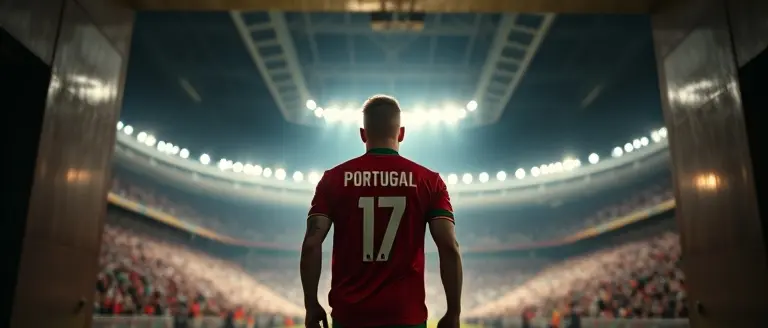
The 2026 FIFA World Cup has transformed from a mere global showcase into a high-stakes audition for Bernardo Silva. As a marquee free agent, Silva’s strategic decision to delay his contract signing until after the tournament is a calculated maneuver. By representing Portugal on the world stage, he is not only aiming for international glory but also providing suitors like Real Madrid and FC Barcelona with real-time, high-pressure data on his physical condition and tactical versatility. For elite clubs, this period serves as a definitive stress test; they are closely monitoring his minute management, recovery rates, and ability to dictate play against top-tier national teams.
The Strategic Value of the Tournament
For potential clubs, Silva’s performance in the 2026 World Cup carries significant weight regarding his market valuation and potential contract longevity. A standout tournament proves that he remains at the absolute zenith of his career, potentially justifying the lucrative long-term deals currently being tabled by European giants. Conversely, the risks inherent in such a high-exertion window cannot be ignored:
- Injury Vulnerability: Any setback during the tournament would immediately complicate ongoing negotiations, likely forcing suitors to introduce more performance-based incentives into their formal contract offers.
- Tactical Versatility: Silva’s ability to thrive under different tactical setups for Portugal provides scouts with a roadmap on how he might integrate into the specific systems of managers at clubs like Real Madrid or Barcelona.
- Leverage Dynamics: A dominant display in the knockout stages strengthens the player’s bargaining power, potentially sparking a renewed bidding war once the World Cup concludes in July.
Ultimately, Silva is playing a sophisticated waiting game. By focusing entirely on Portugal, he ensures that his final decision is based on the most current data available—both regarding his own physical fitness and the evolving roster needs of his top suitors. While the transfer saga remains in a state of flux, the post-World Cup period is expected to trigger a rapid sequence of events as clubs look to lock down one of the most sought-after free transfers in modern football history.
The Strategic Edge for the Modern Analyst
Bernardo Silva’s pending decision serves as a masterclass in professional positioning. He has successfully transformed himself into the most coveted asset of the 2026 window by ensuring his tactical value is impossible to ignore. As you navigate the complex web of reports, contract proposals, and tactical projections, it becomes clear that tracking such a monumental career move requires more than just passion; it requires elite mental processing. Just as elite clubs like Real Madrid rely on cutting-edge data to identify top-tier talent, your ability to synthesize these high-level transfer dynamics depends entirely on your own cognitive sharpness.
To truly grasp the implications of this transfer saga, you need more than just information—you need the mental clarity to process it effectively. The Brain Song is designed for the serious football analyst who refuses to settle for superficial headlines. By integrating this proven method into your routine, you gain the focus required to dissect complex tactical systems and understand the true strategic impact of Silva’s free agency. It is the definitive mental performance tool for those who treat the game with the same analytical rigor as the world’s most successful sporting directors.
Don’t let the noise of the 2026 World Cup window dull your analytical edge. By sharpening your cognitive focus, you position yourself to extract deeper insights from every development in this unfolding story, staying three steps ahead of the mainstream narrative.
 Optimize your analytical edge for the remainder of the 2026 World Cup window by incorporating this 12-minute daily routine into your research process.Transform My Mental Clarity Today!