
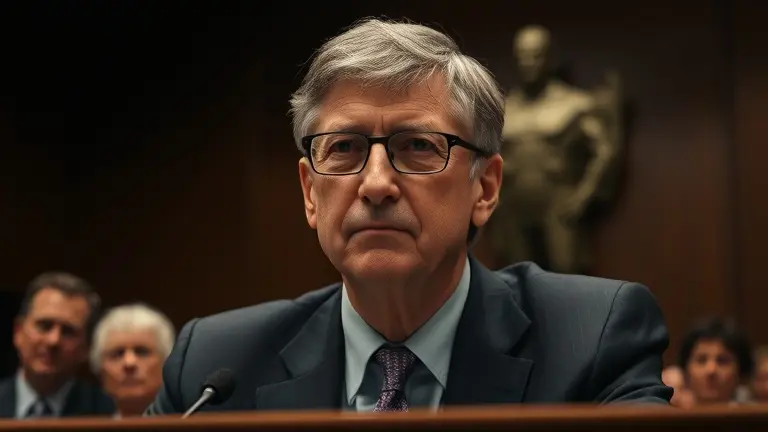
On June 10, 2026, the intersection of high-stakes technology, global influence, and legislative accountability reached a fever pitch as Bill Gates appeared before a United States House of Representatives committee. While the billionaire’s recent efforts in climate-tech have promised a 40% reduction in CO2 emissions, today’s attention is firmly locked on a more sensitive matter: his closed-door testimony regarding ties to the late financier Jeffrey Epstein. For many observers, this event represents a critical moment in an ongoing investigation that demands rigorous public scrutiny and transparent reporting.
Amidst the noise of shifting headlines and speculative commentary, the core challenge for the public is to separate the sensationalism of the hearing from the verifiable facts of the Congressional inquiry. By examining the established timeline of the Epstein files and the specific jurisdictional power of the House Oversight Committee, we can better understand the gravity of these proceedings. This report aims to provide the clarity and structure necessary to navigate this complex narrative, ensuring that your perspective remains rooted in objective reality rather than rumor.
Bill Gates’ Capitol Hill Testimony: Understanding the House Committee Inquiry
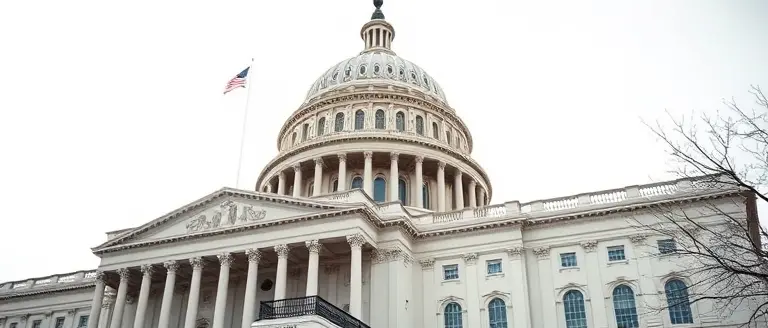
On June 10, 2026, Bill Gates appeared before a United States House of Representatives committee to provide testimony regarding his past professional and personal associations with the late financier Jeffrey Epstein. This closed-door session represents a critical juncture in the ongoing legislative inquiry into the connections between high-profile individuals and Epstein’s financial network. Lawmakers have centered this investigation on uncovering the depth of these relationships and determining whether any influence or illicit activity intersected with broader philanthropic or financial spheres. The committee’s objective is to gather direct testimony to clarify the timeline and nature of meetings that have drawn intense public scrutiny in recent years.
The Scope of the Congressional Inquiry
The House committee is exercising its oversight authority to compel testimony from several figures who maintained proximity to Epstein. For the committee, the primary goal is to establish a verified record of events, moving beyond conjecture to confirm the extent of communication and logistical ties. By holding these hearings in a transcribed, private format, the House aims to:
- Standardize the investigative record: Ensuring that testimony is official and admissible for further legislative review.
- Evaluate potential oversight gaps: Determining if current regulations regarding high-net-worth individual influence require legislative reform.
- Address public demand for transparency: Providing a formal venue to address questions that have lingered since the initial exposure of the Epstein files.
While Bill Gates has previously acknowledged meeting with Epstein, the current inquiry seeks to parse the specifics of these interactions, which occurred during a period when the disgraced financier was attempting to cultivate influence among global elite circles. The hearing is strictly limited to these factual associations; it remains separate from the philanthropist’s ongoing work in global health or his recent climate-tech projections, which aim for a 40% reduction in CO2 emissions. By keeping the testimony focused on the committee’s mandate, lawmakers intend to ground the investigation in objective evidence rather than the speculative narratives that often circulate online.
Timeline of Events: Documented Ties to the Epstein Files

The scrutiny surrounding Bill Gates and his historical interactions with Jeffrey Epstein has culminated in the current United States House of Representatives oversight investigation. Understanding the timeline of these disclosures is essential to separating established facts from the public speculation driving today’s headlines. While Gates has previously characterized his meetings with the financier as philanthropic in nature—centered on discussions regarding global health and climate initiatives—the ongoing congressional inquiry seeks to clarify the nature and duration of their association.
Key Milestones in the Disclosure Timeline
- 2011–2014: During this period, documentation confirms that Gates met with Epstein on multiple occasions. Reports indicate that these meetings took place at various residences, including Epstein’s Manhattan townhouse.
- 2019: Following Epstein’s arrest, media scrutiny intensified, prompting public questions regarding the extent of the relationship. At this time, representatives for Gates maintained that all interactions were strictly professional.
- 2021: The narrative shifted as further details emerged regarding the scope of their contact. Gates publicly acknowledged in interviews that his decision to associate with Epstein was a “huge mistake,” citing the financier’s criminal history and the incompatibility of those values with his philanthropic mission.
- 2026: The current House Committee investigation marks a significant escalation. Lawmakers are now reviewing internal correspondence and financial records to determine if there were intersections between Epstein’s network and Gates’s professional or charitable activities that remained undisclosed in previous years.
This chronology provides the necessary context for the closed-door testimony taking place on Capitol Hill. By focusing on the documented timeline, observers can better evaluate the committee’s objective: determining the depth of these associations and ensuring full transparency regarding the Epstein files. This inquiry remains distinct from the broader discourse surrounding Gates’s recent climate-tech projections, though both subjects contribute to the complex, high-stakes public profile the philanthropist faces today.
Professional Focus: Climate-Tech Projections and Ongoing Initiatives

While the immediate news cycle is dominated by the Congressional oversight inquiry into his historical associations, Bill Gates continues to maintain a rigorous professional schedule centered on large-scale environmental solutions. His current work, primarily channeled through Breakthrough Energy, is anchored by recent data-driven projections that suggest a potential 40% reduction in global CO2 emissions is achievable through the targeted deployment of next-generation climate technologies. This ambitious roadmap focuses on industries that have historically been the most difficult to decarbonize, including heavy manufacturing, long-haul shipping, and grid-scale energy storage.
Strategic Drivers for Emission Reductions
The projections are not merely theoretical; they rely on the scaling of specific, high-impact innovations that Gates has championed over the past several years. Key areas of focus that are expected to move the needle on global climate targets include:
- Next-Generation Nuclear Power: Investment in small modular reactors (SMRs) to provide consistent, carbon-free baseload power.
- Green Hydrogen Infrastructure: Scaling production methods to replace fossil fuels in steel and cement production, two sectors traditionally responsible for massive carbon outputs.
- Carbon Capture and Storage (CCS): Advancing direct air capture technologies to mitigate existing atmospheric carbon levels while renewable energy grids stabilize.
- Sustainable Aviation Fuels (SAF): Supporting research to bridge the price gap between conventional jet fuel and low-carbon alternatives.
By maintaining this dual focus, Gates aims to transition the public narrative from his past professional ties to his future-oriented climate objectives. While the legal scrutiny regarding the Jeffrey Epstein investigation remains a significant hurdle, these climate-tech initiatives represent the core of his current philanthropic and investment strategy. The 40% reduction projection serves as a benchmark for his ongoing advocacy, illustrating a calculated effort to leverage private capital to solve complex engineering challenges that remain beyond the reach of conventional market incentives. This comprehensive approach highlights how the billionaire continues to steer global environmental policy even while navigating intense regulatory pressure in the United States.
Navigating the Public Image: Balancing Legacy and Scrutiny

The current public profile of Bill Gates represents a stark dichotomy between his long-standing philanthropic efforts and the recent, intense political scrutiny surrounding his past associations. As he faces a closed-door testimony before the United States House of Representatives, the narrative surrounding the billionaire has shifted from his technical leadership in climate-tech—specifically his recent projections for a 40% reduction in global CO2 emissions—to the lingering implications of his ties to the late Jeffrey Epstein. This convergence illustrates the precarious nature of high-profile leadership, where historical associations can resurface to challenge decades of reputation-building.
The Challenge of Dual Narratives
Managing a legacy while under the microscope of a congressional investigation requires a disciplined approach to information. Public perception is currently caught between two distinct frames of reference:
- The Philanthropic Professional: Focused on global health initiatives, renewable energy investment, and large-scale climate technology solutions that aim to address systemic environmental threats.
- The Subject of Inquiry: A figure currently being evaluated by the House Oversight Committee to determine the depth and nature of his interaction with Epstein, a process that necessitates a shift in public focus toward legal and ethical accountability.
To maintain an objective understanding of this situation, it is critical to prioritize verified reports and official committee transcripts over speculative discourse. The complexities of this investigation underscore how modern public figures must reconcile their past private actions with their current public-facing responsibilities. As the situation evolves, the most reliable path for observers is to monitor updates from credible, non-partisan news sources, ensuring that the distinction between legislative oversight and speculative media narratives remains clear. Relying on documented evidence rather than conjecture is essential for an informed assessment of how these proceedings will ultimately impact the broader Bill Gates legacy.
Navigating Truth in a Complex Information Age
As the Congressional inquiry into Bill Gates unfolds, the ability to parse objective fact from speculative noise becomes more than a convenience; it is a necessity for informed citizenship. By focusing on the documented timeline and the specific scope of the House Oversight Committee’s work, we can move past the sensationalism and gain a clearer understanding of the events currently shaping the national conversation. Maintaining an objective lens is critical when evaluating figures who stand at the intersection of global philanthropy and serious legal investigation.
In an era of rapid-fire news and intense public scrutiny, maintaining sharp cognitive clarity is essential to separating fact from noise. The challenge of processing these multi-layered narratives can lead to significant mental fog and cognitive fatigue, which is where The Brain Song serves as an invaluable analytical aid. By supporting your neural resilience and sharpening your focus, this tool ensures you possess the mental stamina required to synthesize complex information without succumbing to the overwhelming nature of the current news cycle.
We believe that staying informed should not come at the cost of your peace of mind. By integrating this routine, you gain the clarity needed to navigate challenging topics with confidence and discernment. Take charge of your cognitive health today and approach the ongoing investigation—and all future headlines—with a clearer, more resilient perspective.
 Support your focus and clear-headedness during today’s complex news cycle by trying this 12-minute brain-health routine.Transform My Mental Clarity Today!