

On June 9, 2026, NASA officially unveiled the high-stakes roster for the Artemis III mission: Commander Randy Bresnik, pilot Luca Parmitano, and lander specialists Frank Rubio and Andre Douglas. This isn’t just another voyage to the stars; it is a critical 2027 test flight designed to push human spaceflight to its absolute limits. By staging complex rendezvous and docking procedures in Earth orbit with both SpaceX and Blue Origin hardware, NASA is meticulously laying the foundation for the return to the lunar surface in 2028.
For veterans like Frank Rubio, fresh from his record-breaking stay on the International Space Station, this mission represents a shift from long-duration endurance to high-intensity precision. The technical complexity of managing two different lander architectures simultaneously requires a level of cognitive acuity that defies conventional training. As we look toward 2028, Artemis III stands as the ultimate proving ground—not only for the hardware that will carry us back to the Moon but for the mental resilience of the humans tasked with piloting the future of space exploration.
NASA Unveils the Artemis III Crew: A New Era for Lunar Exploration
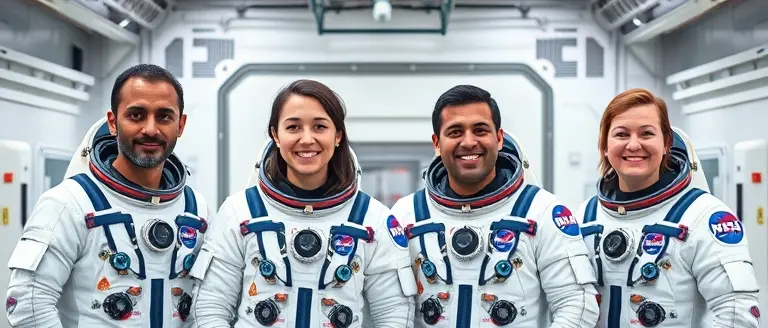
On June 9, 2026, NASA officially electrified the aerospace community by announcing the personnel selected for the Artemis III mission. Scheduled to launch in 2027, this mission marks a pivotal shift in the agency’s lunar strategy, serving as a high-stakes test flight designed to validate critical infrastructure before the planned human landings in 2028. The selected Artemis III crew brings together a blend of seasoned veterans and mission specialists tasked with ensuring that the complex choreography of deep-space operations is perfected.
Meet the Artemis III Crew
The mission roster reflects a truly international effort, emphasizing collaboration and specialized expertise required for lunar operations:
- Commander Randy Bresnik: An experienced astronaut and former ISS commander, Bresnik will lead the mission, overseeing the critical rendezvous and docking maneuvers.
- Pilot Luca Parmitano (ESA): Representing the European Space Agency, Parmitano provides essential piloting expertise for the integrated vehicle systems.
- Mission Specialist Frank Rubio: Renowned for his record-breaking long-duration space flight, Rubio brings unparalleled experience in handling the psychological and physical rigors of extended missions.
- Mission Specialist Andre Douglas: A vital addition to the team, Douglas will focus on the technical verification of the lunar lander hardware.
This mission is explicitly defined as a test flight rather than an immediate lunar touchdown. The primary objectives center on testing rendezvous, docking, and the operational capabilities of both SpaceX and Blue Origin landers in Earth orbit. By refining these maneuvers in 2027, NASA aims to mitigate the risks associated with the eventual 2028 human moon landings. The inclusion of the Artemis iii team represents a methodical, safety-first approach to space exploration, ensuring that every element—from life support to lander descent engines—is rigorously vetted under real-world conditions before attempting a lunar surface return.
Mission Profile: The 2027 Test Flight vs. The 2028 Landing

The Artemis III mission, now officially scheduled for 2027, marks a pivotal shift in NASA’s exploration strategy. Unlike initial expectations of a direct lunar touchdown, this mission functions as a sophisticated orbital test flight. The primary objective is to validate complex systems integration, specifically focusing on rendezvous and docking procedures involving high-stakes hardware from both SpaceX and Blue Origin. By keeping the crew in Earth orbit, NASA mitigates high-risk variables while ensuring that the docking mechanisms, life support, and propulsion systems are battle-tested before the 2028 landing mission.
Technical Objectives and Multi-Lander Integration
The 2027 flight is engineered to solve the “multi-lander” technical challenge. Because both SpaceX and Blue Origin are providing lander technology, the Artemis III crew—led by Commander Randy Bresnik and pilot Luca Parmitano—must demonstrate the agility required to interface with distinct orbital architectures. This is not merely a rehearsal; it is a critical engineering milestone.
Key objectives for the 2027 mission include:
- Orbital Rendezvous: Testing autonomous and manual docking sequences between the Orion spacecraft and the lander modules.
- Systems Interoperability: Assessing how the lander hardware functions in the harsh vacuum of space, far beyond standard ISS conditions.
- Crew Readiness: Utilizing the unique expertise of lander specialists Frank Rubio and Andre Douglas to troubleshoot potential mechanical failures in real-time.
While the 2028 mission serves as the culmination—aiming for a sustainable human footprint on the lunar surface—the 2027 test serves as the “gatekeeper.” By leveraging the experience of astronauts like Frank Rubio, whose record-breaking tenure on the ISS provides invaluable data on long-duration physiological tolerance, NASA is building a safer pathway to the Moon. The success of this test flight will determine the confidence levels required to transition from orbital verification to the high-stakes surface operations planned for the following year.
The Multi-Lander Challenge: SpaceX Starship vs. Blue Origin Blue Moon

A cornerstone of the Artemis III mission profile is the complex integration of two distinct Human Landing Systems (HLS). Unlike previous lunar programs, NASA is leveraging a competitive, dual-vendor architecture involving SpaceX’s Starship and Blue Origin’s Blue Moon lander. The 2027 test flight, commanded by Randy Bresnik, is fundamentally designed to evaluate the docking compatibility and performance profiles of these competing vehicles while in Earth orbit. This “test-flight” nature is a strategic departure from earlier expectations, prioritizing the validation of rendezvous protocols before the high-stakes 2028 human landing on the lunar surface.
Comparing Technical Architectures
The mission requires the Artemis III crew—which includes pilot Luca Parmitano, and lander specialists Frank Rubio and Andre Douglas—to execute precise maneuvers with both platforms. This is not merely a hardware check; it is a rigorous assessment of how these divergent systems interact with the Orion spacecraft. Key technical challenges include:
- Docking Mechanisms: Evaluating the interface reliability between the International Docking System Standard (IDSS) used by the Orion crew capsule and the unique configurations of both the Starship and Blue Moon landers.
- Systems Integration: Testing the life-support transition and data-handshake processes that must remain seamless regardless of which lander is docked.
- Propulsion and Maneuverability: Assessing how the massive scale of the SpaceX Starship compares to the Blue Origin lander in terms of fuel consumption and station-keeping capabilities during the crucial docking phases.
By tasking the crew with these operations in a controlled orbital environment, NASA aims to mitigate the risks associated with deep-space lunar transitions. The inclusion of Frank Rubio, leveraging his experience from record-breaking long-duration missions on the ISS, adds a layer of operational expertise vital for managing these complex systems. This comparative data is the prerequisite for mission safety, ensuring that by 2028, the Artemis program possesses the mature, reliable infrastructure required for sustained lunar exploration.
Artemis Mission Snapshot: The Road to 2028
The Artemis III mission serves as the critical technical proving ground for NASA’s long-term lunar ambitions. Unlike previous iterations, this 2027 test flight is designed as an orbital precursor, focusing on the high-stakes integration of diverse lunar landing architectures. By testing both SpaceX and Blue Origin landers in Earth orbit, the agency aims to validate critical rendezvous and docking protocols before the crewed lunar surface operations projected for 2028. This deliberate transition from a pure landing mission to an orbital test flight reflects a conservative, safety-first strategy intended to mitigate risks associated with next-generation human-rated hardware.
Crew Roles and Operational Expertise
The Artemis III crew brings a blend of veteran leadership and specialized technical experience essential for the mission’s complex maneuvers. The specific roles are distributed to maximize operational efficiency during the multi-lander evaluation:
- Commander Randy Bresnik: Responsible for overall mission safety and primary pilot-in-command duties during manual docking phases.
- Pilot Luca Parmitano (ESA): Oversees flight systems and provides the European Space Agency’s critical technical oversight during the integration of international docking standards.
- Lander Specialist Frank Rubio: Utilizing his endurance from his record-breaking stay on the ISS, Rubio will focus on long-duration system stress testing and habitability assessments.
- Lander Specialist Andre Douglas: Focused on the intricate logistics of the SpaceX and Blue Origin hardware, Douglas will manage the technical performance data collection required for 2028 certification.
The presence of Frank Rubio and Randy Bresnik provides the flight deck with the steady hands necessary to handle the nuances of docking varied commercial vehicles. As the team prepares for the 2027 flight, their primary objective remains the validation of life-support and propulsion systems. Evidence suggests that the successful synchronization of these independent systems in 2027 is the singular gating factor for returning humans to the lunar surface in 2028, ensuring the Artemis program remains on a sustainable trajectory toward lunar exploration.
The New Frontier of Cognitive Excellence
The Artemis III mission is a testament to the fact that when technology reaches the peak of possibility, the limiting factor becomes the human mind. Whether it is Randy Bresnik navigating a complex orbital docking or Frank Rubio managing high-pressure hardware integration, the margin for error is razor-thin. It is this exact intersection of technical precision and peak human performance that defines the modern astronaut’s challenge, requiring a level of sustained cognitive clarity that most of us never encounter in our daily lives.
Much like the mission control team focuses on the technical precision of the SpaceX and Blue Origin landers, the astronauts themselves rely on peak cognitive sharpness to execute these complex maneuvers. You can mirror this elite standard of performance with The Brain Song, an audio routine engineered to help you achieve the same level of mental clarity and cognitive resilience required for high-consequence environments. It is the premier tool for those looking to sharpen their focus and optimize their neural output under pressure.
By integrating The Brain Song into your daily routine, you aren’t just improving your concentration—you are adopting a mindset of high-stakes readiness that mirrors the rigorous preparation of the Artemis III crew. Elevate your potential and master your focus, ensuring that when your own challenges arise, you are operating at the peak of your mental capacity.
 Discover how to sharpen your own focus and cognitive edge, just like the crew preparing for the Artemis III mission.Yes, I Want This Now!