
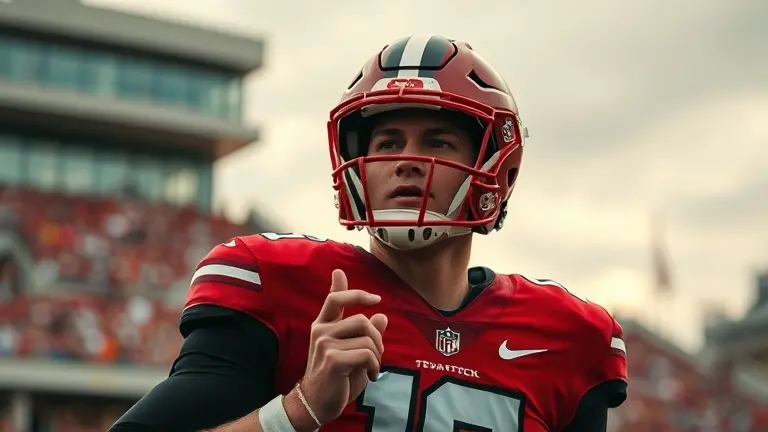
On June 8, 2026, a district judge in Lubbock County fundamentally altered the landscape of collegiate athletics. By issuing a temporary injunction against the NCAA, Judge Ken Curry effectively overrode a national governing body’s decision to rule Texas Tech quarterback Brendan Sorsby ineligible due to previous sports betting allegations. This ruling is far more than a one-off reprieve for a star athlete; it stands as a seismic flashpoint in the ongoing power struggle between the NCAA’s rigid regulatory framework and the surging influence of state-level judicial intervention. As the lines between national policy and state-court jurisdiction blur, fans and analysts alike find themselves at the center of a complex legal experiment.
Understanding this conflict requires navigating a dense thicket of administrative law, jurisdictional claims, and the unprecedented implications of the ‘two-game suspension’ compromise. As we peel back the layers of the NCAA vs. Texas Judiciary clash, it becomes clear that we are witnessing a permanent shift in how college sports are governed. To grasp the nuances of these competing institutional authorities, one needs more than just a surface-level summary—it demands absolute, unwavering mental focus.
The Texas Tech Ruling: Understanding the Brendan Sorsby Injunction

On June 8, 2026, a pivotal legal shift occurred in the landscape of collegiate athletics when a district judge in Lubbock County issued a temporary injunction effectively overriding NCAA eligibility sanctions against Texas Tech football quarterback Brendan Sorsby. The legal battle stemmed from a prior NCAA investigation into sports betting allegations, which included claims that Sorsby had placed wagers on his own team during his tenure at Indiana. Following the NCAA’s June 6 decision to deny the university’s appeal, the legal team representing the student-athlete sought immediate intervention from the Texas judiciary, arguing that the governing body’s punitive measures lacked the necessary legal due process required under state guidelines.
The court’s ruling introduced a structured compromise that balances institutional integrity with player eligibility. Rather than a total ban, the injunction mandates a two-game suspension as the final disciplinary action. This specific court-ordered outcome allows Sorsby to return to active status for the remainder of the 2026 season once the suspension period concludes. By circumventing the NCAA’s internal appeals process, the ruling highlights a growing tension between national regulatory standards and local judicial authority.
Key Factors in the NCAA vs. Texas Judiciary Clash
- Legal Precedent: The injunction marks a rare instance where a state court has successfully intervened to modify the internal disciplinary bylaws of the NCAA.
- The Compromise: The two-game suspension serves as a legal middle ground, offering a punitive consequence while preserving the athlete’s right to participate in the sport.
- Procedural Conflict: The court’s decision was heavily influenced by arguments suggesting that the NCAA’s initial investigation protocols and subsequent ineligibility ruling did not meet the evidentiary standards expected under Texas law.
- Institutional Impact: Legal experts are closely monitoring this case, as it establishes a potential blueprint for future student-athletes to challenge national governing body rulings through local court systems.
This ruling significantly alters the 2026 college football outlook for Texas Tech, providing clarity for the coaching staff and the roster. However, it also raises broader concerns regarding the uniform application of gambling policies across the NCAA, as the intervention by Judge Ken Curry—and the judicial system at large—suggests that national regulatory authority is increasingly susceptible to localized legal challenges in the modern NIL era.
NCAA vs. Texas Judiciary: A New Power Struggle

The June 8, 2026, ruling by a Lubbock County district judge marks a pivotal shift in the governance of collegiate athletics. By issuing a temporary injunction that overrides NCAA eligibility standards for Brendan Sorsby, the court has effectively challenged the long-standing autonomy of the national governing body. This legal intervention suggests that the NCAA’s ability to unilaterally enforce its gambling policies—which resulted in Sorsby’s initial suspension—is no longer shielded from state-level judicial scrutiny. The involvement of Judge Ken Curry highlights a growing trend where institutions and athletes increasingly turn to local courts to resolve disputes that were once handled exclusively through internal collegiate administrative channels.
The Erosion of NCAA Autonomy
The core of this conflict lies in the tension between national bylaws and state-level judicial authority. Legal analysts note that the NCAA vs. Texas Judiciary standoff represents a significant “slippery slope” that could fundamentally alter the landscape of student-athlete discipline.
- State-Level Intervention: The precedent set in the Sorsby case signals that state courts may now be willing to bypass the NCAA’s internal appeals process, such as the one that saw the association deny Texas Tech football earlier this month.
- The Compromise Model: The court-ordered “two-game suspension” represents a departure from the NCAA’s standard punitive measures, potentially setting a new industry standard for how gambling-related infractions are handled.
- Shifting Jurisdiction: The case forces a reckoning regarding where the authority of a national non-profit ends and the jurisdiction of a state’s legal system begins, especially regarding the protection of a student-athlete’s “right to play.”
As legal entities examine the strategies utilized in Lubbock, it is clear that the traditional model of NCAA self-regulation is under immense pressure. By framing the dispute through the lens of state sovereignty, the legal team surrounding Sorsby has provided a blueprint for future litigation. This transition away from centralized control suggests that we are entering an era where collegiate sports eligibility will be increasingly dictated by courtroom rulings rather than conference bylaws or NCAA mandate. The long-term impact of this power struggle remains to be seen, but the institutional leverage of the NCAA has arguably reached its most vulnerable point in recent history.
Navigating the Conflict: Gambling Policies and State Law

The June 8, 2026, ruling by a Lubbock County district court regarding Brendan Sorsby marks a pivotal shift in the NCAA vs. Texas Judiciary power struggle. At the heart of this legal standoff is not the morality of athlete conduct, but rather the jurisdictional limits of the NCAA in enforcing administrative penalties. When Judge Ken Curry issued the temporary injunction, the court effectively questioned whether the NCAA’s internal investigative processes provide sufficient due process for student-athletes. The legal strategy employed by the defense shifted the focus from the underlying gambling allegations to the procedural fairness—or lack thereof—within the NCAA’s current governance structure.
The Clash Over Institutional Authority
The friction arises because the NCAA operates as a private association with its own bylaws, yet it imposes penalties that carry significant professional and economic consequences for players like Sorsby. By invoking state-level judicial intervention, legal counsel for Texas Tech football highlighted a growing tension:
- Due Process Deficits: The defense argued that the NCAA’s investigation into sports betting allegations lacked the transparency and evidentiary standards required by state-level administrative law.
- Scope of Enforcement: Legal experts suggest that the NCAA may be overstepping its authority by enforcing indefinite or permanent ineligibility, prompting state courts to treat these bans as “restraint of trade” or interference with employment opportunities.
- The Two-Game Compromise: The court’s mandate for a two-game suspension serves as a judicial middle ground, effectively overriding the NCAA’s original ruling while maintaining a punitive measure to satisfy institutional concerns.
This case creates a “slippery slope” that could redefine how governing bodies like the NCAA manage compliance. By bypassing national bylaws in favor of local injunctions, the Texas judiciary has demonstrated that national athletic policies are increasingly subject to the scrutiny of state law, potentially inviting a wave of similar challenges across the country.
The Future of Collegiate Athletic Governance

The intervention by Judge Ken Curry in the Brendan Sorsby case signals a seismic shift in how collegiate athletics are regulated. By granting a temporary injunction against the NCAA, the Lubbock County court has effectively challenged the long-standing autonomy of the national governing body. This legal maneuver suggests that Texas Tech football and other programs operating in states with athlete-friendly judicial climates may increasingly turn to local courts to override national eligibility standards. This development creates a complex “patchwork” landscape where disciplinary consistency is sacrificed for regional legal interpretations, potentially undermining the NCAA’s ability to enforce uniform gambling policies across all member institutions.
Implications of the NCAA vs. Texas Judiciary Conflict
The ripple effects of this ruling go far beyond a single player’s eligibility. Legal analysts are particularly focused on whether this case establishes a new standard for challenging punitive measures. Key concerns regarding this shift include:
- Erosion of National Authority: When state courts intervene in internal athletic disputes, the NCAA’s bylaws become secondary to state-level mandates, inviting more frequent litigation.
- The “Two-Game” Precedent: The compromise regarding Sorsby—a partial suspension rather than a total ban—may set a soft precedent for how future gambling-related infractions are negotiated, moving away from rigid institutional guidelines toward individualized judicial settlements.
- Jurisdictional Fragmentation: If student-athletes across the U.S. pursue legal recourse in their home districts, the definition of “compliance” will vary significantly from state to state, complicating recruitment and competitive equity.
This environment suggests that the NCAA will face persistent obstacles in maintaining a unified disciplinary framework. As the tension between NCAA vs. Texas Judiciary escalates, the risk is a move toward a fragmented system where legal strategy becomes as critical to a program’s success as recruiting or on-field coaching. For the 2026 season and beyond, this represents a fundamental transition from centralized athletic governance to a model increasingly influenced by local judicial oversight.
The New Frontier of Collegiate Governance
The intervention by the Lubbock district court signals a potential paradigm shift in the enforcement of gambling policies within collegiate sports. By establishing a compromise that balances institutional accountability with state-level judicial relief, the Sorsby case offers a roadmap that other jurisdictions may soon follow. As the NCAA struggles to maintain a uniform standard against an increasingly fragmented legal landscape, observers must be prepared to synthesize massive amounts of high-stakes information to stay ahead of the narrative.
Just as legal experts must maintain sharp cognitive focus to dissect the complex jurisdictional battle between Texas courts and the NCAA, you need absolute mental clarity to follow these intricate institutional arguments. This is exactly where The Brain Song proves its value. Designed for those who demand strategic precision in their analysis, this tool provides the neuroscience-backed cognitive support necessary to cut through the noise of legal jargon and institutional maneuvering. By enhancing your focus and cognitive processing speed, it ensures you remain a step ahead of the dense, rapidly evolving policy changes that now define the modern era of sports.
Don’t let mental exhaustion cloud your understanding of the issues that matter most in the world of sports law. Equip yourself with the clarity required to master this complex landscape and elevate your analytical edge to an expert level.
 Sharpen your analytical edge for deep-dive sports research with The Brain Song.Yes, I Want This Now!