
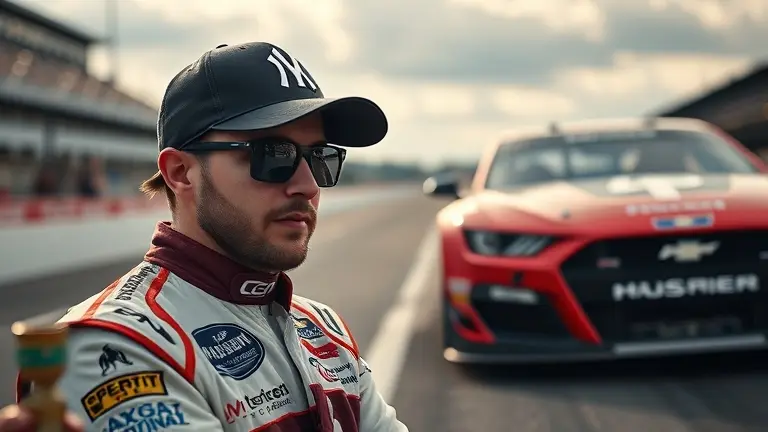
When Garrett Mitchell, better known as Cleetus McFarland, secured a career-first pole position at the Michigan International Speedway, he didn’t just break the barrier between YouTube creator and NASCAR driver; he sent a shockwave through the established sports industry. Following a dramatic, race-altering crash that became a flashpoint for debate among legends like Dale Earnhardt Jr. and Greg Biffle, the industry is now forced to ask: is this a fleeting social media spectacle, or are we witnessing the birth of a new, disruptive business model for professional motorsport?
The Cleetus McFarland Effect is no longer just about viral content or subscriber counts—it is about the serious, logistical evolution required to transition a high-performance content machine into a competitive, NASCAR-sanctioned team. As his pursuit of the Daytona 500 moves from a dream to a legitimate athletic challenge, we must analyze whether a creator can sustain this pace without sacrificing the authenticity that defined his brand. This is the story of how technical precision and a ‘do-it-yourself’ spirit are rewriting the rulebook on what it means to be a modern professional athlete.
,slug:
From Viral Videos to the Pole Position: The Rise of Garrett Mitchell
For years, Garrett Mitchell, known to millions as Cleetus McFarland, operated in a lane parallel to professional motorsport—entertaining a massive digital audience with high-octane automotive content. However, the paradigm shifted dramatically in June 2026 at the Michigan International Speedway. By securing a career-first pole position in the ARCA Menards Series, Mitchell transitioned from a content creator experimenting on the track to a legitimate force capable of commanding the front of a professional field. This performance served as a definitive proof-of-concept, silencing critics who previously relegated his racing aspirations to mere “YouTube project” status.
The trajectory of this breakout moment highlights a critical shift in how the NASCAR ecosystem perceives non-traditional talent:
- The Pole Position: Achieving top-qualifying status proved that Mitchell’s technical understanding of vehicle dynamics translates effectively into competitive, high-speed environments.
- The Incident: His subsequent involvement in a high-profile crash—which significantly impacted the championship standings—was arguably more validating than the pole itself. It placed him in the crosshairs of professional pressure, forcing the racing community to treat him as a peer rather than a celebrity participant.
- The Industry Response: High-profile commentary from legends like Dale Earnhardt Jr. and Greg Biffle underscores the legitimacy of his efforts. While Biffle has offered professional “reality checks” regarding the complexities of the sport, the fact that these icons are engaging with Mitchell indicates he has moved past the novelty phase.
Evidence suggests that this sequence of events has fundamentally recalibrated the expectations surrounding his career. By demonstrating the speed to lead and the grit to remain relevant amidst professional volatility, Mitchell has forced the industry to view his Daytona 500 ambitions as a viable, data-driven objective rather than an internet stunt. The Michigan weekend transformed the narrative from “YouTuber tries racing” to a serious study of whether an influencer-turned-driver can survive the unforgiving demands of the NASCAR-sanctioned circuit.
The Business of Speed: Marketing the ‘Cleetus Effect’

The rise of Cleetus McFarland, the persona of Garrett Mitchell, represents a seismic shift in how professional racing organizations perceive driver value. Traditionally, the NASCAR developmental pipeline relies on heavy, corporate-funded sponsorship models where drivers function primarily as billboards for B2B partners. In contrast, the “Cleetus Effect” leverages a direct-to-consumer (D2C) media empire. By documenting his journey toward the Daytona 500 with high-production storytelling, McFarland has bypassed the traditional “pay-to-play” barriers, bringing a built-in audience of millions directly to the track.
The D2C Sponsorship Paradigm
Unlike traditional drivers who depend on legacy corporate contracts, McFarland controls his own distribution and merchandise channels. This creates a unique value proposition for brands looking to infiltrate the automotive sector:
- Audience Authenticity: His fans are not just passive viewers; they are active consumers who purchase products featured in his videos, translating views into measurable ROI that traditional NASCAR broadcasts often struggle to quantify.
- Reduced Overhead: With his own production team and distribution, McFarland’s racing endeavor acts as a multifaceted marketing engine, potentially sustaining the high costs of professional racing through internal revenue rather than relying solely on external corporate sponsorship.
- Rapid Engagement: The ability to pivot content strategy in real-time—such as detailing a crash at Michigan or a mechanical failure—creates a level of transparency that traditional, media-trained drivers cannot offer.
This shift challenges existing marketing paradigms in professional sports. If McFarland can maintain competitive performance while sustaining his content output, he effectively proves that a creator-led business model can be more resilient than the standard sponsorship-dependent career path. By monetizing his fan base through his own brand channels, McFarland is not merely a driver; he is an integrated marketing agency, signaling to the sports industry that the most valuable sponsorship asset is no longer just a logo on a car, but the direct attention of a loyal digital community.
Bridging the Gap: Can Content Creators Sustain a NASCAR Career?
The transition from a high-output YouTube production schedule to the elite, unforgiving environment of NASCAR represents a fundamental shift in professional demands. For Cleetus McFarland, the challenge is not merely physical or technical; it is a complex logistical balancing act. While a content creator’s value is derived from accessibility and frequent updates, the ARCA Menards Series and the broader NASCAR circuit demand obsessive focus, strict secrecy regarding vehicle telemetry, and a recovery schedule that rarely aligns with the “always-on” nature of digital media.
Navigating Veteran Skepticism
The path forward is defined by a necessary evolution in professional credibility. Early skepticism from racing legends highlights the gap between “personality-driven” racing and the tactical discipline of professional stock car racing:
- Dale Earnhardt Jr. has noted that while McFarland’s car control is evident, the transition requires a shift from “stunt-based” driving to the granular, repetitive precision required for track positioning and fuel management.
- Greg Biffle has offered a pragmatic “reality check,” emphasizing that the physical G-forces and long-distance endurance of professional racing are significantly different from the short-burst intensity of viral automotive content.
- Acceptance is growing as McFarland demonstrates the ability to adapt to professional race craft rather than attempting to force the sport to accommodate his content style.
Sustaining the Business Model
Can a creator maintain a competitive NASCAR career without compromising his core audience? The key lies in the integration of his business infrastructure. By shifting his content from “experimentation” to “documentation of a professional climb,” McFarland is effectively monetizing his development arc. This allows his sponsors to gain exposure in the professional NASCAR market while he maintains the authenticity his fans demand. Success hinges on his ability to perform during critical events—such as his recent pole position—to prove that his presence in the garage is a merit-based endeavor rather than a marketing stunt. If he continues to balance these pressures, he may redefine how modern drivers secure sponsorship in the digital age.
The Daytona 500 Ambition: Reality or Pipe Dream?
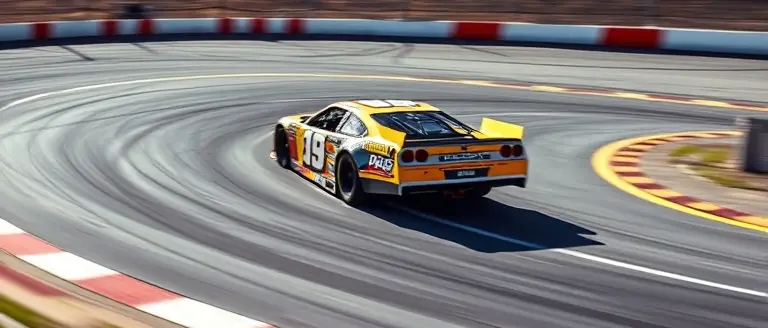
The professional aspiration of Cleetus McFarland—real name Garrett Mitchell—to compete in the Daytona 500 has shifted from a digital content project to a legitimate point of discourse within the NASCAR ecosystem. While critics initially dismissed his entry into the ARCA Menards Series as a publicity stunt, his recent pole position at Michigan International Speedway indicates a level of technical aptitude that demands closer inspection. Unlike typical development drivers, Mitchell enters the circuit with an existing massive media infrastructure, allowing him to monetize his learning curve in a way traditional racers cannot.
Benchmarking the Transition
To determine if this trajectory is sustainable, industry experts often look at “non-traditional” drivers who successfully navigated the gap between niche motorsport disciplines and stock car racing.
- Travis Pastrana: Like Mitchell, Pastrana brought a vast fan base and brand equity to the sport. His ability to secure sponsorship through high-visibility marketing proved that professional racing is as much about commercial viability as it is about lap times.
- The “Reality Check” Factor: Racing veterans, including Greg Biffle and Dale Earnhardt Jr., have noted that while raw speed is obtainable, the race-craft required for the Daytona 500 involves a level of defensive strategy and pack management that cannot be simulated.
For Mitchell to transition from a social media sensation to a permanent fixture in the garage, he must prove he is a long-term asset to team owners. The primary hurdle is shifting the narrative from “content creator trying to race” to “professional driver who happens to create content.” If he continues to demonstrate competitive consistency without sacrificing the safety of the field or the competitive integrity of the events, he may secure the necessary backing to make a Daytona attempt a reality rather than a pipe dream. Ultimately, his success hinges on his capacity to scale his operations to match the rigorous, high-stakes demands of top-tier stock car racing.
Beyond the Track: Scaling Your Own Ambitions
The Cleetus McFarland trajectory proves that transition from internet personality to professional contender is not merely about raw talent or viral reach; it is about the brutal, analytical commitment to logistical precision. Whether you are aiming for a pole position at Michigan International or tackling a complex project in your own garage, the difference between a stalled engine and a podium finish is the quality of the technical framework you choose to follow.
Cleetus built his empire on the ethos of hands-on mastery, understanding that you cannot shortcut the mechanical fundamentals. Just as he relies on rigorous team planning to reach the Daytona 500, you can bypass the costly, amateur trial-and-error cycle in your own workshop by utilizing the right professional-grade blueprints. Success, in every arena, belongs to those who do not just dream, but build with absolute clarity and precision.
Ted’s Woodworking acts as the ultimate technical manual for the modern creator, providing an unrivaled library of 16,000+ workshop-tested plans. By providing the exact structural guidelines needed to execute complex builds, it eliminates the guesswork, allowing you to achieve the high-stakes, professional results that characterize the ‘maker’ culture Cleetus has championed. Secure your competitive edge today.
 Master your next project with the same precision Cleetus brings to the track; access the complete library of 16,000 professional workshop plans here.Yes, I Want To Master My Projects Now!