

The financial markets are recalibrating as Oscar Health (OSCR) captures renewed interest from Wall Street, recently climbing above its 20-day moving average following a pivot in analyst sentiment. With Wells Fargo shifting the stock from ‘Underweight’ to ‘Hold,’ investors are forced to reconsider the viability of tech-enabled healthcare models in a crowded, legacy-dominated space. This isn’t just about a ticker symbol; it’s about a fundamental shift in how we value efficiency in an era defined by data-driven performance.
Yet, the narrative surrounding Oscar’s proprietary technology platform provides a vital lesson that extends far beyond the trading floor. It highlights the critical difference between legacy bloat and optimized, lean operations. As we break down why the market is beginning to reward Oscar’s technical precision, we are also looking at the internal infrastructure of the human body, where similar inefficiencies—specifically metabolic ‘clutter’—can stall your personal peak performance. Understanding this alignment is the key to mastering both your portfolio and your physical health in 2026.
The Oscar Health Pivot: Analyzing the Wells Fargo Upgrade and Market Sentiment

The financial trajectory of Oscar Health, Inc. (OSCR) has reached a pivotal inflection point as of June 2026. A significant signal of this shift arrived on June 5, 2026, when Wells Fargo & Company upgraded the insurer from “Underweight” to “Hold.” This move reflects a broader reassessment of the company’s fundamental health following a record-breaking Q1 2026 earnings report, which showcased the highest net income in the firm’s history. By transitioning from a bearish stance to a neutral “Hold” rating, analysts are signaling that Oscar’s aggressive efforts to scale its proprietary technology platform are finally yielding tangible, bottom-line results that competitive legacy insurers are struggling to match.
Technical Momentum and Market Indicators
Beyond fundamental earnings, technical analysts have noted a critical development in OSCR’s market behavior. As of early June, the stock successfully surpassed its 20-day moving average, a technical indicator that often serves as a proxy for short-term bullish momentum. For retail and institutional investors, this crossover is significant for several reasons:
- Trend Confirmation: Crossing the 20-day moving average suggests that short-term market sentiment is shifting from corrective to accumulative.
- Improved Risk-Reward: With the stock trading around $22.23—well above its 52-week low of $10.85—the upgrade provides a cushion for investors concerned about the volatility inherent in the tech-enabled healthcare sector.
- Institutional Alignment: The Wells Fargo rating change suggests that Wall Street is moving away from purely skeptical views, now pricing in the company’s operational efficiency and platform scalability.
The current “Hold” status does not imply a lack of growth, but rather a cautious acknowledgment of the company’s progress in a competitive landscape dominated by giants like UnitedHealth Group. As Oscar continues to leverage its data-driven infrastructure to lower administrative costs, the market is beginning to treat the stock less as a speculative tech play and more as a stabilizing force in modern healthcare delivery.
Evaluating the Tech-Enabled Healthcare Business Model

At the heart of the current investor interest in Oscar Health (OSCR) lies a fundamental shift in how the company leverages its proprietary technology stack compared to legacy insurers. Unlike traditional carriers that often rely on fragmented, legacy software systems for claims processing and member management, Oscar operates as a full-stack platform. This infrastructure allows the company to integrate clinical data and member engagement tools into a single, cohesive ecosystem. By prioritizing a data-centric architecture, the firm can identify cost-saving opportunities and improve member outcomes in real-time, effectively creating a more agile response to healthcare utilization patterns than established giants like UnitedHealth Group.
The Competitive Edge of a Full-Stack Platform
The differentiation for Oscar rests on its ability to bypass the administrative bottlenecks that plague conventional insurers. Key advantages of their tech-enabled model include:
- Real-time Data Integration: By utilizing proprietary algorithms to process member behavior and clinical needs, Oscar can proactively manage high-cost claimants.
- Member Experience Optimization: A mobile-first approach significantly lowers customer acquisition and retention costs, which are typically high in the highly regulated US insurance market.
- Operational Scalability: Because the platform is built from the ground up to be digital-native, the company can deploy new products or enter new regions with significantly less friction than companies hampered by legacy debt.
Investors questioning whether the recent financial progress is sustainable should look toward the company’s Q1 2026 earnings report, which displayed record net income growth. Evidence suggests that this momentum is not a mere market fluctuation but a result of matured underwriting cycles and improved medical loss ratios enabled by their tech stack. While the stock’s recent surge above its 20-day moving average highlights technical strength, the long-term thesis relies on whether this proprietary platform can continue to scale efficiency faster than legacy competitors. If the technology continues to reduce administrative overhead while improving clinical outcomes, Oscar appears well-positioned to maintain its current trajectory in the evolving healthcare landscape.
State of the Industry: Trends in Tech-Driven Insurance

The landscape of US healthcare is undergoing a radical transformation as tech-enabled insurance providers shift from speculative growth models to sustainable profitability. Oscar Health, Inc. (OSCR) serves as a primary case study for this transition, demonstrating how proprietary technology stacks can mitigate the administrative inefficiencies that have long plagued legacy insurers. Unlike traditional carriers that rely on fragmented, legacy systems, firms like Oscar are leveraging centralized data platforms to streamline member engagement, automate claims processing, and provide personalized care navigation through AI-driven insights. This shift is not merely cosmetic; it is a fundamental reconfiguration of the insurer-patient relationship designed to lower the medical loss ratio (MLR) and improve long-term financial predictability.
Competitive Advantages of Modern Platforms
The battle for market share between tech-first disruptors and incumbents like UnitedHealth Group rests on two core pillars: member experience and operational agility. Investors analyzing the sector should focus on how these companies integrate technology into the provider-payer interface:
- Integrated Care Pathways: By utilizing real-time data to connect members with the most cost-effective, high-quality care providers, tech-centric firms reduce unnecessary medical expenditure.
- Administrative Efficiency: AI-driven automation significantly reduces the headcount traditionally required for manual claims adjudication, providing a clearer path to margin expansion.
- Scalability: Modern tech stacks allow for rapid deployment in new markets, enabling a more flexible response to regulatory changes and local healthcare demands.
Current market trends suggest that as Oscar achieves stronger net income results and improves its technical standing—evidenced by recent movements above its 20-day moving average—the investment community is increasingly rewarding companies that prove their “tech-first” claims lead to tangible bottom-line results. As regulatory tailwinds continue to favor transparency and digital integration, the ability of companies to deploy sophisticated consumer-facing tools while maintaining strict cost control will remain the key differentiator for long-term portfolio performance in the healthcare sector.
Investment Outlook: Navigating Risk in the Current OSCR Cycle

The recent upgrade of Oscar Health (OSCR) from “Underweight” to “Hold” by Wells Fargo & Company marks a pivotal shift in institutional sentiment. For investors, this transition suggests that the company’s tech-enabled healthcare model is finally moving past its initial capital-intensive phase toward sustainable profitability. With the stock price hovering near $22.23 and successfully climbing above its 20-day moving average, technical momentum currently favors the bulls. However, the insurance sector remains inherently volatile, and investors must balance this newfound optimism with the realities of scale and competition against legacy giants like UnitedHealth Group.
Assessing Volatility and Financial Benchmarks
Investors re-evaluating their position should focus on risk-adjusted returns rather than short-term price swings. While the Q1 2026 earnings report highlighted record-setting net income, the path forward requires rigorous monitoring of operational efficiency. As you look toward the Q2 and Q3 2026 earnings calls, consider the following key financial indicators to gauge the health of your position:
- Medical Loss Ratio (MLR) Stability: Watch for consistency in claims management; any unexpected spikes here could indicate pricing miscalculations in their ACA or Medicare Advantage markets.
- Member Growth vs. Retention: In a saturated US healthcare market, the cost of acquiring new members remains a primary risk factor. Sustained profitability will depend on the company’s ability to retain existing members without ballooning marketing expenditures.
- Technological Leverage: Evaluate whether the proprietary platform is successfully driving down administrative costs relative to traditional peers.
- Liquidity and Capital Buffers: Given the 52-week trading range of $10.85 to $25.30, ensure your portfolio can absorb potential drawdowns should macroeconomic headwinds impact insurance premium growth.
Ultimately, the shift to a “Hold” rating acknowledges that Oscar Health has mitigated several immediate execution risks. Investors should view the current cycle as an opportunity to measure the company’s long-term scalability against the cyclical pressures of the broader insurance industry. Remain vigilant for shifts in regulatory environments, as policy changes in the US health sector can rapidly alter the valuation of mid-cap firms like OSCR.
Optimizing for High-Performance Results
In the evolving landscape of 2026, the shift in Oscar Health’s market standing reflects a broader transition toward precision and operational intelligence. Just as investors now look past legacy metrics to uncover tech-enabled efficiency in corporate portfolios, you must apply the same analytical rigor to your personal health. True performance—whether in a brokerage account or your own physiology—depends on eliminating bottlenecks that sap your output and drive stagnation.
We often treat our bodies like legacy systems, ignoring the ‘GLUT-4 receptor overload’ that limits our metabolic potential. Much like Oscar’s platform optimizes care delivery by removing friction, Gluco6 serves as an efficiency upgrade for your metabolic health. By stabilizing your internal environment, you aren’t just managing health; you are engineering the precision-backed stability required for peak performance.
It is time to transition from a reactive model of health to a proactive, data-informed strategy. Take control of your metabolic efficiency today and align your internal performance with the same high standards you demand from your investments.
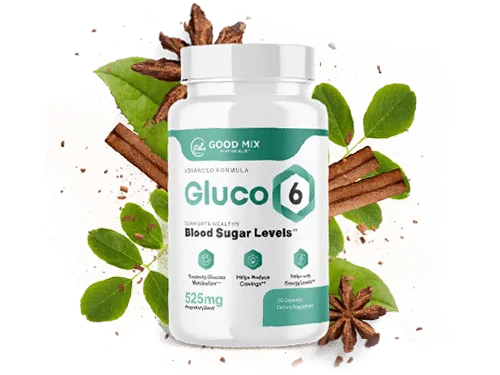 Discover how to optimize your own metabolic efficiency and stabilize your performance with the precision-backed approach of Gluco6.Transform My Metabolic Performance Now!