
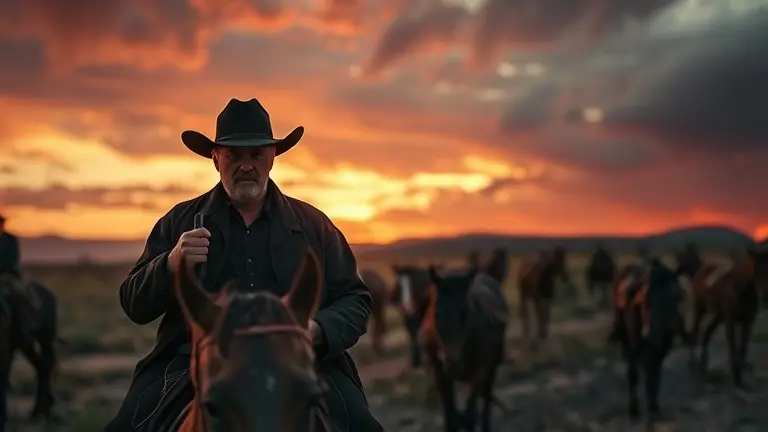
When Kevin Costner’s Horizon: An American Saga – Chapter 1 stumbled at the box office, critics were quick to write an obituary for the traditional, slow-burn Western epic. Yet, in a stunning reversal that mirrors the unpredictability of the frontier itself, the film has found a massive, appreciative audience on Amazon Prime Video. As of June 2026, the film is dominating streaming charts, fueled by a high-profile endorsement from Quentin Tarantino, who has championed the project as a rare triumph of authentic vision in a sea of modern cinematic mediocrity.
This streaming resurgence has sparked a fierce re-evaluation of the project, turning a supposed \”flop\” into a cult-favorite success. But as fans eagerly await news on the delayed Chapter 2, a larger question looms: does the shift from the multiplex to the home screen reveal that modern audiences are finally ready for high-effort, long-form storytelling? To truly grasp the scope of this saga, viewers must move beyond the noise of the digital age and cultivate the deep focus required to appreciate Costner’s deliberate, sprawling narrative craft.
The Resurrection of Horizon: From Box Office Flop to Streaming Powerhouse
The narrative surrounding Kevin Costner’s American West film, Horizon: An American Saga – Chapter 1, has undergone a radical transformation in recent weeks. Initially dismissed by industry analysts following a tepid theatrical performance, the epic has found a definitive “second life” since its May 23, 2026, debut on Amazon Prime Video. Data from FlixPatrol and recent industry reporting confirm that the film has climbed into the streaming platform’s U.S. Top 10, effectively silencing the “box office flop” headlines that dominated its original release window. This shift highlights a growing disconnect between traditional cinematic performance metrics and the evolving consumption habits of modern audiences who prefer long-form, slower-paced narratives within the comfort of their homes.
Why Home Viewing Saved the Saga
The resurgence of this Kevin Costner project is not merely a statistical anomaly; it represents a fundamental change in how viewers engage with sprawling, historical epics. Several factors have contributed to this newfound momentum:
- Convenience of Format: The episodic nature of the Horizon saga feels significantly more at home on streaming services, where the deliberate pacing is viewed as a feature rather than a barrier.
- The “Tarantino Effect”: High-profile endorsements have played a pivotal role in shifting public perception. Quentin Tarantino recently praised the film, positioning it as a rare example of a serious, high-quality modern movie, thereby granting the project a level of critical legitimacy that the box office environment failed to provide.
- Algorithmic Discovery: As the film entered the Amazon Prime Video Top 10, the platform’s recommendation engine introduced the title to a wider demographic, many of whom were previously hesitant to invest three hours in a theater but are now eager to explore the narrative at their own pace.
This streaming data suggests that while the theatrical model may have struggled to capture a broad audience, the home viewing market is far more receptive to Costner’s expansive vision. As the project gains traction, the focus now pivots from its failure to launch in cinemas to its potential as a defining streaming hit, forcing a broader re-evaluation of the saga’s long-term commercial viability.
The Tarantino Effect: Why Quentin is Championing Costner’s Vision
In a landscape where blockbuster filmmaking is often defined by algorithmic repetition and franchise exhaustion, the public endorsement from Quentin Tarantino has fundamentally altered the discourse surrounding Kevin Costner’s American West film, Horizon: An American Saga – Chapter 1. Tarantino, known for his uncompromising standards and vocal disdain for what he terms “plain stupid” contemporary cinema, has positioned the film as a rare sanctuary for genuine auteur-driven storytelling. By championing Costner’s sweeping, methodical approach to the Western genre, Tarantino has provided a critical shield, elevating the project from the “box office flop” narrative that plagued its initial theatrical release to a position of newfound prestige.
The “Tarantino Effect” serves as more than just a promotional soundbite; it offers a high-level artistic validation that encourages audiences to re-evaluate the film’s slower, long-form pacing. Through his public defense, Tarantino has highlighted several key factors that define the current appeal of the project:
- Genre Authenticity: Tarantino identifies Horizon as a throwback to the classical era of Western filmmaking, prioritizing character development over the hyper-kinetic editing common in modern blockbusters.
- The Re-evaluation Narrative: His praise has effectively signaled to film buffs that the project is an ambitious, singular vision rather than a standard commercial product.
- Shift in Consumption: By framing the film as a “serious” work, Tarantino has helped domestic streaming audiences appreciate the epic, episodic nature of the story, which is better suited for home viewing than a crowded multiplex.
This endorsement has undeniably contributed to the film’s surge on Amazon Prime Video, where its entry into the Top 10 lists suggests that the “Tarantino stamp of approval” has successfully bridged the gap between critical elite sentiment and general viewer curiosity. While Chapter 2 remains in a state of limbo, the prestige afforded by one of Hollywood’s most respected directors ensures that the conversation remains active, keeping the franchise relevant long after its initial theatrical struggles.
Redefining Success: Streaming Metrics vs. Traditional Theatrical Models

The initial narrative surrounding the Kevin Costner American West film was heavily skewed by traditional theatrical box office metrics, which often fail to capture the nuance of long-form, prestige storytelling. By labeling Horizon: An American Saga – Chapter 1 as a “flop” based solely on its opening weekend cinema receipts, industry analysts overlooked the reality of modern IP building. In an era where audiences increasingly favor the comfort of home viewing for deliberate, slow-burn narratives, the theatrical model acts as only the first point of entry rather than the definitive verdict on a project’s cultural value.
The Streaming Shift
As the project finds a new lease on life on Amazon Prime Video, data suggests that the film’s pacing—once criticized in theaters—is actually an asset in a streaming environment. By entering the U.S. Top 10 list as of early June 2026, the film demonstrates that viewers are eager for expansive, epic-length cinema when they can consume it at their own pace. Key advantages of this transition include:
- Audience Accessibility: Removing the barrier of a three-hour theatrical time commitment allows casual viewers to engage with Costner’s vision in manageable segments.
- The Tarantino Endorsement: High-profile validation, such as the recent praise from Quentin Tarantino, has shifted the discourse from financial failure to artistic appreciation, legitimizing the film as a “must-watch” for cinephiles.
- Long-tail Engagement: Streaming platforms prioritize completion rates and subscriber retention, metrics that favor episodic, high-quality Westerns over short-term blockbuster spikes.
Ultimately, the resurgence of Horizon proves that the “flop” label is largely an outdated relic of the pre-streaming age. For a sprawling American West film saga, success is now measured by sustained interest and the ability to build a dedicated fanbase across digital platforms. This “second life” on Prime Video provides a much more accurate gauge of audience appetite, potentially providing the leverage needed to secure a path forward for the shelved Chapter 2.
What the Streaming Surge Means for the Future of Chapter 2

The recent ascent of Kevin Costner’s American West film, Horizon: An American Saga – Chapter 1, into the Amazon Prime Video Top 10 has fundamentally altered the conversation surrounding its follow-up installments. While the theatrical release faced significant skepticism regarding its box office performance, the film’s “second life” on home screens serves as a critical proof of concept for the studio. By finding a massive, engaged audience on streaming platforms, the project has effectively mitigated the risk that previously threatened to shelf Chapter 2 indefinitely. This shift suggests that the appetite for dense, sprawling Western storytelling remains strong, provided it is consumed within the intimate environment of the home viewer rather than a traditional cinema.
Assessing the Production Trajectory
The “Tarantino effect”—fueled by high-profile praise for the film’s authenticity—has further legitimized the project, transforming it from a perceived commercial failure into a respected piece of modern cinema. For executives monitoring the data, this surge provides three distinct pathways for the saga’s future:
- Audience Data Validation: The high completion rates and consistent streaming numbers on Amazon Prime signal to financiers that there is a dedicated subscriber base eager for the next chapter.
- Reduced Marketing Overhead: The current grassroots momentum and organic critical acclaim, bolstered by figures like Quentin Tarantino, have created a marketing engine that costs the studio pennies on the dollar compared to a traditional wide-release campaign.
- The Hybrid Release Model: Evidence suggests that rather than another high-stakes theatrical gamble, the saga may now be fast-tracked as a “streaming event” series, allowing the studio to recoup investments through subscription retention and long-term digital licensing.
Ultimately, while Chapter 2 remains in a state of limbo, the metrics from early June 2026 indicate that the project is no longer a liability. The streaming surge acts as a life-raft for the ambitious Kevin Costner American West film, likely convincing stakeholders that completing the saga is not only a creative necessity but a sound investment in high-value, binge-worthy content. As the narrative around Horizon continues to pivot from “flop” to “resurgent epic,” the likelihood of a finalized release schedule for the remaining chapters continues to climb.
Reclaiming the Art of Immersive Cinema
The resurgence of Kevin Costner’s Western epic proves that audiences are still hungry for ambitious, slow-burn storytelling—provided they have the right environment to consume it. While the theatrical release faced skepticism, the transition to the living room has unveiled a narrative depth that demands total attention. This shift suggests that the future of the Horizon saga depends less on frantic pacing and more on a dedicated audience willing to engage with the cinematic mastery of the American West.
However, in a digital era defined by fragmented attention and perpetual distraction, even the most dedicated cinephiles often find themselves struggling with the mental fog that prevents true immersion. To fully appreciate the intricate details of a four-part saga, you need more than just a large screen; you need a sharp, focused mind that can synthesize complex threads of storytelling without losing the plot. This is where The Brain Song becomes the essential partner for your home theater experience.
By clearing away the cognitive clutter that modern life imposes, The Brain Song offers the mental clarity necessary to sustain your focus throughout long-form narratives. It is not just about watching a film; it is about reclaiming your capacity for deep, intellectual engagement with the art you love. If you are ready to stop skimming the surface and start diving deep into the cinematic epics that define our generation, now is the time to unlock your full cognitive potential.
 Ready to sharpen your focus? Experience the 12-minute daily routine that helps you tune out the noise and lock into the depth of ‘Horizon’ and beyond.Yes, I Want This Now!