

As the clay courts of Roland-Garros heat up during the 2026 French Open, the tennis world has turned its eyes toward Peyton Stearns. While casual observers scramble for live-score updates during her high-stakes second-round battle against Daria Snigur, a deeper narrative is unfolding beneath the surface of her baseline rallies. Stearns has transformed from a promising talent into a calculated tactician, demonstrating a level of strategic maturity that far exceeds her previous performances at the 2026 Australian Open. This is no longer just about raw power; it is about the evolution of a professional athlete who has mastered the art of high-pressure consistency.
The difference between a fleeting moment of brilliance and a deep Grand Slam run lies in the ability to maintain cognitive clarity when the stakes are highest. As Stearns navigates a potential collision course with veterans like Belinda Bencic, her performance serves as a masterclass in mental endurance. Understanding her trajectory requires looking beyond the match statistics to the internal, psychological mechanisms that allow elite players to remain ‘in the zone’ for hours at a time, turning split-second decision-making into an unstoppable competitive advantage.
Peyton Stearns at the 2026 French Open: A Campaign in Focus
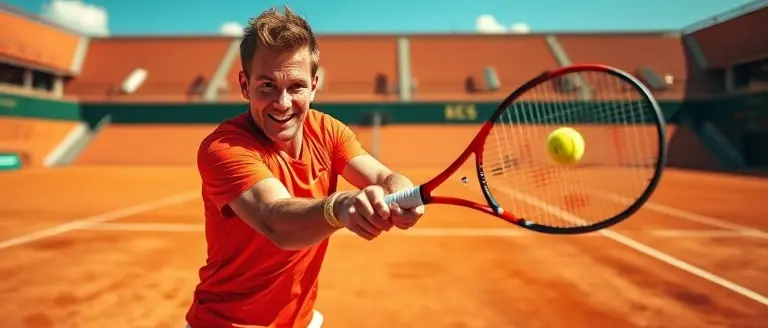
As of May 27, 2026, Peyton Stearns is deep into her quest for a breakthrough performance at the 2026 French Open. Currently battling through a high-stakes second-round encounter against Ukraine’s Daria Snigur, Stearns enters this match with significant momentum and the confidence of oddsmakers, who have priced her at approximately 67% to advance. Her presence on the red clay of Roland Garros serves as a definitive indicator of her maturation on the WTA tour, moving beyond a “rising prospect” label to become a consistent threat in major draws.
Analyzing Stearns’ Path and Tactical Form
Stearns’ trajectory throughout the 2026 season has been defined by increased tactical discipline and improved movement on slower surfaces. After demonstrating flashes of brilliance at the 2026 Australian Open, she has refined her aggressive baseline game to better suit the demands of Parisian clay. Against Snigur, her ability to dictate play with her forehand while maintaining defensive stability has been the primary focal point for analysts. Key takeaways from her current campaign include:
- Shot Selection: Stearns has significantly reduced her unforced error count, opting for high-percentage depth over purely explosive winners.
- Physical Conditioning: Her durability during extended rallies suggests a rigorous off-court training block aimed at navigating the physical toll of Grand Slam tournaments.
- Mental Toughness: By successfully managing the pressure of being a betting favorite, Stearns is signaling an evolution in her competitive temperament.
Should she successfully navigate this second-round hurdle, the path ahead presents a compelling narrative. A potential third-round collision with veteran Belinda Bencic looms as a major test of her tactical ceiling. This match against Snigur is not merely a live-scoring event for fans; it is a critical checkpoint that validates Stearns’ ascent and provides a blueprint for her continued progression in the professional tennis ranks.
Technical Evolution: How Stearns Is Mastering the Clay

The 2026 season has marked a definitive shift in the tactical identity of Peyton Stearns, particularly as she navigates the grueling conditions of the French Open at Roland Garros. Historically known for a hard-hitting, aggressive baseline style that favored faster courts, Stearns has successfully retooled her game to thrive on the slow, high-bouncing European clay. Evidence suggests that her off-season focus on footwork and court positioning has paid dividends, allowing her to neutralize opponents who rely on the traditional surface-specific patience.
Refined Tactical Adjustments
Stearns has evolved from a purely offensive ball-striker into a more calculated strategist. Her approach to the 2026 French Open demonstrates a newfound comfort in extending rallies without sacrificing her signature power. Key technical refinements include:
- Increased Topspin Depth: By modifying her racquet head speed at the point of contact, Stearns is now generating significantly more heavy topspin. This keeps the ball deep in the court, preventing opponents like Daria Snigur from dictating play.
- Defensive Footwork: Her movement on the red dirt is noticeably more fluid. Stearns has improved her sliding technique, enabling her to recover quickly from wide positions and transition from defense to offense in a single motion.
- Controlled Patience: Rather than forcing winners from neutral positions, she now demonstrates the composure to build points. She utilizes cross-court patterns to open up the court before finding the clinical down-the-line winner.
This maturation is critical as Stearns faces tougher challenges, such as potential third-round matchups against seasoned veterans like Belinda Bencic. By marrying her aggressive instincts with a refined defensive toolkit, Peyton Stearns has transformed into a legitimate threat on clay, proving that her technical evolution is not just a temporary adjustment, but a permanent upgrade to her professional arsenal.
Strategic Outlook: A Potential Clash with Belinda Bencic
Should Peyton Stearns successfully navigate her second-round challenge at the 2026 French Open, the path forward presents a formidable tactical test against veteran contender Belinda Bencic. This potential third-round matchup would serve as a definitive litmus test for Stearns, who has shown significant growth since her 2026 Australian Open campaign. Bencic is renowned for her world-class timing and ability to take the ball on the rise, effectively shortening points and depriving opponents of recovery time. To overcome a tactician of Bencic’s caliber, Stearns must leverage her aggressive baseline game with heightened discipline.
Tactical Requirements for Success
Success against a player like Bencic hinges on neutralizing her rhythm. Because the Swiss star excels at redirecting pace, Stearns cannot simply rely on raw power. Instead, she must prioritize:
- Serve Placement and Variety: Stearns needs to exploit wide angles on the deuce side to pull Bencic out of the court, creating an opening for a cross-court winner or a transition volley. Avoiding predictable patterns is essential to prevent Bencic from stepping into the court to dictate.
- Neutral-Ball Consistency: Stearns must resist the temptation to “over-hit” in neutral rallies. Evidence suggests that Bencic thrives when provided with high-pace, waist-high balls; therefore, implementing heavy topspin and varied depth will be critical to disrupt Bencic’s baseline timing.
- Defensive Resetting: When pushed wide, Stearns must prioritize high-margin, deep recovery shots rather than low-percentage winners. By extending the rallies, she forces Bencic—who occasionally battles with physical consistency—into long, grueling points that favor the American’s current fitness trajectory.
Ultimately, the match will be decided by the neutral game. If Peyton Stearns can maintain her composure, utilize her improved forehand stability, and dictate the tempo from the center of the court, she possesses the physical tools to upset Bencic and solidify her status as a rising threat on the red clay of Paris.
Charting the 2026 Season: Stearns’ Career Milestones

The 2026 season has emerged as a definitive turning point for Peyton Stearns, whose current campaign at the French Open serves as the centerpiece of her rapid professional ascent. Following a disciplined showing at the 2026 Australian Open, Stearns has focused heavily on refining her court movement and tactical shot selection on clay surfaces. This strategic pivot has allowed her to transition from a promising contender to a consistent threat on the WTA Tour. Her recent victories demonstrate a higher winning percentage in high-pressure rallies, signaling that her off-season conditioning is yielding significant dividends as she competes in Paris.
Trajectory Toward the Top 20
To break into the upper echelons of the WTA rankings, Stearns must maintain this momentum through the remainder of the Grand Slam circuit. A deep run at Roland-Garros is not merely a statistical boost; it is a psychological milestone that validates her technical improvements against elite opposition. Analysts monitoring her progress point to several key performance indicators that highlight her evolution:
- Service Efficiency: Increased first-serve percentage during critical games, reducing break-point opportunities for opponents like Daria Snigur.
- Court Coverage: Enhanced agility on red clay, allowing Stearns to extend points and force unforced errors from baseline-heavy players.
- Match Management: Improved mental fortitude, evidenced by her ability to recover from early-set deficits in tournament brackets.
Should she successfully navigate the second round in Paris, the path forward involves high-stakes matchups against established veterans such as Belinda Bencic. For Stearns, these challenges represent the necessary hurdles to solidify her standing. If she continues to execute with this level of precision, she is well-positioned to achieve a career-high ranking by year’s end, potentially securing her place among the world’s top 20 players. Her 2026 trajectory suggests that she is moving beyond the “breakout talent” label and settling into the role of a consistent, tour-level force.
The Cognitive Edge of Grand Slam Champions
Peyton Stearns’ progression through the 2026 French Open bracket underscores a fundamental truth in elite sports: the racket and the court are merely extensions of the mind. Her ability to suppress mental fatigue and maintain razor-sharp focus during grueling three-set matches is what separates the tournament contenders from the rest of the field. It is a level of psychological resilience that is forged not just through repetitive physical drills, but through the deliberate optimization of one’s cognitive state.
For those of us striving for high-level performance in our own professional and personal lives, the lessons from the court are clear. Achieving an ‘in-the-zone’ state of flow requires more than just willpower; it demands a dedicated approach to mental clarity. This is precisely where The Brain Song bridges the gap between potential and peak execution. By supporting your brain’s natural capacity for focus, learning, and sustained attention, you can cultivate the same level of mental endurance that Stearns relies on to thrive under the intense pressure of a Grand Slam.
Whether you are facing a high-stakes presentation or simply looking to eliminate brain fog, integrating a proven tool for cognitive performance is the natural next step toward excellence. Stop settling for mental exhaustion and start optimizing for consistent, high-level results in everything you do.
 Unlock your own cognitive peak and sustain high-level focus by incorporating The Brain Song into your daily routine.Transform My Life Today