
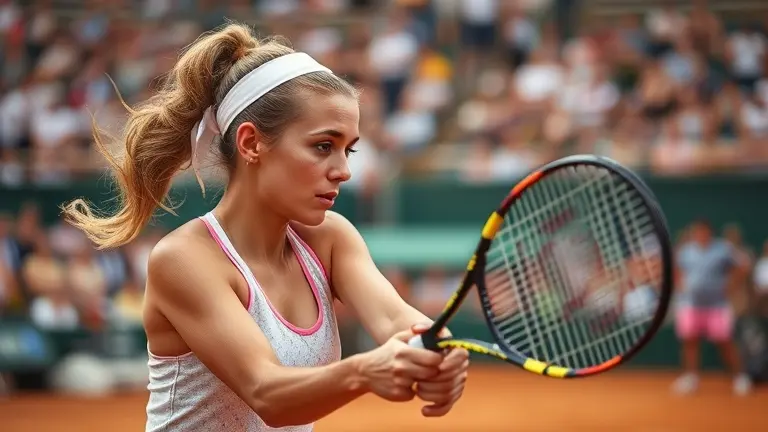
The 2026 French Open has provided a compelling narrative for tennis enthusiasts, but perhaps none more scrutinized than the performance of world number three, Iga Swiatek. In her second-round clash against rising Czech talent Sara Bejlek, Swiatek managed to secure a 6-2, 6-3 victory; however, the scoreline hides a deeper, more complex story of the court. While advancing, the four-time Roland Garros champion displayed an uncharacteristic level of erratic play, punctuated by a high volume of unforced errors that left analysts questioning the stability of her current form under the immense pressure of the Parisian clay.
As Swiatek navigates this tournament under the fresh tactical guidance of coach Francisco Roig, the spotlight remains firmly fixed on her mental equilibrium. The match against Bejlek served as a microcosm of the challenges top-seeded players face when balancing aggressive shot-making with the need for pinpoint precision. For fans and performance analysts alike, the question is no longer just about who wins, but whether the mental conditioning of elite athletes can be sharpened to eliminate the ‘noise’ that leads to critical lapses at the sport’s highest level.
Iga Swiatek Advances: Recap of the Roland Garros Second-Round Clash with Sara Bejlek
On May 27, 2026, Iga Swiatek reaffirmed her dominance on the red clay of Roland Garros, securing a clinical 6-2, 6-3 victory over 20-year-old Czech prospect Sara Bejlek. While the scoreline reflects a comfortable straight-sets win, the match offered a complex look at the four-time champion’s current form as she navigates the early stages of the 2026 French Open. Swiatek’s ability to neutralize Bejlek’s aggressive baseline play demonstrated why she remains the tournament favorite, yet the statistics reveal underlying tensions in her preparation under new coach Francisco Roig.
Tactical Breakdown and Performance Analysis
Despite the win, observers noted that the match was far from flawless. Swiatek recorded 38 unforced errors throughout the contest, a number that raises questions about her consistency as she prepares for the deeper stages of the tournament. The match highlighted key tactical takeaways:
- Handling Pressure: Swiatek utilized her superior court coverage to force Bejlek into uncomfortable defensive positions, effectively mitigating the younger player’s transition game.
- Correction Under Fire: Even during moments of erratic play, Swiatek demonstrated world-class resilience, breaking her opponent’s serve at crucial intervals to stifle any potential momentum shifts from the Czech talent.
- The Roig Influence: Fans are closely monitoring how Swiatek’s tactical adjustments under Francisco Roig evolve during high-pressure scenarios, specifically regarding her shot selection and point construction.
While Sara Bejlek showed flashes of brilliance, proving her potential as a future star on the WTA tour, she could not sustain the intensity required to disrupt Swiatek’s rhythm for long. For Swiatek, this victory marks her 42nd career win at the French Open, moving her one step closer to another title. However, with potential matchups against power hitters like Jelena Ostapenko looming, the world No. 3 will likely need to tighten her groundstrokes and reduce her error count to maintain her pursuit of glory in Paris.
Performance Analysis: Swiatek’s Tactical Evolution at the 2026 French Open

In her second-round victory against Sara Bejlek, Iga Swiatek showcased the formidable baseline dominance that has defined her status as the “Queen of Clay.” However, the match also revealed a complex narrative of transition. While the 6-2, 6-3 scoreline suggests a comfortable outing, the underlying metrics highlight an “erratic” performance characterized by 38 unforced errors. This high margin suggests that under the guidance of coach Francisco Roig, Swiatek is actively experimenting with higher-risk aggressive patterns. Her tactical evolution appears focused on shortening points and increasing serve penetration, a necessary adjustment as the field at Roland Garros continues to challenge her traditional defensive-heavy style.
Technical Breakdown and Tactical Adjustments
Swiatek’s play in this matchup offered a masterclass in controlled pressure, albeit with some calibration issues. Analysts point to several key areas where her game is undergoing refinement:
- Serve Efficiency: There is a concerted effort to add variety to her serve placement, forcing opponents like Bejlek to shift movement patterns early. While the first-serve percentage was respectable, the second-serve delivery remains a point of scrutiny for potential high-seed battles.
- Baseline Aggression: Swiatek is pushing deeper into the court to dictate play sooner. By taking the ball on the rise, she aims to neutralize the counter-punching abilities of rising stars, though this strategy contributed to her higher unforced error count.
- Defensive Movement: Her lateral coverage remains elite, providing a safety net when her aggressive shots drift wide. This hybrid style—combining heavy topspin with proactive net approaches—is clearly being tested to ensure she remains ahead of opponents who now possess deeper scouting reports on her patterns.
Ultimately, Swiatek’s performance highlights the growing pains of a top-seeded player attempting to elevate her game to new levels. As she progresses into the third round, her ability to stabilize these aggressive margins will be the deciding factor in her pursuit of another Grand Slam title. Whether facing seasoned rivals like Jelena Ostapenko or emerging talents, the current iteration of Swiatek is clearly built for long-term dominance rather than just short-term results.
Testing New Alliances: The Impact of Francisco Roig on Swiatek’s Game
The coaching partnership between Iga Swiatek and veteran strategist Francisco Roig remains one of the most closely watched narratives at the 2026 French Open. As Swiatek navigates the early rounds of Roland Garros, the influence of Roig’s technical adjustments is being tested under the unique pressure of clay-court Grand Slam tennis. During her second-round victory against Sara Bejlek, it became clear that while Swiatek’s raw athleticism remains a weapon, the pair is currently focused on fine-tuning her court positioning and shot selection to minimize the high unforced error count that surfaced throughout the match.
Roig, known for his analytical approach to court coverage, appears to be working with Swiatek to refine her response to aggressive, low-ranked opponents who have nothing to lose. Against Sara Bejlek, Swiatek was forced into uncomfortable positions that resulted in 38 unforced errors, suggesting that the integration of Roig’s tactical systems is still a work in progress. Despite the scoreline reflecting a 6-2, 6-3 victory, the match served as a critical diagnostic tool for their new alliance.
Key observations regarding the Roig-Swiatek dynamic include:
- Shot Dispersion: Roig is pushing for more controlled depth, aiming to mitigate the risk of balls sailing wide when Swiatek tries to finish points too early against persistent baseline hitters.
- Strategic Adaptability: The coaching staff is focusing on how to neutralize aggressive “rising star” opponents, ensuring that Swiatek relies on structured patterns rather than reactive play.
- Pressure Management: By analyzing the high-stakes environment of Paris, Roig is helping the four-time champion maintain composure during “erratic” patches, which have been a point of concern in her recent performances.
As the tournament progresses, the efficacy of this collaboration will face greater tests, potentially against dangerous hitters like Jelena Ostapenko. For Swiatek, the ability to internalize Roig’s advice while maintaining her trademark intensity will be the deciding factor in her quest for another title at Roland Garros. Evidence suggests that while the transition has seen some volatile moments, the tactical foundation being laid is designed to sustain her dominance against an increasingly competitive field.
Looking Ahead: Navigating the Path to the Roland Garros Title
As Iga Swiatek advances deeper into the 2026 Roland Garros draw, the focus shifts from routine victories to the tactical precision required for high-stakes matches. While her second-round win against Sara Bejlek secured her place in the third round, the 38 unforced errors recorded during the match highlight a degree of inconsistency that could prove costly against elite competition. Under the guidance of coach Francisco Roig, Swiatek is refining her movement and baseline aggression, yet her performance against rising talents like Bejlek reveals that even a four-time champion must sharpen her game to maintain dominance against more clinical opponents in the tournament’s second week.
Managing Potential Hurdles and Tactical Adjustments
The path toward a championship requires navigating a bracket that could soon feature a marquee clash against Jelena Ostapenko. Historically, such matchups test Swiatek’s defensive capabilities against players who favor high-risk, high-reward power tennis. To mitigate these risks, Swiatek must focus on several key tactical adjustments:
- Shot Selection: Reducing unforced errors will be critical; she must balance her trademark topspin aggression with tactical patience to force opponents into uncomfortable court positions.
- Service Consistency: Improving first-serve percentage will provide the necessary buffer against aggressive returners who look to capitalize on shorter, second-serve opportunities.
- Match Tempo: Utilizing the early rounds to establish rhythm is essential. While matches against lower-ranked players may seem straightforward, they serve as vital opportunities to calibrate her court positioning.
By tightening these technical aspects, Swiatek builds the requisite momentum to face the tournament’s top seeds. Whether she faces seasoned rivals or emerging stars, the ability to reset after an “erratic” performance—as noted in recent match analytics—will ultimately dictate her success in capturing another Roland Garros title.
Mastering the Mindset for Championship Precision
The transition from promising talent like Sara Bejlek to the seasoned dominance of Iga Swiatek hinges on one critical factor: cognitive consistency. As Swiatek looks toward potential high-stakes matchups, such as a rematch against Jelena Ostapenko, her ability to maintain a ‘locked-in’ mental state will determine if she can secure another title or if the pressure will continue to manifest as erratic unforced errors.
Just as Swiatek must refine her mental approach to overcome the lapses seen in her recent matches, high-performing individuals across all fields are turning to advanced cognitive conditioning to maintain precision during high-stakes moments. This is where The Brain Song becomes the essential tool for those serious about performance. Unlike typical supplements, it utilizes groundbreaking auditory neuroscience to help athletes and professionals optimize their brainwave states, directly addressing the need for improved focus, heightened mental clarity, and the suppression of cognitive errors under intense pressure.
By integrating this auditory method into your routine, you aren’t just training harder—you are training smarter, creating the cognitive foundation required for peak execution. It is the natural next step for anyone looking to bridge the gap between effort and absolute, error-free mastery. Don’t leave your performance to chance; elevate your mental architecture today.
 Optimize your own mental performance and sharpen your focus like a pro; discover how The Brain Song can help you achieve your peak state.Yes, I Want This Now!