

In the lead-up to the June 2 Los Angeles mayoral primary, the political landscape has been fundamentally altered by an unexpected force: Spencer Pratt. The former reality TV star has leveraged a staggering $2.7 million in campaign funds to execute a high-velocity, digital-first strategy that blends anti-establishment rhetoric with sophisticated AI-generated imagery. While critics quickly label his viral stunts—like the high-budget ‘Fresh Prince of Bel-Air’ parody—as mere ‘rage-bait,’ the raw metrics suggest a deeper, more calculated disruption of the traditional municipal campaign cycle. By utilizing the ‘reality TV industrial complex’ to bypass legacy gatekeepers, Pratt has turned the election into a masterclass in psychological marketing.
However, beneath the surface of viral hits and controversy lies a critical question about the toll of this digital bombardment on the average voter. As Pratt’s campaign continues to refine its use of AI to dominate social media feeds, the electorate is facing unprecedented levels of cognitive exhaustion. The challenge for the modern citizen is no longer just deciphering policy; it is maintaining the mental autonomy required to see past the noise and filter the actual, impactful information from the tactical, AI-driven distraction.
The Rise of the Reality Disruptor: Spencer Pratt’s Campaign Trajectory

The emergence of Spencer Pratt as a legitimate contender in the Los Angeles mayoral race has transitioned from a fringe narrative to a pivotal election storyline. Once synonymous with the “reality TV industrial complex” due to his tenure on The Hills, Pratt has successfully weaponized his understanding of media manipulation to challenge established political norms. By adopting a high-velocity, anti-establishment platform, he has effectively tapped into voter fatigue, positioning himself as a disruptor capable of pulling the political conversation away from traditional policy debates and into the realm of viral engagement.
Financial Momentum and Strategic Spending
The scale of Pratt’s campaign reached a turning point between April 19 and May 15, 2026, during which he raised approximately $2.7 million. This fundraising performance is particularly notable for its speed and source, nearly matching the figures reported by incumbent Mayor Karen Bass. Analysts suggest this capital is not being deployed through traditional political consulting channels; instead, it is fueling a high-tech, aggressive marketing strategy that prioritizes reach over institutional endorsements.
Key factors contributing to his current statistical dead heat include:
- Viral Parody Tactics: Utilizing content like his ‘Fresh Prince of Bel-Air’ style advertisements to capture demographics that typically ignore municipal politics.
- AI-Driven Outreach: Integrating controversial, AI-generated content to maintain a constant stream of social media “slop” that forces his name into the daily news cycle.
- Populist Rhetoric: Directly mirroring the anti-establishment sentiment that defined the 2016 national political landscape, specifically targeting disenfranchised LA voters.
As the June 2 primary nears, the Spencer Pratt campaign continues to face intense scrutiny regarding its ethical implications and the sustainability of its spending. However, the sheer volume of his social engagement—highlighted by viral TikTok metrics—demonstrates that his pivot from reality television to municipal politics is more than a publicity stunt; it is a calculated application of modern digital disruption that has forced a complete recalculation of the race for City Hall.
The $2.7 Million Marketing Strategy: Beyond Viral Parodies

While viral parodies like his Fresh Prince of Bel-Air remake have dominated headlines, Spencer Pratt’s recent $2.7 million fundraising haul represents a sophisticated pivot toward high-efficiency digital saturation. Unlike traditional mayoral campaigns that rely heavily on expensive television spot buys and legacy direct mailers, Pratt’s strategy functions more like a performance-marketing startup. By leveraging programmatic ad buying, his campaign is effectively micro-targeting specific neighborhoods across Los Angeles, ensuring that his message reaches non-aligned voters with surgical precision. This approach marks a significant shift in municipal politics, where the “reality TV industrial complex” is being repurposed to outmaneuver institutional incumbents through sheer data density.
Allocation and Programmatic Efficiency
The financial mechanics behind Pratt’s campaign reveal a heavy emphasis on digital-first infrastructure. Rather than investing in physical infrastructure or traditional campaign offices, reports suggest that a substantial portion of his capital is directed toward:
- AI-driven ad generation: Reducing creative costs while maintaining a rapid, 24/7 content output that keeps the algorithm constantly engaged.
- Hyper-local programmatic bidding: Utilizing real-time bidding platforms to place digital ads within specific Los Angeles zip codes where voter sentiment remains fluid.
- Influencer partnership tiers: Leveraging a network of micro-influencers to amplify anti-establishment rhetoric, effectively bypassing traditional media gatekeepers.
By funneling the vast majority of his $2.7 million into these high-velocity digital channels, Pratt has managed to match the fundraising intensity of Mayor Karen Bass in just a single month. This expenditure cycle prioritizes high-frequency impressions—specifically through mobile platforms and streaming services—to capitalize on the short attention spans of younger, urban demographics. While critics argue this “AI-slop” approach undermines the seriousness of the office, the campaign’s ability to maintain high engagement suggests that his fiscal strategy is far more calculated than his reality-star persona would imply. As the June 2 primary looms, this data-heavy investment model sets a new, potentially disruptive standard for local electioneering.
Synthetic Campaigning: The Role of AI in Political Messaging

The Spencer Pratt mayoral campaign has effectively weaponized AI-generated content to bypass the traditional political media apparatus, setting a new, controversial precedent for local elections. By utilizing sophisticated generative tools, the campaign produces high-volume, hyper-targeted media that mimics the aesthetic of viral entertainment. This “synthetic campaigning” strategy allows a lean, non-traditional team to output content at a scale that typically requires a massive, well-funded legacy political production house. Evidence suggests these AI-driven assets—ranging from satirical deepfakes to hyper-stylized parody ads—are designed specifically to trigger algorithmic engagement on platforms like TikTok and Instagram, ensuring maximum visibility for the candidate’s anti-establishment platform.
Technical Effectiveness and Ethical Implications
The effectiveness of Pratt’s digital strategy lies in its ability to blur the lines between reality and simulation, keeping the candidate at the center of the news cycle. However, the reliance on what critics term “AI slop” raises significant questions regarding electoral ethics and transparency. Key factors driving this disruption include:
- Algorithmic Optimization: AI tools are used to iterate on video content rapidly, testing which visual hooks or soundbites generate the most comments and shares among undecided voters.
- Cost-Efficiency: By automating the production of high-fidelity parody advertisements, the campaign maximizes its $2.7 million war chest, focusing capital on ad distribution rather than expensive creative agencies.
- Ethical Concerns: The use of synthetic media in municipal politics creates an environment where voters may struggle to distinguish between a candidate’s actual policy proposals and AI-manufactured “rage-bait.”
As the June 2 primary approaches, the Pratt campaign serves as a technical case study in how AI can be leveraged to dismantle traditional political branding. Whether this strategy ultimately converts digital virality into actual ballot-box support remains a point of intense speculation among political analysts. By prioritizing speed and sensory impact over traditional policy discourse, the campaign is fundamentally shifting the standards of municipal engagement, forcing voters to navigate an increasingly synthetic political landscape.
Voter Sentiment and the June 2 Event Horizon
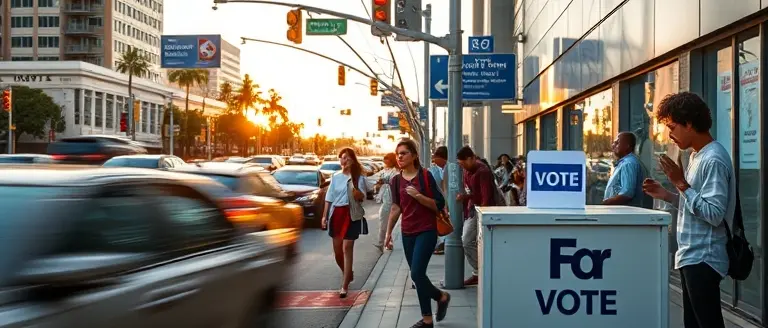
As the June 2 primary approaches, the candidacy of Spencer Pratt has become a litmus test for the intersection of celebrity culture and municipal governance. Current voter sentiment analysis across diverse Los Angeles districts reveals a stark divide. Younger, social-media-native demographics show high engagement with his unconventional, AI-generated campaign ads, viewing the “reality TV industrial complex” as a refreshing departure from traditional, scripted politics. Conversely, older, traditionally aligned voters remain skeptical, often questioning whether his rapid accumulation of $2.7 million in campaign funds reflects genuine grassroots movement or merely a high-budget digital performance designed to manufacture viral outrage.
The Mechanics of Influence
The central question for political analysts is whether Spencer Pratt is pivoting toward substantive policy or if his platform is intentionally obscured by the “rage-bait” nature of his online content. His campaign strategy focuses on:
- Digital Disruption: Utilizing hyper-targeted, AI-driven media to dominate the algorithmic feeds of undecided voters.
- Populist Rhetoric: Championing anti-establishment narratives that mirror the aggressive campaign tactics popularized during the 2016 election cycle.
- Engagement Metrics: Converting high-volume social media interactions, such as those seen on platforms like TikTok, into potential turnout figures for the primary.
Ultimately, the June 2 primary serves as the definitive event horizon for influencer-led politics in the United States. If his high-velocity digital spend translates into actual ballot-box results, it will force a re-evaluation of how political campaigns are financed and conducted. For now, the lack of depth regarding his municipal policy platforms suggests that while Spencer Pratt has successfully harnessed the mechanics of attention, the durability of this political model remains untested. The upcoming vote will reveal whether his campaign represents a transformative shift in voter mobilization or a fleeting trend fueled by entertainment-focused marketing.
Reclaiming Your Mental Clarity in a Chaos-Driven Cycle
Spencer Pratt’s campaign serves as a stark reminder that in the modern political era, attention is the most valuable currency. By weaponizing algorithmic engagement and AI-generated content, campaigns are now engineered to exhaust the mind, making it increasingly difficult for voters to process complex platforms amidst a sea of manufactured outrage. The real danger of this ‘mechanics of disruption’ approach is that it drains your ability to focus, leaving you reactive rather than reflective as the primary deadline approaches.
While Spencer Pratt’s campaign exploits the brain’s reaction to viral content, staying informed shouldn’t come at the cost of your own mental clarity. You need a dedicated defense mechanism to combat the constant cognitive fatigue induced by high-intensity digital media. This is where The Brain Song becomes essential; it acts as a strategic cognitive tool, designed to help you strip away the layers of political noise so you can regain your focus and process information with total autonomy.
By integrating this science-backed approach into your routine, you are not just watching the election unfold—you are protecting your most important asset: your attention. It is time to stop being a passive consumer of political theater and start viewing the upcoming primary with absolute clarity. Regain your focus and cut through the campaign noise—listen to The Brain Song here.
 Regain your focus and cut through the campaign noise—listen to The Brain Song here.Protect My Mental Clarity Now!