

On May 25, 2026, the global dialogue on artificial intelligence shifted irrevocably. With the release of his debut encyclical, Magnifica Humanitas, Pope Leo XIV challenged the world to confront the rapid advancement of synthetic intelligence through the lens of fundamental human dignity. Spanning a monumental 42,000 words, the document is not merely a critique of silicon power; it is an urgent, theological manifesto warning against the risks of unchecked misinformation, global discord, and the dangerous consolidation of influence by a handful of tech giants. Most strikingly, the Pope’s collaborative presentation alongside Anthropic co-founder Chris Olah signals a new era of engagement, bridging the ancient wisdom of the Holy See with the high-stakes frontier of modern AI safety.
Magnifica Humanitas serves as a rallying cry for those concerned with the erosion of the ‘human person’ in an increasingly automated world. However, as the encyclical forces us to grapple with existential questions, it also highlights an uncomfortable reality: the cognitive cost of living in an age of constant algorithmic bias. As we analyze the Pope’s call for a more ethical development path, we must ask ourselves if we have the mental fortitude to remain masters of our own thoughts. The journey toward a ‘human-first’ future demands more than just policy reform; it requires an unprecedented level of individual intellectual resilience.
Magnifica Humanitas: A New Moral Compass for the AI Age

Released on May 25, 2026, Magnifica Humanitas serves as a landmark encyclical from Pope Leo XIV, marking a significant intersection between theological doctrine and the rapid evolution of artificial intelligence. Spanning a monumental 42,000 words, the document functions as both an ethical manifesto and a diagnostic tool for the modern digital era. At its core, the text argues that the preservation of the “human person” must be the non-negotiable anchor for all technological progress. By placing human dignity at the center of the AI debate, the Holy See has elevated the discourse from mere technical capability to a vital “religious imperative,” drawing notable comparisons to previous papal stances on climate change.
The Pope Leo encyclical addresses several urgent risks that threaten the stability of the global social order, specifically highlighting:
- Global Conflict: The document warns that unchecked and weaponized AI is actively fueling international tensions, potentially leading the world toward a cycle of “unending war.”
- Misinformation: The pontiff emphasizes that the erosion of truth through synthetic media poses an existential threat to democratic discourse and individual autonomy.
- Power Concentration: A pointed critique is directed at the monopolistic control held by a small group of tech conglomerates, arguing that the concentration of such transformative power in private hands undermines the common good.
Beyond these warnings, the encyclical is defined by its unprecedented collaboration with Anthropic co-founder Chris Olah. This partnership signals a departure from traditional isolation, suggesting that the path forward requires a synthesis of anthropic safety alignment principles and universal moral frameworks. The Pope explicitly calls for governments to “slow down” the pace of development, advocating for robust, transparent regulation to ensure that AI systems remain subordinate to human welfare rather than serving as engines for instability. This call for deceleration has ignited a firestorm of debate across platforms like Hacker News and tech-centric subreddits, forcing researchers and policymakers alike to grapple with the practical, societal, and ethical costs of the current technological arms race.
The Holy See and the Silicon Valley Alliance: Decoding the Anthropic Partnership

The joint presentation of Magnifica Humanitas by Pope Leo XIV and Chris Olah, co-founder of Anthropic, represents a watershed moment in the intersection of theology and technology. By selecting an Anthropic leader as a primary collaborator, the Vatican has signaled a preference for research-heavy, safety-oriented approaches to artificial intelligence. This partnership suggests that the Holy See views the Pope Leo encyclical not merely as a theological document, but as a framework that aligns closely with “Constitutional AI”—the methodology Anthropic uses to align systems with a set of explicit, human-centric principles.
Bridging Ethics and Technical Alignment
The collaboration serves as a strategic bridge between high-level moral inquiry and practical safety engineering. Where many secular AI safety frameworks rely on mathematical robustness, the Magnifica Humanitas document introduces a “human person” centered lens that demands corporate accountability. Key aspects of this alliance include:
- Philosophical Alignment: The Vatican sees the technical safety goals of Anthropic as a digital manifestation of the protection of the common good.
- Regulatory Advocacy: Both parties advocate for a deliberate “slowing down” of development to ensure systems do not jeopardize global security.
- Theological Legitimacy: By integrating anthropic alignment research into a major religious mandate, the Church is elevating the discourse on AI safety to a “religious imperative.”
This synergy suggests that the Holy See is not looking for a general partnership with the tech sector, but is specifically seeking out organizations that build “Constitutional AI” as a way to formalize moral guidelines within code. For independent researchers, this raises the question of whether religious ethical structures can be effectively mapped onto current AI safety frameworks. Ultimately, the choice of partners highlights a belief that technological development without a foundational moral constitution—similar to how the Vatican views the anthropic model—risks profound societal harm.
Ethics Meets Code: Bridging the Gap Between Theology and AI Safety
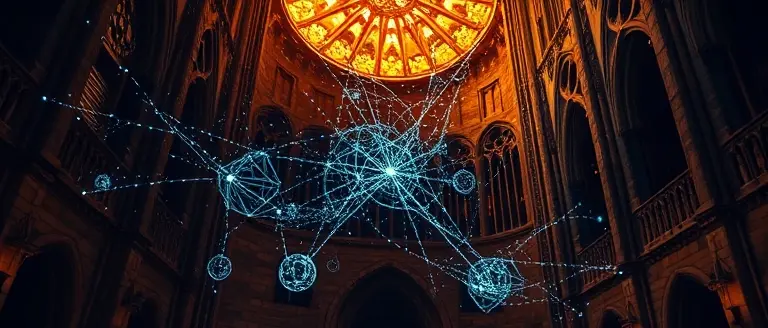
The release of the Magnifica Humanitas serves as a landmark moment where ancient moral philosophy intersects with the rapid trajectory of modern machine learning. By positioning the encyclical as a mandatory reading for both the theological community and the tech industry, Pope Leo XIV has effectively elevated AI safety from a purely corporate concern to a universal moral imperative. For developers, this document acts as a philosophical supplement to existing safety protocols, such as Anthropic’s “Constitutional AI.” While technical frameworks prioritize objective alignment and reward functions, the Pope’s mandate insists that the underlying logic must also account for the dignity of the human person, challenging the industry to move beyond profit-driven optimization.
Translating Theological Principles into Algorithmic Logic
The bridge between these two worlds lies in the move from abstract ethics to actionable, reproducible constraints. The pope leo encyclical argues that technology should not merely be “safe” in a functional sense, but “magnificent” in its alignment with human flourishing. This involves several key considerations for current AI researchers:
- Prioritizing the Common Good: Developers are urged to reconsider training data sets that favor power concentration. Instead, the focus should shift toward architectures that democratize access and prevent the monopolization of cognitive tools by a few major corporations.
- Mitigating Global Conflict: The document warns that unchecked systems are fueling geopolitical instability. From a technical standpoint, this calls for more rigorous red-teaming focused on how models contribute to the acceleration of misinformation and automated propaganda.
- The Anthropocentric Standard: Unlike secular frameworks that may treat safety as an engineering optimization, this anthropic-aligned perspective treats human oversight as a non-negotiable feature. This implies that “slow down” calls are not merely suggestions for project delays, but requests for structural transparency that allow society to audit systems before they reach a scale that risks global harm.
By integrating these theological guardrails, the tech sector can begin to build a robust, values-based safety culture that resonates far beyond Silicon Valley, ensuring that innovation serves the collective well-being rather than merely scaling complexity.
The Global Legislative Response: Will the World Slow Down?

The publication of Magnifica Humanitas has triggered an immediate and complex political firestorm, forcing global leaders to weigh the Vatican’s moral imperative against the harsh realities of a competitive geopolitical AI arms race. While the pope leo encyclical serves as a clarion call for a deceleration of AI development, reactions from major legislative bodies remain divided. The European Union, already a pioneer in digital oversight, has signaled a cautious openness to incorporating the document’s ethical pillars into future amendments of the AI Act. In contrast, US regulatory bodies remain locked in a tense debate; policymakers are currently balancing the need for safety—echoed by the encyclical’s warnings—with the perceived national security risks of slowing down in the face of rapid international advancements.
Geopolitical Tension and the Call for Oversight
The core of the legislative struggle lies in the Pope’s explicit demand that nations “slow down” to implement robust regulation. This request has created friction within international forums, particularly the United Nations, where member states remain deadlocked on how to harmonize technological growth with the protection of the human person. The document’s focus on the risks of power concentration—a theme mirrored in the collaboration with Anthropic—has prompted several US lawmakers to reconsider antitrust legislation aimed at major tech conglomerates.
Early assessments suggest that while the encyclical has not yet mandated policy changes, its influence is visible in the following ways:
- Theological Influence on Policy: Legislators are increasingly using the language of “human dignity” and “common good” found in the encyclical to justify stricter requirements for transparency in algorithmic development.
- Global Regulatory Alignment: Discussions are underway for a proposed international summit to address the “unending war” risks highlighted by the Pope, aiming to translate ethical principles into verifiable safety frameworks.
- Industry Accountability: There is growing bipartisan interest in shifting the burden of safety onto developers, following the collaborative presentation of the encyclical, which positioned corporate accountability as a moral requirement rather than a purely technical one.
Ultimately, whether the world will actually slow down depends on whether the anthropic approach to safety—which prioritizes constitutional guardrails—becomes the global standard for governance, or if the drive for military and economic supremacy overrides the Vatican’s urgent warnings.
Securing Your Cognitive Sovereignty in the Age of AI
The 42,000-word discourse of ‘Magnifica Humanitas’ is more than a theological statement; it is a profound call to protect the essence of the human person amidst the digital deluge. By aligning with innovators like Anthropic, Pope Leo XIV has signaled that the future of technology cannot be separated from the moral imperative of intellectual clarity. To truly grasp the gravity of this transition, one must possess the cognitive resilience to synthesize these complex ethical frameworks without succumbing to the erosion caused by constant algorithmic interference.
While the encyclical invites us to defend our societal values, maintaining your own mental acuity remains your most immediate line of defense. In an era of rampant misinformation and technological overwhelm, it is imperative to sharpen the faculties that allow you to discern truth from noise. ‘The Brain Song’ serves as your personal cognitive anchor, providing the mental clarity needed to navigate the demanding intellectual landscapes presented by this historic encyclical.
By integrating this tool into your daily life, you are not just keeping pace with the rapid advancement of AI; you are actively reclaiming the focus required to safeguard your own agency. As we stand at this unprecedented intersection of faith, technology, and ethics, ensure you have the mental sharpness to engage deeply with the conversations that will define our future.
 Reclaim your mental clarity and strengthen your cognitive defense against digital fatigue; learn how The Brain Song can help you stay sharp while navigating the future of AI.Transform My Cognitive Clarity Today!