

As the clay courts of Roland Garros ignite for the 2026 French Open, all eyes are fixed on the captivating ascent of Jiri Lehecka. Facing a stern opening-round test against veteran Pablo Carreno Busta, the young star enters this tournament carrying the weight of massive expectations and a reputation for brilliance that remains dangerously inconsistent. For tennis enthusiasts and analysts alike, Lehecka represents the ultimate ‘high-ceiling’ prospect, a player capable of dismantling the top seeds one day and struggling to find his rhythm against the tour’s steady baseline grinders the next.
But what truly separates a grand slam champion from a talented contender? It is rarely a lack of skill; rather, it is the invisible, relentless struggle for mental consistency—a ‘floor’ performance that holds firm even when the adrenaline spikes and the pressure mounts. As Lehecka steps into the spotlight to face a battle-hardened veteran, we must look beyond the service stats and spin rates. The real story of his career resides in the complex, often fragile architecture of his cognitive focus during the high-stakes moments that define a legacy.
Jiri Lehecka at the 2026 French Open: The Road to Roland Garros

The 2026 French Open marks a pivotal moment for Jiri Lehecka, who enters the tournament as a formidable presence in the ATP Top 12. His campaign begins with a high-stakes Round of 128 clash against Spanish veteran Pablo Carreno Busta, a matchup that perfectly encapsulates the current generational transition in men’s professional tennis. As the clay courts of Roland Garros demand both physical endurance and tactical patience, Lehecka’s ability to navigate this opening encounter serves as an immediate litmus test for his trajectory this season. While his explosive baseline game is widely recognized, the buzz surrounding his Paris appearance centers on whether he can maintain the composure required to dismantle a seasoned defensive specialist like Carreno Busta.
Stakes and Tactical Expectations
The pre-match narrative surrounding Lehecka highlights his “high ceiling, low floor” reputation, a point of significant discussion across sports media and betting circles. Analysts observe that while his raw power often overwhelms opponents, his performance consistency remains the primary hurdle for deep-run success in Grand Slams. For this opening match, several key factors are under scrutiny:
- Generational Contrast: The clash between the aggressive, high-risk style of Jiri Lehecka and the methodical, grit-based veteran approach of Carreno Busta is expected to dictate the tempo of the match.
- Mental Fortitude: Fans are eager to see if the young star can withstand the pressure of a major stage, especially during long rallies on the slow red clay.
- Ranking Progression: Having solidified his spot in the upper echelons of the ATP Tour, Lehecka faces the challenge of playing under the weight of higher expectations compared to his previous tournament entries.
Evidence suggests that if Lehecka can minimize unforced errors and lean into his serve-plus-one dominance, he is well-positioned to advance. However, the international tennis community remains divided on whether his tactical discipline will hold against a player who rarely gives away free points. This match is more than just a bracket filler; it is an essential indicator of whether Lehecka has truly evolved into a perennial contender.
Tactical Breakdown: Deconstructing Lehecka’s Playing Style

Jiri Lehecka has established himself as one of the most explosive ball-strikers on the ATP Tour. His game is anchored by a high-octane offensive baseline profile, characterized by aggressive, flat groundstrokes that leave opponents with minimal reaction time. Central to his tactical success is his forehand, which he uses to dictate play, flattening out the ball to push competitors deep behind the baseline. His serve mechanics complement this aggressive intent; he consistently targets high-percentage spots, allowing him to transition quickly into a “plus-one” forehand strike. This aggressive positioning is exactly what earned him his current trajectory toward the Top 12, as he forces errors through pure pace and depth.
Adapting to the French Open Clay
While his power thrives on hard courts, the 2026 French Open demands a distinct evolution in technique. On the slower, high-bounce clay surface at Roland Garros, Lehecka must balance his natural inclination for pace with the necessity of patience:
- Height and Spin Management: Evidence suggests that Lehecka is increasingly incorporating more topspin on his groundstrokes to ensure the ball clears the net with a safer margin, preventing the clay’s friction from deadening his speed.
- Defensive Movement: Against seasoned veterans like Pablo Carreno Busta, Lehecka’s ability to slide and recover is paramount. His defensive mechanics have improved, allowing him to transition from retrieval to counter-punching more effectively.
- Shot Selection: Rather than aiming for immediate winners, Lehecka utilizes his heavy groundstrokes to construct points, opening up the court before hitting his signature inside-out forehand.
Ultimately, Lehecka’s performance in this tournament hinges on his “floor”—his ability to maintain these technical adjustments during lengthy baseline rallies. While his ceiling is undeniably elite, his capacity to withstand the strategic nuances of clay-court tennis will dictate his longevity in the 2026 French Open draw.
The Mental Fortitude Factor: Inside the Mind of a Rising Star

As Jiri Lehecka solidifies his position within the ATP Top 12, the tennis world has shifted its focus from his undeniable technical power to the psychological resilience required to sustain success at the Grand Slam level. The “high ceiling, low floor” narrative that often follows the Czech star is fundamentally rooted in his ability—or occasional struggle—to navigate high-pressure momentum shifts. At a major tournament like the 2026 French Open, where veteran savvy often dictates the flow of play, Lehecka’s mental fortitude becomes the primary filter separating a top-50 breakout talent from a legitimate Grand Slam contender.
Bridging the Gap: Consistency and Composure
Analysts frequently point to Lehecka’s explosive groundstrokes as his greatest weapon, yet his capacity to manage internal expectations during pivotal games remains the true litmus test of his professional evolution. Developing the grit to grind out wins on slower surfaces against tactical masters like Pablo Carreno Busta requires a refined cognitive approach to match management. To evolve into a perennial contender, Lehecka’s focus on the court must transition from purely physical dominance to strategic patience. Experts suggest that his long-term trajectory depends on several psychological milestones:
- Emotional Regulation: Maintaining composure during “dip” periods in a match to prevent unforced errors from cascading into lost sets.
- Tactical Flexibility: Trusting his defensive game plan when his primary offensive shots are not landing, rather than forcing high-risk winners.
- Pressure Management: Effectively handling the heightened scrutiny and betting market expectations that follow his ascent into the world’s elite rankings.
While physical conditioning is well-documented, his psychological growth is the unseen metric that will define his future. If Lehecka can successfully stabilize his performance floor, his path toward major titles becomes significantly more feasible, marking the transition from a dangerous opponent to a consistent champion.
Lehecka’s Career Trajectory: Beyond the Stats
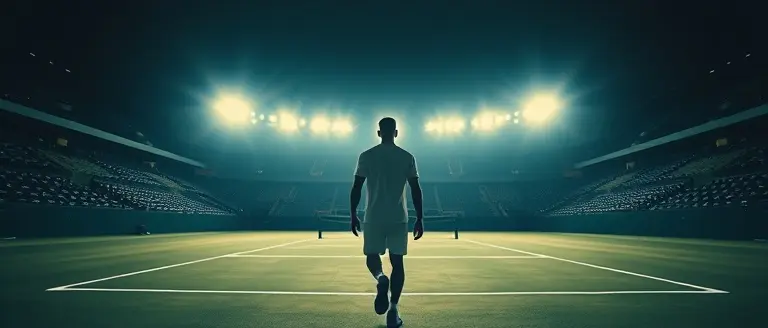
While raw win-loss records capture the surface of Jiri Lehecka’s rise, a deeper analysis reveals a player currently navigating the most critical phase of professional development: the transition from an explosive challenger to a consistent ATP elite contender. By entering the top 12, Lehecka has bypassed the typical mid-career plateau experienced by many emerging stars. His trajectory mirrors that of historical high-ceiling prospects who relied on aggressive baseline dominance early in their careers before maturing into tactical strategists. Unlike players who peak physically early, Lehecka’s evolution is defined by a deliberate refinement of his mental fortitude and shot selection under high-pressure scenarios.
Strategic Evolution and Physical Conditioning
The US tennis market has taken a keen interest in Lehecka, largely due to his ability to dictate play against established veterans. His current development focuses on two specific pillars:
- Strategic Variation: Shifting away from “first-strike” tennis to implement more patient point construction, which is essential for surviving grueling clay-court tournaments like the French Open.
- Physical Resilience: Integrating advanced recovery protocols to maintain high-velocity groundstrokes during deep tournament runs, addressing past concerns regarding late-match fatigue.
- Psychological Maturity: Reducing the variance in his “floor” performance by neutralizing unforced errors during defensive transitions.
By comparing his progress to current benchmarks, analysts suggest Lehecka is ahead of the curve in terms of match-play awareness. While his “high ceiling” talent has never been in doubt, his long-term success depends on his ability to stabilize his performance levels. As he faces seasoned competitors like Pablo Carreno Busta, the objective for Lehecka is not just to win through raw power, but to outmaneuver the game’s best through sustained tactical discipline. This shift marks the definitive move from being a dangerous outsider to a consistent threat in every Grand Slam draw.
Mastering the Mind Behind the Game
Jiri Lehecka’s journey at Roland Garros serves as a poignant reminder that elite tennis is won as much in the mind as it is on the court. While his raw talent and groundstrokes are undeniable, the gap between his high-ceiling potential and his current floor performance rests entirely on his ability to sustain cognitive clarity under extreme pressure. Understanding this internal struggle is not just for tennis analysts; it is a lesson in the architecture of human performance itself.
Just as elite players like Lehecka rely on tactical visualization to maintain their mental edge, you can apply similar neuroscience principles to clear your own mental fog and sharpen your focus. True consistency—the ability to perform at your peak regardless of the stakes—is a skill that can be trained, not just a trait you are born with. By bridging the gap between raw potential and sustained execution, you can finally transcend the plateaus that hold you back from your own personal victories.
Our neuroscience-backed performance tool is designed specifically to help you achieve the same state of flow and mental consistency that separates the professionals from the rest of the pack. By integrating a refined, daily cognitive routine, you can eliminate mental fatigue and command your focus like never before. Don’t leave your performance to chance; bridge the gap between where you are and your absolute peak today.
 Achieve your own peak performance; try The Brain Song’s 12-minute daily routine to sharpen your focus and eliminate mental fatigue.Yes, I Want This Now!