
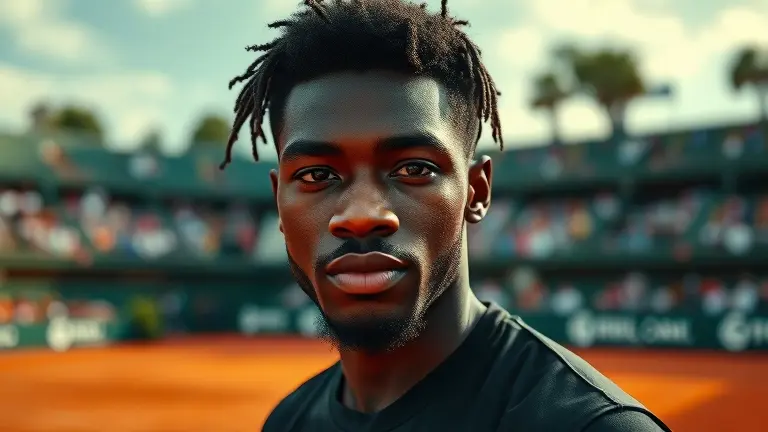
As the clay dust settles at Roland Garros for the 2026 French Open, all eyes are fixed on Frances Tiafoe. Entering his high-stakes opening match against Eliot Spizzirri, Tiafoe carries the weight of a nation desperate for a breakthrough in the long-standing American men’s Grand Slam drought. Yet, the narrative surrounding the tennis star extends far beyond his tactical adjustments on the red clay. While fans analyze his recent performance slump, the media spotlight has also intensely focused on the resilience of his personal life, particularly the courageous stance taken by his partner, Ayan Broomfield, against systemic inequities at tournament venues.
This unique intersection of professional pressure and deeply personal advocacy highlights the reality behind the world’s elite athletes: success is never a solo endeavor. As Tiafoe battles to redefine his trajectory on the court, the public conversation has shifted toward the hidden dynamics that sustain high-performance partnerships. Amidst the chaos of the tour, understanding the psychological underpinnings of committed, supportive relationships has become just as compelling as the match score itself.
Frances Tiafoe at Roland Garros 2026: The Path Ahead and Recent Controversies
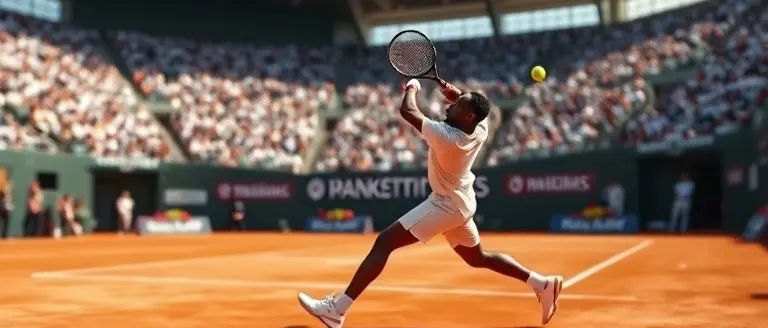
As the 2026 French Open gets underway, all eyes are on Frances Tiafoe as he navigates a challenging opening round against Eliot Spizzirri. For Tiafoe, this match at Roland Garros represents more than just a quest for a title; it serves as a critical test of his current form. After a series of inconsistent performances on the clay-court circuit this season, analysts are closely monitoring his tactical adjustments. While his athleticism is unquestioned, the transition to clay often highlights the technical deficiencies that have plagued his recent tour appearances. The pressure is compounded by the persistent narrative surrounding the American men’s Grand Slam drought, with fans and pundits increasingly questioning whether the current generation of stars, including Tiafoe, can finally break through the European dominance that has defined the sport for decades.
A Multidimensional Challenge
Beyond the baseline, Tiafoe’s entry into this year’s tournament has been complicated by significant off-court discourse. His girlfriend, Ayan Broomfield, has recently utilized her platform to highlight systemic issues and discriminatory behavior faced by the partners of professional players at various tour venues. Her outspoken advocacy has sparked a broader conversation about inclusion, safety, and the culture of professional tennis, drawing attention far beyond the match results. This emotional backdrop, combined with the professional scrutiny regarding his recent form, creates a high-stakes environment for the Maryland native.
Key factors influencing the conversation around Tiafoe at Roland Garros 2026 include:
- Tactical Execution: Whether he can stabilize his serve and backhand under the grueling conditions of a clay-court Grand Slam.
- The “Drought” Narrative: The internal and external pressure to end the long-standing absence of an American male Grand Slam champion.
- Advocacy and Awareness: The impact of Ayan Broomfield’s revelations regarding the treatment of player support systems, which has dominated social media discourse heading into the first round.
Whether Tiafoe can compartmentalize these distractions to overcome Spizzirri will be the defining narrative of his early tournament journey.
Form Check: Analyzing Tiafoe’s Struggle and Clay Court Potential
Entering the 2026 French Open, Frances Tiafoe finds himself at a critical career crossroads. Following a series of inconsistent results throughout the early spring, his form on clay courts has become a subject of intense scrutiny among analysts. While Tiafoe is renowned for his explosive athleticism and ability to thrive under the bright lights of Grand Slam competition, his recent performance slump—characterized by early exits in several lead-up tournaments—has sparked concerns regarding his tactical readiness for the grueling conditions at Roland Garros. Evidence suggests that his heavy-topspin baseline game has struggled to find rhythm on the European dirt, forcing him into a defensive posture that often neutralizes his natural offensive firepower.
Assessing the Tactical Hurdle
To regain his competitive edge, Tiafoe must adapt his match strategy to handle the slower, high-bouncing nature of the clay. His current “underdog” status, while unexpected for a player of his caliber, may serve as a psychological catalyst. History shows that Tiafoe excels when the pressure is shifted away from him, allowing him to play with more fluidity and less restraint. Key performance indicators to monitor as he faces Eliot Spizzirri include:
- First-serve percentage: Maintaining consistency to dictate points early.
- Aggressive court positioning: Reducing unforced errors by shortening points despite the surface’s tendency to extend them.
- Mental resilience: Overcoming the pressure of the ongoing “US Men’s Tennis Drought” narrative.
Whether he can pivot from his recent struggles to a deep run at the 2026 French Open remains the primary question for fans. While current form indicators are worrying, Tiafoe’s historical ability to elevate his level in high-pressure environments provides a sliver of optimism. If he can leverage his powerful forehand to dictate play rather than waiting for mistakes, he remains a dangerous contender capable of upsetting the tournament’s hierarchy.
Beyond the Baseline: Ayan Broomfield and the Call for Change in Tennis Culture
As Frances Tiafoe prepares for his high-stakes opening match at the 2026 French Open, the conversation surrounding him has extended well beyond his current form on the clay courts. A significant portion of the discourse in the lead-up to Roland Garros involves the experiences of his girlfriend, Ayan Broomfield, who has been vocal regarding the systemic issues of racism and the poor treatment of players’ partners within the professional tennis circuit. Broomfield’s public testimony has shed light on an often-overlooked reality: the hostile environments that athletes and their support systems frequently navigate behind the scenes at major international tournaments.
Addressing Systemic Challenges in Tennis
The accounts shared by Broomfield have resonated throughout the sports community, sparking a broader debate about equity and inclusion in a sport traditionally viewed as elitist. These concerns touch upon several critical areas of the professional landscape:
- Hostile Environments: Reports suggest that partners of players, particularly those of color, have faced discriminatory remarks and exclusionary policies at various tournament venues.
- Lack of Institutional Support: Critics argue that tournament organizers have historically failed to provide adequate security or professional respect for the families and support teams surrounding top-tier athletes.
- Cultural Shifts: The courage shown by advocates like Broomfield is pushing the ATP and WTA to confront these uncomfortable truths, demanding that player welfare extends to their immediate support systems.
By bringing these experiences to the forefront, Broomfield is forcing the tennis establishment to address whether their commitment to diversity is merely performative or deeply rooted in policy. For a player like Frances Tiafoe, who often serves as an ambassador for the growth of tennis in underserved communities, these social narratives are intrinsically linked to his professional journey. As fans look toward his performance in Paris, the discussion serves as a sobering reminder that the health of the sport is measured not just by set scores and Grand Slam trophies, but by the safety and dignity of everyone involved in the tour.
The Weight of Expectation: Can Tiafoe End the American Grand Slam Drought?
The narrative surrounding Frances Tiafoe and the broader state of American men’s tennis remains one of the most scrutinized storylines in the sport. As the calendar shifts to the 2026 French Open, the conversation inevitably gravitates toward the multi-decade American Grand Slam drought. While fans and analysts alike search for a successor to the legacy of Andy Roddick—the last American man to win a major title in 2003—Tiafoe often finds himself at the epicenter of this high-pressure discourse. For Tiafoe, the challenge is twofold: he must navigate the technical demands of the clay court while managing the psychological burden of being a standard-bearer for a nation starved of a major trophy.
Breaking the Mental Barrier
The mental toll of carrying these expectations is palpable. Recent commentary from Tiafoe highlights a growing frustration regarding the constant reminders of the drought, which can shift focus away from tactical development. To secure a breakthrough at Roland Garros, Tiafoe must reconcile his aggressive playing style with the patience required for clay. Key factors influencing his potential performance include:
- Tactical Adaptation: Improving his baseline consistency and movement on slower surfaces remains critical for deep tournament runs.
- Mental Fortitude: Moving past the “drought” narrative to treat each match as an individual contest rather than a referendum on his career.
- Physical Conditioning: Sustaining intensity over best-of-five matches, a necessity if he hopes to overcome top-tier clay-court specialists.
Statistically, the current generation of American players, including Tiafoe, faces a crowded field where top-seeded international players maintain a high standard of consistency. While critics point to his recent form as a concern, his ability to feed off crowd energy provides a unique X-factor in Grand Slam environments. Whether he can convert this potential into sustained excellence at the 2026 French Open remains the defining question for his season.
Mastering the Dynamics of Unwavering Support
Whether Frances Tiafoe clinches a historic victory at Roland Garros or continues to navigate his current professional transition, the spotlight on his partnership with Ayan Broomfield serves as a poignant reminder of the importance of emotional stability. True elite-level performance—in sports or in life—often relies on the invisible strength provided by a secure and devoted connection. It is the silent, psychological foundation that allows individuals to face high-pressure environments with courage and focus.
Just as these high-stakes professional environments require a robust support system, many fans have been captivated by the deep bond shared by players like Tiafoe and their partners, sparking questions about the psychology behind such lasting connections. If you have ever wondered what drives a partner to remain deeply devoted, it is often tied to the ‘Hero Instinct’—a biological, subconscious driver that, when properly understood, can transform a relationship into an unbreakable partnership of mutual growth and profound emotional depth.
By applying these psychological tools, you can cultivate a dynamic defined by professional-grade support and unwavering commitment. This isn’t just about understanding your partner; it is about mastering the subconscious triggers that lead to a truly devoted and emotionally stable connection, effectively bridging the gap between fleeting attraction and a lifelong, high-impact union.
 Discover how to trigger the ‘Hero Instinct’ and build a relationship characterized by unwavering devotion and professional-grade support.Transform My Relationship Today