
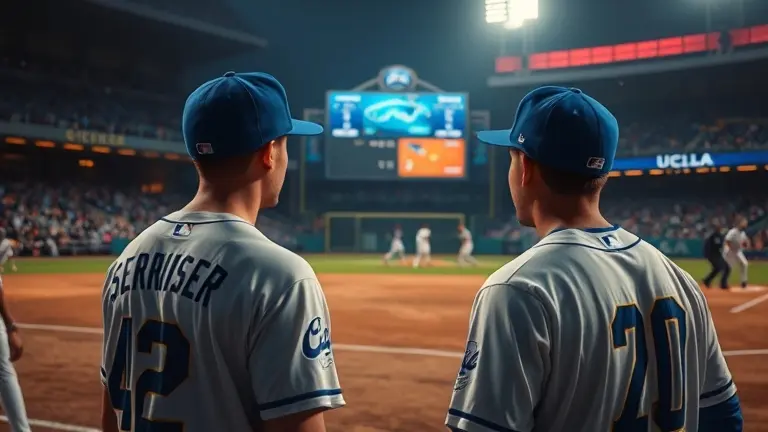
On May 24, 2026, the college baseball world watched in stunned silence and frenzied excitement as an 11-inning championship thriller concluded in Omaha. The high-stakes clash between the No. 1 seed UCLA and No. 3 seed Oregon pushed both programs to their absolute limits, culminating in a controversial walk-off hit-by-pitch that cemented UCLA’s dominance in the Big Ten. This wasn’t just a trophy game; it was a defining moment that sent shockwaves through the NCAA tournament selection committee, forcing a re-evaluation of regional power dynamics.
UCLA baseball now finds itself at the center of a national debate regarding officiating integrity and championship fairness, while Oregon’s resilience throughout the tournament—despite this agonizing defeat—has earned them the status of a dangerous NCAA regional host. As we pivot toward the national tournament, the strategic fallout from this marathon match remains the most critical narrative for fans and analysts alike. Understanding the nuances of this game is the key to predicting which teams have the mental toughness to survive the road to Omaha.
UCLA’s Hard-Fought Path to the 2026 Big Ten Title
The 2026 Big Ten Baseball Tournament reached a crescendo on May 24, 2026, in Omaha, Nebraska, serving as the defining moment of the season. In a high-stakes showdown, No. 1 seed UCLA baseball faced off against a gritty No. 3 seed Oregon baseball squad. What transpired was an grueling 11-inning marathon that pushed both programs to their physical and mental limits, ultimately ending in a 3-2 victory for the Bruins. The game’s conclusion, however, was marked by significant drama, as the winning run was forced home via a controversial walk-off hit-by-pitch (HBP).
Analyzing the Championship Drama
The UCLA vs Oregon 2026 Big Ten Championship controversy has since dominated post-game discussions among analysts and fans alike. With the score deadlocked in the bottom of the 11th, the officiating decision to award the winning base sparked immediate debate regarding the mechanics of the play. While the Bruins celebrated a hard-earned title, the nature of the walk-off HBP remains a polarizing topic in collegiate sports discourse. Key aspects of the contest included:
- Elite Pitching Duels: Both programs displayed incredible depth, effectively neutralizing high-powered offenses through ten innings of high-leverage baseball.
- Tactical Fatigue: As the game stretched into extra innings, coaching decisions regarding bullpen management became the deciding factor in the 11-inning battle.
- Officiating Scrutiny: The final HBP call has prompted deep dives into strike zone consistency and situational umpiring during high-pressure tournament moments.
This game solidified UCLA’s dominance in the conference, yet it simultaneously highlighted the resilience of the Ducks. Despite the heartbreaking loss, the tournament served as a testament to the high caliber of play in the Big Ten, ensuring that both programs remain central figures as the focus shifts toward the upcoming NCAA Tournament.
Analyzing the Walk-Off HBP Controversy

The 2026 Big Ten Championship between UCLA baseball and Oregon baseball will long be remembered for its anticlimactic and polarizing conclusion. After an 11-inning marathon in Omaha, the game ended not with a swing of the bat, but with a controversial walk-off hit-by-pitch (HBP). As the Bruins secured a 3-2 victory, fans and analysts immediately questioned the officiating, sparking a heated debate regarding the batter’s movement and the umpire’s interpretation of the “avoidance” rule. Under NCAA guidelines, a batter is required to make an honest effort to avoid being hit; if they lean into the pitch or fail to move, the umpire maintains the discretion to call a ball rather than awarding first base.
Dissecting the Rulebook and Officiating
The UCLA vs Oregon 2026 Big Ten Championship controversy highlights the subjective nature of home-plate officiating during high-leverage moments. Critics of the call argue that the batter failed to exhibit sufficient effort to dodge the inside offering, effectively “buying” the tournament title. Proponents of the ruling suggest that the pitch was sufficiently erratic to warrant a base-runner, emphasizing that the hitter’s instinctual reaction to a high-velocity ball should be interpreted with grace. Key takeaways from the incident include:
- Subjectivity in Judgment: Officiating crews must make split-second decisions on intent, which remains one of the most inconsistent aspects of college baseball rules.
- The Weight of the Moment: In an 11-inning contest, the pressure to end the game can lead to officiating scrutiny that might otherwise go unnoticed in the early innings.
- Strategic Implications: This walk-off HBP impact fundamentally changed the post-game narrative, shifting focus from a hard-fought pitching duel to a debate on technicalities.
While the Bruins celebrate their title, the technicality of the win does not diminish the tactical prowess displayed by both programs. However, the controversy serves as a stark reminder of how thin the margin is between championship glory and heartbreaking defeat in the NCAA tournament landscape. Despite the loss, the resilience of the Ducks remains a major talking point as they pivot toward their role as an NCAA baseball regional host, proving that a single disputed call cannot define an entire season of excellence.
Oregon’s Resilience: A Journey to Regional Hosting

While the narrative of the 2026 Big Ten Championship will long be defined by the controversial walk-off hit-by-pitch against UCLA baseball, the story of Oregon baseball is one of undeniable grit and postseason-caliber excellence. Entering the tournament as the No. 3 seed, the Ducks faced an uphill battle that demanded back-to-back victories against elite competition just to secure a spot in the final. This arduous path demonstrated a level of tactical discipline and pitching depth that has become the hallmark of the program’s identity under pressure. Even as the final outcome fell in favor of the Bruins after 11 grueling innings, the committee’s subsequent decision to award Oregon a coveted NCAA baseball regional host spot serves as an objective validation of their overall tournament body of work.
Proving Ground: The Path to Omaha
The Ducks’ ability to remain competitive throughout the 2026 postseason is a testament to their roster’s psychological toughness. Key factors that bolstered their hosting resume included:
- Tournament Depth: Sustaining momentum through the losers’ bracket required a high-leverage bullpen performance that kept Oregon in contention despite exhausted resources.
- Resilience Under Pressure: Even when faced with the high-stakes officiating disputes in the championship game, the squad maintained composure, ensuring they remained in striking distance of UCLA until the final frame.
- RPI and Strength of Schedule: Their performance against top-tier conference opponents provided the necessary statistical leverage for the NCAA selection committee to recognize them as a host-worthy site.
By securing hosting rights, Oregon has shifted the narrative from a single heartbreak in Omaha to a broader success story. While the UCLA vs Oregon 2026 Big Ten Championship controversy will continue to be a talking point among fans and analysts, the Ducks have successfully parlayed their tournament performance into a tangible home-field advantage. This resilience not only validates their season-long efforts but also positions them as a formidable threat as they prepare to defend their turf in the opening rounds of the NCAA Tournament.
Implications for NCAA Baseball Regional Seeding

The outcome of the 2026 Big Ten Championship has fundamentally altered the landscape of the upcoming NCAA Tournament, particularly regarding NCAA baseball regional host implications. While UCLA baseball entered the tournament as a clear favorite, their hard-fought 3-2 victory in 11 innings against Oregon—secured by a controversial walk-off hit-by-pitch (HBP)—has forced the selection committee to re-evaluate the strength of the Big Ten conference. By capturing the title in Omaha, the Bruins have essentially locked in a top-eight national seed, providing them with the critical advantage of hosting both a regional and a potential super regional.
Conversely, the narrative surrounding Oregon baseball remains one of remarkable resilience. Despite the heartbreak of the 11-inning defeat, the Ducks displayed enough high-level play throughout the tournament to convince the committee of their merit. The fact that Oregon was officially announced as an NCAA regional host immediately following the tournament underscores that the committee valued their cumulative body of work over the final score of a single game. This dual recognition of the champion and the runner-up highlights several key takeaways for the post-season bracket:
Tournament Selection Factors
- Resilience as a Metric: The committee rewarded Oregon’s ability to navigate the losers’ bracket and reach the final, proving that the UCLA vs Oregon 2026 Big Ten Championship controversy did not overshadow their consistency.
- The Impact of the Walk-off HBP: While the officiating of the final play drew scrutiny, the intensity of the 11-inning marathon served as a litmus test for both teams’ pitching depth, a critical factor for the NCAA selection committee.
- Conference Standing: UCLA’s performance bolsters the Big Ten’s reputation as a power conference, directly influencing how other bubble teams from the region are perceived in the final rankings.
Ultimately, both programs enter the national stage with momentum. UCLA carries the confidence of a title winner, while Oregon possesses the “host” designation, signaling that the committee is looking for programs that can sustain peak performance under the immense pressure of the postseason.
Mastering the Bracket with Sharp Strategic Insight
The 2026 Big Ten Championship serves as a reminder that in college baseball, the difference between glory and heartbreak often comes down to the smallest of margins. Whether it was the tension of the 11-inning marathon or the controversial walk-off HBP that finalized UCLA’s win, these moments highlight why the road to Omaha requires more than just physical talent; it demands unwavering mental fortitude from both players and the fans who obsessively track their progress.
Just as UCLA and Oregon had to maintain absolute cognitive discipline through that grueling, high-stakes game, the modern sports analyst must possess peak mental clarity to navigate the complex web of NCAA regional seeding and tournament implications. When you are dissecting advanced metrics or predicting bracket outcomes, your ability to process information rapidly is your greatest competitive advantage.
This is where The Brain Song becomes an essential tool for the serious fan. By sharpening your focus and enhancing your cognitive acuity, it allows you to analyze these dense statistical trends and high-stakes tournament scenarios with the precision of a professional scout. It is time to stop watching the game from the surface and start mastering the complexities that lie beneath the stats.
 Unlock your analytical potential and sharpen your focus for the remainder of the NCAA Tournament with The Brain Song.Yes, I Want This Now!