
The high-octane drama at Mercedes has reached a boiling point as the 2026 Formula 1 season shifts beneath our feet. What began as a traditional veteran-rookie dynamic has mutated into a fierce, psychological warfare between George Russell and the sensation Andrea Kimi Antonelli. Following the Canadian Grand Prix, where a mechanical failure robbed Russell of a hard-earned lead and handed Antonelli his fourth consecutive victory, the team hierarchy is in total disarray. As the rookie-turned-contender cements his command over the Formula 1 standings, the internal tension has spilled over into public disputes regarding ‘rules of engagement’ and on-track aggression.
This rivalry represents more than just a battle for points; it is a clinical study in pressure, focus, and the brutal transition of power. With Antonelli’s F1 dominance forcing a tactical rethink, the spotlight is now fixed on how George Russell handles the mental toll of a crumbling championship bid. In the cutthroat world of elite racing, the difference between standing on the top step of the podium and being forced into retirement is often measured in milliseconds of cognitive clarity, making this more than a mechanical struggle—it is a war of the mind.
The Canadian GP Turning Point: A Mercedes Implosion
The 2026 Canadian Grand Prix will be remembered as the definitive moment the internal hierarchy at Mercedes underwent a tectonic shift. George Russell, who had masterfully secured pole position, appeared destined for a dominant victory until a catastrophic power unit failure forced his retirement from the lead. This mechanical heartbreak handed the win to his teammate, Andrea Kimi Antonelli, marking the rookie’s fourth consecutive victory and cementing his position at the summit of the current Formula 1 standings. The contrast between Russell’s misfortune and Antonelli’s opportunistic precision has sent shockwaves through the paddock, effectively turning the team’s internal dynamic from a collaborative effort into a fierce, “gloves off” rivalry.
Rising Tensions and Championship Implications
The atmosphere surrounding the team has become increasingly volatile, particularly following aggressive on-track encounters during the Canadian sprint race. These incidents forced high-tension discussions regarding “rules of engagement,” as the friction between the veteran and the rising star has reached a boiling point. The current state of the 2026 Driver’s Championship highlights the gravity of the situation:
- Antonelli’s Dominance: With four straight wins, Antonelli f1 form has shifted from rookie sensation to legitimate title favorite.
- Russell’s Defiance: Despite trailing, George Russell remains a critical technical benchmark for the team, though he has openly admitted the title may now be Antonelli’s “to lose.”
- Strategic Fallout: Mercedes management now faces a difficult dilemma regarding whether to maintain neutral status or prioritize the championship leader.
As the season progresses, the scrutiny on F1 results will intensify. The Canadian GP was not merely a race; it was the catalyst for an intra-team battle that has moved beyond simple competition. With the championship gap widening, the psychological pressure on Russell to recover while simultaneously navigating the relentless pace of his rookie teammate will be the defining narrative of the coming months.
The Rise of Antonelli: Challenging the Mercedes Hierarchy
The 2026 Formula 1 season has witnessed a seismic shift within the Mercedes garage as Andrea Kimi Antonelli defies every convention of a rookie campaign. While George Russell entered the year as the clear team leader, the narrative has shifted rapidly following Antonelli’s unprecedented string of four consecutive race victories. This dominance has not only catapulted the youngster to the top of the Formula 1 standings but has also dismantled the traditional hierarchy, forcing a high-tension rethink of internal team strategy.
The Clash of Styles: Experience vs. Raw Speed
The internal dynamic is defined by the stark contrast between George Russell’s technical precision and the aggressive, risk-taking profile of Antonelli. While Russell has demonstrated superior qualifying pace, often securing pole position, his recent misfortune—most notably the mechanical failure while leading the Canadian Grand Prix—has left him vulnerable to his teammate’s momentum. Evidence suggests that the friction is no longer just competitive; it has become tactical, with both drivers struggling to reconcile their “rules of engagement” following several high-profile on-track clashes.
The current power struggle is characterized by several key factors impacting the team’s performance:
- Championship Trajectory: With four straight wins, Antonelli F1 momentum appears unstoppable, leading even Russell to concede that the title is now the rookie’s to lose.
- Psychological Pressure: The “gloves off” nature of their rivalry has forced Mercedes management into delicate mediations to prevent further collisions.
- Technical Reliability: Persistent power unit issues have disproportionately affected Russell, amplifying the frustration of a driver seeing his championship aspirations slip away.
As the season progresses, the question remains whether Mercedes will formalize a “number one” driver status to protect their title defense. The transformation of Antonelli from a developmental project into a legitimate championship contender has arguably created the most volatile and compelling teammate rivalry in the modern era of the sport.
Veteran Defiance vs. The New Guard: Russell’s Psychological Test
The 2026 Formula 1 season has become a crucible for George Russell, who finds his standing within Mercedes increasingly scrutinized as Andrea Kimi Antonelli continues his meteoric rise. With antonelli f1 performances netting four consecutive victories, the psychological pressure on the veteran is palpable. Russell, once the designated leader of the Silver Arrows, is now battling the perception that the team’s hierarchy is shifting toward the rookie. His recent string of misfortune, highlighted by a crushing power unit failure while leading the Canadian Grand Prix, has only intensified the narrative that the tide is turning. This “passing of the torch” dynamic is not merely statistical; it is a profound test of temperament for a driver who is now publicly acknowledging that the title race is Antonelli’s to lose.
Asserting Control Amidst the Chaos
To reclaim his footing, Russell has aggressively pushed for updated “rules of engagement” to govern his intra-team battles with the younger Italian. This move represents a classic case of veteran defiance, as Russell seeks to impose structure on an environment where he is being consistently outperformed. The friction peaked following the Canadian sprint race, where the two drivers engaged in high-tension wheel-to-wheel combat that left little margin for error.
Key aspects of this escalating internal conflict include:
- The Rules of Engagement: Russell is actively lobbying for clearer internal boundaries to prevent the high-stakes collisions that threaten Mercedes’ formula 1 standings.
- On-Track Authority: Every aggressive move and defensive maneuver by Russell is an attempt to signal to the pit wall that he remains a championship-capable asset rather than a mentor for the newcomer.
- The Reliability Gap: While technical failures like his Canadian retirement are beyond his control, they compound the psychological weight, forcing Russell to drive with an “all or nothing” intensity that often invites more risk.
As the season progresses, the question remains whether Russell’s attempts to assert authority will stabilize his position or merely highlight the inevitability of the changing guard at Mercedes. For now, the “gloves off” approach has left the team at a crossroads, forced to balance the established experience of their veteran against the undeniable, unstoppable momentum of Antonelli.
Rules of Engagement: Managing the Mercedes Rivalry
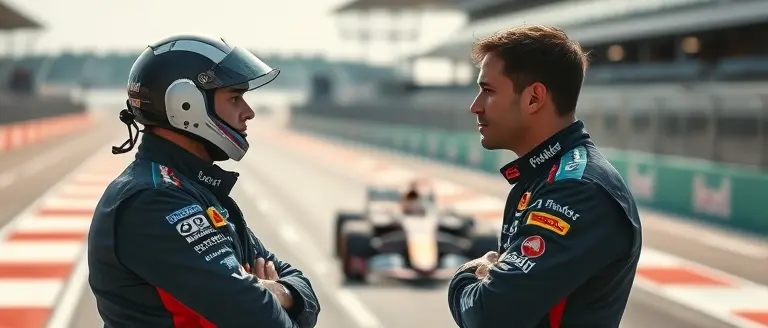
The internal friction between George Russell and rookie sensation Andrea Kimi Antonelli has reached a boiling point, forcing Mercedes leadership to re-evaluate their internal protocols. Following the high-tension clashes during the Canadian Grand Prix weekend, the “gloves off” mentality displayed by both drivers has jeopardized the team’s standing in the Formula 1 standings. With Antonelli currently riding a wave of four consecutive victories, the power dynamic within the garage has shifted, turning a standard teammate pairing into a volatile championship battle. To stabilize the team’s pursuit of the title, Mercedes must now enforce strict “rules of engagement” to ensure that on-track aggression does not result in further points-losing incidents.
Defining Boundaries for Wheel-to-Wheel Combat
The primary challenge for team principal Toto Wolff is curbing the ambition of a burgeoning star like Antonelli without stifling the veteran defiance of George Russell. When the rivalry between drivers escalates to the point of mechanical risk—as seen when aggressive maneuvers contribute to race-ending failures—the team must intervene. Effective management strategies currently under consideration include:
- Mandatory Cooling-Off Periods: Implementing strict communication protocols during wheel-to-wheel battles to avoid the defensive tactics that characterized their Canadian sprint race clash.
- Tiered Priority Levels: Clarifying whether Mercedes will shift to a “number one” driver status given Antonelli’s current dominant lead in the championship.
- Technical Accountability: Addressing the power unit reliability concerns that led to Russell’s retirement in Canada, ensuring that internal rivalry does not overshadow critical maintenance focus.
Ultimately, the goal for Mercedes is to maintain a competitive spirit while preventing the “intra-team battle” from escalating into a public relations liability. As George Russell himself admitted, the title is currently Antonelli’s to lose, but how the team manages this friction will determine if they can secure both the Constructors’ and Drivers’ championships by the end of the season.
Mastering the Mindset of a Champion
The evolving saga between Russell and Antonelli serves as a stark reminder that in elite sports, physical talent is only half the equation. The ability to remain composed while your teammate aggressively challenges your authority requires a level of mental fortitude that separates legends from the field. Whether you are navigating the high-stakes environment of corporate leadership or simply aiming to master your own daily challenges, the core lesson is universal: peak performance demands unyielding cognitive clarity.
Just as these drivers face the relentless pressure of the 2026 season, you too must defend your focus against the ‘brain fog’ that hinders progress in your own life. This is where The Brain Song becomes an essential tool. By bridging the gap between high-pressure professional environments and your personal mental wellness, this product helps sharpen your cognitive stamina, allowing you to maintain the same unwavering focus seen in the cockpit of a championship-winning car.
Align your cognitive edge with that of a racing prodigy. By reducing mental fatigue and unlocking deep concentration, you prepare yourself to handle stress with the poise of an F1 veteran. Stop letting distractions dictate your results—take command of your mental performance today.
 Achieve the same mental sharpness as an F1 champion—unlock your focus with The Brain Song today.Sharpen My Mind Now!