

As the 2026 French Open unfolds under a sweltering Parisian heat wave, the clay courts of Roland-Garros serve as a crucible not just for tactical tennis, but for profound psychological endurance. Among the standout competitors, 15th-seeded Marta Kostyuk has captured the world’s attention, displaying a mastery of form that propelled her to a commanding 6-2, 6-3 opening-round victory. Yet, the story transcends mere statistics; Kostyuk’s performance is being defined by an extraordinary capacity for resilience, as she competes with a focused intensity while grappling with the heavy emotional toll of geopolitical instability impacting her family in Ukraine.
This Grand Slam represents more than a quest for the trophy; it is a testament to the mental fortitude required to navigate high-stakes pressure when external circumstances threaten to fracture one’s focus. While fans are mesmerized by the tactical evolution of her game—honed through her impressive 2026 season and recent Madrid victory—it is her ability to compartmentalize and channel emotional trauma into athletic excellence that sets a new standard for elite sports psychology.
Marta Kostyuk’s Resilient Start Amidst Paris Heatwave

The 2026 French Open commenced on May 24 under the sweltering conditions of a historic Parisian heatwave, challenging even the most conditioned athletes on the tour. Despite the physical strain caused by the record-breaking temperatures, the atmosphere at Roland-Garros has been charged with heightened intensity. Among the standout performances of the opening round, Ukrainian tennis star Marta Kostyuk delivered a clinical display, securing a 6-2, 6-3 victory over Oksana Selekhmeteva. Seeded 15th, Kostyuk’s dominant baseline play suggests that her recent momentum—bolstered by a high-profile win in Madrid—has successfully transitioned to the red clay of Paris.
Navigating Geopolitical Trauma and Professional Focus
The narrative surrounding Kostyuk’s campaign is as much about psychological fortitude as it is about her tactical advancement. Her participation in the French Open follows a distressing personal development: a missile strike occurred in close proximity to her parents’ home in Ukraine just days before her opening match. The emotional weight of this news has captivated the public and media, yet Kostyuk has maintained an extraordinary level of focus. Her ability to partition personal trauma from the high-stakes environment of a Grand Slam tournament highlights the evolving intersection of athlete mental health and performance.
- Statistical Consistency: Kostyuk’s efficient straight-sets win showcases the tactical discipline that has defined her 2026 season.
- Resilience Under Pressure: Reporters noted the athlete’s visible emotional strain, yet her performance remained unaffected, demonstrating a professional maturity that belies her age.
- Public Perception: The global tennis community has rallied behind her, with media outlets emphasizing her resilience as a primary storyline of the opening week.
As the tournament progresses through the Paris heat, the spotlight on Kostyuk serves as a testament to the mental toughness required at the elite level. While the physical challenge of the climate remains a concern for all competitors, Kostyuk’s controlled aggression and steadiness have positioned her as a formidable contender to watch throughout the tournament.
From Madrid Glory to Roland-Garros Pressure

The 2026 French Open serves as the ultimate litmus test for Marta Kostyuk, who enters the clay-court Grand Slam carrying the significant momentum of a breakout season. Her recent WTA 1000 victory in Madrid was not merely a trophy win; it was a tactical masterclass that validated her evolution into a consistent top-tier threat. By securing a commanding 6-2, 6-3 victory over Oksana Selekhmeteva in her opening round at Roland-Garros, Kostyuk demonstrated that the technical confidence forged in Spain—specifically her improved movement on slower surfaces and her ability to dictate play from the baseline—has successfully translated to the heavy, heat-affected courts of Paris.
Tactical Evolution and Mental Anchoring
Analysts have noted that Kostyuk’s current tennis form is underpinned by a newfound discipline in point construction. In Madrid, she displayed a remarkable capacity to neutralize aggressive hitters, a trait that is proving vital as she navigates the unique pressures of the French Open. This tactical maturity acts as an emotional anchor, providing her with a reliable framework to retreat to when external stressors—such as the recent missile strike news affecting her family—threaten to disrupt her focus. Key drivers of her current success include:
- Baseline Consistency: Reduced unforced error counts compared to previous seasons, allowing her to weather high-pressure rallies.
- Surface Adaptation: Leveraging the clay-court sliding techniques refined during her Madrid run to stay balanced in the Parisian heat.
- Strategic Composure: Using the “Madrid blueprint” to maintain tactical discipline, preventing emotional volatility from influencing shot selection.
Evidence suggests that Kostyuk is currently operating at a career-best level, utilizing the high-stakes environment of the French Open as a canvas to apply her enhanced game plan. While the emotional toll of global events remains a factor, her ability to compartmentalize and rely on her recent trophy-winning experience provides a distinct competitive advantage. By maintaining the same aggressive yet controlled style that secured her success in Madrid, Kostyuk remains one of the most compelling narratives of the 2026 tournament.
The Psychology of Resilience: Playing Through Conflict

The French Open serves as a demanding stage for even the most composed athletes, but for Marta Kostyuk, the 2026 tournament arrives amidst a profound personal backdrop. Competing while her home country navigates active conflict, Kostyuk has become a symbol of extraordinary mental fortitude. Sports psychologists often note that when athletes face extreme external adversity, their perspective on the court can shift dramatically. Rather than viewing high-pressure moments as debilitating, many elite competitors begin to view them through a lens of perspective; if an athlete can manage the trauma of a missile strike near their family, the pressure of a Grand Slam break point begins to lose its capacity to intimidate.
From Personal Trauma to Tactical Fearlessness
Evidence suggests that Kostyuk’s recent career-best form—highlighted by her impressive victory at the Madrid Open—is not coincidental to her emotional state, but perhaps fueled by it. Her performance in the first round of Roland-Garros, a clinical 6-2, 6-3 victory, demonstrates a “fearless” tactical approach that experts believe is rooted in her ability to compartmentalize. By channeling the intensity of her personal experiences into her tennis game, Kostyuk has transformed potential psychological vulnerability into an aggressive, proactive playing style.
Key indicators of this psychological evolution include:
- Enhanced Focus Under Pressure: An ability to maintain consistency during prolonged baseline rallies despite off-court distractions.
- Perspective-Driven Calm: A reduced fear of failure, which allows for more aggressive shot selection in high-stakes situations.
- Emotional Resilience: The capacity to pivot between personal concern for her family in Ukraine and the singular objective of professional match play.
Ultimately, Kostyuk’s presence at the French Open challenges the traditional narrative of the “burdened” athlete. Instead, she showcases how personal resilience can act as a catalyst for performance. As she progresses through the draw, her journey remains one of the most compelling narratives in professional sports, proving that mental strength is often the most significant differentiator at the elite level.
Analyzing the 2026 French Open Narrative
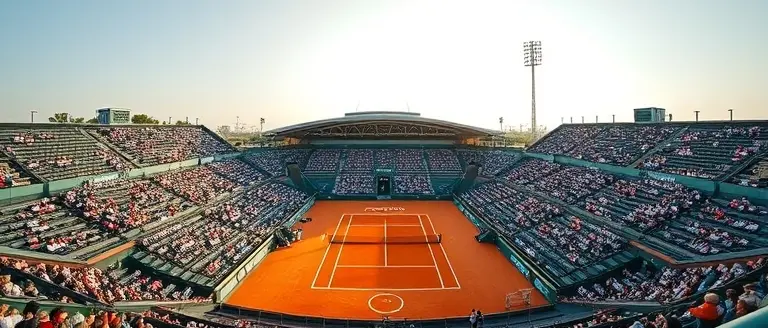
The 2026 French Open has evolved into more than a simple display of clay-court athleticism; it has become a profound intersection of elite tennis performance and the human condition. As the tournament progresses through a challenging Parisian heat wave, media coverage has shifted from mere score tracking to an investigative look at player resilience. Fans and analysts alike are increasingly drawn to the emotional backstories that define the current field, moving beyond box scores to understand the internal pressures driving professional athletes.
The Human Element in High-Stakes Tennis
A central pillar of this year’s narrative is the mental fortitude displayed by competitors like Marta Kostyuk. Her recent first-round victory at Roland-Garros highlights a growing trend in sports journalism: the prioritization of the “resilience narrative.” When athletes navigate high-pressure environments while facing significant personal or geopolitical trauma, their performance on the court takes on deeper meaning. To effectively track these stories alongside traditional statistics, consider the following approach:
- Look Beyond the Win-Loss Column: Analyze how off-court circumstances—such as the recent missile strikes near Kostyuk’s home—impact pre-match preparation and focus.
- Evaluate Tactical Evolution: Connect emotional stability to recent career milestones, such as Kostyuk’s strategic breakthroughs during her successful Madrid WTA 1000 campaign.
- Monitor Professional Conditioning: Observe how top seeds manage the physical and mental toll of a Grand Slam tournament during extreme weather conditions.
Evidence suggests that audience engagement is strongest when viewers view the French Open as a psychological crucible rather than just a sporting event. By balancing technical match analysis with an appreciation for the emotional variables at play, fans gain a more comprehensive understanding of the sport. Moving forward, the most compelling narratives will be those that successfully bridge the gap between high-level tactical performance and the personal realities that shape today’s professional tennis stars.
Mastering Your Mind for Peak Performance
The journey of Marta Kostyuk at this year’s French Open highlights a fundamental truth about elite competition: while physical prowess and tactical preparation get you onto the court, your mental state determines whether you stay there. Professional athletes are increasingly realizing that the difference between a good performance and a legendary one lies in the ability to maintain cognitive clarity under extreme, high-pressure environments. By channeling resilience through dedicated mental protocols, athletes like Kostyuk are able to rise above the noise of internal and external stressors.
Just as top-tier competitors rely on rigorous training to sharpen their focus, you can cultivate that same high-level composure in your daily life. The real battle often happens in the mind, and you don’t need to be on a professional court to benefit from the same level of cognitive training used by elite performers. Incorporating advanced, science-based auditory protocols allows you to regulate your mental state, sharpen your focus, and effectively combat the distraction-heavy environments that lead to mental fog and stress.
The Brain Song offers a unique, neuroscience-backed solution designed for high-achievers who refuse to let the pressure of a demanding world dictate their productivity. By integrating this tool into your routine, you gain a practical, effective way to enhance your own mental resilience, ensuring that you remain composed and clear-headed exactly when the stakes are highest. It is time to treat your mental performance with the same care and strategy that the pros apply to their game.
 Optimize your own mental performance and sharpen your focus like the pros; discover how 12 minutes of auditory stimulation can help you stay composed under pressure.Transform My Mental Clarity Today