
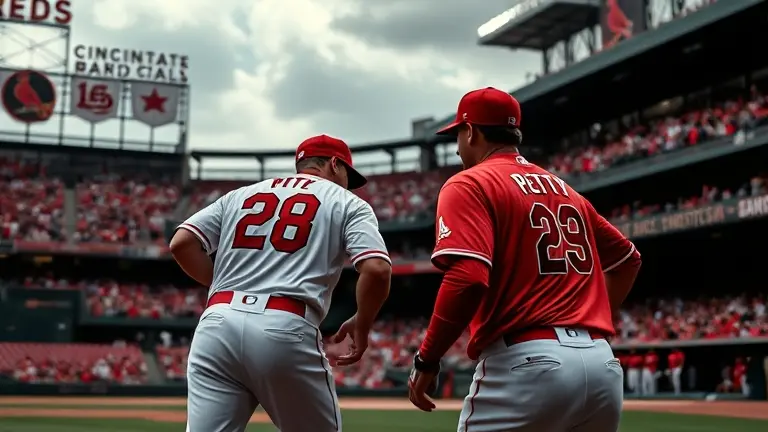
The May 23, 2026, doubleheader at Great American Ball Park was nothing short of a rollercoaster, encapsulating the raw, unpredictable intensity of the NL Central rivalry. After a crushing 8-1 opening defeat, the Cincinnati Reds found themselves facing a critical juncture in their season trajectory. What followed was a masterclass in resilience: an 11-inning, back-and-forth thriller that saw the Reds claw their way to a 7-6 victory. Amidst the tactical chess match orchestrated by manager Terry Francona, one standout narrative emerged: the composed, high-leverage performance of starting pitcher Chase Petty.
Chase Petty’s performance wasn’t just a box-score win; it was a testament to the cognitive endurance required to survive the grind of a major league doubleheader. For fans watching the reds game today, the shift in momentum wasn’t just about bat speed or defensive positioning—it was about mental stamina. As we dissect the key takeaways from this series, it becomes clear that in the high-stakes world of professional baseball, the battle is won as much in the mind as it is on the diamond.
Recapping the Cardinals vs. Reds Doubleheader: A Tale of Two Games

The May 23, 2026, cardinals vs reds doubleheader at Great American Ball Park provided a stark study in momentum shifts and roster resilience. In the opener, the St. Louis Cardinals asserted their offensive dominance early, dismantling the Cincinnati Reds with an 8-1 victory. The loss highlighted immediate concerns regarding the Reds’ pitching depth during a high-intensity divisional clash. However, the energy shifted dramatically for the nightcap, as the reds fought back to secure a thrilling 7-6 walk-off victory in 11 innings. This dramatic turnaround served as a critical response to the earlier blowout, proving the team’s capacity to adjust under pressure in a tightly contested NL Central race.
Tactical Performance Highlights
The defining narrative of the nightcap was the stabilizing presence of Chase Petty. His performance proved pivotal, as he navigated five solid innings to keep the Reds game competitive and prevent the bullpen from burning out too early in the twin bill. His ability to command the zone against a high-powered Cardinals lineup provided a necessary morale boost for a team coming off a demoralizing first loss.
Key takeaways from the doubleheader include:
- Offensive Consistency: While the Reds struggled in the opener, their ability to produce runs in the 11-inning nightcap showcased a necessary tactical evolution under manager Terry Francona.
- Pitching Management: The transition from a lopsided defeat to a marathon win necessitated aggressive roster management and precise bullpen usage.
- Series Momentum: The split allowed the Cincinnati Reds to regain their footing, turning a potential series disaster into a testament to their long-term 2026 season trajectory.
- Fan Engagement: The high-stakes atmosphere mirrored the intensity seen across platforms like Viva El Birdos, where supporters debated the long-term implications of these roster moves on the divisional standings.
Ultimately, this doubleheader illustrated why the cardinals vs reds rivalry remains a central focus for MLB analysts. By stabilizing the rotation with performances like Petty’s, the Reds demonstrated that they possess the depth required to remain competitive in the grueling divisional grind.
Spotlight on Chase Petty: Stabilizing the Reds’ Rotation
The Cincinnati Reds faced a daunting challenge during their May 23, 2026, doubleheader against the St. Louis Cardinals. After a demoralizing 8-1 loss in the first game, the team required a significant morale boost and a masterful outing from the mound to remain competitive. Chase Petty answered that call, delivering a pivotal five-inning performance that served as the backbone for the Reds’ dramatic 7-6, 11-inning victory. His ability to command the strike zone while facing high-leverage situations proved that he is ready to evolve from a prospect into a cornerstone of the rotation.
Tactical Impact and Mechanics
Petty’s performance was defined by composure and tactical precision, qualities often missing in the current pitching staff. By maintaining his release point consistency despite the immense pressure of a struggling rotation, Petty was able to induce weak contact and suppress the Cardinals’ offensive momentum. His outing provided the following strategic advantages for manager Terry Francona:
- Bullpen Preservation: By working through five tough innings, Petty allowed the coaching staff to rest key high-leverage relievers after a taxing first game.
- Rotational Depth: Evidence suggests that Petty’s reliability acts as a bridge for a rotation currently thin on durability, offering the Reds a viable option for consecutive series starts.
- Mental Toughness: Successfully bouncing back from an early-series blowout demonstrated an intangible “clutch” factor, which is essential for any pitcher aiming to anchor a major league rotation.
This breakout performance during the cardinals vs reds series highlights a turning point for the franchise. As fans continue to search for updates on every reds game, Petty’s composure during this 11-inning marathon suggests a player who can withstand the rigors of the NL Central. While the reds look to build consistency, the continued development of Petty’s mechanics will remain a primary focus for the organization’s long-term success.
Tactical Breakdown: Performance Metrics Across the Series
The cardinals vs reds doubleheader on May 23, 2026, served as a masterclass in how roster depth and managerial strategy dictate outcomes in the National League Central. In the first contest, the St. Louis Cardinals exploited defensive gaps and pitch selection to dominate with an 8-1 victory. Their offensive approach focused on high-contact hitting and capitalizing on base-running opportunities, effectively stifling the Cincinnati Reds early. The efficiency displayed by the Cardinals in game one demonstrated a well-prepared scouting report, which forced the Reds’ rotation into early, high-leverage situations that depleted their bullpen depth.
Roster Resilience and Tactical Pivots
The narrative shifted significantly during the second half of the doubleheader, where the Reds showcased internal growth and tactical adaptability. A focal point of this transformation was the emergence of Chase Petty. His five-inning performance acted as a critical stabilizer for the pitching staff, allowing the team to manage their arm barn effectively throughout the 11-inning marathon. By eating up meaningful innings, Petty provided the necessary breathing room for the coaching staff to execute precise, late-game substitutions.
- Bullpen Reliability: The Reds’ ability to hold the Cardinals to fewer runs in the second game highlights a strategic focus on high-strikeout, low-walk scenarios.
- Clutch Hitting: In the 7-6 victory, the Reds game performance was defined by situational hitting rather than reliance on long-ball power.
- Managerial Depth: Terry Francona’s reliance on bench utility players ensured the team remained competitive even after a lopsided opening loss.
The final outcome, a hard-fought 11-inning win, proves that the Cincinnati Reds have developed the grit required to compete against top-tier NL Central rivals. While the Cardinals maintained a strong offensive profile, the Reds’ pivot toward defensive persistence and bullpen management represents a long-term shift in their 2026 season strategy. The contrast between these two games underscores the importance of not just starting pitching, but the tactical management of depth throughout the entire reds game today roster.
What the May 23rd Series Reveals About Current Roster Depth

The cardinals vs reds doubleheader on May 23, 2026, served as a definitive litmus test for both franchises as they navigate the rigorous NL Central schedule. The series highlighted a stark contrast in team identity: the St. Louis Cardinals showcased an explosive, top-heavy offensive capability in the opening 8-1 rout, while the Cincinnati Reds demonstrated the resilience and pitching depth necessary to survive the marathon nature of a mid-season campaign. For fans checking the reds game today or analyzing long-term trends, this series confirmed that roster management—specifically the ability to pivot between blowout losses and high-leverage victories—is the defining variable for post-season contention.
Key Takeaways on Roster Resilience and Pitching
The most significant revelation from the series was the emergence of Chase Petty as a stabilizing force within the Cincinnati rotation. In the second game, Petty’s ability to command the zone for five innings provided the tactical bridge the Reds needed to force extra innings, eventually securing a gritty 7-6 win. His performance underscores several critical aspects of the current roster:
- Pitching Stability: The Reds’ front office has prioritized depth, ensuring that even after a demoralizing loss in the first half of the doubleheader, the bullpen and spot-starters like Petty remain battle-ready.
- Offensive Grit: Converting an 11-inning win after an 8-1 defeat proves that the current Cincinatti Reds squad possesses the mental fortitude to rebound, a trait often absent in less experienced teams.
- Tactical Flexibility: Manager Terry Francona’s strategic maneuvering during the late-inning stages of the second game suggests that the Reds are becoming increasingly comfortable in high-stakes divisional scenarios.
Evidence suggests that while the Cardinals maintain a formidable offense capable of overwhelming opponents early, the Reds are building a roster designed for situational consistency. As the season progresses, the ability to win the “ugly” games—defined by the long, back-and-forth battle seen in the second game—will likely serve as the primary differentiator in the heated NL Central race. Future matchups between these rivals will undoubtedly hinge on whether the Cardinals can maintain their offensive pressure against the improving depth of the Cincinnati pitching staff.
Unlock Your Peak Mental Performance
The exhilarating victory in the nightcap against the Cardinals highlights a fundamental truth of elite sports: success is tethered to cognitive stamina. Much like Chase Petty, who had to remain perfectly locked in through five grueling innings under extreme pressure, your ability to perform at your peak—whether in the office, the gym, or in high-stakes decision making—relies on sustained focus. When the intensity ramps up, the brain’s ability to filter out fatigue and remain sharp is what separates the winners from the rest of the pack.
This is where The Brain Song becomes an essential tool for your daily arsenal. Just as professional athletes utilize advanced preparation to reach their potential, you can leverage this auditory performance optimizer to sharpen your mental game. By addressing the neurological demands of stress, it helps reduce cognitive fatigue and enhances your reaction time. It is not just about listening; it is about calibrating your brain to match the demands of your environment, mirroring the clarity required by a pro pitcher during a high-leverage at-bat.
If you are ready to stop leaving your mental performance to chance and start operating at an elite level, the science behind our approach is waiting for you. Dive into a new standard of focus and see how far your concentration can take you when you optimize your cognitive baseline.
 Ready to sharpen your own focus? Experience the neuroscience of elite performance and see if you can sustain concentration like a pro pitcher.Transform My Focus Today!