
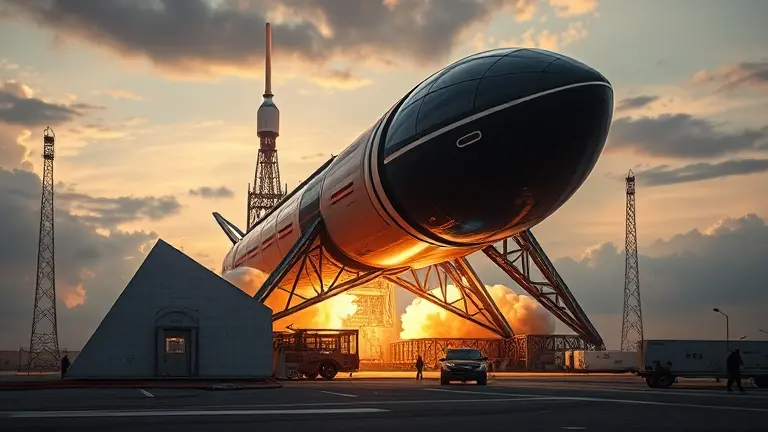
The aerospace sector held its breath on May 21, 2026, as the highly anticipated 12th test flight of the SpaceX Starship V3 was scrubbed moments before ignition. While the technical delay at Starbase, Texas, dominated the headlines, the real story is playing out in the boardrooms of Wall Street. With SpaceX’s S-1 prospectus now filed for a pending Nasdaq IPO, the market is no longer just watching a rocket; it is evaluating the fundamental KPI of the decade. Investors are looking past the spectacle of fire and steel to calculate whether the V3’s performance metrics can truly justify a trillion-dollar valuation.
Bridging the gap between Starship launch time and IPO share price requires a shift in perspective. For the savvy investor, this launch is not just a test flight—it is an audit of SpaceX’s operational maturity. As the countdown resets for the May 22 retry, the critical question is whether you possess the cognitive stamina to synthesize rapidly evolving technical data against the backdrop of complex financial disclosures. In a market where information is the ultimate currency, keeping your analytical edge sharp is the difference between a calculated opportunity and a costly misread.
,slug:
The Starship V3 Delay: Why Market Eyes Are Locked on Starbase
The scrubbed starship launch today from Starbase, Texas, is more than a technical hurdle; it serves as a critical stress test for institutional and retail investor sentiment. As the spacex starship program nears a pivotal juncture, the delay of the 12th test flight highlights the inherent volatility of the aerospace sector. For those monitoring the company’s impending Nasdaq IPO, this postponement represents a window into the operational realities that will define the firm’s long-term enterprise value. Investors are currently weighing the “failure-to-launch” risks against the transformative potential of Starship V3, which remains the cornerstone of SpaceX’s valuation in its recently filed S-1 prospectus.
Financial Implications of Flight Readiness
The market’s intense focus on these technical delays stems from the direct correlation between flight cadence and revenue generation potential. A successful Starship V3 mission acts as a validation of the company’s reusable architecture, which is the primary driver of its projected competitive moat. When a starship launch time is missed, it triggers concerns regarding:
- Capital Efficiency: Delays increase the “burn rate” of capital-intensive test cycles, directly impacting the free cash flow projections found in the S-1 filing.
- Operational Risk: Institutional investors are analyzing whether these scrubs indicate deeper systemic engineering complexities that could affect future commercial contract fulfillment.
- IPO Volatility: The immediate reaction to the scrub underscores how retail sentiment—heavily influenced by X (formerly Twitter) and real-time updates—can induce short-term fluctuations in pre-IPO interest.
Ultimately, the delay in the starship launch serves as a reality check for potential shareholders. While the space community views a scrub as a routine safety measure, the financial markets interpret it through the lens of project management reliability. Evidence suggests that for SpaceX, the ability to rapidly diagnose and reset after a delay is now a vital KPI that will influence the ultimate strike price of its public offering.
Investor’s Guide to Starship V3: From Technical Specs to Valuation Drivers

For the institutional and retail investor, the SpaceX Starship V3 is far more than a feat of aerospace engineering; it represents the core infrastructure upon which the company’s future revenue streams are built. While the public monitors the starship launch today for dramatic visuals, analysts are parsing technical performance as a proxy for the firm’s long-term enterprise value. The transition from experimental flight to a reliable, reusable transport system is the fundamental Key Performance Indicator (KPI) that will dictate market confidence once the SpaceX IPO reaches the Nasdaq.
Decoding Space Economics: The Unit Cost Model
To understand why the starship launch time and its ultimate outcome matter, one must view the rocket as an industrial asset rather than a project. The financial viability of SpaceX relies on three primary variables that translate technical capability into balance sheet health:
- Payload Capacity: Starship V3’s unprecedented mass-to-orbit capability drastically reduces the “cost-per-kilogram” of cargo, positioning SpaceX to capture nearly 90% of the projected global launch market.
- Rapid Reusability: The ability to land, refuel, and relaunch within hours—rather than months—is the “holy grail” of space logistics. It transforms the launch vehicle from a disposable expense into a high-utility, capital-efficient machine.
- Turn-around Time (TAT): Faster turnaround cycles directly correlate to higher revenue cadence, essential for justifying a premium valuation during the pending S-1 offering.
A successful flight validates these metrics, proving that SpaceX can scale its Starlink deployment and interplanetary transport services at a margin unattainable by competitors. Conversely, delays—such as the recent scrub—function as a volatility trigger. For investors, the Starship V3 success rate is the single most important variable in calculating the company’s future market cap, as each mission serves as a stress test for the operational sustainability required to support a public entity. As we approach the rescheduled window, the market is not just watching for a successful ascent; it is assessing the maturity of an engine-and-chassis model that will define the next decade of orbital commerce.
Risk Analysis: Evaluating the Impact of Starship Failure on IPO Valuation
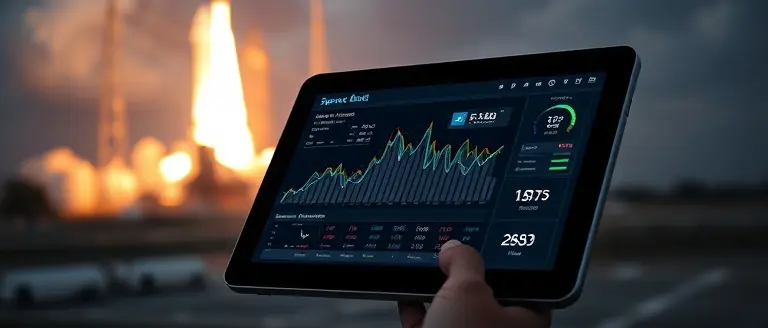
The delay of the 12th test flight—often discussed alongside the SpaceX Starship and its high-stakes development—has intensified scrutiny from the financial sector as the company’s S-1 prospectus for its Nasdaq IPO makes its way through regulatory channels. For institutional investors, the primary concern is not a singular test flight anomaly, but rather the broader transition from “innovation risk” to “operational reliability.” While SpaceX has mastered rapid prototyping, the public market requires a predictable cadence of success to justify a high-growth valuation. If the Starship V3 retry on May 22nd experiences another technical scrub or failure, the market may adjust its short-term sentiment, viewing the rocket’s development timeline as a drag on future revenue streams related to satellite deployment and deep-space logistics.
Institutional Perspectives on Mission Success
Sophisticated investors weigh SpaceX’s mission success rates against its long-term financial commitments. When analyzing the SpaceX IPO impact of Starship failure, the market typically differentiates between “developmental learning” and “systemic failure.”
- Operational Reliability: Investors look for data that indicates Starship can achieve repeatable, cost-effective heavy-lift capacity.
- Risk Premium: Repeated delays can lead to an increased “risk premium” in the stock price, as analysts factor in potential overruns in research and development costs.
- Market Sentiment: High-profile failures in the run-up to an IPO can create volatility, as retail investors—who often follow the #StarshipFlight12 narrative—react more viscerally to technical setbacks than institutional counterparts.
Ultimately, the starship launch time and outcome serve as a fundamental KPI for potential shareholders. While one failed launch is unlikely to derail the long-term thesis of a company with such a dominant market position, sustained issues with the Starship V3 could lead underwriters to price the IPO more conservatively to account for execution uncertainty. Investors should prioritize the company’s ability to demonstrate consistent, measurable milestones as they evaluate the valuation in the lead-up to the public debut.
Market Outlook: The Long-Term Correlation Between Flight Success and Stock Performance

The anticipation surrounding the SpaceX Starship launch reflects a critical juncture in private spaceflight economics. As the company moves toward its highly publicized Nasdaq IPO, institutional and retail investors are increasingly viewing mission performance as a primary Key Performance Indicator (KPI) for valuation. Historically, aerospace firms faced long development cycles with limited transparency, but SpaceX has pioneered a “fail-fast, iterate-often” model. For the upcoming Starship V3 flight, success is not merely a technical milestone; it is a financial signal that validates the company’s ability to achieve full reusability—the “holy grail” of lowering launch costs to sustainable, profitable margins.
Defining the ‘SpaceX Premium’
Investors often assign a “SpaceX Premium” to the company’s valuation, a multiplier driven by its unique position as a launch provider with high mission frequency and orbital reliability. This premium is heavily tethered to the Starship V3 test flight results because the rocket’s performance directly influences the firm’s projected cash flow. Should the 12th test flight achieve its key objectives, the market perception of risk decreases, potentially inflating the IPO valuation. Conversely, repeated scrubs or technical failures may force analysts to re-evaluate the risk-adjusted price of the stock.
Key factors that influence how investors interpret these launch results include:
- Asset Reliability: Each successful flight proves the viability of the hardware, reducing insurance and operational cost risks.
- Operational Velocity: The time elapsed between the recent “scrub” and the next starship launch time serves as a metric for the company’s organizational efficiency.
- Development Milestone Progression: Meeting technical goals during the Starship V3 test demonstrates that SpaceX is nearing the commercialization phase of its heavy-lift architecture.
Ultimately, prospective shareholders should view these launches as real-time stress tests of the company’s underlying business model. While a single launch failure is unlikely to derail the long-term IPO trajectory, consecutive technical hurdles could temper institutional enthusiasm, making the outcome of the rescheduled flight a pivotal factor in establishing the initial SpaceX IPO price range.
The Path to Precision: Mastering the SpaceX IPO
The scrubbing of the Starship V3 launch is more than a momentary technical delay; it is a vital stress test for the future of SpaceX’s market valuation. As the S-1 prospectus looms over the Nasdaq, every millisecond of flight data becomes a primary indicator of long-term commercial viability. For the serious investor, the gap between mission success and financial gain is bridged by one crucial factor: the ability to parse high-stakes technical data without succumbing to the cognitive fatigue that often plagues retail analysts during such high-velocity news cycles.
Navigating the convergence of aerospace engineering and complex financial filing requires more than just spreadsheets; it demands peak mental clarity. This is precisely where The Brain Song becomes an indispensable asset in your professional toolkit. By utilizing science-backed cognitive optimization, this tool helps you process dense, technical S-1 documents with sharper focus and reduced mental friction. Just as SpaceX engineers refine their flight software for the next launch, you can refine your analytical process to gain a competitive edge over the market.
The era of the SpaceX IPO is approaching, and the volume of incoming data will only accelerate. Don’t let information overload cloud your investment judgment. Equip yourself with the mental clarity necessary to distinguish between temporary setbacks and long-term value, and ensure your portfolio decisions are backed by superior analytical endurance.
 Sharpen your analytical edge for the upcoming IPO: Click here to incorporate The Brain Song into your daily investment research routine.Transform My Focus Today!