
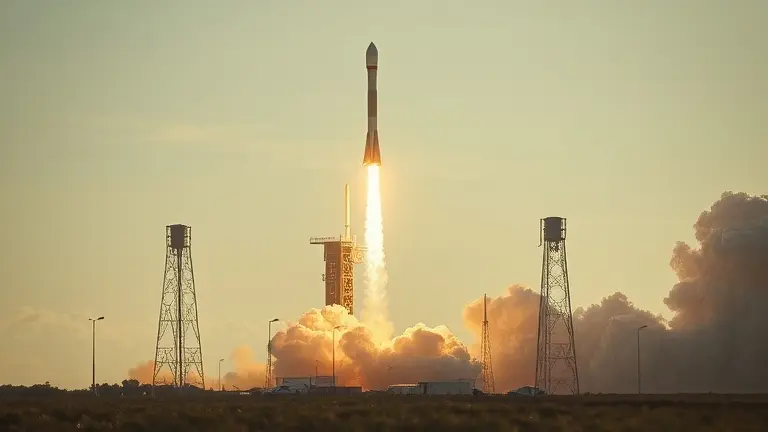
The predawn sky over Florida ignited this morning as a Falcon 9 rocket pierced the atmosphere, trailing the ethereal, bioluminescent glow of a ‘jellyfish’ exhaust plume. Yet, for the savvy observer, the real shockwave wasn’t the sonic boom—it was the simultaneous filing of SpaceX’s long-awaited Initial Public Offering. As the world watches the intersection of historic aerospace engineering and high-stakes finance, the narrative has shifted from mere curiosity to intense institutional scrutiny.
With US$4.28 billion in reported losses acting as a stark counterpoint to the company’s astronomical valuation, retail investors find themselves standing at a critical junction. Understanding whether this ‘rocket launch today’ represents a sustainable business model or a speculative bubble requires more than a passing interest in spaceflight. It demands the ability to bridge the gap between complex atmospheric physics and the cold, hard logic of balance sheets in a rapidly evolving 2026 market.
May 21, 2026: A Defining Moment for SpaceX and the Aerospace Economy

May 21, 2026, marks an unprecedented collision between aerospace engineering and global finance. The predawn Falcon 9 launch successfully deployed a new batch of Starlink satellites, once again painting the Florida skies with the iconic, ethereal “jellyfish” effect that has captivated civilian observers and photographers alike. Yet, for institutional investors, the real spectacle occurred in the boardroom. Following the post-market filing on May 20, the SpaceX IPO has officially moved from speculative rumor to a high-stakes market reality, positioning the company at the center of the 2026 “IPO wave.”
This duality defines the current market sentiment: while the public celebrates the raw power of a rocket launch today, Wall Street is dissecting the company’s financials. The reported US$4.28 billion loss has raised eyebrows among retail investors, but market analysts from firms like The Economist suggest viewing this figure through the lens of aggressive capital expenditure rather than operational failure. By prioritizing infrastructure—specifically the upcoming Starship V3 megarocket—SpaceX is essentially utilizing a “burn rate” strategy to secure a dominant position in the burgeoning space economy.
To understand why this is a critical juncture for both space enthusiasts and stakeholders, consider these key drivers:
- Infrastructure Investment: The massive losses are primarily attributed to the rapid development cycle of Starship, which is deemed essential for the long-term sustainability of the NASA Artemis program and interplanetary logistics.
- Starlink Monetization: The frequent space launch today cycle serves as the delivery mechanism for a recurring revenue model that is currently offsetting launch costs and funding further R&D.
- Market Sentiment: Investors are currently weighing the risks of SpaceX’s capital-intensive model against the massive TAM (Total Addressable Market) of global satellite internet and orbital transportation services.
As SpaceX pivots from a private powerhouse to a publicly traded entity, the connection between a successful spacex launch today and its valuation has never been more tangible. The company is no longer just selling space travel; it is selling the future of global connectivity, with its financial strategy acting as the fuel for its next generation of orbit-capable hardware. Whether you are observing the atmospheric propulsion patterns of a rocket launch or analyzing the balance sheet of the century, May 21, 2026, serves as a masterclass in modern aerospace capitalization.
The SpaceX IPO: Decoding the $4.28 Billion ‘Loss’

When retail investors see a headline figure of a US$4.28 billion loss, the natural instinct is to assume financial instability. However, for a disruptive force like SpaceX, this red ink is a hallmark of growth-stage accounting in the capital-intensive aerospace sector. As the company prepares for its highly anticipated IPO, investors must look past the current deficit to understand how these expenditures serve as the foundational bedrock for future profitability. This massive capital outlay is not merely operational expense; it is a strategic investment in vertical integration, most notably in the development of the Starship V3 megarocket and the global expansion of the Starlink satellite network.
Rethinking Aerospace Expenditures
In the context of the current rocket launch today cycle, it is vital to distinguish between a company failing and a company aggressively reinvesting. SpaceX is currently prioritizing long-term asset valuation over short-term quarterly earnings. Investors should consider the following factors when analyzing the filing:
- R&D as Capital Expenditure: Development of the Starship architecture is essential for fulfilling NASA’s Artemis program mandates. This R&D spend is the “rocket fuel” behind future commercial lunar and heavy-lift logistics.
- Infrastructure Scaling: Much of the loss is tied to the mass manufacturing of terminal hardware and satellite deployment, which creates a massive barrier to entry for competitors.
- Revenue Predictability: Once the Starship infrastructure is fully operational, the company will likely achieve economies of scale that current launch providers cannot replicate, effectively turning the current “loss” into a massive future moat.
For institutional and retail shareholders alike, the current financial picture represents a bet on the Falcon 9 launch ecosystem as a steady-state revenue generator that subsidizes the radical innovation of the Starship program. The SpaceX IPO is not being positioned as a traditional utility, but as a long-term technology play. By prioritizing dominance in orbital logistics, SpaceX is betting that these aggressive upfront costs will eventually yield a monopoly on the emerging space-based economy. For those monitoring the space launch today landscape, the $4.28 billion figure should be viewed as the price of admission for a company currently building the primary infrastructure for the next century of space travel.
Anatomy of a Celestial Spectacle: Why the ‘Jellyfish’ Occurs

The stunning visual phenomenon witnessed during today’s Falcon 9 launch—widely shared across social media as the “jellyfish” effect—is not a glitch in the atmosphere, but a masterclass in physics and timing. This display occurs specifically during pre-dawn or post-sunset windows, a phenomenon known in the aerospace community as the twilight effect. As the rocket ascends into the upper atmosphere, it enters a region where the sun is still visible, even though it remains below the horizon for observers on the ground. The rocket’s exhaust plume, composed of water vapor and combustion byproducts, expands rapidly in the thin air of the upper thermosphere, catching the sun’s rays from behind the horizon to create the characteristic iridescent, glowing spectacle.
The Science Behind the Plume
The dramatic “bell” or “jellyfish” shape is a direct result of pressure differentials as the rocket climbs. As the engine’s exhaust plume expands into the near-vacuum of space, the ambient pressure decreases, causing the plume to broaden significantly. Key factors contributing to this visual density include:
- Atmospheric Expansion: Because the air pressure at high altitudes is significantly lower than at sea level, the rocket exhaust spreads out into a massive, bulbous cloud rather than a tight, concentrated stream.
- Sunlight Refraction: Because the rocket has reached a high altitude before the sun has risen for those on the ground, the exhaust particles act as a prism, scattering light in a way that highlights the “tentacles” of the plume against the dark backdrop of the night sky.
- Exhaust Composition: The water-rich exhaust of the Merlin engines serves as a canvas, with frozen water droplets effectively acting as tiny mirrors that reflect high-altitude solar radiation.
This space launch today provided perfect conditions for these visual data points, as the trajectory and timing aligned to keep the plume illuminated for an extended period. While civilian hobbyists captured the event for its aesthetic beauty, these visual events are also critical for engineers; they provide observable, real-time data regarding the plume’s interaction with the upper atmosphere, serving as a functional testament to the complex aerodynamics governing every rocket launch.
The Road to Starship V3: Bridging the Gap to Artemis
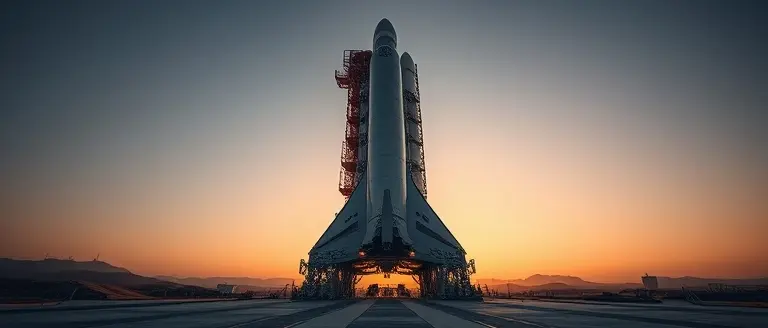
While the Falcon 9 launch observed today provided a stunning visual display for spectators across Florida, it serves as more than just a satellite deployment mission. It is a critical data-gathering exercise. Every successful rocket launch today reinforces the reliability of SpaceX’s flight-proven hardware, providing the engineering team with the telemetry necessary to refine the architecture of the upcoming Starship V3. As the company transitions into a publicly traded entity following its massive IPO filing, the capital influx is expected to drastically accelerate the test-to-flight cycle, moving the massive Starship vehicle from experimental status to a reliable workhorse for deep space exploration.
Starship V3 as the Artemis Backbone
The Starship V3 megarocket is widely viewed by industry analysts and NASA stakeholders as the essential logistical backbone for the Artemis program. Unlike current launch systems, Starship’s unprecedented payload capacity is required to ferry the necessary lunar base supplies, modular habitats, and high-mass life support systems to the Moon’s surface. By leveraging the financial backing secured through the recent IPO, SpaceX is positioning itself to bypass traditional, slow-moving procurement cycles. Key factors driving this rapid development include:
- Rapid Iteration: Increased funding allows for a higher cadence of orbital testing, essential for perfecting the Starship’s complex heat shield and rapid-reusability systems.
- Fuel Depots: The ability to conduct “in-space” refueling—a foundational requirement for the lunar landing—relies heavily on the high-frequency launch schedules that today’s SpaceX launch infrastructure is currently pioneering.
- Mission Success: By proving the durability of Falcon’s recovery processes, the company has established the technical maturity required to build confidence in the far more ambitious Starship architecture.
As retail and institutional investors assess the company’s current financial standing, the synergy between existing revenue-generating flights and the capital-intensive development of Starship V3 becomes clear. This space launch today is not an isolated event; it is a tactical precursor to the next era of human exploration, proving that the road to the Moon is paved with the data harvested from today’s skies.
Mastering the New Frontier of Investment
The convergence of today’s viral SpaceX Falcon 9 launch and the unprecedented scale of its IPO filing marks a definitive shift in the tech-finance landscape. While the ‘jellyfish’ spectacle in the Florida sky captured the public imagination, the real story lies beneath the surface: a multibillion-dollar gamble on Starlink that demands more than just casual observation. Analyzing these deep-tech valuations requires the same level of precision and analytical rigor that engineers apply to orbital mechanics.
Just as SpaceX engineers require absolute precision to execute a successful orbital insertion, your ability to distill complex IPO filings and atmospheric physics depends entirely on your own cognitive clarity. To navigate this volatility, you need more than just information—you need the mental edge to process data faster and more accurately than the competition.
That is why we recommend The Brain Song, the essential intellectual performance enhancer for those tracking high-stakes market movements. By cutting through the noise and sharpening your focus, this tool allows you to digest complex financial data and technical engineering reports without the friction of mental fatigue, ensuring you are prepared for the next market cycle.
 Unlock your peak analytical potential—stream The Brain Song today to sharpen your focus for the next market cycle.Transform My Mental Clarity Today!