

The clay courts of the Geneva Open have become more than just a venue for a mid-tier ATP 250 tournament; they serve as the ultimate proving ground for Taylor Fritz. After a daunting 57-day hiatus from the professional tour, the American star is stepping back into the fray with a singular mission: recalibrating his game for the high-stakes intensity of Roland Garros 2026. This extended absence, while physically restorative, raises critical questions about his match rhythm and his ability to navigate the slippery, unpredictable nature of European clay. As fans turn their attention to his tactical adjustments and movement patterns, it is clear that Fritz’s performance in Geneva is a decisive bellwether for his upcoming French Open campaign.
Beyond the raw statistics of serve percentages and baseline winners, this return represents a profound test of athletic endurance and mental fortitude. Transitioning from months of rehabilitation back into the elite competitive circuit is an Herculean task, requiring more than just physical health. The ability to reclaim competitive momentum hinges on how quickly Fritz can re-sync his cognitive processing with the blistering speed of elite clay-court tennis. As analysts dissect his performance against contenders like Alexei Popyrin, the focus shifts to the subtle, essential bridge between recovery and peak performance: the razor-sharp mental edge required to dominate when it matters most.
The Road to Roland Garros: Taylor Fritz’s Strategic Return in Geneva
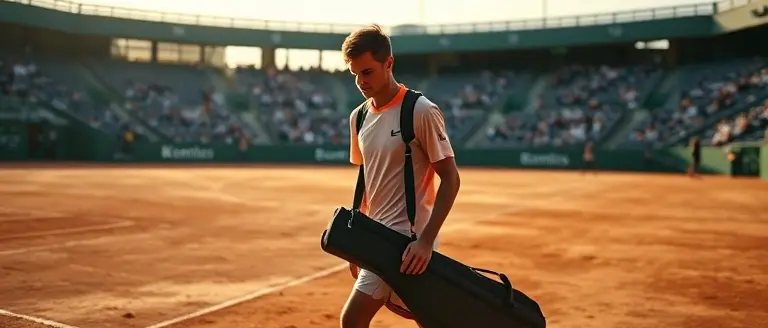
Taylor Fritz has officially returned to professional competition at the Geneva Open, marking his comeback after a challenging 57-day hiatus due to an undisclosed injury. This ATP 250 event serves as a pivotal bridge between his recovery phase and the grueling demands of the 2026 French Open. By choosing Geneva as his primary warm-up, Fritz is prioritizing high-intensity match play on European clay to recalibrate his movement patterns and serving rhythm before heading to Paris. Analysts view this participation as a calculated effort to mitigate “rust” following his extended absence, providing him with a controlled environment to test his physical conditioning against top-tier competition.
Measuring Momentum: The Popyrin Benchmark
His second-round encounter against Alexei Popyrin has become a focal point for performance analysts looking to gauge Fritz’s current fitness level. Because the clay surface requires superior lateral movement and endurance compared to hard courts, this match serves as a diagnostic tool for his readiness:
- Tactical Adaptation: Observers are closely monitoring how well Fritz manages slide-and-recover mechanics after nearly two months away from the tour.
- Serve Efficiency: With his serve being a cornerstone of his game, maintaining velocity and accuracy under the pressure of a live match is critical for his Roland Garros ambitions.
- Endurance Thresholds: The match provides data on whether the 57-day break has resulted in a loss of match-toughness or if the rest has bolstered his overall stamina.
The narrative surrounding Fritz is one of cautious optimism. While the break presents a tactical hurdle, there is a “surprise factor” associated with fresh legs, potentially giving him an endurance edge over players who have grinded through the entire spring clay season. Whether this comeback serves as a launching pad for a deep run in Paris remains the central question for fans tracking his progress in Switzerland.
Analyzing the 57-Day Hiatus: Disadvantage or Fresh Start?

The 57-day hiatus taken by Taylor Fritz ahead of the Geneva Open represents a significant gamble in the lead-up to the 2026 Roland Garros. In professional tennis, match rhythm is arguably the most difficult metric to simulate in training; by stepping away from the tour for nearly two months, Fritz faces a nuanced transition back to competitive play. While he avoids the cumulative fatigue that often plagues players during the grueling European clay swing, he simultaneously forfeits the granular comfort required to slide, pivot, and execute high-percentage shots on the dirt.
The Case for a Fresh Start
From an endurance perspective, the extended break may prove advantageous. Elite athletes often navigate the season with lingering micro-injuries that are exacerbated by the constant impact of clay court surfaces. By opting for a full recovery window, Fritz arrives at the French Open 2026 with a recharged physical profile. Analysts suggest that this “fresh-start” approach could be the key to his stated goal of surprising the field:
- Reduced Mental Burnout: The mental toll of constant travel and tournament pressure is mitigated by a deliberate reset.
- Peak Physicality: A fresh set of legs allows for more explosive lateral movement, a prerequisite for success on the slow red clay of Roland Garros.
- Tactical Refinement: The layoff provided a rare, uninterrupted training block to adjust his serve and baseline strategy specifically for European conditions.
The Risks of Competitive Rust
Conversely, the lack of match play risks diminishing his “feel” for the ball. Tennis is a game of fine motor adjustments, and the transition back to the intensity of the ATP circuit—seen in his matchup against Alexei Popyrin—tests his reflexes under pressure. Evidence suggests that even top-tier professionals struggle with timing after extended breaks, particularly regarding court positioning and point construction. Whether this hiatus serves as a springboard to a deep run in Paris or a tactical misstep depends on how rapidly Fritz can synthesize his training-ground improvements with the volatile, high-stakes environment of live match competition. Regardless, his performance in Geneva serves as the ultimate diagnostic for his readiness.
Tactical Hurdles: Adapting Power Tennis to Clay
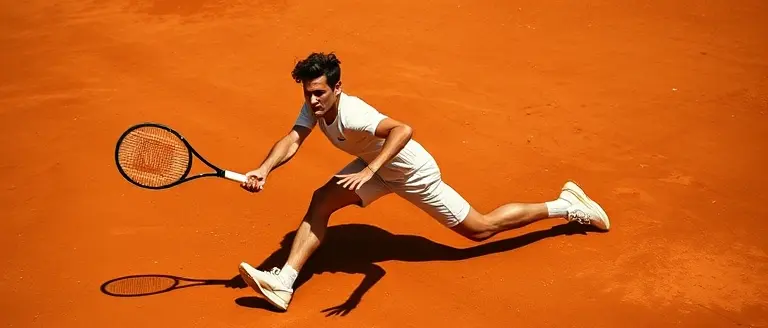
Returning to the court after a 57-day hiatus, Taylor Fritz faces a significant technical adjustment as he transitions his signature hard-court power game to the unforgiving surface of the Geneva Open. While his heavy baseline aggression is a staple of his success, the transition to clay—and ultimately to Roland Garros 2026—demands a recalibration of his movement patterns and tactical patience. On clay, the surface friction and high bounce negate raw pace, forcing players to rely on lateral efficiency and point construction rather than the short, explosive rallies common on hard courts.
Mastering Movement and Slide Efficiency
The primary hurdle for Fritz lies in his defensive transition. On hard surfaces, movement is linear and planted; on clay, he must master the art of the controlled slide. If his balance is even slightly off, his timing on the backhand wing—usually a reliable weapon—can become vulnerable. To thrive, Fritz must focus on:
- Slide Initiation: Utilizing early, purposeful slides to reach wide balls, allowing him to recover into a neutral position rather than constantly hitting on the run.
- Footwork Elasticity: Decreasing the frequency of heavy foot plants to prevent “getting stuck” in the surface, which is crucial for maintaining his serve-plus-one rhythm.
- Height Calibration: Adjusting his strike zone to manage the higher-bouncing clay balls, which requires a heavier topspin transition to keep opponents pinned behind the baseline.
Tactical Patience and the French Open Preparation
Beyond physical mechanics, Fritz’s return to form hinges on his ability to integrate tactical patience. By participating in the Geneva Open, he is essentially testing his ability to maintain intensity over longer, more arduous rallies. Evidence suggests that his 57-day layoff could offer a “fresh-start advantage,” providing him with the endurance levels necessary to survive the best-of-five sets at Roland Garros. If Fritz can blend his inherent power with a newfound willingness to engage in patient point-building, he positions himself as a genuine dark horse for the second Grand Slam of the year.
Performance Metrics: Gauging Form Ahead of the Second Grand Slam
The return of Taylor Fritz to the ATP circuit at the Geneva Open offers a critical window into his physical readiness for the 2026 Roland Garros campaign. Following a 57-day hiatus, the primary objective for his coaching staff is not merely match victories, but the recalibration of his high-velocity game to the demands of European clay. Analysts are specifically monitoring his serve percentage and court coverage efficiency to determine if the extended rest period has successfully mitigated the lingering fatigue that often plagues players during the transition from the North American hard-court swing to the European clay season.
Analyzing Technical Efficiency and Endurance
To understand how Fritz might perform at the French Open 2026, we must look beyond the win-loss column and focus on specific performance indicators that define his ceiling:
- Service Reliability: On the slower surface of Geneva, his first-serve percentage must remain above 65% to avoid extended baseline rallies where he historically faces more pressure. Early data from his matches suggests a deliberate effort to prioritize placement over raw power.
- Break-Point Conversion: Efficiency in high-leverage moments serves as a litmus test for his mental sharpness. A low conversion rate would indicate that his timing—a common casualty of a long layoff—is still catching up to the speed of the competition.
- Baseline Stamina: The most significant hurdle after a nearly two-month break is aerobic recovery. Observing his capacity to maintain intensity during extended rallies against opponents like Alexei Popyrin provides a clear projection of his stamina for best-of-five-set encounters in Paris.
Evidence suggests that this period of recovery could act as a “fresh-start advantage,” allowing him to enter Roland Garros with greater physical reserves than many of his peers. While the Geneva Open serves as a vital proving ground, the ultimate metric for success is his ability to adapt his aggressive baseline play to the inconsistent bounces and sliding requirements of red clay. If Fritz demonstrates consistent depth and footwork recovery in Geneva, he stands a strong chance of making an unexpected deep run in Paris, potentially surprising competitors who are already showing signs of mid-season burnout.
Mastering the Mind-Game for Elite Recovery
Taylor Fritz’s return at the Geneva Open illustrates a fundamental truth in professional sports: physical conditioning provides the engine, but cognitive sharpness steers the ship. Whether the 57-day break acts as a disadvantage or a tactical reset depends entirely on how effectively an athlete can regain their internal processing speed. Navigating high-stakes clay matches after a lengthy layoff requires extraordinary mental agility to overcome the inevitable cognitive fog that accompanies a prolonged absence from the tour.
While physical training is the backbone of any return-to-form strategy, the cognitive demand is often the hidden hurdle. This is where The Brain Song becomes an essential tool for the modern athlete. By targeting enhanced focus and sustained cognitive resilience, The Brain Song helps you sharpen your decision-making capacity under the intense pressure of elite competition, ensuring your mental processing keeps pace with your physical skills. It is the natural evolution for any competitor looking to secure a winning edge during their own growth or recovery phases.
Aligning your mental state with your physical potential is no longer optional—it is the standard for excellence. Don’t let mental fatigue hold you back from your next breakthrough. Whether you are coming off an injury or simply looking to elevate your performance, optimizing your focus is the key to unlocking your full potential.
 Discover how to sharpen your mental focus and maintain high-level cognitive performance during your own recovery or growth phases.Transform My Mental Focus Today!