

In the current US market climate, retail investors are finding themselves on a turbulent ride as geopolitical tensions—specifically involving Iran and Trump-era policy echoes—send shockwaves through the energy and tech sectors. Financial news outlets are filled with reports of assets that “pop” unexpectedly, referring to those sudden, sharp price movements that can either signal a massive opportunity or the start of a dangerous bubble. For the average investor, this volatility is more than just a data point; it is a source of constant, underlying stress that demands a heightened level of mental clarity and emotional discipline.
Understanding the mechanics behind these sudden market pops is the first step toward reclaiming control over your financial narrative. When uncertainty drives the market, the difference between panic-selling and strategic holding lies in your ability to maintain a steady, analytical mindset. Just as an investor must navigate the volatile spikes in their portfolio, they must also learn to recognize the importance of stability in every facet of their life to ensure they stay sharp enough to make informed decisions when the market shifts.
Understanding Market Volatility: Why ‘Pop’ is the New Financial Baseline
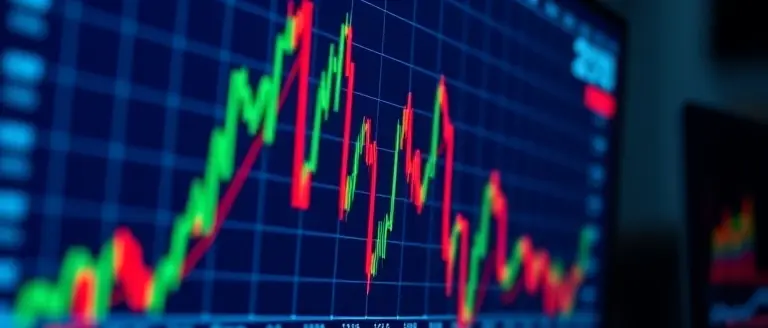
In the current financial landscape of May 2026, the term “pop” has evolved from simple market jargon into a pervasive shorthand for the rapid, often unpredictable, price swings defining today’s trading environment. When analysts remark that a stock might “pop,” they are referencing a sudden, high-intensity spike in valuation or volatility that often detaches from long-term fundamental analysis. While the term may seem like conversational filler in headlines, it serves as a linguistic signal of deeper systemic instability. This phenomenon represents a transition toward a baseline where market sentiment is highly reactive to instantaneous news flows rather than gradual economic indicators.
The Drivers of Sudden Market Shifts
The primary catalyst for these sudden movements is a complex intersection of geopolitical tension and automated trading. Investors are witnessing increased frequency in price fluctuations due to several key factors:
- Geopolitical Sensitivity: Developments involving the Iran-Trump diplomatic environment have created an atmosphere where headlines trigger immediate, high-volume reallocations in energy and tech portfolios.
- Options Market Liquidity: The prevalence of short-dated options contracts means that a small influx of buying or selling can force market makers to hedge aggressively, which inherently causes the asset price to pop or drop in an amplified fashion.
- Algorithmic Reactivity: High-frequency trading systems are calibrated to identify and exploit these momentum bursts, effectively turning minor news cycles into major valuation pivots.
For the retail investor, recognizing that a “pop” is often a symptom of technical market mechanics—rather than a shift in underlying company value—is essential for risk management. Understanding that these spikes are now a standard feature, not a bug, allows traders to navigate the current climate of uncertainty with greater discernment. Rather than chasing the volatility, successful market participants are focusing on identifying when these bursts represent a genuine trend change versus a short-lived liquidity event.
Geopolitical Tensions: The Iran-Trump Factor and Energy Prices

In the current economic climate of May 2026, the intersection of geopolitical volatility and market behavior has become a primary driver of investment sentiment. The ongoing discourse surrounding the Iran-Trump political landscape serves as a potent catalyst for sudden market shifts. When news reports indicate heightened tensions in the Middle East, energy markets frequently witness a rapid pop in commodity prices, particularly in crude oil and natural gas futures. This phenomenon occurs as traders immediately price in the risk of supply chain disruptions in key oil-producing regions, leading to sharp, vertical moves in energy-sector equities.
The Mechanics of Market Volatility
Financial markets rarely react with subtlety to geopolitical uncertainty. A sudden headline can trigger algorithmic trading desks to adjust positions, causing a pop in volatility indices that often ripples across tech and energy stocks simultaneously. For the retail investor, distinguishing between long-term value and short-term speculative reaction is critical. Understanding why these sudden price adjustments occur involves recognizing that market participants are essentially bidding up the price of protection against supply-side shocks.
To navigate these periods of heightened tension, sophisticated investors often utilize specific strategies to hedge their portfolios:
- Diversification into Safe Havens: Allocating capital toward assets that typically maintain value during geopolitical conflict, such as gold or defensive consumer staples.
- Options Hedging: Utilizing put options on energy ETFs to protect against downside risks, or conversely, using calls to capture potential upside if supply fears materialize.
- Focus on Fundamentals: Prioritizing companies with strong balance sheets and minimal exposure to foreign operational risk, ensuring that a speculative pop in a sector does not lead to an overvaluation trap.
Ultimately, while the term pop serves as a shorthand for these sudden market reactions, the underlying reality is a complex rebalancing of risk. Investors should maintain a disciplined approach, focusing on long-term financial goals rather than reacting impulsively to the noise generated by real-time geopolitical updates.
The Tech Sector’s Reaction to Uncertainty
In the current US market landscape, the tech sector has become a primary barometer for investor anxiety. When observers note that a stock may pop—meaning a sudden, explosive move in valuation—it is rarely a random event. Instead, these swings are typically the direct result of market participants recalibrating risk models in response to geopolitical instability, such as the ongoing tensions involving the Iran-Trump situation. As investors move to hedge their portfolios, high-growth tech stocks often face extreme liquidity shifts, leading to the rapid price volatility that analysts frequently label as a market pop.
The Mechanics of Algorithmic Volatility
The speed of these movements is no longer driven solely by human sentiment but by high-frequency trading algorithms. These systems are programmed to react to news catalysts in milliseconds, creating a feedback loop that amplifies price swings:
- Sentiment Analysis: Algorithms scrape geopolitical headlines to trigger automated sell or buy orders before human traders can process the information.
- Liquidity Gaps: During moments of heightened uncertainty, institutional players may pull back, causing thin order books that allow small trades to trigger a massive price pop.
- Margin Calls: Rapid declines can force liquidations, creating a cascade effect that forces the stock price further downward, or conversely, a short squeeze that forces it upward.
Why Sentiment Drives the ‘Pop’
Market fragility is inherently linked to the reliance on tech-heavy indices. When news breaks, the immediate reaction is often binary: investors either rotate into “safe haven” assets or double down on tech, expecting a breakthrough in efficiency or defense-related innovation. Evidence suggests that during periods of geopolitical friction, market participants prioritize short-term price action over long-term fundamentals. Consequently, any significant news headline—regardless of its actual long-term financial impact—is enough to drive the sudden, erratic momentum that defines the modern pop in stock valuation, leaving retail investors to navigate an environment where volatility is the only constant.
Navigating Market ‘Pops’: Financial Literacy for the Uncertain Investor

In the current financial landscape, the term “pop” has become a ubiquitous shorthand for sudden, high-intensity shifts in asset valuation. Whether driven by earnings reports or geopolitical friction, a sudden stock pop often triggers a psychological response in retail investors—the urge to either chase the momentum or panic-sell. However, seasoned investors understand that these rapid price movements are frequently decoupled from underlying corporate fundamentals. When news cycles report a “pop” in energy or tech stocks following developments such as the Iran-Trump situation, it is critical to distinguish between noise-driven volatility and substantive market shifts. Relying on emotional reactions during these windows of high uncertainty often leads to buying at market peaks or locking in losses during temporary corrections.
Decoding the Mechanics of Market Volatility
To maintain a long-term strategic perspective, retail investors must look past the sensationalist headlines that use “pop” as clickbait. Market spikes are often the result of algorithm-driven trading or reflexive positioning rather than long-term value creation. When you encounter a sudden surge, consider the following checklist to maintain composure:
- Assess the Catalyst: Determine if the price movement is rooted in legitimate financial reporting or merely speculative reaction to shifting geopolitical narratives.
- Identify Your Time Horizon: If your investment thesis spans years, the intraday “pop” is largely irrelevant to your terminal performance.
- Avoid Chasing Trends: Entering a trade simply because an asset has experienced a vertical move is a classic behavioral trap that often results in poor entry points.
- Prioritize Risk Management: During periods of heightened volatility, ensure your portfolio remains diversified enough to withstand sudden sector-specific downturns that often follow an artificial spike.
Ultimately, financial literacy in the modern era requires the discipline to remain static when the market demands action. By focusing on the Why behind market movements—such as supply chain disruptions or macroeconomic policy shifts—you can transform from a reactive trader into a resilient investor. True wealth building is rarely found in the excitement of a daily “pop,” but rather in the consistent execution of a well-researched, long-term strategy that ignores the temporary fervor of the news cycle.
Achieving Stability in Volatile Times
Navigating the current economic landscape requires more than just technical analysis; it demands a commitment to personal sustainability. Just as market volatility creates dangerous ‘pops’ that can erode your capital if left unchecked, sudden glucose spikes can derail your daily performance, focus, and long-term metabolic health. When your internal energy is erratic, your ability to make clear-headed financial decisions suffers, making you vulnerable to the very market swings you are trying to master.
Think of your metabolic health as the foundational asset class of your portfolio. To manage the ‘pops’ in your daily energy and prevent the inevitable crashes that follow, you need a stabilization tool that works as hard as you do. Gluco6 is designed to help you maintain consistent metabolic balance, mirroring the analytical goal of creating stability within your investment strategy. By curbing unnecessary biological spikes, you gain the endurance required to monitor high-pressure market conditions with a steady hand.
Integrating Gluco6 into your daily routine is the proactive step toward ensuring that you remain as resilient as your portfolio. Do not let internal volatility distract you from your financial goals; take control of your personal metrics today and experience the difference that true stabilization can provide.
 Learn how to stabilize your personal metrics as effectively as you monitor your market portfolio with Gluco6.Secure My Metabolic Stability Today!