
The footballing landscape shifted on its axis this morning as news broke that Jose Mourinho has reached a verbal agreement to return to the helm of Real Madrid. Thirteen years after his initial, transformative exit, the ‘Special One’ arrives at the Santiago Bernabéu not as a savior, but as a calculated strategic intervention for a club grappling with locker room instability and the looming shadow of the 2026 World Cup. With a rumored €7 million deal to finalize his exit from Benfica, the move has ignited a global debate: is this the pragmatic leadership Real Madrid desperately craves, or does it invite the very friction that threatens to undermine their elite ambitions?
Mourinho’s second stint in the Spanish capital represents a fascination with the past to solve the crises of the present. As he prepares to reshape a squad that has struggled to find internal equilibrium, observers and fans alike are left questioning if his legendary ‘combative’ management style is a relic of a bygone era or a necessary defensive wall for modern football’s most scrutinized club. This isn’t merely a managerial shuffle; it is a high-stakes chess match played out under the brightest lights in sports, setting the stage for a summer defined by tactical obsession and total psychological warfare.
,slug:
The Return of The Special One: Mourinho’s Shock Real Madrid Comeback
In a move that has sent shockwaves through the global football landscape, Jose Mourinho has reached a verbal agreement to return to Real Madrid on a two-year contract. Marking his sensational comeback to the Santiago Bernabéu 13 years after his initial departure, the Portuguese tactician is tasked with restoring order to a club currently grappling with internal locker room instability and inconsistent on-pitch performances. This high-profile appointment represents a major shift in strategy for the Spanish giants as they look to regain their dominant status ahead of the 2026 summer tournament cycle.
Breaking Down the Deal
The logistics behind the transition are as complex as the tactical implications of his return. To secure his services, Real Madrid is reportedly finalizing a €7 million compensation package to facilitate his release from his current post at Benfica. Key stakeholders are viewing this move through several critical lenses:
- Strategic Stabilization: The board identifies Mourinho’s authoritative leadership style as the necessary antidote to recent squad friction.
- Squad Rebuilding: Early reports indicate that Mourinho has already identified key transfer targets, with internal discussions centering on a high-profile pursuit of Manchester City’s Rodri to anchor the midfield.
- Financial Commitment: The substantial compensation required reflects the club’s urgent need for a proven winner who can navigate the pressures of elite European football.
While some critics label the appointment a reactive gamble from a club under immense pressure, supporters of the move argue that his unparalleled experience is exactly what this roster requires. By choosing a manager known for his defensive discipline and uncompromising standards, Real Madrid is signaling an end to the current period of uncertainty. Whether this reunion results in a second golden era or further controversy, the return of Mourinho effectively shifts the narrative of global football, ensuring that all eyes will be fixed on Madrid as the new season approaches.
Tactical Synthesis: Integrating Mourinho’s Pragmatism into Madrid’s Current Squad
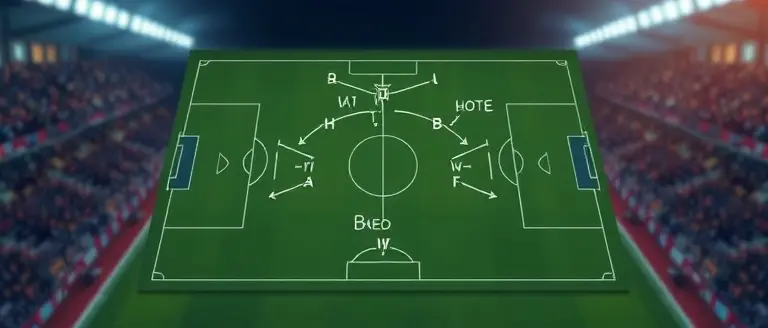
The return of Jose Mourinho to the Santiago Bernabéu signals a seismic shift away from the free-flowing, perhaps overly relaxed, tactical structure that has plagued Real Madrid throughout the 2025-2026 campaign. Known for his “park-the-bus” reputation, the modern Mourinho is expected to implement a highly disciplined 4-3-3 or 4-2-3-1 block, focusing on rapid vertical transitions rather than sustained possession. By prioritizing defensive stability, he aims to cure the internal locker room instability that stemmed from a perceived lack of structural accountability.
Key Tactical Shifts and Player Impact
Evidence suggests that the current squad, while technically gifted, requires the rigid defensive organization that has defined the Portuguese manager’s career. His immediate priority involves restoring a “mentality of sacrifice” among the attacking core.
- Defensive Anchoring: The rumored pursuit of Manchester City’s Rodri serves as the cornerstone of this new vision. A holding midfielder with the composure and tactical intelligence of Rodri is essential to transition from a disorganized defensive unit to a lethal counter-attacking force.
- The Counter-Attack Revival: Much like his 2011-2012 title-winning side, this iteration of Real Madrid will likely funnel play through high-paced wingers who can exploit gaps the moment possession is regained.
- Squad Accountability: Players who fail to adhere to defensive tracking responsibilities are likely to see their minutes diminish. Mourinho has historically utilized his “us against the world” narrative to tighten the defensive lines, a strategy clearly designed to rectify the recent performance dips and lack of cohesion in the Santiago Bernabéu dressing room.
By reintroducing a low-block transition style, Mourinho intends to maximize the clinical finishing of his forwards while shielding a backline that has looked vulnerable under pressure this season. While critics argue this approach is outdated, the tactical synthesis of his pragmatism with the raw talent currently in Madrid could create a defensively ironclad squad capable of dominating European football once again.
The Benfica Exit and the Logistics of a Managerial Power Move

The logistical mechanics behind Jose Mourinho’s departure from Benfica to return to the Santiago Bernabéu represent one of the most complex managerial transitions in recent European football history. With a reported compensation package of approximately €7 million required to trigger his release, Real Madrid has signaled a willingness to prioritize immediate authority over fiscal conservatism. This move, finalized as of mid-May 2026, highlights the internal urgency at the Spanish giant, where the board has clearly prioritized the re-establishment of discipline following a period of locker room instability and inconsistent tactical output.
Financial and Operational Hurdles
Facilitating a transition of this magnitude during the final stretch of the season creates significant operational friction. The logistics of the move include:
- Contractual Buyouts: The €7 million figure serves not only as a transfer fee for a manager but as a high-stakes investment in a specific leadership profile deemed necessary for Real Madrid’s short-term rebuilding phase.
- Succession Planning: Benfica’s leadership must now navigate an abrupt coaching vacuum, which has caused minor diplomatic tension between the two clubs as they finalize the exit clauses.
- Boardroom Strategy: The move suggests a pivot in Real Madrid’s management philosophy. By opting for a proven, albeit polarizing, veteran, the board is effectively betting that Mourinho can impose his will on a squad that has struggled to find a unified identity under recent stewardship.
Industry analysts observe that this appointment is not merely a staffing change but a strategic reaction to the competitive pressures looming ahead of the 2026 World Cup. By securing a manager of Mourinho’s stature, Real Madrid aims to stabilize their domestic and European standing before the summer transfer window opens. However, the success of this maneuver hinges entirely on how quickly the club can integrate his high-intensity requirements into a squad currently grappling with internal division and waning morale.
Authority vs. Chaos: The Global Debate Shaping the 2026 World Cup Narrative

The return of Jose Mourinho to the Santiago Bernabéu has ignited a fierce global debate that transcends club football, positioning the Real Madrid locker room as the central theater of drama heading into the 2026 World Cup. Supporters of the appointment argue that the club has suffered from a lack of clear, iron-fisted leadership, viewing Mourinho as the only personality capable of restoring the disciplinary standards required to challenge for major honors. Conversely, skeptics—including those echoing sentiments from the Daily Mail—fear that his combative history will inevitably lead to locker room fracturing, potentially sabotaging the club’s season just as global focus shifts toward the summer tournament.
The Management Paradox
At the heart of this divide is the question of whether modern player management requires a ‘player-coach’ or a ‘dictator.’ The arguments surrounding this polarizing hire generally break down as follows:
- The Case for Order: Proponents suggest that Mourinho provides the psychological armor necessary to thrive in high-pressure environments, theoretically shielding the squad from external media noise.
- The Fear of Friction: Critics highlight his documented history of ‘third-year syndrome’ and interpersonal conflicts, suggesting his presence creates a self-fulfilling prophecy of instability that could destabilize key players before they head to national team duty.
- Tactical Pragmatism: Analysts note that his ability to secure results during periods of transition may be exactly what a struggling squad needs to regain competitive momentum.
As the international football community looks toward the 2026 World Cup, the Mourinho factor introduces a new layer of volatility. Real Madrid players will be carrying the weight of this intense managerial transition throughout the summer. Whether his signature high-intensity style will galvanize a team looking to rebuild or accelerate internal division remains the primary narrative of the season. By securing a two-year deal, the club has signaled a desperate intent to trade long-term harmony for immediate, authoritative impact.
Mastering the Tactical Mind of the 2026 Season
The return of Jose Mourinho to the Santiago Bernabéu is more than just a managerial appointment; it is a high-stakes experiment in leadership, psychology, and tactical evolution. As the football world braces for the chaos and the genius that inevitably follow in his wake, one thing is certain: success in this new era will require the same razor-sharp discipline that defines the world’s most elite managers. Whether you are analyzing his defensive schemes or projecting his impact on squad morale, your ability to process these complex narratives hinges entirely on your own cognitive performance.
Just as Mourinho must optimize his squad’s cognitive discipline to handle the crushing pressure of Real Madrid, managing your own mental clarity is essential for navigating the dense, fast-moving storylines of the 2026 season. You need more than just news; you need the tactical advantage of deep focus to synthesize the data that matters. This is where The Brain Song bridges the gap between passive consumption and active, high-level analysis, offering a science-backed solution to eliminate mental fog and sharpen your focus.
By treating your cognitive health as a high-performance asset, you position yourself to see the game—and the world—with unprecedented clarity. Stop reacting to the headlines and start mastering the analysis. It is time to equip your brain with the precision required to keep pace with the most demanding season in modern football history.
 Optimize your own performance for this season—try The Brain Song’s 12-minute daily routine to sharpen your focus while you follow the latest tactical updates.Sharpen My Tactical Focus Today!