
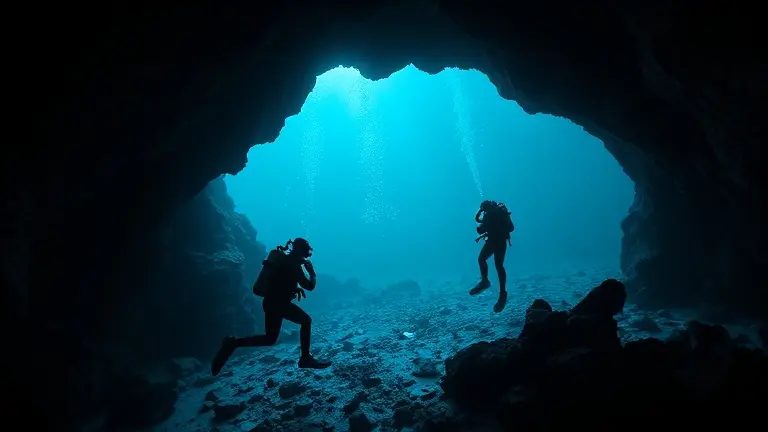
The recent tragedy in the Maldives, where five Italian tourists and a heroic military rescue diver lost their lives in a complex underwater cave system, has sent shockwaves through the global diving community. While news headlines captured the raw emotion of this harrowing recovery operation, the incident serves as a stark, sobering reminder of the unforgiving nature of deep-water exploration. Beyond the tragic circumstances, this event highlights an urgent need for the diving industry to move past reactive reporting and toward a rigorous examination of technical protocols.
Subterranean diving is not merely an extension of recreational scuba; it is a high-stakes discipline that demands flawless preparation, specialized training, and an unwavering commitment to safety standards. In environments where the margin for error is non-existent, understanding the mechanics of risk and the necessity of exhaustive planning is the difference between a successful dive and a catastrophic failure. This analysis dissects the technical realities of cave exploration to ensure that such a tragedy serves as a final, definitive lesson in the importance of total procedural certainty.
Understanding the Recent Maldives Diving Tragedy: A Chronology of Events

In mid-May 2026, the international diving community was devastated by a profound maldives scuba diving accident involving five Italian tourists. The incident occurred when the group attempted to explore a complex and deep underwater cave system, a pursuit that experts categorize as an extreme technical endeavor requiring specialized training far exceeding standard recreational certification. Reports confirm that the primary incident took place approximately four to five days prior to May 18, 2026, when search and rescue teams were mobilized to track the missing divers. The environment, known for its challenging currents and intricate subterranean geography, presented immediate logistical difficulties for recovery teams.
The scope of the tragedy expanded significantly during the rescue operation. While authorities and specialized teams worked to locate the original group, Maldives military rescue diver Staff Sgt Mohamed Mahdhee tragically lost his life while performing duties to retrieve the victims. His death underscores the extreme risks inherent in deep-water recovery missions, even for highly trained military personnel operating in pressurized and unpredictable environments. The loss of a professional rescuer during the operation highlighted the severity of the underwater conditions and the dangers posed by the specific cave topography.
Final Recovery and Resolution
As of May 18, 2026, officials confirmed the conclusion of the recovery mission. Key details regarding the timeline include:
- Initial Incident: A group of five Italian nationals entered a deep underwater cave, leading to their entrapment and subsequent loss.
- Secondary Tragedy: Staff Sgt Mohamed Mahdhee died during a rescue attempt, becoming a victim of the same hazardous conditions.
- Operation Conclusion: By May 18, search teams successfully located the remaining four bodies of the Italian tourists, effectively ending the high-profile search effort.
This sequence of events has prompted an urgent industry-wide discussion regarding the safety protocols required for cave exploration in the Maldives. The tragedy serves as a solemn reminder that underwater cave systems—regardless of their scenic beauty—demand a level of technical mastery and risk assessment that must never be underestimated by recreational enthusiasts.
The Hidden Dangers: Technical Realities of Deep Cave Diving

The recent maldives scuba diving accident highlights the lethal disparity between recreational scuba training and the requirements for exploring overhead environments. Unlike open-water diving, where a direct ascent to the surface is a viable emergency exit, cave diving traps the diver within a ceiling-bound space. This lack of vertical escape makes even minor equipment malfunctions or navigation errors potentially catastrophic. In the Maldives, deep underwater caverns often feature complex, labyrinthine structures that can quickly induce disorientation, further complicated by silt-outs where stirred-up sediment reduces visibility to zero in seconds.
Technical Challenges and Environmental Risks
The specialized nature of technical diving requires rigorous redundant equipment and specific decompression protocols that standard recreational certifications do not cover. The environmental hazards prevalent in Maldivian waters include:
- Unpredictable Currents: Strong tidal flows within cave systems can quickly exhaust a diver’s air supply and complicate the return route.
- Nitrogen Narcosis: At the depths required to explore deep caves, the anesthetic effect of nitrogen becomes a significant safety threat, impairing decision-making and manual dexterity.
- Overhead Constraints: The inability to execute a direct ascent necessitates extreme gas management planning—usually adhering to the “Rule of Thirds”—to ensure enough air is reserved for the exit.
- Complexity of Recovery: As evidenced by the tragic loss of Staff Sgt Mohamed Mahdhee, even elite military search and rescue teams face extreme peril when entering these zones. The structural instability and depth of these caves turn recovery missions into high-stakes technical operations that demand specialized training in cave salvage.
For recreational divers, these risks serve as a critical reminder: deep cave exploration is not an extension of leisure diving, but a high-risk discipline that demands professional-grade technical certification, specialized redundancy, and profound situational awareness. Crossing the threshold into an overhead environment fundamentally changes the safety parameters, requiring a level of preparation far beyond standard dive tourism expectations.
Critical Safety Protocols for Cave and Overhead Environment Exploration

The recent Maldives scuba diving accident serves as a somber reminder that overhead environments—whether natural caves or shipwrecks—demand a rigorous adherence to specialized technical diving protocols. Unlike open-water recreational diving, where an ascent to the surface is a viable emergency option, cave diving removes the vertical escape route. This reality necessitates a specialized Full Cave Diver certification, which focuses on navigation, gas management, and psychological preparedness for high-stress, low-visibility conditions. Divers must possess the discipline to recognize that the environment is unforgiving of mistakes in buoyancy control or gas planning.
Essential Technical Standards for Overhead Diving
To operate safely in extreme environments, technical divers rely on the “RULE” acronym and strict redundancy standards. The following protocols are non-negotiable for anyone entering an overhead space:
- Rule of Thirds: This fundamental gas management strategy dictates that one-third of the diver’s air supply is used for penetration, one-third for the exit, and one-third is held in reserve for emergencies or team support.
- Redundant Air Sources: Divers must carry an independent backup air source, typically a redundant tank or a manifold-coupled system, to ensure survival in the event of a primary regulator failure.
- Buoyancy and Trim: Mastery of neutral buoyancy is critical to avoid disturbing sediment, which can cause silt-outs—reducing visibility to zero in seconds and leading to total disorientation.
- Continuous Guideline: A permanent or laid line must connect the diver to the open-water exit point at all times. This is the single most important tool for navigating back to the surface when visual landmarks are obscured.
Team Communication and Contingency Planning
In technical diving, team communication is paramount. Because communication via sound is impossible, divers must be proficient in light signaling and touch contact protocols. Contingency planning involves pre-dive “what-if” scenarios, specifically addressing what happens if a team member becomes trapped or incapacitated. The tragedy involving the recovery efforts in the Maldives underscores the extreme danger posed to rescuers when safety protocols are compromised or when the environment exceeds the training capabilities of the personnel involved. Even for experts, the complexity of a deep-water recovery requires specialized training in technical cave recovery to mitigate secondary risks. By prioritizing these safety metrics, divers can minimize the inherent risks of exploring these extreme underwater frontiers.
The Evolution of Dive Safety: Lessons from Recent International Incidents

The recent Maldives scuba diving accident has prompted a rigorous re-evaluation of safety protocols within technical diving tourism. When high-profile fatalities occur, they inevitably serve as a catalyst for the global diving community to scrutinize the gap between recreational certification and the extreme demands of cave exploration. Regulatory bodies are currently emphasizing that standard scuba training—even at advanced levels—is insufficient for navigating complex, overhead environments. The consensus among safety experts is shifting toward a mandate for specialized cave diving certification, which includes specific training in line-laying, gas management for decompression, and emergency protocols for zero-visibility scenarios.
The Human Factor: Ego and Decision-Making
A critical component of this post-mortem analysis involves the “human factor.” Dive safety professionals increasingly point to cognitive biases, such as the “normalization of deviance,” where divers become comfortable pushing boundaries until a catastrophic failure occurs. Managing the intersection of ego, fatigue, and environmental conditions is now at the forefront of dive briefings. Key areas for improvement in safety-first diving cultures include:
- Pre-Dive Risk Assessment: Rigorous evaluation of site-specific hazards that exceed the training level of the group, regardless of experience.
- Adherence to Gas Management Rules: Strictly enforcing the “rule of thirds” to ensure adequate reserves for the entire duration of a dive.
- Buddy System Integrity: Moving away from passive following toward active, continuous monitoring of teammate status in high-stress environments.
- Psychological Readiness: Recognizing when physical exhaustion or emotional external factors compromise the mental clarity required for technical maneuvers.
The tragic death of the rescue diver during the recovery operation further underscores the immense risks inherent in deep underwater extraction. International bodies are now calling for a standardized “safety-first” framework in the Maldives to ensure that both tourists and rescue personnel are operating within a rigorous, well-documented set of technical safety protocols, preventing similar tragedies in the future.
The Price of Precision in High-Stakes Environments
Ultimately, the tragedy in the Maldives underscores a universal truth: in any domain where safety is paramount, there is no substitute for rigorous, battle-tested planning. Whether you are navigating the claustrophobic depths of an underwater cave or tackling a complex, high-stakes project in your workshop, the core requirement remains the same. You cannot afford to rely on guesswork or ‘good enough’ preparation when the results demand absolute perfection.
This is where the philosophy of technical certainty becomes your most vital tool. Just as a professional diver trusts only the most precise, proven protocols, you should demand the same level of integrity for your own work. By adopting a ‘blueprint-first’ mindset, you eliminate the catastrophic errors caused by inadequate preparation. Much like navigating a dangerous cave system requires an unflinching commitment to precise plans, any endeavor requiring high-stakes skill needs professional-grade guidance to avoid costly, and sometimes fatal, mistakes.
Ted’s Woodworking provides the gold standard for this technical discipline, offering thousands of professional-grade plans that ensure your projects are structured with the same precision and structural logic demanded by experts. If you wouldn’t enter a high-risk environment without a battle-tested strategy, why would you attempt your next project without the security of total technical certainty? Step up your standards today and ensure every piece you build is backed by the industry’s most rigorous, workshop-tested guidance.
 Adopt the professional standard: ensure every step of your next technical project is backed by precision-engineered blueprints and total technical certainty.Transform My Projects Today!