
The Santiago Bernabéu is once again teetering on the edge of a seismic shift. As the dust settles on a trophyless 2025/26 campaign under Álvaro Arbeloa, all roads seem to lead back to a familiar architect of chaos and triumph: José Mourinho. With reports signaling a near-finalized two-year agreement, the global football community is fixated on the ‘sensational’ return of a man who last stood on the Madrid sidelines thirteen years ago. However, beyond the celebrity narrative and the high-stakes political maneuvering of Florentino Pérez, a critical question remains: Can the 2026 version of Mourinho truly reconstruct a squad plagued by systemic instability?
This article moves past the recycled rumors to conduct a deep-dive, data-backed analysis of the structural requirements for Madrid’s recovery. We will examine the divergence between Mourinho’s legendary 2010-2013 tactical blueprint and his current managerial maturity at Benfica. By assessing player fit, administrative pressures, and the long-term cost of this pivot, we aim to provide the clarity needed to understand not just if Mourinho will return, but how he intends to reshape the future of the world’s most scrutinized football club.
The Return of The Special One: Decoding the Real Madrid-Mourinho Speculation
The atmosphere surrounding the Santiago Bernabéu has reached a fever pitch as Jose Mourinho stands at the center of arguably the most significant managerial transition in modern European football. Following a stagnant and trophyless 2025/26 campaign under Álvaro Arbeloa, the pressure on club president Florentino Pérez has become untenable. After a series of highly publicized and combative press conferences that signaled internal administrative unrest, the search for a new identity has led the club back to a familiar face. While Mourinho is currently managing Benfica, reports from reputable outlets, including The Athletic and OneFootball, suggest that a two-year deal is effectively agreed upon in principle, marking a sensational potential reunion 13 years after his initial tenure in Madrid.
The Timeline of a Strategic Pivot
The timeline of this pursuit accelerated rapidly around May 13, 2026, as it became clear that Real Madrid required a high-profile tactical overhaul to quell fan dissatisfaction. Despite Mourinho’s public insistence that “no offer is on the table” and his stated intention to weigh his future, his admission that his representatives are in active dialogue with Madrid has fueled widespread speculation. The prevailing sentiment is that both parties are managing the optics of a transition that is essentially inevitable. Several factors underscore the gravity of this move:
- Addressing Systemic Failure: Arbeloa’s tenure struggled with tactical consistency, a gap the board believes only a veteran of Mourinho’s stature can bridge.
- The Pérez Factor: Florentino Pérez is under immense scrutiny; bringing back ‘The Special One’ is viewed by analysts as a high-stakes play to regain control of the club’s narrative.
- Administrative Clarity: With Mourinho stating he will decide his future by the end of the week, an official announcement is expected within the coming seven days to minimize disruption to the upcoming transfer window.
Ultimately, whether this reunion functions as a short-term fire-fighting measure or a long-term restructuring project remains the core question for Madridistas. As the club navigates these final negotiations, the focus is shifting from pure speculation to the practical implications of integrating Mourinho’s disciplined, high-impact tactical profile into a squad that has clearly lost its competitive edge.
Post-Arbeloa Analysis: Where the 2025/26 Madrid System Collapsed
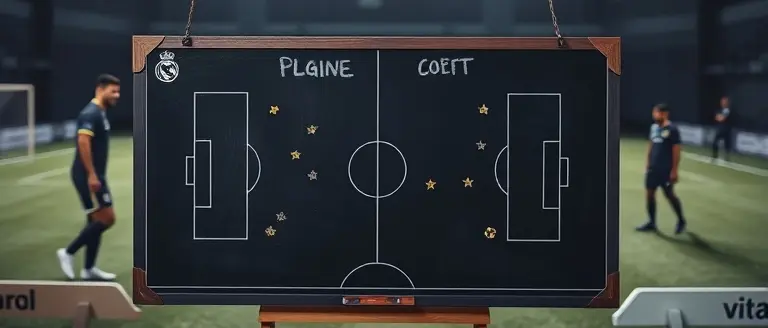
The 2025/26 campaign at the Santiago Bernabéu will be remembered as a period of significant structural instability. Under the tenure of Álvaro Arbeloa, Real Madrid suffered from a recurring inability to maintain defensive cohesion, often leaving the center-backs exposed during quick transitions. The primary tactical failure stemmed from an unbalanced mid-block that lacked the necessary discipline to screen the backline, resulting in a porous structure that top-tier European opponents exploited with ease. Evidence suggests that the squad’s tactical rigidity—marked by a struggle to adapt mid-game—prevented the team from controlling the tempo of high-stakes matches.
The Breakdown of Dressing Room Hierarchy
Beyond the tactical failures, internal sources indicate that Arbeloa struggled to manage the club’s complex locker room hierarchy. When veteran leadership and emerging stars lack clear, authoritative direction, accountability often evaporates. Key issues that the incoming manager, potentially Jose Mourinho, must address immediately include:
- Defensive Transition Volatility: Restoring the disciplined, low-block integrity that has historically defined successful Madrid iterations.
- Tactical Flexibility: Moving away from the stagnant system that forced square pegs into round holes during the latter half of the season.
- Accountability Protocols: Re-establishing a meritocratic culture where starting spots are dictated by performance rather than seniority or perceived status.
By analyzing the Arbeloa era, it becomes clear that the systemic collapse was as much about identity as it was about execution. The incoming administration is faced with a roster that is technically gifted but organizationally fragmented. If Jose Mourinho is indeed the man tasked with the reconstruction, his first objective will be to strip back the complex, ill-fitting strategies of the previous season and implement a pragmatic, results-oriented framework. Fixing these systemic issues is not just a preference; it is an absolute requirement to reclaim the domestic and continental dominance expected by the Madrid faithful.
The Evolution of Mourinho: Is the 2026 Version Still the Right Fit?

The potential return of Jose Mourinho to the Santiago Bernabéu is far more than a nostalgic play by Florentino Pérez; it is a calculated attempt to overhaul the systemic instability that defined the tenure of Álvaro Arbeloa. Unlike the combative, counter-attacking iteration of Mourinho that exited Madrid in 2013, the 2026 version of the manager—honed through his recent stint at Benfica—has demonstrated a more nuanced tactical flexibility. While his foundational principles regarding defensive solidarity remain, Mourinho has integrated modern, data-driven metrics to optimize player rotation and high-press transitions, suggesting he is better equipped to handle the demands of a high-ceiling, elite-level squad.
Adapting to Modern Football Demands
Mourinho’s tactical philosophy has shifted from rigid defensive blocks to a more fluid, possession-resilient structure. During his time in Lisbon, he emphasized:
- Hybrid Pressing: Implementing intelligent triggers that allow the team to conserve energy while maintaining a high defensive line against elite transitions.
- Squad Integration: A renewed focus on developing a core of tactical ‘leaders’ on the pitch who can adapt to in-game situational changes without waiting for secondary instructions from the touchline.
- Data-Centric Selection: Utilizing advanced analytical insights to mitigate physical fatigue, a recurring issue that plagued the 2025/26 Madrid squad.
The burning question remains: can this evolved style stabilize a Real Madrid side currently reeling from internal fragmentation? Evidence suggests that Mourinho’s reputation for ‘stability through structure’ is exactly the corrective mechanism required to silence the chaos of the last twelve months. By prioritizing defensive discipline, he provides a platform for the team’s creative sparks to operate with freedom. If the reported deal is finalized, the focus must shift immediately from his celebrity status to his capacity to impose a rigid, disciplined culture upon a team that has lacked a singular, authoritative identity since the previous managerial transition.
Strategic Implementation: Short-Term Fixes and Long-Term Club Sustainability

The potential return of Jose Mourinho to the Santiago Bernabéu represents far more than a sentimental reunion; it is a calculated administrative pivot by Florentino Pérez to address the systemic stagnation that defined the Álvaro Arbeloa era. To successfully stabilize the club, Mourinho must immediately reconcile the squad’s tactical deficiencies with the high-pressure demands of the Madrid fanbase. Unlike his tenure a decade ago, the 2026 version of Mourinho must focus on a “hybrid reconstruction” model that balances elite-level recruitment with the integration of burgeoning academy prospects who were underutilized during the 2025/26 season.
Tactical Rebirth and Squad Overhaul
Evidence suggests that Mourinho’s initial mandate will involve reinforcing the defensive transition and identifying a clinical focal point for the attack. With rumored targets like Victor Osimhen linked to the club, the strategy appears to shift toward a direct, vertical playstyle that moves away from the possession-heavy approach that failed to yield trophies last season. Key areas for structural improvement include:
- Defensive Rigidity: Implementing a high-press structure that minimizes counter-attacking risks.
- Squad Rationalization: Moving on players who do not fit the high-intensity profile required for the Mourinho system.
- Youth Integration: Establishing a clear pathway for Castilla talents to transition into the first team, a move essential for long-term wage bill sustainability.
For fans and analysts attempting to decode how this might look on the pitch, visual evidence is paramount. We recommend seeking out dedicated video analysis on platforms like YouTube and TikTok, where tactical experts are currently breaking down the “Mourinho Blueprint.” These visual breakdowns provide a necessary layer of clarity that static news reports often miss, mapping out exactly how the 2026 iteration of Real Madrid might reshape its identity to compete for domestic and European titles once again. By blending proven leadership with a modernized tactical approach, Mourinho aims to move the club past the internal turmoil of the recent past toward a more stable, trophy-laden future.
Beyond the Rumors: Decoding the Next Era
The return of José Mourinho to the Santiago Bernabéu is far more than a sentimental reunion or a desperate political gamble by Florentino Pérez; it represents a fundamental shift in Real Madrid’s structural philosophy. Whether this 2026 iteration of the ‘Special One’ can mend the systemic fractures left behind by the Arbeloa tenure depends on a cold, calculated integration of tactical discipline and roster realignment. As the smoke clears from the latest administrative meetings, the real work begins—not just for the manager, but for the analysts and fans tasked with tracking the evolution of this historic club.
Much like a manager needs complete mental clarity to reconstruct a winning squad, modern analysts require sharp focus to decode the complex tactical shifts Mourinho is expected to implement. Navigating the noise of media rumors while performing deep-dive data analysis demands a level of cognitive endurance that few possess naturally. This is where The Brain Song becomes an essential tool for the strategic thinker; it offers a science-backed approach to mental clarity and pattern recognition, ensuring you remain as sharp as the tactics you study.
By optimizing your focus and learning capacity, you can cut through the fog of sensationalist journalism and truly understand the intricacies of Madrid’s looming restructuring. Elevate your analytical game and prepare for the upcoming managerial transition by sharpening your perspective with the right mental support.  Sharpen your tactical insight and stay ahead of the game; try The Brain Song today to optimize your focus for the upcoming managerial transition. Transform My Analytical Clarity Now!