
The commercial automotive landscape shifted dramatically in mid-May 2026 when General Motors officially confirmed that it would end production of its medium-duty Silverado 4500HD, 5500HD, and 6500HD trucks. With an effective date of September 30, 2026, this announcement brings a definitive end to an eight-year partnership with Navistar at the Springfield, Ohio, facility. For fleet managers and commercial operators, the news is not merely a headline; it is a catalyst for urgent operational re-evaluation.
Driven by a staggering 37.4% year-over-year decline in Q1 sales, the move signals GM’s retreat from a segment currently dominated by Ford’s robust F-Series lineup. As businesses scramble to determine the best path forward—whether by rushing to secure final-year inventory or pivoting to competitor chassis—the focus must shift toward long-term maintenance and technical autonomy. In this guide, we break down what this discontinuation means for your fleet and how you can maintain your operational edge even as manufacturer support for these specific models begins to fade.
The End of an Era: GM Ceases Silverado HD Medium-Duty Production
General Motors has officially confirmed that it will cease production of its medium-duty Chevrolet Silverado truck lineup, specifically the 4500HD, 5500HD, and 6500HD models, effective September 30, 2026. This decision signals a major strategic withdrawal from the medium-duty commercial vehicle segment, marking the conclusion of an eight-year manufacturing collaboration with Navistar International. The trucks, which were produced at the Navistar facility in Springfield, Ohio, will no longer roll off the assembly line as GM opts not to renew its current manufacturing contract.
The Catalyst for Discontinuation
The primary driver behind the decision is a sharp decline in market performance. Market data indicates that GM ends Silverado HD production largely due to a severe sales slump that hindered the brand’s ability to remain competitive against established heavy-duty leaders like Ford. Key factors contributing to this exit include:
- Substantial Sales Decline: In Q1 2026, sales for the medium-duty Silverado range plummeted by 37.4% year-over-year, with only 1,273 units moved during that period.
- Competitive Imbalance: The medium-duty segment has been overwhelmingly dominated by the Ford F-650 and F-750, leaving GM with insufficient market share to justify continued investment.
- Operational Shifts: With the dissolution of the partnership, Navistar is reportedly repositioning its Springfield operations, prompting GM to pivot its resources toward more profitable, high-volume segments.
This move leaves fleet managers and commercial operators searching for alternatives as the supply chain for these specific chassis prepares to shut down. By exiting this niche, GM appears to be pruning its commercial portfolio to prioritize more lucrative opportunities, potentially focusing on electric vehicle integration or light-duty fleet dominance. For businesses currently relying on the Silverado 4500HD–6500HD, the industry now shifts toward navigating a post-production landscape where support and inventory availability will become the primary focus for fleet longevity.
Fleet Transition Guide: Top Alternatives for Your Business
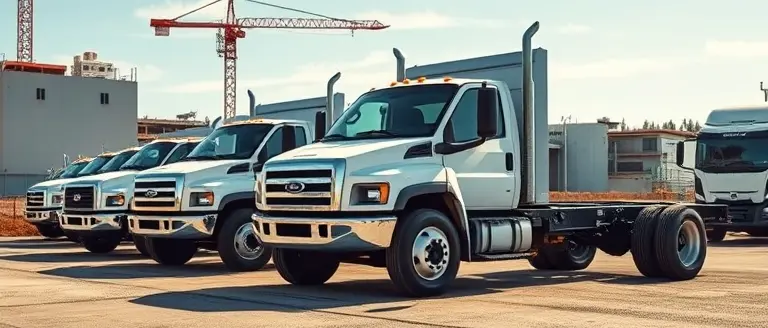
With the news that GM ends Silverado HD production for the 4500HD, 5500HD, and 6500HD models on September 30, 2026, fleet managers must shift their procurement strategies immediately. This exit from the medium-duty commercial segment necessitates a transition to established competitors that offer long-term support, parts availability, and factory-integrated upfitting solutions. For businesses relying on these chassis, moving to either the Ford F-650/F-750 or the Ram Chassis Cab lineup is the most viable path forward to maintain operational continuity.
Comparing Market Alternatives
When evaluating the replacement for your aging Chevrolet fleet, consider the following key differentiators:
- Ford F-650/F-750: Known as the industry standard for durability, the Ford medium-duty lineup offers the most seamless integration for vocational bodies. Ford’s massive dealership and service network provides the best uptime assurance for multi-state operations. Their reliance on the 7.3L V8 gas engine or the 6.7L Power Stroke diesel offers robust power curves that rival the outgoing Duramax performance.
- Ram Chassis Cab (3500/4500/5500): If your workflow requires extreme towing capacity and a highly refined interior, the Ram platform is a superior choice. Ram provides excellent upfit-friendly engineering, featuring flat frame rails and pre-drilled holes for rapid body mounting. Their Cummins turbo-diesel engines maintain a legendary reputation for high-mileage longevity, which is critical for lowering your total cost of ownership (TCO).
Strategic Recommendations for Fleet Managers
Transitioning brands is not merely a purchasing decision; it is a logistical overhaul. To mitigate the impact of the GM commercial exit, focus on consolidating your fleet into a single platform to simplify technician training and spare parts inventory.
We recommend that fleet managers conduct an immediate audit of their 2026 vehicle lifecycle plans. If your operations rely heavily on the unique specifications of the GM medium-duty chassis, securing remaining dealer inventory before the September 30 cutoff may provide a 24-month buffer, allowing your team sufficient time to pilot test Ford or Ram units. Prioritize units with standard configurations to ensure your existing body equipment can be transferred or serviced with minimal custom fabrication costs. By acting now, you effectively insulate your business from potential supply chain volatility following the factory closure.
Maintaining Your Legacy Fleet: Post-Discontinuation Strategy

With GM ending Silverado HD production of the 4500HD, 5500HD, and 6500HD models on September 30, 2026, fleet managers must shift from an acquisition mindset to a long-term sustainment strategy. While General Motors will continue to support these vehicles with factory parts, the cessation of new production often signals a gradual tightening of supply chains for niche chassis-specific components. To protect your capital investment, it is vital to audit your current fleet’s mileage and wear-and-tear cycles immediately. We recommend establishing a “critical parts” stockpile now, focusing on electronic control modules, specific chassis suspension components, and trim-level-specific sensors that may become difficult to source as the aftermarket refocuses on Ford and Ram alternatives.
Strategic Asset Management and Maintenance
Transitioning to a proactive maintenance model is essential for businesses relying on these medium-duty assets. Relying exclusively on dealership networks—which may prioritize newer retail vehicle support—could lead to extended downtime. Instead, cultivate relationships with authorized, independent commercial fleet specialists who can handle the intricacies of the Navistar-built chassis.
- Inventory Audits: Catalog every unit’s service history to identify recurring failure points. Pre-emptively replace high-wear components before the September 2026 production deadline.
- Documentation: Ensure your maintenance team has digital access to all technical service bulletins (TSBs) and wiring schematics, as factory-level documentation may become harder to access once the product line is officially legacy.
- Asset Lifecycle Planning: Gradually phase these vehicles out of high-intensity routes. Shift your 4500HD–6500HD models to lighter-duty cycles to extend their usable service life, while simultaneously trialing alternatives like the Ford F-650 or Ram Chassis Cab to ensure operational continuity.
By treating these vehicles as “legacy assets” today, you mitigate the operational risk inherent in GM ending Silverado HD production. Planning now prevents the reactionary, high-cost repairs that often plague fleets holding onto discontinued commercial hardware.
GM’s Commercial Future: Pivot or Pullback?

The decision to end GM Silverado HD production for the 4500HD, 5500HD, and 6500HD models represents more than just a failed manufacturing partnership; it signals a fundamental shift in General Motors’ long-term commercial strategy. While industry analysts initially speculated that GM might retool to compete more aggressively with the Ford F-650 and F-750, the 37.4% year-over-year sales collapse in Q1 2026 suggests the company has opted for a strategic retreat from the medium-duty chassis market. By cutting these low-margin, high-complexity vehicles, GM is effectively reallocating its internal capital toward more profitable sectors that promise higher growth in the coming decade.
Prioritizing Electrification and Light-Duty Dominance
Evidence suggests that GM’s commercial roadmap is leaning heavily into electrification and specialized delivery solutions rather than traditional combustion-powered medium-duty work trucks. The aggressive expansion of BrightDrop, GM’s dedicated electric delivery vehicle subsidiary, serves as the clearest indicator of this pivot. Instead of fighting for market share in the crowded, low-volume medium-duty space, GM appears to be banking on:
- Electric Vehicle Scalability: Moving resources toward the BrightDrop platform to capture the growing urban delivery sector.
- Light-Duty Fleet Optimization: Doubling down on the Silverado 1500 and 2500/3500 series, where volume and profit margins remain significantly higher.
- Infrastructure Synergy: Aligning commercial offerings with the broader rollout of the Ultium platform to standardize fleet maintenance and energy requirements.
Implications for the Commercial Market
For fleet operators, this exit creates a vacuum that competitors are already rushing to fill. With the Silverado HD medium-duty line exiting production on September 30, 2026, the American commercial truck market is consolidating further. While critics view this as a surrender to the dominance of Ford and Ram, it is perhaps more accurately viewed as a tactical pullback. By offloading the operational burden of the Navistar partnership, GM is positioning itself to be a leaner, more agile competitor in the segments where it holds a clear technological and financial advantage. Moving forward, buyers should expect GM to emphasize “smart” fleet tech and zero-emission logistics over heavy-duty chassis capability.
Maximizing Fleet Longevity in a Changing Market
The decision by General Motors to pull the plug on the Silverado 4500HD–6500HD production line marks a pivotal shift for fleet managers across the nation. Whether you decide to pivot to Ford or Ram, or commit to keeping your existing medium-duty workhorses on the road, the reality of the post-September 2026 landscape demands a more proactive approach to vehicle maintenance and custom upfitting.
As you evaluate your transition strategy, remember that maintaining specific fleet configurations often requires custom fabrication; having access to professional-grade build plans can be the difference between a functional workspace and a costly downtime scenario. This is where precision and technical capability become your greatest assets in protecting your business operations against supply chain uncertainty.
By utilizing professional-grade workshop plans, you gain the ability to fabricate custom truck-mounted storage, specialized utility beds, and infrastructure necessary to keep your legacy commercial vehicles operational for years to come. This is the ultimate toolkit for fleet maintenance, allowing you to maximize the utility and longevity of your existing assets regardless of manufacturer support. Do not let shifting production schedules dictate your success.
 Secure your professional-grade building plans and streamline your fleet’s maintenance and customization needs today.Secure My Professional Workshop Plans Now!