
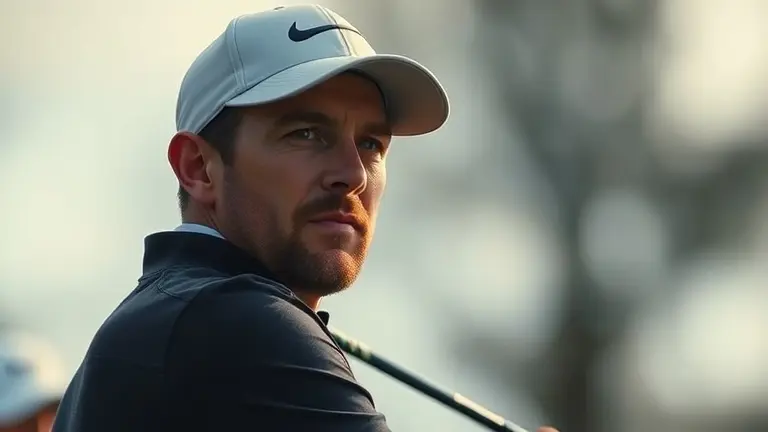
The atmosphere at Aronimink Golf Club has shifted from cautious deliberation to high-octane intensity as the 2026 PGA Championship hits its critical ‘Moving Day’ phase. Amidst a leaderboard that has tightened significantly, Chris Kirk has emerged as a focal point of this Saturday’s action, orchestrating a masterclass that mirrors the resilience shown by fellow contenders Justin Rose and Michael Kim. While most of the field struggles to navigate the demanding nuances of the Aronimink course, these players have unlocked a specific rhythm, shooting low scores that have suddenly thrust them into the center of the championship conversation.
What separates these surging golfers from the rest of the pack isn’t just raw talent; it is their ability to execute under the mounting pressure of a Major championship. By analyzing their iron performance and strategic adaptation to the wind, we can uncover why these three players are succeeding where others falter. This isn’t just a streak of luck—it is a calculated display of mental stamina and physical precision required to survive the grueling grind of a Saturday afternoon at one of golf’s most punishing venues.
Chris Kirk’s Electric Moving Day Surge at the 2026 PGA Championship
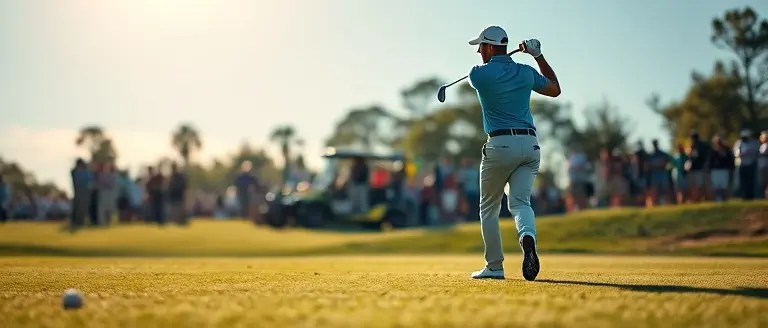
The atmosphere at Aronimink Golf Club has shifted dramatically this Saturday as Chris Kirk ignited a spectacular performance during the third round of the 2026 PGA Championship. Moving into the prime of “Moving Day,” Kirk has demonstrated clinical precision on the greens, posting an electric 5-under through his opening seven holes. This surge has not only vaulted him into immediate contention but has also provided a blueprint for how to attack the course’s demanding layout under changing wind conditions. His ability to navigate the complex pin locations suggests a masterful adaptation to the specific challenges Aronimink poses, turning what began as a mid-pack pursuit into a genuine challenge for the Wanamaker Trophy.
The Dynamics of the Mid-Round Charge
Kirk is not alone in this aggressive climb up the leaderboard. Alongside him, Justin Rose and Michael Kim have also capitalized on the morning conditions, creating a trio of momentum that has redefined the tournament’s weekend narrative. Statistical analysis of their play reveals a shared commitment to aggressive iron play that minimizes risk while maximizing scoring opportunities on reachable par-fours.
- Strategic Precision: Each player has utilized high-trajectory approach shots to negate the firm, fast conditions of the Aronimink greens.
- Momentum Shifts: The resurgence of Justin Rose—notably following his clutch eagle save during the second round—has provided a psychological tailwind for the field.
- Course Adaptation: By attacking pins that were previously avoided during rounds one and two, Kirk and his counterparts have successfully leveraged the scoring windows that opened up as the winds shifted.
As the afternoon progresses, the spotlight remains firmly on this surge. While the leaderboard remains fluid, the impact of these performances cannot be overstated. By mid-day, the gap between the lead pack and the challengers has narrowed significantly, setting the stage for a high-stakes final round. Fans tracking the live scores are witnessing a masterclass in professional course management, proving that on “Moving Day,” experience and confidence are the ultimate currencies.
Statistical Analysis: The ‘Big Three’ Resurgence at Aronimink

The leaderboard at the 2026 PGA Championship has undergone a dramatic transformation, driven by a statistical masterclass from Chris Kirk, Justin Rose, and Michael Kim. While the field has struggled to navigate the shifting winds and complex pin placements at Aronimink Golf Club, these three players have outperformed the field average by a significant margin. Data from the third round indicates that their ascent is not merely a product of favorable bounces, but a result of elite-level precision in strokes gained metrics, particularly in their approach play and putting efficiency.
Decoding the Metrics of Success
The primary driver behind this sudden surge lies in their ability to master the Aronimink approach shots. By analyzing the data, we can identify specific patterns that separate these contenders from the rest of the pack:
- Strokes Gained: Approach: Kirk and his peers have displayed an uncanny ability to stick the ball closer to the hole than the tournament average, often hitting into the smaller, well-guarded target zones that have neutralized many of the field’s top seeds.
- Putting Efficiency: After barely surviving the cut, players like Justin Rose have utilized a heightened putting rhythm, converting mid-range birdie opportunities that were missed by the field earlier in the week.
- Resilience Under Pressure: The combined data for Michael Kim and the others suggests a high ‘scramble rate,’ allowing them to save par in situations where the course architecture would typically force a bogey.
Evidence suggests that these players have effectively adapted to the course’s firming conditions. While many competitors are playing defensively, the ‘Big Three’ are attacking pins with calculated aggression. By maintaining a higher-than-average proximity to the hole, they have drastically reduced the variance in their putting, turning Aronimink’s defense into their greatest statistical advantage as they push toward Sunday’s final round.
Mastering Aronimink: Why the Course is Yielding Low Scores

The 2026 PGA Championship at Aronimink Golf Club has transformed into a masterclass in aggressive play, specifically during the pivotal “Moving Day.” While the course is traditionally known for its stout defense, Chris Kirk, Justin Rose, and Michael Kim have successfully decoded its complexities to vault up the leaderboard. The key to their success lies in a high-reward approach to the firm fairways and specific pin placements that have plagued other contenders. By prioritizing iron precision and adapting to the swirling winds, these players are creating scoring opportunities where most of the field sees only risk.
The Strategy Behind the Surge
The Aronimink layout requires a blend of length and tactical intelligence. As the ground firms up, players who can control their spin rates off the tee are finding themselves in positions to attack pins that are tucked into narrow corridors. The current performance of these three athletes highlights a shift in “Moving Day” strategy:
- Aggressive Pin Seeking: Rather than playing for the center of the greens, players like Kirk are utilizing the firm slopes to funnel shots toward hole locations, turning seemingly difficult approaches into manageable birdie looks.
- Adaptation to Wind Conditions: The variable winds at Aronimink have forced a change in club selection. The ability to flight shots lower has allowed these players to maintain control, whereas those playing high-trajectory shots have struggled with distance regulation.
- Momentum Management: Following his narrow escape from the cut line, Justin Rose has utilized a refined short-game strategy to salvage par saves that kept his round momentum alive, mirroring the tactical focus observed in Michael Kim’s recent surge.
Evidence suggests that those who embraced an aggressive, low-stinger approach off the tee are seeing the most success. By keeping the ball under the wind, Chris Kirk has successfully navigated the course’s hardest stretches, proving that mastering the setup at Aronimink is as much about mental discipline as it is about physical execution. As the tournament reaches its conclusion, this blend of calculated risk and elite ball-striking remains the gold standard for navigating the championship layout.
From Underdogs to Contenders: Narratives Heading into the Final Round
The narrative arc of the 2026 PGA Championship at Aronimink Golf Club has been defined by the remarkable resilience of players who, just 48 hours ago, appeared to be afterthoughts in the championship conversation. Chris Kirk embodies the quintessential mid-pack climber, having methodically dismantled the course layout on “Moving Day” to transform a modest position into a legitimate title hunt. Unlike leaders who start with high expectations, Kirk’s strategy has relied on clinical iron play and an acute adaptation to the swirling wind conditions that have plagued the field throughout the weekend. By stringing together aggressive birdies, he has shifted the momentum, forcing the rest of the leaderboard to recalibrate their risk-reward calculations heading into the final round.
Parallel to this, the comeback of Justin Rose serves as the emotional anchor of the tournament. After nearly missing the cut with a dramatic, high-stakes eagle save in the second round, Rose has channeled that near-elimination experience into a masterclass of composure. This psychological reset allowed him to play with a “nothing to lose” mentality that is rare in major championship settings. Along with Michael Kim, who has mirrored this surge with equally impressive low scoring, these three athletes represent the volatility of Aronimink.
Why These Contenders Are Dominating
The resurgence of these players is not merely a product of luck but a testament to specific technical adjustments that set the stage for Sunday’s pressure:
- Adaptation to Aronimink: Each player identified specific pin locations that favored precise approach shots, allowing them to capitalize on the course’s firm greens.
- Momentum Management: By effectively utilizing the momentum from early-round saves, they have successfully neutralized the psychological stress inherent in a major tournament.
- Field Comparison: While the rest of the field played defensively to protect their positions, Chris Kirk, Justin Rose, and Michael Kim maintained an aggressive pace that statistically widened the gap between them and the stagnant leaders.
As the tournament reaches its climax, these narratives of resurgence create a heightened sense of pressure. Sunday’s final round will test whether these surging veterans can maintain their technical precision under the unique spotlight of a major championship, or if the weight of the leaderboard will force a retreat back toward the pack.
Unlock Your Peak Focus for the Final Round
As we witness the incredible resolve of Chris Kirk, Justin Rose, and Michael Kim, it becomes clear that elite performance—whether on the links or in your daily life—demands consistent metabolic stability. The pressure of the final round at Aronimink is immense, and these athletes are succeeding because they maintain the cognitive clarity necessary to make split-second decisions without falling victim to the ‘brain fog’ that plagues so many when the stakes are at their highest.
Just as these pros must maintain peak physiological function to navigate Aronimink’s challenges, you need a reliable strategy to keep your energy steady throughout your own demanding schedule. Sustained focus isn’t an accident; it is the result of metabolic support. This is where Sugar Defender comes in, providing the science-backed, liquid-based solution designed to counter energy slumps and help you maintain the laser-like focus you need to keep up with every twist and turn of the championship finale.
Don’t let mid-day fatigue hold you back from staying sharp and fully engaged. Elevate your potential, eliminate the fog, and experience the consistency that fuels top-tier performance. Join the ranks of those who prioritize their metabolic health to stay ahead of the curve.
 Support your focus and energy throughout the final round—try Sugar Defender for peak performance.Yes, I Want Sustained Energy Now!