
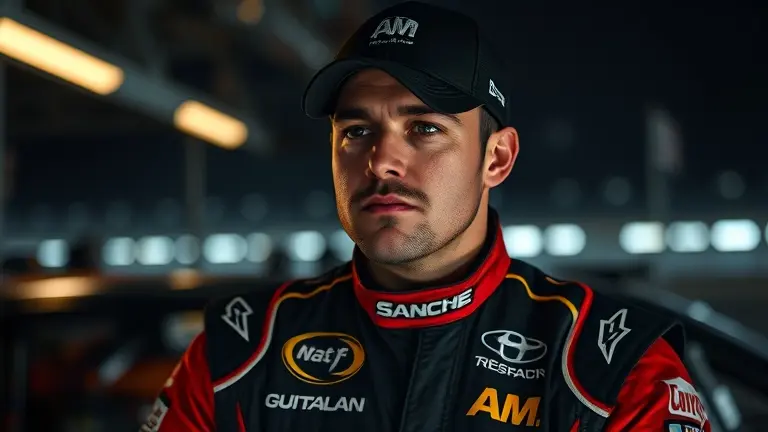
The NASCAR garage is built on the promise of perpetual motion, but as of mid-May 2026, the silence surrounding AM Racing tells a more sobering story. With the organization officially ceasing operations and releasing all staff, the sudden collapse has sent a ripple of instability through the O’Reilly Auto Parts Series. What began as internal tremors—highlighted by the team’s withdrawal from Rockingham—has culminated in a definitive end, leaving seasoned professionals and rising talents like Nick Sanchez scrambling to find their footing in a paddock that rarely offers second chances mid-season.
This collapse is not merely a logistical failure; it is a human crisis. Beyond the headlines of abandoned equipment and closed shops, there is a reality of sudden unemployment and the frantic search for new career trajectories in an increasingly volatile financial climate. To understand the future of this sport, we must look past the racing lines and investigate the underlying pressures that make mid-tier teams so vulnerable to dissolution, and address the acute psychological impact on those left behind when the team colors are folded for the final time.
,slug:
AM Racing Shuts Down: The End of an Era
The professional racing landscape shifted abruptly in mid-May 2026 as AM Racing officially announced it would cease operations, marking a definitive end to its participation in the NASCAR O’Reilly Auto Parts Series. This sudden closure, confirmed just prior to the race weekend at Dover, brought a permanent halt to the organization’s competitive efforts. The move was not entirely unexpected by industry insiders; it followed a period of mounting instability that began in late March when the team withdrew from the race at Rockingham. This earlier absence served as a harbinger of the financial and operational difficulties that ultimately rendered the organization unsustainable.
A Rapid Descent to Closure
The final decision to fold came as a swift blow to the garage area, with team leadership formally notifying all employees that they were being released from their duties immediately. The timeline of this collapse highlights the fragile nature of mid-tier racing organizations:
- Late March 2026: AM Racing officially withdrew from the Rockingham event, sparking initial concerns regarding their long-term solvency.
- Early May 2026: The organization attempted to navigate ongoing economic challenges but failed to find a path to continued participation.
- May 15, 2026: Leadership confirmed the team would cease operations, resulting in the immediate termination of the entire staff.
The impact of this shuttering extends far beyond the organization’s facility. Drivers, most notably Nick Sanchez, now find themselves in a precarious position, forced to navigate the mid-season market for new opportunities. The sudden loss of employment for crew members and support staff underscores the “human impact” of business volatility in professional motorsports. As the community reflects on this departure, discussions in forums like r/NASCAR continue to highlight concerns regarding the sustainability of teams outside the sport’s largest organizations. This closure serves as a stark reminder of the rigorous financial demands required to maintain a presence in the competitive NASCAR ecosystem.
The Human Cost: Driver Mobility and Staff Displacement

The sudden announcement that AM Racing ceases operations has sent shockwaves through the NASCAR garage, moving well beyond the loss of a team on the entry list. The most immediate concern involves the professional future of its drivers, most notably Nick Sanchez. For a talent of his caliber, being displaced mid-season creates an incredibly complex scenario. Finding a competitive seat after the season has already begun is notoriously difficult, as most teams have already finalized their driver lineups and sponsorship commitments. Sanchez now faces the high-pressure reality of navigating “silly season” dynamics while the rest of the field is fully focused on race preparation.
The Ripple Effect on Team Personnel
Beyond the drivers, the most profound impact of this closure is the sudden unemployment of mechanics, engineers, fabricators, and pit crew members. The AM Racing closure serves as a stark reminder of the inherent instability within mid-tier professional racing organizations. When a team folds, it is not just a business entity dissolving; it is dozens of individuals who must immediately source new employment in a niche industry.
- Mechanics and Engineers: These highly specialized professionals now face a saturated job market where openings at established, well-funded teams are rare mid-year.
- Support Staff: The logistics and operations teams, often the backbone of the garage, are frequently overlooked in headlines despite bearing the brunt of the instability.
- Professional Uncertainty: This event highlights the fragility of careers in the O’Reilly Auto Parts Series, where reliance on sponsorship cycles can result in overnight staff releases.
The sentiment among the racing community, as echoed in discussions across platforms like r/NASCAR, reflects genuine concern for the staff left behind. Unlike the drivers who may have personal backing, the crew members are often left to navigate a precarious career path in a sport where financial solvency is the primary gatekeeper for job security. This collapse underscores the broader, often hidden, human cost when a team struggles to remain solvent in an increasingly demanding economic climate.
Economic Realities: Why Teams Collapse in Modern NASCAR
The decision for AM Racing to cease operations mid-season serves as a sobering reminder of the razor-thin margins defining the NASCAR O’Reilly Auto Parts Series. While top-tier organizations benefit from diversified revenue streams and long-term manufacturer support, mid-tier teams often operate under a precarious “race-to-race” financial model. The modern landscape demands massive capital for technical development, high-end engineering talent, and complex logistics. When sponsorship packages fall short or projected revenue fails to materialize, the ability to sustain these overhead costs evaporates rapidly, leaving little room for error or recovery.
The Fragility of Mid-Tier Operations
Unlike larger, consolidated teams that can absorb financial fluctuations through technical partnerships and veteran sponsorship portfolios, smaller organizations face a “bottleneck” effect. As costs for parts, specialized labor, and travel continue to inflate, the barrier to entry—and survival—has spiked significantly. Evidence suggests that teams like AM Racing often struggle because they lack the necessary infrastructure to scale efficiently.
Key factors contributing to the collapse of such organizations typically include:
- Sponsorship Volatility: A reliance on a narrow base of sponsors creates high exposure; if one primary partner exits, the operational runway shortens instantly.
- Technical Development Costs: The constant need for aerodynamic advancements and engine tuning requires heavy R&D spending that often outpaces the budget of independent teams.
- Operational Scaling: Smaller teams often face higher relative costs for travel and logistics compared to multi-car operations that benefit from economies of scale.
When these factors converge—as witnessed in the withdrawal of the team from Rockingham earlier this spring—it creates an unsustainable environment. The permanent departure of AM Racing underscores a broader trend in professional stock car racing where the “middle class” of the garage is increasingly squeezed by the rising financial demands of remaining competitive. This consolidation of power among the elite teams means that for smaller outfits, financial stability is no longer just a goal—it is a prerequisite for entry.
The Ripple Effect: Shifting Garage Dynamics
When a professional organization like AM Racing ceases operations mid-season, the fallout extends far beyond the immediate loss of a single entry. The NASCAR garage functions as a tightly knit, high-stakes ecosystem where personnel, equipment, and sponsorship capital are perpetually in motion. The sudden vacuum left by the team’s collapse creates an immediate competitive imbalance, forcing rival teams to quickly assess how this departure changes the series’ landscape. For drivers like Nick Sanchez, the closure marks an abrupt transition into a hyper-competitive free-agent market, where securing a ride mid-season often requires navigating complex contractual obligations and limited remaining seats in the NASCAR O’Reilly Auto Parts Series.
The economic instability that precedes such a folding often signals deeper issues regarding the financial health of mid-tier operations. Industry analysts point to several logistical and competitive shifts that occur when a team exits:
- Personnel Migration: Experienced crew chiefs, engineers, and pit crew members are suddenly available, leading to a scramble among rival teams to bolster their own departments with veteran talent.
- Equipment Liquidation: The infusion of chassis, engines, and specialized racing technology into the marketplace can suppress prices or offer smaller, underfunded teams a rare opportunity to upgrade their hardware.
- Sponsorship Redistribution: Sponsors previously tied to the defunct team may pivot their marketing budgets to competing entries, altering the sponsorship hierarchy for the remainder of the season.
Ultimately, the departure serves as a sobering reminder of the fragile nature of modern NASCAR business models. The garage community often responds with a mix of collective shock and strategic opportunism. As rival organizations move to absorb the talent left behind by the AM Racing closure, the series inevitably undergoes a period of reshuffling. This internal migration highlights the high barrier to entry and the immense capital required to remain competitive, further underscoring the risks faced by teams attempting to sustain operations in an increasingly expensive racing environment.
Navigating the Turbulence: Finding Clarity Amidst Career Shifts
The shuttering of AM Racing is more than just a headline; it is a stark reminder of the fragile economic ecosystem that sustains professional NASCAR operations. For the staff and drivers like Nick Sanchez now thrust into an uncertain off-season, the immediate challenge is not just professional, but deeply psychological. When your identity is tied to the high-stakes, hyper-focused world of the garage, a sudden departure can leave a void that disrupts cognitive function and spikes cortisol levels, making the next professional step feel like an insurmountable mountain.
In high-performance industries, mental sharpness is the primary currency. When the roar of the engines goes silent, the resulting mental fog can cloud your ability to negotiate new contracts or pivot your trajectory effectively. This is where The Brain Song becomes an essential tool in your recovery toolkit. By utilizing neuroscience-based auditory stimulation for just 12 minutes a day, you can strip away the debris of stress and anxiety, allowing you to regain the executive function required to map out your next move with cold, clinical precision.
Don’t let the instability of the industry define your future. By prioritizing your mental clarity now, you regain the leverage needed to secure your next opportunity. Whether you are a displaced crew member or an athlete seeking a new home, restoring your focus is the most productive action you can take.
 Regain your mental edge while you navigate your next career move; explore how sound-based stimulation can clear the fog and restore your professional focus.Yes, I Want My Mental Edge Back!