

The financial markets have entered a state of high-stakes volatility that separates the reactive from the resilient. Following a record-shattering rally that pushed the Dow Jones Industrial Average past the 50,000 milestone, the narrative has shifted rapidly. As of May 15, 2026, Nasdaq futures and S&P 500 futures are struggling, tumbling by over 1% in early trading hours. This pre-market retreat is no mystery—it is a direct response to a spike in bond yields and resurfacing inflation concerns that are causing investors to reconsider their positions after a period of intense, AI-driven tech optimism.
For the individual trader, this environment is particularly treacherous. As the market digests the nuances of recent U.S.-China trade talks and the cooling sentiment in the technology sector, the gap between macro-economic data and individual portfolio performance has never been wider. Whether you are analyzing technical charts or tracking geopolitical developments, the ability to maintain cognitive clarity is the difference between a calculated move and an emotional error. In the following breakdown, we strip away the jargon to explain why your portfolio is reacting to current yield curves and how you can maintain the mental edge required to trade these volatile swings with confidence.
Market Snapshot: Why Nasdaq Futures Are Tumbling Today
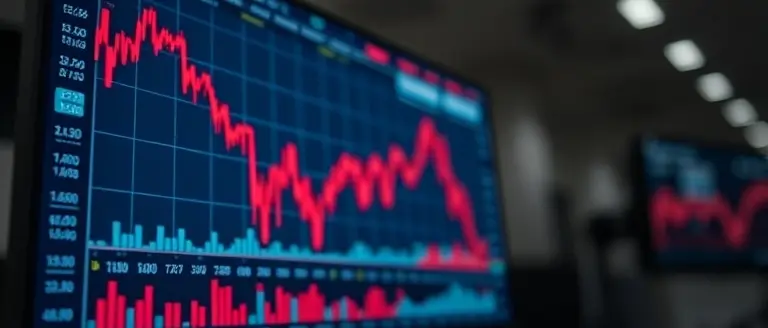
As of May 15, 2026, the financial landscape is undergoing a notable correction. Nasdaq futures and S&P 500 futures have retreated by more than 1% during early trading hours, signaling a sharp departure from the recent bullish momentum that saw the Dow Jones Industrial Average smash through the historic 50,000 milestone. This pre-market volatility highlights a growing divergence between the enthusiasm that propelled the AI-sector rally and the colder realities of current macroeconomic indicators.
The Catalyst: Bond Yields and Inflation Fears
The primary driver behind today’s downward pressure is a sudden spike in Treasury bond yields. When bond yields rise, they increase the cost of borrowing for corporations and provide a higher risk-free rate of return, which inherently makes growth-oriented tech stocks less attractive to institutional investors. This shift in sentiment is rooted in resurfacing inflation concerns that have forced market participants to recalibrate their expectations for long-term growth.
Investors are currently processing several high-stakes variables:
- Rising Interest Rates: The jump in bond yields is dampening appetite for high-valuation tech assets that previously benefited from a low-rate environment.
- Geopolitical Uncertainty: The conclusion of the latest U.S.-China trade summit has left markets seeking clarity, with investors reacting cautiously to potential shifts in trade policy.
- Profit-Taking: After a record-breaking rally, many institutional traders are locking in gains, contributing to the broader decline in stock market futures.
While the market remains highly reactive, this pullback represents a critical transition point. The exuberance surrounding AI-driven investment is meeting stiff resistance from macroeconomic headwinds, leading to a “wait-and-see” approach for many participants. As we move through the session, the interplay between these rising yields and the tech sector’s stability will likely dictate whether this tumble is a brief consolidation or the start of a broader market rotation. Traders should monitor bond market volatility closely, as it remains the single most influential factor driving the current retreat in equity derivatives.
The Tech Correction: Cooling AI Enthusiasm

The recent trajectory of Nasdaq futures signals a definitive shift in market psychology. After months of parabolic growth fueled by relentless AI investment enthusiasm, the technology sector is currently facing a period of intense re-evaluation. As of May 15, 2026, the euphoria that pushed valuations to record highs is meeting the cold reality of macro-economic constraints. This cooling effect is not merely a technical pullback but a structural rotation as institutional investors weigh the sustainability of premium pricing against rising capital costs.
When examining the current market landscape, several catalysts are contributing to this sentiment shift:
- Bond Yield Sensitivity: As bond yields spike, the cost of borrowing rises, disproportionately affecting high-growth tech stocks that rely on future earnings potential. This dynamic has dampened the appetite for speculative risk.
- Macro-Economic Drag: The broader market, including the Dow Jones futures, is feeling the pressure from persistent inflation concerns, which threaten to stifle the aggressive spending that previously supported the tech rally.
- Valuation Ceiling: Many market participants are now questioning if the recent surges in AI-related hardware and software companies have outpaced their actual earnings realization, leading to a “wait-and-see” approach.
While stock market futures have tumbled by over 1% in recent trading sessions, it is crucial to understand that this is a reactive environment. The tech sector, which acted as the engine of the recent bull market, is now transitioning into a defensive stance. Investors are no longer blindly chasing momentum; instead, they are prioritizing balance sheets and cash flow stability. As the dust settles from recent geopolitical developments, such as the outcomes of the U.S.-China summit, the tech sector must demonstrate tangible operational efficiency to regain the confidence of a cautious, yield-conscious investor base. The market is effectively demanding a proof-of-concept phase for AI, moving beyond the narrative-driven growth that defined the early half of 2026.
Geopolitical Ripples: U.S.-China Trade Talks Impact

The recent conclusion of high-level U.S.-China trade discussions has introduced a new layer of complexity to the financial landscape, directly influencing Nasdaq futures and broader market volatility. As institutional traders digest the summit outcomes, the prevailing “wait-and-see” sentiment has begun to override the exuberance previously fueled by the AI sector. Because tech-heavy companies often rely on global supply chains and vast consumer bases within the Chinese market, any ambiguity regarding trade policies creates immediate pressure on stock valuations. When geopolitical tension rises, investors often rotate out of growth-oriented tech stocks, leading to the sharp retreats seen in pre-market trading.
Connecting Trade Outcomes to Market Volatility
The current instability in stock market futures is not occurring in a vacuum; it is a reactive response to how trade friction impacts corporate earnings potential. While the Dow Jones futures recently celebrated the psychological milestone of 50,000, the tech-focused Nasdaq has struggled to maintain momentum as macro-economic concerns deepen. Key factors currently driving this cautious investor behavior include:
- Supply Chain Uncertainty: Ambiguous trade outcomes increase the risk of overhead cost hikes for tech hardware firms.
- Regulatory Anxiety: Investors are monitoring the potential for retaliatory trade measures that could restrict market access for U.S.-based software and semiconductor companies.
- Capital Allocation Shifts: As geopolitical risks materialize, institutional capital is frequently reallocated from high-beta tech assets into more defensive positions, exacerbating the sell-off in index futures.
This pivot away from the “AI rally” toward a more defensive posture suggests that the market is prioritizing stability over speculative growth. For the retail investor, understanding this connection is essential. The correlation between U.S.-China policy shifts and daily futures fluctuations serves as a reminder that even record-breaking performance in the Dow Jones Industrial Average can be quickly tempered by global trade realities. As inflation concerns simultaneously pressure bond yields, the intersection of these two forces—geopolitical risk and rising rates—continues to define the current, high-stakes trading environment.
Macro vs. Real-Time: Navigating High-Stakes Volatility

Navigating the current market landscape requires a clear distinction between ephemeral pre-market jitters and structural shifts in the economy. As of May 2026, Nasdaq futures are serving as a primary thermometer for investor anxiety, specifically reacting to the convergence of rising bond yields and the cooling of the AI-driven tech rally. When stock market futures tumble by over 1% in early trading, retail investors often mistake this as a signal to liquidate positions. However, seasoned traders look past the immediate red ticker to assess if the underlying macro-economic catalyst—such as the outcome of U.S.-China trade talks—warrants a change in long-term strategy or is merely noise.
Bridging the Gap: Yield Curves and Institutional Sentiment
To determine if a correction is becoming a sustained trend, you must monitor the relationship between Dow Jones futures performance and the fixed-income market. When bond yields spike, the cost of capital increases, which disproportionately impacts the high-growth tech firms that previously powered the Nasdaq to record highs. To navigate this high-stakes environment effectively, consider the following tactical framework:
- Yield Monitoring: Watch the 10-year Treasury yield as a lead indicator. Sustained upward pressure often signals a rotation out of tech and into defensive sectors, validating a potential trend change.
- Sentiment Divergence: If Nasdaq futures drop while the broader market stays flat or rallies, it indicates sector-specific repositioning rather than a systemic economic collapse.
- Geopolitical Filtering: Analyze the post-summit policy statements from the U.S.-China trade meetings. If the rhetoric suggests increased regulatory friction for semiconductors, the tech sector cooling may be structural rather than cyclical.
By focusing on these macro indicators, you can avoid reactive trading during volatile sessions. Understanding that the market is currently digesting the transition from “AI euphoria” to “inflationary caution” allows for a more disciplined, evidence-based approach to your portfolio management.
Master Your Focus Amid Market Turbulence
In a landscape where the Nasdaq futures and Dow Jones futures shift violently on every headline regarding inflation or U.S.-China summit outcomes, clarity is your most valuable commodity. While others react to the noise and succumb to the exhaustion of volatile sessions, the successful retail investor knows that high-stakes trading demands more than just technical analysis; it requires sustained mental sharpness. To navigate this high-volatility environment without falling victim to the mid-day brain fog that plagues so many, you need more than a strategy—you need physiological support.
In a market environment where every percentage point move is driven by rapid inflation data and geopolitical shifts, your greatest asset isn’t just your strategy—it’s your ability to maintain absolute mental clarity while others succumb to reactive fatigue. Sugar Defender bridges the gap between biological stability and the high-performance mental requirements of finance, serving as a critical ‘trader’s essential’ for consistent cognitive focus. By optimizing your internal energy, you ensure that your decision-making remains precise even when the charts become chaotic.
Don’t let fatigue cloud your judgment during critical trading windows. Support your trading performance today by ensuring your cognitive health is as sharp as your market insights—discover the benefits of Sugar Defender.
 Support your trading performance today by ensuring your cognitive health is as sharp as your market insights—discover the benefits of Sugar Defender.Transform My Mental Performance Today