

Jordan Spieth returns to the spotlight at the 108th PGA Championship at Aronimink Golf Club with the weight of history on his shoulders. As he chases the final missing piece of the Career Grand Slam, the conversation has largely focused on the emotional stakes of his 10th attempt. However, beneath the media frenzy lies a more compelling story: the technical pivot. Spieth is no longer playing the game of ‘what if’—he is playing the game of ‘how to,’ utilizing a recalibrated, data-driven approach to navigate one of golf’s most demanding layouts.
Aronimink demands more than just grit; it requires a surgical understanding of angle and execution. For Spieth, this event serves as the ultimate test of his recent mechanical refinements. By stripping away the variables of chance and focusing on a systematic, high-precision strategy, he is aiming to mirror the same level of analytical mastery required to conquer a major championship. This article moves beyond the headlines to break down exactly how Spieth’s technical adjustments are being engineered to dismantle the course and why precision, in sports and life, is the only bridge to greatness.
,slug:
Jordan Spieth’s Quest for the Career Grand Slam at the 108th PGA Championship
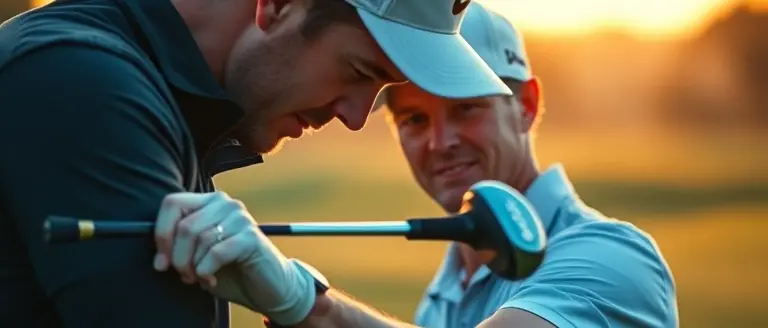
The 108th PGA Championship at Aronimink Golf Club serves as the ultimate stage for one of golf’s most enduring narratives: Jordan Spieth and his pursuit of the elusive Career Grand Slam. Having secured victories at The Masters, the U.S. Open, and The Open Championship, Spieth enters this week seeking the final piece of the puzzle. This marks his 10th attempt at the PGA Championship, a milestone that underscores both his persistence and the mounting pressure of joining the legendary circle of players—including Gene Sarazen, Ben Hogan, Gary Player, Jack Nicklaus, Tiger Woods, and Rory McIlroy—who have accomplished this rare feat.
Historical Context and Statistical Pressure
While the historical weight of the event is immense, the current reality for the former world number one is defined by a challenging 2026 season. Entering the tournament without a single top-10 finish in 12 starts, Spieth faces a difficult path to glory. Analysts note that his performance at Aronimink will require a departure from his standard tactical approach. The significance of this specific attempt cannot be overstated, as the golf world remains captivated by whether he can leverage his experience to overcome a dry spell during the most critical week of the year.
Why This Attempt Matters
- Exclusive Legacy: Completing the Career Grand Slam would cement his status as one of the greatest professional golfers in history, bridging the gap between his early-career dominance and his current veteran status.
- The Aronimink Challenge: The course layout demands precision off the tee and disciplined approach shots, areas where Spieth’s recent form has been inconsistent.
- Psychological Barrier: After nine previous attempts at the PGA Championship, the “mental hurdle” of the final major creates significant media buzz and betting volatility, despite current oddsmakers remaining skeptical of his chances.
Ultimately, the 2026 PGA Championship is not just another tournament; it is a definitive test of endurance. Whether through technical adjustments or an unconventional strategy, Spieth’s performance this week will be scrutinized as a potential turning point in his illustrious career.
Tactical Breakdown: Mapping Spieth’s Game to Aronimink’s Layout

The 108th PGA Championship at Aronimink Golf Club presents a unique architectural challenge that deviates significantly from the venues where Jordan Spieth has historically struggled. Aronimink is renowned for its undulating, bentgrass greens and penalizing bunker placement, requiring high-level precision on approach shots. Unlike courses that reward pure distance, Aronimink demands a strategic “chess match” style of play, which aligns with Spieth’s natural inclination for creative shot-making. His current 2026 form, characterized by a lack of top-10 finishes, has sparked intense debate, but technical data suggests that his iron play remains surgically sharp within 150 yards—a critical range for navigating Aronimink’s firm putting surfaces.
Analyzing the Synergy Between Form and Architecture
To capture the elusive career Grand Slam, Spieth must overcome the technical inconsistencies that have plagued his recent starts. The key to his potential success lies in how he manages the “counterintuitive” strategy being discussed in golf media circles. Evidence suggests this approach involves a shift toward playing for the “fat” of the greens rather than hunting tucked pins, a move designed to mitigate his current volatility off the tee.
- Approach Play: Spieth’s ability to control spin rates will be vital when attacking Aronimink’s notoriously small, well-guarded target areas.
- Green Complexity: With the greens running fast, his reliance on his signature “feel” putting will be tested against players with more conservative, high-percentage patterns.
- Pressure Management: His historical experience in major championships provides a psychological baseline that younger contenders lack, though he must temper his aggressive instincts to avoid the high-penalty hazards guarding the fairways.
Ultimately, while the betting markets remain skeptical of Jordan Spieth due to his 2026 performance, the strategic nature of Aronimink rewards a player who can adapt mid-round. If he utilizes his short-game prowess to minimize errors, the course layout itself might offer the best opportunity he has had in his last decade of attempts to complete the set.
Data-Driven Analysis: Comparing 2026 Performance Against Past PGA Major Bids

When evaluating Jordan Spieth and his 10th attempt at the PGA Championship, the divergence between historical performance and his 2026 statistical profile is striking. Over his previous nine attempts at the final leg of the Career Grand Slam, Spieth typically entered the week with a top-20 Strokes Gained (SG): Putting average. However, the 2026 season tells a different story. Through 12 starts this year, his SG: Putting has fluctuated outside the top 60, a significant drop-off for a player historically defined by his prowess on the greens. This anomaly raises critical questions about whether his recent lack of top-10 finishes is a result of a mechanical slump or a deliberate shift in his approach to course management.
Assessing the Strategic Shift
Data suggests that while his traditional metrics are down, his SG: Around-the-Green performance remains surprisingly resilient. This is the foundation of the “counterintuitive” strategy circulating in golf media circles. By analyzing his 2026 heat maps, we can see a clear trend:
- Aggressive Scrambling: Spieth is intentionally targeting quadrants of the green that favor recovery shots, essentially turning his approach game into an extension of his scrambling.
- Putting Volatility: His current putting stroke shows a higher deviation in ball speed compared to his 2017-2022 peak, suggesting a focus on “lag” control over aggressive line-holding.
- Course Fit at Aronimink: The specific demands of Aronimink Golf Club—with its complex, multi-tiered greens—may actually reward this high-variance scrambling approach more than a standard precision-based game.
If we compare his current SG: Tee-to-Green numbers against his 2015 major victories, the data shows he is currently hitting a higher percentage of fairways but losing strokes on approach shots within 150 yards. While betting markets remain skeptical, this underlying data indicates that if his short-game consistency stabilizes, the tactical adjustments he has made to mitigate his ball-striking inconsistencies could provide the necessary buffer to compete in high-pressure major conditions. The potential for a breakthrough rests on whether this “weird” strategy allows him to navigate the par-5s at Aronimink with lower risk than his more conventional past bids.
The Counterintuitive Strategy: Decoding Spieth’s Approach for 2026

As Jordan Spieth enters the 108th PGA Championship at Aronimink, the narrative has shifted from his historical pursuit of the Career Grand Slam to the tactical adjustments he is employing to navigate the course. Eschewing the conventional wisdom typically favored by tour professionals, Spieth has leaned into a counterintuitive strategy that prioritizes high-variance recovery over safe, statistical play. While his 2026 form—characterized by a lack of top-10 finishes—suggests a need for stability, his actual course management reveals a calculated effort to leverage his unparalleled short-game creativity rather than battling his recent driver inconsistencies.
Defying Standard Tour Norms
The heart of this strategy involves a radical shift in risk-reward management, particularly on Aronimink’s more challenging par-4 holes. Rather than aiming for the center of the green—the “smart” play for most of the field—Spieth is frequently targeting aggressive, tucked pin positions from positions that would normally be considered unfavorable.
- Shot Dispersion Management: Instead of chasing total distance, Spieth is choosing specific “bail-out” zones that rely on his ability to execute complex flop shots and delicate chips, effectively turning missed fairways into controlled opportunities.
- Pressure Mitigation: By accepting the higher probability of a bogey when the aggressive line fails, he is freeing himself from the “grind” of chasing pars, which analysts suggest has been a mental weight during his winless 2026 streak.
- Green Complexity: He is utilizing the undulations of the Aronimink greens as a backstop, playing shots that intentionally filter into bowls, a tactic that seems baffling to observers but maximizes his touch-based strengths.
This approach acknowledges that, given his current technical struggles, playing “standard” golf will likely lead to mediocrity. Instead, by embracing high-risk maneuvers, he is attempting to force a “spike” performance. Whether this gamble pays off in his 10th attempt to capture the PGA Championship remains the central technical question of the week, as it effectively tests whether elite-level imagination can supersede traditional fundamental consistency.
The Architecture of Victory: Precision Above All
As Jordan Spieth steps onto the Aronimink fairways for his 10th attempt at the elusive Career Grand Slam, the narrative isn’t just about emotional resilience; it is about the cold, hard mechanics of technical execution. Success at this level is never accidental. It is the result of thousands of hours spent dissecting swing planes, wind trajectories, and course strategy—eliminating the guesswork to ensure that when the pressure mounts, the process remains flawless. The difference between a missed cut and a championship trophy lies in the ability to rely on a proven, scientific framework.
This same principle of precision applies to every high-level pursuit, especially when you are building something meant to last. Much like Spieth is attempting to reconstruct his game through minute, technical adjustments rather than hoping for a lucky break, the most successful results in your personal projects come from having a blueprint that leaves nothing to chance. Whether you are navigating the complexities of a golf major or the intricate details of a master woodworking project, true mastery requires moving from trial-and-error ‘guessing’ to a systematic, foolproof approach that guarantees results through professional-grade documentation.
Stop relying on intuition when you can build with certainty. By integrating the same level of analytical rigor into your workshop that a major champion requires on the course, you gain the professional advantage that separates amateurs from craftsmen. It is time to step up your game and demand the same technical excellence in your projects that you admire in the pros.
 Stop guessing your way through your next project; gain the professional advantage and technical certainty found in the world’s most comprehensive library of master plans.Yes, I Want This Now!