
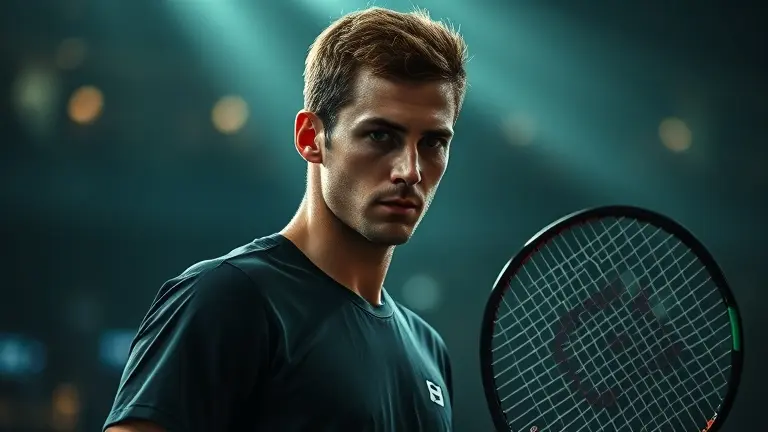
At the 2026 Italian Open, Jannik Sinner has done more than just dominate the clay; he has equaled a record held by the legendary Novak Djokovic, stringing together 31 consecutive victories at ATP Masters 1000 tournaments. To the casual observer, Sinner’s performance is a masterpiece of mechanical perfection, a calculated display of power and precision that defines the post-Big Three era. Yet, behind the scenes, the narrative is far more turbulent. The Italian prodigy is currently fighting a dual battle: the physical intensity of a quarterfinal clash against Andrey Rublev and the heavy, distracting weight of off-court controversies, ranging from contentious prize-money disputes with the Grand Slams to the disturbing reality of social hostility in his home country.
This dichotomy—the cold, tactical brilliance on the court versus the mounting psychological pressure of public scrutiny—is the defining story of Sinner’s 2026 season. As he approaches the French Open, the question is no longer just about his groundstrokes, but about his capacity to shield his mind from the systemic pressures of professional tennis. How does an athlete perform at the highest level when they are forced to play against both an opponent and the system itself? To understand Sinner’s evolution, we must look beyond the statistics and dive into the mental architecture that allows a champion to remain unshakable in the face of relentless disruption.
The Sinner Era: A Record-Breaking Run Under the Roman Spotlight
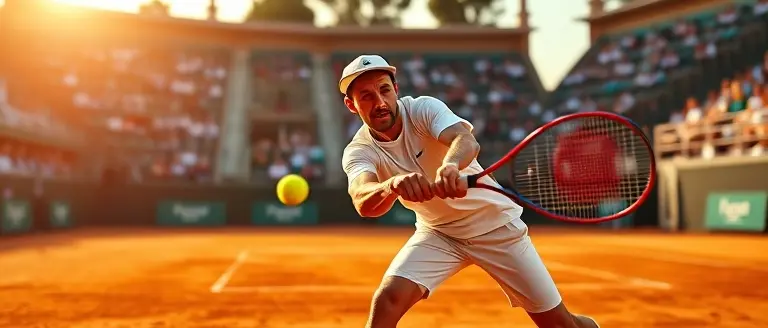
As of May 2026, Jannik Sinner has cemented his status as the undisputed titan of the ATP Tour. By securing his 31st consecutive victory in an ATP Masters 1000 tournament, the Italian superstar has officially equaled the legendary record previously held solely by Novak Djokovic. This historic milestone arrives at the most opportune moment: the 2026 Italian Open in Rome. Performing on home soil, Sinner has carried the weight of national expectation with a clinical efficiency that has become his trademark, effectively silencing skeptics who questioned his ability to handle the extreme pressure of the world No. 1 ranking.
Navigating the Quarterfinal Pressure
The atmosphere in Rome has been electric, yet layered with palpable tension as Sinner prepares for his high-stakes quarterfinal showdown against Andrey Rublev. While Sinner’s physical prowess remains at an all-time peak, the mental hurdle of competing in front of a fervor-filled home crowd cannot be overstated. His path to this point has been marked by a level of technical precision that suggests a fundamental shift in the landscape of professional tennis, moving away from the era of the “Big Three” and into a phase of ruthless, mechanical consistency.
Key elements of his current campaign include:
- Tactical Mastery: Sinner’s baseline aggression has overwhelmed opponents, keeping his service games remarkably efficient throughout the tournament.
- Resilience Under Scrutiny: Despite navigating external distractions—ranging from public administrative battles over prize money to unfortunate, hostile incidents involving local spectators—he has maintained a composed demeanor.
- Statistical Dominance: The 31-match win streak serves as empirical proof that he is not merely the current favorite, but the benchmark for the next generation of athletes.
Sinner’s ability to compartmentalize these off-court pressures while maintaining his pursuit of the title demonstrates a level of maturity that is essential for any player hoping to dominate the French Open. Whether he continues to dismantle his opposition or succumbs to the mounting external stressors remains the defining question of this clay-court season.
Sinner vs. The System: Navigating Power, Prize Money, and Governance

Beyond his historic 31-match Masters 1000 winning streak, Jannik Sinner is undergoing a profound transformation off the court. Long regarded as the stoic, mechanical competitor who lets his racquet do the talking, the world No. 1 has recently pivoted into the role of an outspoken industry leader. This shift is most visible in his public confrontation with tennis governing bodies regarding the equitable distribution of French Open prize money and broader professional player rights. By challenging the status quo, Sinner is signaling that the era of passive athlete participation in tennis governance is rapidly drawing to a close.
A New Era of Player Autonomy
Sinner’s recent critiques suggest a strategic alignment with other high-profile players who believe the current structure of Grand Slams does not sufficiently compensate the talent driving the sport’s massive revenue growth. His willingness to address these issues—despite the potential for institutional friction—highlights a growing confidence that transcends his on-court tactical brilliance. Key aspects of this evolution include:
- Financial Transparency: Demanding clearer visibility into how tournament revenues are calculated and allocated toward player compensation.
- Institutional Reform: Advocating for more robust representation for players within the hierarchies of the ATP and Grand Slam committees.
- Collective Leverage: Positioning himself as a centerpiece of a movement that prioritizes long-term sustainability for professional athletes over traditional, top-down management models.
Evidence suggests that Sinner’s transition from a quiet prodigy to a socio-political advocate is not a distraction, but rather a reflection of the “Big Three” era’s expiration. As the game enters a post-Djokovic, Nadal, and Federer landscape, the burden of leadership has fallen to Sinner. His ability to maintain a calm, methodical approach during his quarterfinal run at the Italian Open, while simultaneously battling the “System,” demonstrates a unique mental fortitude that is currently defining his legacy as more than just a tournament winner. By anchoring his influence in both performance and policy, Sinner is effectively redefining what it means to be a modern tennis icon.
Beyond the Baseline: Resilience Amidst External Distractions

While Jannik Sinner dominates the headlines for his mechanical precision and a historic 31-match Masters 1000 winning streak, his journey through the 2026 Italian Open has been defined as much by off-court adversity as by his tactical brilliance. As a “Home Hero” in Rome, Sinner carries the immense weight of national expectation, a burden recently compounded by disturbing incidents of hostility. The discovery of homophobic stickers targeting the world No. 1 within the tournament vicinity has sparked widespread condemnation, forcing the young athlete to navigate a complex socio-political landscape while preparing for high-stakes quarterfinals.
Managing High-Stakes Public Scrutiny
Sinner’s ability to partition these external stressors from his professional performance is a testament to his evolving mental fortitude. Rather than allowing the toxic atmosphere to disrupt his focus, he has maintained a stoic, professional demeanor, even as he simultaneously navigates administrative battles regarding Grand Slam prize money. This “Sinner vs. The System” narrative underscores a pivotal shift in the modern era of professional tennis, where athletes are increasingly expected to balance peak athletic performance with advocacy and public resilience.
- Emotional Regulation: Experts note that Sinner’s “robotic” on-court efficiency serves as a psychological shield, helping him isolate matches from the noise of public controversy.
- Administrative Advocacy: By challenging governing bodies on compensation, Sinner has positioned himself as a leader among his peers, though this increases the pressure placed upon him by both the media and sporting institutions.
- Social Impact: The homophobic incidents in Rome have tested his maturity; his response has prioritized the integrity of the sport over reacting to fringe provocations, demonstrating a level of emotional intelligence that transcends his age.
By maintaining his composure against the backdrop of these distractions, Sinner is proving that his dominance is rooted in a disciplined mindset that remains unshakable, regardless of the political or social climate surrounding the court.
The Evolution of a World No. 1: What’s Next for the Italian Icon?
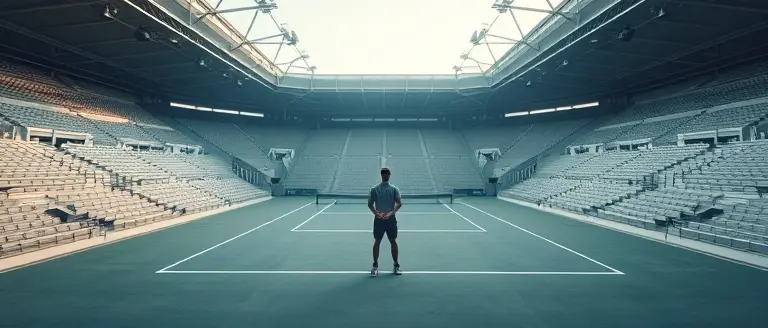
As Jannik Sinner solidifies his position at the pinnacle of the ATP rankings, his trajectory suggests more than just athletic supremacy; it marks a fundamental shift in the influence wielded by top-tier players. Having just equaled Novak Djokovic’s record of 31 consecutive victories at ATP Masters 1000 events, the 2026 Italian Open serves as the ultimate backdrop for his transformation from a promising talent to a global standard-bearer. His clinical, mechanical precision on the court, currently on display in his quarterfinal charge against Andrey Rublev, has effectively redefined the tactical expectations for the post-Big Three era.
However, Sinner’s legacy is increasingly being forged through his willingness to challenge the status quo. By taking a vocal, public stance on issues like French Open prize money and the administrative shortcomings of professional tennis governance, Sinner is signaling a transition toward a more activist model of sports stardom. This willingness to confront tournament organizers and governing bodies suggests that he intends to leverage his current “World No. 1” status to advocate for systemic changes that benefit the broader player collective.
Shaping the Future of Player Power
The implications of this shift are profound for the professional circuit. Evidence suggests that Sinner’s willingness to push back against the “System” is already inspiring a new generation of players to demand greater transparency and equity. Future analysts may view this period as the moment the power balance tilted toward the athletes. Key areas of this ongoing influence include:
- Structural Advocacy: Leveraging his immense popularity to force discussions on revenue sharing and labor conditions within Grand Slam tournaments.
- Mental Resilience: Navigating the hostile off-court environments—such as the recent, deeply concerning homophobic incidents in Rome—without compromising his on-court performance.
- The “Home Hero” Paradigm: Managing the heavy socio-political expectations of being the face of Italian tennis while simultaneously acting as a global voice for industry reform.
As Sinner looks toward the French Open, his ability to balance these high-stakes administrative battles with his physical dominance will be the true test of his longevity. If he succeeds, he will not only be remembered for his records but as the architect of a fairer, more player-centric tennis ecosystem.
Beyond the Baseline: Mastering Your Inner Arena
Jannik Sinner’s historic ascent to the world No. 1 ranking is defined by a mechanical, almost surgical precision on the court. Yet, as he navigates the volatile intersection of sporting glory, administrative battles with the sport’s governing bodies, and the unfair weight of public controversies, it becomes clear that his greatest challenge lies not in his forehand, but in the preservation of his mental space. His journey mirrors the broader struggle of elite performers who must find stillness while living in the center of a storm.
While Sinner relies on intensive tactical discipline to maintain his win streak, the reality is that high-stakes pressure eventually tests the limits of any human mind. We often look to athletes for physical inspiration, but the true lesson lies in cognitive resilience. Just as Sinner manages the chaotic noise of external criticism to maintain his flow, modern neuroscience offers a pathway for anyone to refine their own mental architecture, ensuring that you remain laser-focused even when your environment demands otherwise.
This is where The Brain Song becomes an essential tool for those looking to replicate the mental fortitude of a world-class athlete. By utilizing science-backed auditory pathways to optimize focus and clarity, you can bridge the gap between reacting to stress and mastering your cognitive output. It is more than just a technique; it is a fundamental upgrade to how you engage with your own daily challenges.
 Harness the same principle of cognitive refinement that top athletes use to stay sharp; start your 12-minute daily audio routine here to unlock your full mental potential.Transform My Mental Performance Today!