
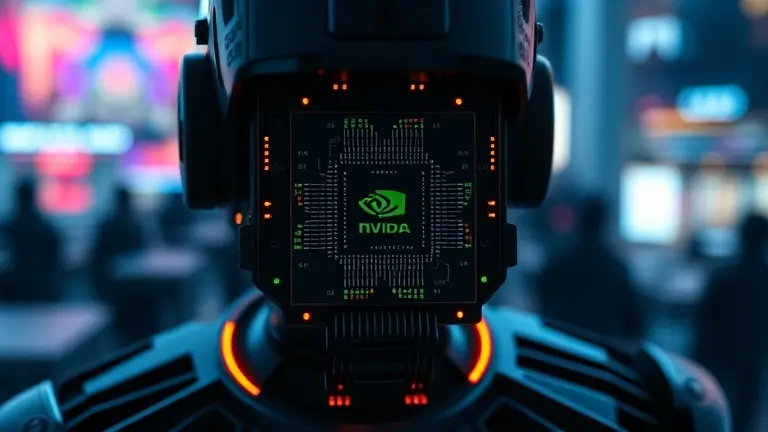
When the dust settled on May 14, 2026, the $5.55 billion IPO of Cerebras Systems (CBRS) did more than just break records—it signaled a seismic shift in the AI hardware landscape. As shares soared beyond a $100 billion valuation, retail and institutional investors alike were forced to confront a reality where Nvidia’s long-standing dominance is no longer unchallenged. Beyond the immediate market euphoria and the ‘AI bubble’ rhetoric, the true narrative lies in the unprecedented engineering of the Wafer-Scale Engine (WSE), a technology that fundamentally rearchitects how large language models are trained and deployed.
Yet, amidst this high-stakes race for computational supremacy, a divide has emerged between pure market speculation and long-term technical sustainability. Navigating this environment requires more than just capital; it demands the mental clarity to parse through complex institutional risk assessments and distinguish genuine technological breakthroughs from short-lived hype. To stay ahead of the next market cycle, investors must look past the ticker symbol and into the sophisticated core of the competition.
Cerebras Systems IPO: A Blockbuster Debut for AI Hardware

On May 14, 2026, the technology sector witnessed a watershed moment as Cerebras Systems officially entered the public markets. The CBRS IPO stands as the largest public offering of the year, successfully raising $5.55 billion in capital. By setting the initial cerebras stock price at $185 per share, the company achieved an initial valuation of $56.43 billion. This aggressive entry into the Nasdaq was met with overwhelming investor enthusiasm, resulting in the stock opening at $350 and sustaining intense buying pressure throughout the day. By the closing bell, the company’s market capitalization had surged beyond the $100 billion threshold, effectively signaling a massive appetite for specialized AI hardware.
This debut serves as the definitive kickoff for the 2026 tech IPO season, moving past the cautious atmosphere that defined previous quarters. Market analysts point to several factors driving this historic valuation:
- Institutional Dominance: Strong backing from major institutional players underscores confidence in Cerebras’s proprietary wafer-scale engine technology.
- Performance Metrics: The stock’s first-day gains exceeding 100% reflect a “gold rush” mentality regarding AI infrastructure providers.
- Sector Benchmarking: As a direct competitor to Nvidia, the firm has positioned itself as the primary alternative for companies seeking to scale high-end LLM training beyond traditional GPU clusters.
While the market performance has been nothing short of explosive, the rapid climb in CBRS shares has sparked debate among financial observers. Reports from outlets like Benzinga highlight the inherent volatility of such high-profile listings, warning that early-stage valuation models may be outpacing fundamental revenue growth. Investors are now tasked with distinguishing between the excitement surrounding the company’s technical hardware innovation and the speculative fervor currently influencing the cerebras stock price. As the dust settles, the focus must shift from the spectacle of the IPO to whether the company can sustain its momentum in the face of intense market expectations and evolving hardware competition.
Architecture Face-Off: Cerebras Wafer-Scale vs. Nvidia’s Blackwell

The market debut of Cerebras Systems has shifted focus toward the underlying technological differentiation that justifies its valuation. While Nvidia’s Blackwell and H100 architectures represent the pinnacle of traditional GPU-based computing, they rely on a cluster-based approach. Nvidia systems distribute workloads across thousands of individual chips, necessitating complex interconnects like NVLink to manage the communication overhead between processors. This fragmentation introduces inherent bottlenecks in latency and memory synchronization, which can become significant constraints when training massive, next-generation large language models (LLMs).
The Wafer-Scale Advantage
In contrast, Cerebras Systems utilizes a proprietary Wafer-Scale Engine (WSE), which treats an entire silicon wafer as a single, massive processing unit. This architectural paradigm offers distinct advantages for high-end AI workloads:
- Memory Bandwidth: By housing memory directly on the wafer alongside the compute cores, Cerebras eliminates the physical distance data must travel between the GPU and external HBM (High Bandwidth Memory). This results in memory bandwidth speeds orders of magnitude higher than traditional architectures.
- Reduced Latency: The WSE minimizes the “data movement” problem, allowing for near-instantaneous synchronization across the wafer. This is critical for scaling LLM training, where communication latency between discrete GPUs often becomes the primary limiting factor.
- Simplified Scaling: Because the Cerebras approach integrates processing and memory at the wafer level, it bypasses the need for the massive, power-hungry, and complex networking infrastructure required to glue together thousands of Nvidia chips.
As investors analyze the cbrs ipo and the sustainability of the cerebras stock price, the technical debate centers on whether the WSE’s efficiency in handling massive data parallelism can meaningfully erode Nvidia’s entrenched market share. While Nvidia provides a versatile, battle-tested ecosystem, the sheer throughput potential of the Wafer-Scale Engine positions Cerebras as a specialized, high-performance alternative for hyperscalers seeking to slash training times for the most complex frontier models.
Valuation Sustainability: Is the $100 Billion Price Tag Justified?

The explosive debut of Cerebras Systems on the Nasdaq, which saw the company’s market capitalization surge past $100 billion, has ignited an intense debate among market analysts regarding the sustainability of such a premium. While the CBRS IPO captured the imagination of retail investors, driving shares well above their $185 opening price, institutional observers are urging caution. When evaluating whether this valuation is justified, one must distinguish between legitimate technical superiority and speculative fervor. Cerebras’s wafer-scale engine architecture offers a unique paradigm for LLM training, but justifying a $100 billion price tag requires more than just innovative hardware—it demands a clear, long-term pathway to capture significant market share from entrenched incumbents like Nvidia.
Financial Fundamentals vs. Market Sentiment
Investors currently pricing Cerebras stock at these levels are essentially betting on hyper-growth scenarios that assume the company will scale production to meet massive enterprise and cloud-service provider demand. However, the volatility observed during its first days of trading—with the stock opening at nearly double the IPO price—highlights the gap between fundamental valuation and speculative FOMO. Key risks that could impact the long-term sustainability of the current valuation include:
- Production Scalability: Can Cerebras efficiently manufacture its massive, single-wafer chips at volumes that compete with the sheer output capacity of major GPU foundries?
- Customer Concentration: A dependency on a small number of large-scale AI research labs could lead to revenue lumpiness, putting downward pressure on the stock if contract cycles slow down.
- Competitive Moats: While the wafer-scale technology is distinctive, the rapid pace of R&D at Nvidia and other specialized silicon firms could compress Cerebras’s margins over time.
For the CBRS valuation to hold, the company must demonstrate consistent order-book growth that translates into rapid revenue expansion. Analysts at institutions are closely watching the next few quarters, specifically looking for evidence that the “AI hardware hype” is backed by recurring enterprise spending rather than one-off pilot programs. If the company fails to convert its post-IPO momentum into sustained financial performance, the risk of a significant valuation correction remains high, especially as the broader market grows wary of “AI bubble” pricing. Investors should approach this asset with a focus on enterprise adoption rates rather than relying on the daily volatility of the ticker.
The Post-IPO Dashboard: Tracking Institutional vs. Retail Sentiment

Following the explosive debut of Cerebras Systems (CBRS), market participants are now shifting their focus from initial hype to long-term valuation sustainability. The divergence between retail-driven momentum and institutional positioning is the primary indicator of the stock’s future stability. While retail sentiment often reacts to the immediate “blockbuster” IPO narrative, institutional investors prioritize fundamental metrics such as wafer-scale engine (WSE) production yields and contractual backlog growth. Investors must distinguish between the “FOMO” trading volume that pushed the cerebras stock price above $350 on day one and the methodical accumulation strategies typical of major asset managers.
Key Metrics for Strategic Monitoring
To effectively track the health of Cerebras Systems as a public company, investors should monitor these critical indicators:
- Institutional Filing Disclosures (13F): Keep a close eye on upcoming 13F filings to see if hedge funds and mutual funds are establishing long-term positions or if they are treating the cbrs ipo as a short-term volatility play.
- Lock-up Expiration Dates: Monitor the calendar for when early investors and insiders are permitted to sell their shares. A massive influx of supply upon expiration often leads to short-term price compression.
- Hardware Shipping Volume: The ultimate test of the company’s $100B valuation is its ability to scale manufacturing. Pay close attention to quarterly earnings reports for verified data on WSE unit shipments versus their competitors.
- Order-Book Transparency: Look for clarity on whether the revenue growth is derived from speculative pilot programs or recurring, high-volume contracts with major cloud service providers.
Ultimately, the long-term viability of the cerebras stock price depends on the company’s ability to prove that its unique wafer-scale technology translates into tangible, competitive advantages over the established Nvidia infrastructure. Investors should remain disciplined, favoring verifiable hardware deployments over social media-driven hype, as the market begins to reconcile the current valuation with the actual execution of the company’s ambitious roadmap.
Mastering the AI Investment Frontier
The successful public debut of Cerebras Systems marks a pivotal moment, but it is merely the opening chapter of a much larger battle for data-center supremacy. As you peel back the layers of wafer-scale architecture versus the established GPU dominance of Nvidia, it becomes clear that winners will be defined by their ability to maintain precision in the face of extreme volatility. Relying on superficial analysis is no longer enough when institutional valuation concerns are already signaling a divergence in market sentiment.
However, the cognitive burden of synthesizing these complex hardware specifications and financial metrics can lead to significant decision fatigue. While you deep-dive into the technical architecture of the next generation of AI compute, you need a mental edge to maintain the focus required for high-level market evaluation. This is where intellectual clarity becomes your greatest asset.
To sharpen your analysis, we recommend a tool designed to cut through the noise of an AI-saturated market. By enhancing your cognitive focus, you can better process the intricate dynamics of the CBRS vs. Nvidia landscape, positioning yourself not as a reactionary participant, but as a disciplined investor. It is time to treat your decision-making processes with the same rigor you apply to your portfolio.
 Optimize your analytical focus for the next market cycle; try this 12-minute brain-performance routine.Yes, I Want This Now!