
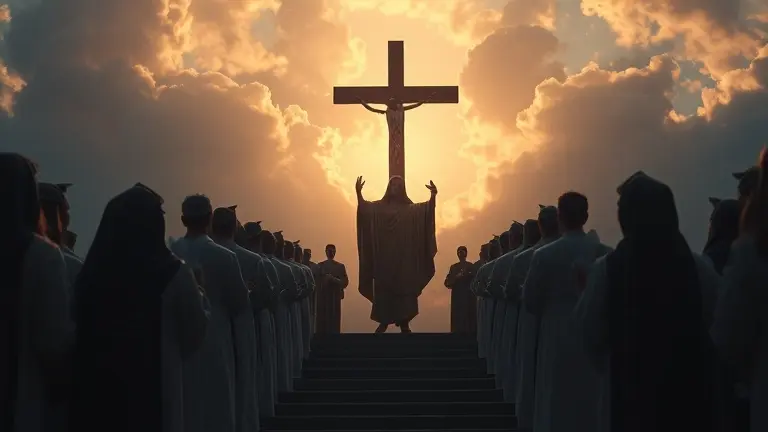
Every year, as the calendar inches toward late spring, a quiet wave of global activity shifts. While Ascension Day—falling on Thursday, May 14, in 2026—might pass by with little notice in the United States, it remains a pillar of European life, bringing business to a standstill and signaling a deeply ingrained cultural and religious rhythm. For the uninitiated, the sudden closure of international offices or the sight of global supply chains pausing can be perplexing. Yet, beyond the logistics, this day marks one of the most transformative concepts in the Christian tradition: the movement from the physical to the transcendent.
Ascension Day represents far more than a historical footnote; it is a profound narrative of purpose and mission. However, separating the theological weight of this event from common cultural misconceptions requires a sharp, attentive mind. In an era dominated by bite-sized clips and fragmented information, truly understanding the ‘why’ behind this observance demands a departure from the superficial. This article cuts through the noise, bridging the gap between European tradition and American curiosity, providing the historical depth necessary to appreciate why, two millennia later, the world still pauses to look toward the horizon.
Understanding Ascension Day: A Global and Theological Overview

Ascension Day, often referred to as Ascension Thursday, is a foundational feast in the Christian liturgical calendar. It commemorates the belief that Jesus Christ ascended into heaven in the presence of his disciples 40 days after his resurrection on Easter. In 2026, this significant observance falls on Thursday, May 14. While theologically rooted in the narrative of Christ’s departure and the subsequent promise of the Holy Spirit, the day serves as a pivotal bridge between the joy of Easter and the anticipation of Pentecost. Understanding the Ascension Day meaning requires moving beyond simple calendar mechanics to appreciate its role as the conclusion of Jesus’s earthly ministry.
Global vs. Domestic Perspectives
The cultural weight of the holiday creates a notable disconnect between the United States and various international regions. While the day remains a largely private, religious observance in the US with no federal holiday status, it is a major public holiday in several European nations, including France, Germany, and Belgium.
- Operational Impact: For US-based professionals, this discrepancy often leads to unexpected communication delays or stalled international trade. When European offices shutter for the holiday, it is not merely a religious event but an economic pause.
- Theological Nuance: Beyond the logistics, the day is frequently misunderstood. Unlike popular secular portrayals, the event is deeply theological, symbolizing the exaltation of Christ and the empowering of his followers to carry on his mission.
Recognizing these distinctions is essential for anyone navigating global logistics or seeking a deeper grasp of the holiday’s historical significance. Whether you are observing the event liturgically or managing the practical implications of a disrupted business week, understanding why the world stops on this specific Thursday provides vital context for the global stage.
The Meaning and Mission: Why Ascension Day Matters

For many in the United States, Ascension Day may seem like an obscure entry on a liturgical calendar, yet it serves as a cornerstone of the Christian narrative. Occurring 40 days after the Resurrection, this feast marks the final physical departure of Jesus Christ from Earth into Heaven. Far from being a mere historical footnote, the Ascension provides the essential theological “hinge” between the resurrection of Christ and the coming of the Holy Spirit at Pentecost. It represents the transformation of Jesus’s ministry from a localized, physical presence into a universal, spiritual one, fundamentally changing the relationship between the divine and the human experience.
The Great Commission and the Call to Action
At the heart of the Ascension narrative is the Great Commission, where the disciples are entrusted with the continuation of Jesus’s mission. This transition is not an abandonment but an empowerment; the departure of the physical Christ necessitates the active engagement of the faithful. The significance of this day lies in its transition from “witnessing” to “acting.” It shifts the burden of the mission onto the collective body of believers, establishing the mandate for outreach and service that defines the Christian mission.
Key theological takeaways from the event include:
- The Universal Presence: By ascending, Christ is no longer limited by physical geography, allowing the faith to expand beyond the borders of Judea.
- The Empowerment of the Church: The event prepares the disciples for the arrival of the Holy Spirit, transforming them from frightened observers into bold leaders.
- The Promise of Return: The Ascension establishes the liturgical hope for a future restoration, anchoring Christian eschatology in the expectation of an ultimate resolution.
By moving beyond the logistical question of “When is Ascension Day 2026?” and focusing on this narrative arc, we see that the day is actually a celebration of potential and global purpose. For those observing, it is a reminder that the “mission” mentioned in the Gospels remains an ongoing endeavor, requiring both contemplation and active participation in the world.
Navigating International Operations: How Ascension Day Impacts Business

For US-based professionals working with European partners, Ascension Day represents a significant logistical consideration that is often overlooked. Unlike in the United States, where it remains a purely religious observance, many European nations—including Germany, France, Belgium, Austria, and Switzerland—recognize this feast as a formal public holiday. On Thursday, May 14, 2026, you should expect widespread office closures, limited customer support availability, and potential disruptions across the European supply chain. Failing to account for this 40-day post-Easter milestone can lead to stalled projects, missed deadlines, and misaligned expectations in cross-border communication.
Proactive Strategies for Cross-Border Success
To maintain seamless workflow continuity, effective communication must begin at least two weeks before the holiday. When navigating international operations during this window, consider the following best practices:
- Adjust Project Timelines: If you have deliverables due or urgent meetings scheduled for mid-May, proactively reschedule them for the beginning of the week or the following Monday. Assume your counterparts will be unavailable on Thursday, and often on the following Friday, as many employees bridge the gap for a long weekend.
- Communicate Early: Send a polite inquiry to your European stakeholders in late April to confirm their availability. Explicitly asking, “Will your team be observing the holiday on May 14?” demonstrates cultural awareness and helps you gauge the impact on specific departments.
- Manage Client Expectations: If you manage US clients waiting on deliverables from European vendors, manage their expectations now. Informing them that “European operations may experience a temporary slowdown due to a regional holiday” prevents last-minute panic.
- Automate and Batch Tasks: Before the holiday begins, ensure all necessary files, data, and instructions are transferred to your European colleagues. This allows them to resume work immediately upon their return without waiting for your input.
By treating Ascension Day 2026 as a scheduled “blackout” period, your organization can avoid the friction commonly associated with global collaboration. A little preparation goes a long way in sustaining professional relationships and ensuring your international operations remain on track throughout the spring season.
Ascension Day Myths vs. Facts: Clearing Up Misconceptions

The significance of Ascension Day is often obscured by its shifting calendar date and the lack of widespread public observance in the United States. While many assume this holiday is static or secondary, it holds profound theological weight in Christian tradition. To clarify the common confusion surrounding this event, it is essential to distinguish between historical fact and popular cultural misconceptions.
Why the Date Constantly Changes
One of the most frequent questions regarding Ascension Day 2026—and every other year—is why the date varies. Unlike fixed-date holidays such as Christmas, the Ascension is tethered to the date of Easter. According to the New Testament, the event occurred exactly 40 days after the resurrection. Because Easter is a “moveable feast” dictated by the lunar calendar, the date for the Ascension must be recalculated annually. This 40-day countdown is symbolic, representing the period during which Jesus remained on Earth to instruct his disciples before ascending to heaven.
Common Misconceptions Clarified
Social media trends often frame this holiday with a sense of mystery, but the theological reality is quite specific. Here are the facts to help you navigate common points of confusion:
- Ascension Day vs. Pentecost: A frequent error is conflating the Ascension with Pentecost. The Ascension marks Jesus leaving the Earth, while Pentecost (occurring 10 days later) celebrates the descent of the Holy Spirit. They are distinct, sequential events in the liturgical calendar.
- The “Global Holiday” Confusion: Many US-based professionals find themselves surprised by closed offices or halted trade when dealing with European counterparts in countries like France, Germany, or Belgium. While it is not a federal holiday in the US, it is a statutory public holiday in many European nations, which can lead to significant logistical delays in international business.
- A “Forgotten” Holiday: While it may seem obscure in secular American culture, it remains a “holy day of obligation” for millions of Catholics and other liturgical denominations worldwide, focusing on the mission left to the faithful rather than just the historical event itself.
By understanding these distinctions, observers can better appreciate why international partners may be unavailable and why the day holds such historical gravity in the global religious landscape.
Deepen Your Understanding and Clarity
As we reflect on the profound implications of Ascension Day, it becomes clear that this is more than just a date on the calendar. Whether you are navigating the logistical realities of international business in Europe or seeking a deeper grasp of the historical and theological weight of this event, the true meaning of the Ascension invites us to look upward and engage with ideas that transcend the mundane. This exploration requires more than passive reading; it demands a state of mental acuity that allows for genuine reflection and the synthesis of complex concepts.
Engaging with such profound historical and spiritual narratives requires a clear and focused mind. Many of our readers find that a short, neuroscience-backed auditory routine helps them transcend the noise of daily life, entering the meditative state necessary for this level of deep inquiry. When your focus is sharp, the nuance between cultural tradition and true historical significance becomes infinitely easier to parse, allowing you to absorb the depth of the narrative without the distraction of mental fatigue.
The Brain Song is designed precisely as a cognitive facilitator, helping you achieve the mental stillness required for your most important intellectual and spiritual pursuits. By integrating this short, focused routine into your day, you provide your mind with the optimal environment to process and retain the heavy, transformative ideas that define our cultural and religious heritage. Don’t let mental fog cloud your journey through history—unlock your full cognitive potential today.
 Try the 12-minute Brain Song routine today to sharpen your focus and fully immerse yourself in your intellectual and spiritual pursuits.Transform My Mental Clarity Today!