
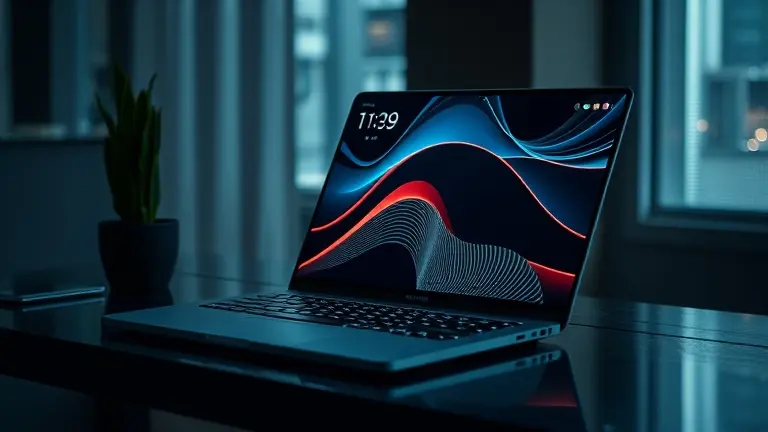
The tech world was set ablaze on May 12, 2026, when Alphabet Inc. pulled back the curtain on the Googlebook laptop. Designed to bridge the gap between high-end mobile productivity and desktop-class power, this new platform isn’t just another iteration of a Chromebook—it is a strategic pivot. By running a refined, Android-centered operating system deeply integrated with Gemini Intelligence, Google is aiming squarely at the premium professional market currently dominated by Apple’s MacBook line.
For power users and early adopters, the question is no longer just about hardware specs; it is about architectural evolution. As we await the upcoming I/O conference, the industry is grappling with a critical ambiguity: is this device a mere productivity upgrade, or a niche experiment that forces a fundamental shift in how we approach our daily workflows? In this guide, we cut through the SEO noise to explore whether you should wait for the Googlebook or stick with your current hardware setup.
Understanding the Googlebook: A New Era for Android-Powered Computing

The official unveiling of the Googlebook laptop on May 12, 2026, during “The Android Show” marks a significant architectural pivot for Alphabet Inc. Unlike the web-centric legacy of traditional Chromebooks, the Googlebook is engineered as a high-end, premium hardware platform built upon a refined, Android-centered operating system. This new OS is designed to bridge the gap between mobile versatility and desktop productivity, offering native Android application support that is fully optimized for high-performance silicon. By moving away from a purely browser-based dependency, Google is positioning this device to compete directly with premium workstations like the MacBook, targeting power users who require both mobile fluidity and professional-grade computing capabilities.
Strategic market positioning suggests that the Googlebook is not an immediate successor to the existing Chromebook ecosystem. Instead, Google has clarified that these two product lines will coexist for the foreseeable future. While affordable Chromebooks will continue to dominate the education and entry-level markets, the Googlebook represents a strategic move into the luxury segment, likely featuring:
- Gemini Intelligence: A deep, native integration of AI at the hardware level for real-time task management and productivity enhancements.
- Unified Ecosystem: Seamless interoperability with the broader Android mobile experience, allowing for instantaneous handoffs and synced workflows.
- Performance-First Architecture: A focus on local, edge-based processing to reduce latency for complex AI-driven applications.
Early industry reports indicate that while the Googlebook does not immediately render Chromebooks obsolete, it sets the stage for a long-term transition. As Google refines the Android-centered OS, we can expect the line between “laptop” and “mobile workstation” to blur, making the Googlebook a critical watch item for early adopters and enterprise professionals looking to upgrade their hardware this fall.
Googlebook vs. MacBook: Can Gemini Intelligence Change the Workflow?

The introduction of the Googlebook laptop represents a fundamental pivot in how Google approaches personal computing. Unlike the traditional browser-centric ChromeOS, the Googlebook is engineered from the ground up as an AI-first platform, with Gemini Intelligence woven into the kernel of the operating system rather than layered on top as an application. While Apple’s M-series architecture and macOS have long dominated the creative professional market through optimized hardware-software synergy, the Googlebook challenges this status quo by prioritizing local, real-time AI processing capabilities that promise to automate complex workflows natively within the Android app ecosystem.
AI Integration vs. Hardware Architecture
Apple currently leads with the unified memory architecture of its M-series chips, which provides high-speed efficiency for creative tasks. However, the Googlebook attempts to bridge the productivity gap by utilizing a dedicated neural processing unit specifically tuned for Gemini. This integration aims to provide:
- Context-Aware Multitasking: Gemini can anticipate user intent across Android applications, streamlining file transfers and communication flow in ways current desktop OS environments struggle to replicate.
- On-Device Efficiency: By prioritizing local execution of AI models, the Googlebook promises lower latency compared to cloud-dependent assistants, directly competing with the responsive feel of local macOS applications.
- Unified Ecosystem: The ability to run full-featured Android applications natively allows professionals to maintain a seamless transition between mobile and desktop environments, a persistent friction point for MacBook users who must rely on iOS-to-macOS ports.
Despite these advancements, the transition remains a significant barrier for legacy power users. While the Googlebook offers a compelling vision of AI-driven efficiency, the mature software suite available on macOS—such as the Adobe Creative Cloud or high-end development environments—remains the gold standard. For the Googlebook to successfully challenge the MacBook, Google must prove that its Android-centered OS can support heavy-duty professional workflows without sacrificing the stability and compatibility that current high-end laptop users demand. Whether this hardware shift is a genuine professional evolution or a niche experiment will largely depend on the third-party developer support Google secures post-launch.
The Evolution of the Ecosystem: From Chromebook to Googlebook

The unveiling of the Googlebook laptop signals a definitive pivot in Alphabet’s hardware strategy, marking a departure from the browser-centric philosophy of ChromeOS toward a more robust, Android-centered operating system. While Chromebooks have long dominated the education sector and entry-level enterprise markets with their simplicity and low maintenance costs, they have historically struggled to shed their reputation as “glorified web browsers.” The new Googlebook platform aims to bridge this divide, positioning itself as a premium competitor to traditional powerhouses like the MacBook. By integrating Gemini Intelligence at the silicon level, Google is shifting the value proposition from simple cloud-connectivity to high-performance local AI processing, which is essential for modern professional workflows.
Navigating the Ecosystem Transition
Industry analysts are closely monitoring how this move affects the long-term viability of the legacy Chromebook line. While Google has stated the platforms will coexist, historical patterns suggest that the Googlebook will likely supersede Chromebooks in the high-end premium segment. This shift raises critical questions for IT decision-makers and early adopters:
- Multitasking Capabilities: Can the new Android-derived OS handle intensive professional multitasking—such as complex video editing or heavy containerized development—better than the container-based architecture of ChromeOS?
- Enterprise Longevity: How will Google handle the lifecycle and security patch cadence for this new hardware compared to the established 10-year support window of current devices?
- Software Compatibility: Will existing professional Android apps provide a true “desktop-class” experience, or will the platform rely heavily on emulated environments that may compromise performance?
The success of the Googlebook will ultimately depend on whether developers embrace the new hardware architecture. If the Android-centered OS can maintain its promise of seamless mobile-to-desktop transitions while leveraging Gemini Intelligence to optimize local power consumption, it could fundamentally disrupt the current laptop market. Prospective buyers should carefully weigh these architectural differences before committing to the new ecosystem, as the transition represents a fundamental shift in how Google intends to support productivity and creative work moving forward.
Is the Googlebook Ready for Early Adopters? A Pre-I/O Analysis

As the tech community pivots toward the May 19, 2026, I/O conference, the Googlebook laptop has emerged as the most debated hardware transition in recent memory. While ChromeOS devices long served the education and entry-level markets, the Googlebook represents a strategic shift toward a high-end, Android-centered operating system designed to challenge the dominance of the MacBook. Early industry sentiment suggests that while the hardware is undeniably premium, the true test lies in whether the OS can bridge the gap between casual tablet-like Android functionality and the complex, multi-window productivity workflows required by modern professionals.
For early adopters, the burning question is whether this is a niche prosumer experiment or a legitimate workhorse. Evidence suggests that Google is prioritizing a “Gemini-first” architecture, which aims to handle intensive AI tasks locally rather than relying exclusively on cloud processing. This shift toward on-device Gemini Intelligence could potentially redefine battery efficiency and privacy standards for laptops. However, professional users should approach the launch with cautious optimism until the developer ecosystem demonstrates consistent app optimization for the new desktop-class Android interface.
Key technical specifications and capabilities to track during the upcoming I/O deep dives include:
- Native Hardware Integration: Look for details on how the OS manages background resource allocation compared to the legacy ChromeOS kernel.
- Gemini AI Latency: Monitor performance metrics regarding local versus cloud-based AI processing for creative workflows.
- Android App Parity: Evaluate if third-party software developers are porting full-featured desktop versions of their apps or merely scaling mobile iterations.
- Cross-Device Ecosystem: Watch for announcements regarding seamless hand-off features between the Googlebook and existing Pixel mobile hardware.
Ultimately, early adopters should wait for confirmed benchmarks regarding stability and third-party software compatibility. While the Googlebook laptop offers a compelling vision of a unified Android future, its status as a daily driver will be determined by the depth of professional software support announced next week.
Unlocking Your Full Cognitive Potential
As the Googlebook laptop reshapes the hardware landscape, it is clear that we are moving toward an era of unprecedented digital efficiency. However, the true value of integrated Gemini Intelligence isn’t just in the speed of your device, but in your ability to maintain deep focus while navigating increasingly complex AI-driven workflows. Hardware is only as capable as the operator navigating the system.
While the Googlebook streamlines your digital output, your greatest competitive advantage remains the hardware between your ears. Many early adopters are now realizing that to truly master this new computing power, they must prioritize their cognitive performance. This is where The Brain Song becomes an essential partner to your technological setup, acting as a cognitive force-multiplier that ensures your mental clarity keeps pace with your machine’s processing speed.
By incorporating this routine, you address the foundation of productivity: your ability to sustain focus and eliminate mental fog. Preparing your biological operating system is the logical next step for any professional seeking to leverage the Googlebook for maximum impact. Equip your mind for the next generation of computing—start your 12-minute daily cognitive routine today.
 Equip your mind for the next generation of computing—start your 12-minute daily cognitive routine today.Transform My Mental Focus Today