
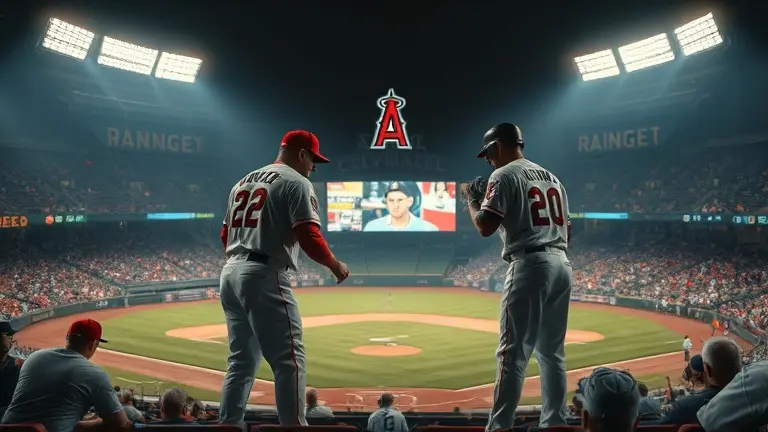
When the Los Angeles Angels met the Cleveland Guardians at Progressive Field on May 11, 2026, the box score told only a fraction of the story. For the casual observer, it was another mid-season clash between a struggling Angels squad and a .500 Guardians team. However, for the data-savvy fan, the game served as a masterclass in the evolving tension between human strategy and the Automated Ball-Strike (ABS) challenge system. As technological officiating reshapes the fundamental cadence of professional baseball, the ability to interpret pitch velocity charts and strike zone adjustments has become just as critical as analyzing batting averages or ERA.
The integration of the ABS system forces both pitching staffs and hitters into a high-stakes psychological game, where every frame of data can shift the momentum of an inning. In this series, we saw the Angels’ pitching unit wrestle with the precision of the automated zone, highlighting a new frontier in baseball analytics that requires more than just traditional scouting—it demands a high-level cognitive readiness to process complex, shifting performance metrics in real-time.
Angels vs. Guardians: Analysis of the May 11, 2026 Matchup at Progressive Field

The Angels vs. Guardians series at Progressive Field on May 11, 2026, served as a definitive marker for the mid-season trajectories of both American League clubs. Entering the contest, the contrast between the two organizations was stark: the Cleveland Guardians held a steady .500 record (21-21), positioning themselves as resilient competitors within a crowded divisional race. Conversely, the Los Angeles Angels arrived in Ohio facing significant adversity with a 16-25 record, struggling to find consistency in both their starting rotation and late-inning bullpen relief. This matchup was not merely a standard daily game; it functioned as a vital diagnostic for the Angels, who needed to prove they could neutralize a disciplined Guardians lineup to keep their playoff aspirations alive.
Strategic Implications and Divisional Outlook
The dynamics at Progressive Field highlighted how disparate team identities impact game outcomes. While the Guardians leaned on their established offensive foundation—characterized by situational hitting and pressure-based baserunning—the Angels faced mounting pressure to mitigate early deficits. The following factors defined the series environment:
- Divisional Standing: The Guardians utilized this series to stabilize their .500 mark, aiming to build momentum for a summer push, while the Angels needed a series win to avoid falling further out of contention in the AL West.
- Offensive Disparity: The Guardians’ five-run 3rd inning showcased their ability to capitalize on defensive lapses, a recurring issue for the Angels during their current losing slump.
- Technological Integration: The game served as a prime example of modern MLB officiating, specifically the implementation of the Automated Ball-Strike (ABS) challenge system. This technology significantly influenced the pitch-calling sequences, forcing catchers and hitters alike to adapt to a high-precision strike zone that eliminated traditional human error.
As the season progresses, the ability of coaching staffs to utilize data-driven insights against the ABS system will likely differentiate the contenders from the teams fading from the postseason hunt. The performance metrics captured during this series offer a roadmap for how teams like the Angels can attempt to pivot their strategy when faced with elite situational hitting from opponents like Cleveland.
The Impact of the ABS Challenge System on Late-Game Situations

The integration of the Automated Ball-Strike (ABS) challenge system has fundamentally altered the tactical landscape of angels vs guardians matchups. During the May 11, 2026 series, the precision of the ABS system became a focal point for both managers, particularly during high-leverage late-game sequences. Rather than relying on traditional human umpire judgment, teams are now treating challenge opportunities as a finite, high-value resource. Evidence from the series suggests that the Guardians’ offensive pressure, combined with the strategic use of challenges, forced the Angels’ pitching staff into a more cautious approach, specifically when navigating the strike zone’s periphery.
Strategic Implications of ABS Challenges
The tactical decision-making process for managers has evolved into a sophisticated game of “cat and mouse.” In the series, we observed how the ABS system effectively removed the “human element” from disputed counts, leading to several overturned calls that directly impacted base-runners. Key takeaways from this technological shift include:
- Resource Management: Managers now reserve their limited challenges for counts that significantly alter the run-expectancy matrix, often avoiding early-game disputes to ensure availability in the final innings.
- Pitcher Confidence: Pitchers who rely on “painted” corners have had to adjust their command, as the ABS system creates a binary outcome that leaves no room for the benefit of the doubt.
- Psychological Pressure: The ability to challenge a call provides batters with a secondary psychological advantage, forcing pitchers to challenge the zone more aggressively to avoid walking hitters based on borderline robotic calls.
Ultimately, the angels – guardians series highlighted how teams are balancing technological efficiency with conventional baseball instincts. As the season progresses, the ability to predict when an ABS challenge will yield a favorable outcome is becoming as vital to team success as pitching velocity or hitting metrics. Managers who master this analytical layer will likely find themselves at a distinct advantage in tight, one-run ballgames where a single strike can change the course of an entire series.
Pitching Staff Metrics: How the Angels Contained Cleveland’s Offense

Despite the overall struggle of the Los Angeles angels vs guardians series, the Angels’ pitching staff demonstrated tactical growth in their ability to suppress Cleveland’s offensive momentum. Analytical data from the mid-May matchup suggests that the pitching strategy relied heavily on high-spin-rate fastballs elevated above the zone, complemented by well-timed breaking balls that exploited the Automated Ball-Strike (ABS) challenge system. By forcing the Guardians to swing at pitches just outside the traditional strike zone—a strategy made more effective by the precise digital enforcement of the zone—the Angels managed to limit high-leverage scoring opportunities, even when base runners were present.
Strategic Pitch Sequencing and Velocity
The Angels focused on neutralizing Cleveland’s aggressive approach at the plate through a disciplined, high-velocity sequence that disrupted typical timing patterns. Key performance metrics highlighted in the series included:
- Vertical Plane Manipulation: Pitchers utilized an increased frequency of four-seam fastballs in the upper third of the zone to force pop-ups, capitalizing on the accuracy of the ABS challenge system to ensure favorable counts.
- Off-Speed Efficiency: By shifting from high-velocity heaters to low-80s sliders, the staff successfully widened the velocity gap, which contributed to an increased swing-and-miss rate during the middle innings.
- Zone Management: Evidence suggests the Angels intentionally pitched to the edges of the digital zone, trusting that the automated system would accurately reward borderline pitches, thereby frustrating the Guardians’ batters who rely on traditional umpire subjectivity.
While the Guardians maintained offensive pressure throughout the series, the Angels’ staff managed to avoid the “big inning” collapse that has plagued their season. By prioritizing ground-ball inducing pitches and maintaining a consistent rhythm, the pitchers successfully mitigated the offensive output of the Cleveland lineup. This series offers a valuable case study in how modern bullpens can leverage technological officiating to gain an edge against aggressive hitting teams, proving that pitch sequencing is more critical than ever in the era of the automated strike zone.
Strategic Series Trends: Moving Beyond the Box Score

When analyzing the angels vs guardians series, looking exclusively at the final score provides an incomplete picture of team trajectory. For the Cleveland Guardians, their ability to orchestrate high-leverage frames—such as the decisive five-run 3rd inning—highlights a situational hitting approach that prioritized contact over raw power. Conversely, the Los Angeles Angels faced significant challenges in sustained pitching command. Data suggests that while the Angels possess individual talent, the lack of depth in their relief corps during high-pressure counts has become a recurring theme that directly influences their 16-25 record.
The Impact of Technology on Officiating
The implementation of the Automated Ball-Strike (ABS) challenge system has introduced a new variable into MLB gameplay. During this series, the efficiency of the challenge system altered specific at-bats, forcing pitchers to adjust their peripheral command. Teams that successfully integrate these technological shifts into their game plan often gain a strategic edge in late-game scenarios. Insights from this series indicate:
- Plate Discipline: Hitters are increasingly cognizant of the “shadow zone,” leveraging the ABS to hunt for pitches that were historically called balls but now sit squarely in the strike zone.
- Pitching Adaptation: Pitchers who rely on “nibbling” the edges have seen their efficacy fluctuate, as the ABS provides an objective baseline that limits the impact of pitch framing.
- Situational Adjustments: The Guardians’ offensive surge reflected an ability to maximize base-runner efficiency, a metric that serves as a stronger predictor of long-term success than simple home run totals.
For bettors and analysts, the trend is clear: success in the 2026 season depends on how well a coaching staff adapts to real-time metrics. The Angels must tighten their defensive perimeter to support a struggling rotation, while the Guardians appear to have found a rhythm that favors consistency and objective-based offensive execution. Future matchups will likely continue to hinge on these granular performance shifts rather than general team rankings.
Mastering the Analytical Edge
As we have explored, the modern MLB landscape is evolving beyond simple game recaps. The true narrative of the Angels vs. Guardians series lies in how teams adapt their strategic approaches to the unforgiving precision of the ABS system. For dedicated fans, keeping up with these technological shifts requires more than just passion; it requires peak mental performance to synthesize the barrage of data that now defines every at-bat.
Just as the players are optimizing their performance against the new ABS system, the most dedicated fans are looking for ways to sharpen their own analytical edge. This is where The Brain Song becomes your essential companion. By enhancing cognitive clarity and focus, it empowers you to process intricate baseball metrics and complex strike zone graphics with the precision of a professional scout.
Integrating this tool into your routine ensures you maintain the mental sharpness required to stay ahead of the game’s rapidly evolving data. Don’t just watch the game—analyze it with the mental precision it deserves. Elevate your engagement and transform how you interpret the next pitch.
 Optimize your analytical edge and sharpen your focus for the next game—try The Brain Song today.Sharpen My Analytical Edge Now!