
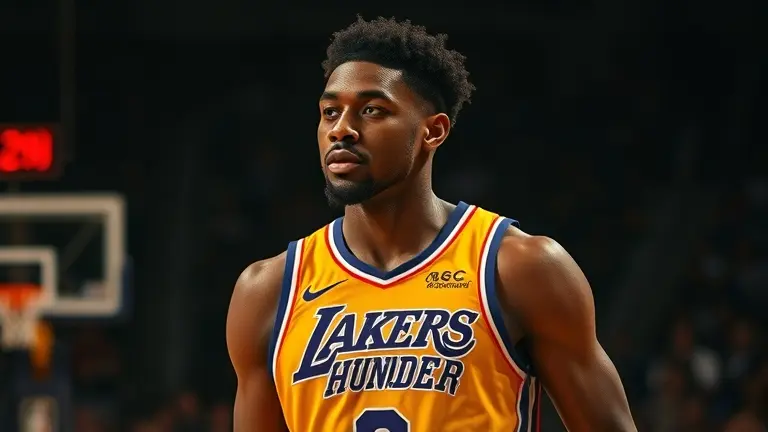
The 2026 NBA Western Conference Semifinals have turned into a sobering reality check for the Los Angeles Lakers. Down 3-0 against a relentless Oklahoma City Thunder squad, the Lakers aren’t just losing; they are systematically collapsing under the weight of their own inability to maintain mental and tactical cohesion. While the Thunder’s seven-game winning streak continues to rewrite the narrative of this postseason, it is the meteoric rise of Ajay Mitchell that has truly dismantled the Lakers’ defensive identity. With a career-high 24 points in Game 3, Mitchell has become the face of a Thunder team that operates with frightening efficiency, leaving Los Angeles scrambling to find answers that simply haven’t materialized over 144 minutes of basketball.
Why is the Lakers’ strategy failing so consistently? Beyond the obvious talent gap, the issue lies in the third quarter—the recurring ‘danger zone’ where the Lakers lose their focus and the Thunder accelerate. This isn’t just a lack of hustle; it is a breakdown in the cognitive endurance required to execute complex plays when the pressure reaches its boiling point. To understand how the Thunder are dismantling a seasoned roster, we must look deeper into the mental discipline that separates championship contenders from teams that fold under fire.
Thunder Dominance: Recapping the 3-0 Western Conference Semifinal Lead
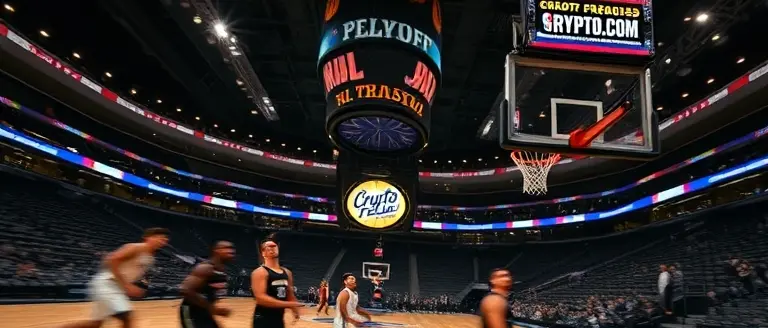
The Oklahoma City Thunder have dismantled the Los Angeles Lakers with surgical precision, establishing a commanding 3-0 lead in the 2026 Western Conference Semifinals. This series has been defined by OKC’s relentless pace and depth, culminating in a dominant 131-108 victory in Game 3 at Crypto.com Arena. The Thunder vs. Lakers matchup has shifted from a competitive series expectation to a demonstration of systemic superiority, as the Thunder extended their historic postseason run to seven consecutive wins. While the Lakers opened the series with hopes of matching OKC’s athleticism, their inability to sustain defensive intensity across all four quarters has allowed the Thunder to capitalize on second-half collapses.
The Breakdown of the 3-0 Deficit
The statistics reveal a grim reality for the Lakers as they face a potential elimination sweep. Key takeaways from the series progression include:
- Second-Half Efficiency: The Thunder have consistently outpaced the Lakers after halftime, exploiting defensive rotations and forcing high-percentage turnovers.
- The Ajay Mitchell Factor: Emerging as the series’ unexpected catalyst, Ajay Mitchell delivered a career-high 24 points on 10-of-17 shooting in Game 3, proving that OKC’s roster depth is simply too versatile for the current Lakers scheme to contain.
- Stifling Defensive Pressure: By holding the Lakers to 108 points in Game 3, the Thunder demonstrated an ability to stifle Los Angeles’ primary offensive sets, forcing them into contested mid-range shots.
For the Lakers, the stakes could not be higher. Historically, the 3-0 deficit is insurmountable in the NBA, and the current iteration of the roster appears to be hitting a tactical wall. Whether it is a lack of bench production or the exhaustion of their primary stars, the OKC vs. Lakers narrative is now centered on whether the Lakers can salvage pride in Game 4 or if the Thunder will complete a historic sweep of a storied franchise. Evidence suggests the Thunder’s momentum, fueled by both veteran composure and the emergence of Ajay Mitchell, makes them the clear favorites to advance to the Western Conference Finals.
The Ajay Mitchell Breakout: The X-Factor of the Series
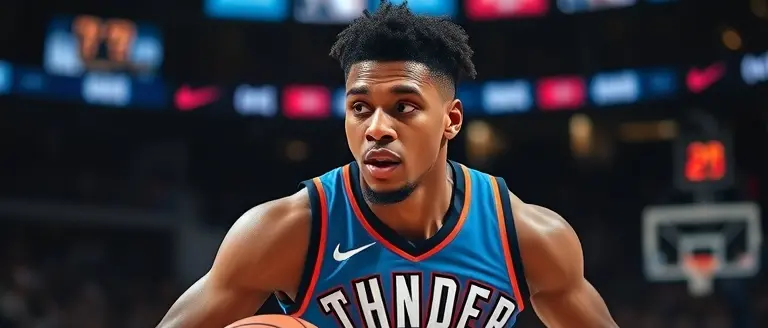
While veteran stars often dominate the headlines, the 2026 Western Conference Semifinals have been defined by the stunning emergence of Ajay Mitchell. In the Thunder vs. Lakers series, Mitchell has evolved from a rotational asset into the ultimate X-factor, culminating in a career-high 24-point performance during Game 3. His efficiency—shooting an impressive 10-of-17 from the floor—has placed the Lakers‘ defense in a state of constant recovery, as they struggle to account for his multifaceted offensive skill set. By exploiting gaps in the perimeter coverage, Mitchell has effectively dismantled the defensive schemes that were designed to prioritize the Thunder’s primary scoring options.
Tactical Versatility and Defensive Impact
The tactical brilliance behind the Oklahoma City Thunder’s success lies in their depth, and Mitchell currently serves as the engine of that production. His ability to transition from a secondary playmaker into a primary scoring threat has left the Lakers unable to adjust. Several key factors highlight why Mitchell has become the central narrative of this dominant 3-0 series lead:
- Efficient Floor Spacing: Mitchell’s ability to hit from beyond the arc forces defenders to extend, opening the paint for the rest of the OKC roster.
- Secondary Playmaking: When the defense collapses on him, Mitchell’s high basketball IQ allows him to find open teammates, contributing to the Thunder’s consistent second-half scoring outbursts.
- Transition Prowess: During the Thunder’s current 7-game playoff winning streak, Mitchell has thrived in open-court scenarios, punishing the Lakers for their lackluster transition defense.
For the Lakers, the challenge is no longer just stopping the stars; it is containing a player whose growth has outpaced their scouting reports. As the series moves forward, evidence suggests that the Thunder’s reliance on Mitchell’s versatility is a deliberate strategy to tire out the older Lakers roster, forcing them into high-intensity defensive rotations they are no longer equipped to maintain for four full quarters.
Tactical Failure: Why the Lakers Cannot Solve the Thunder
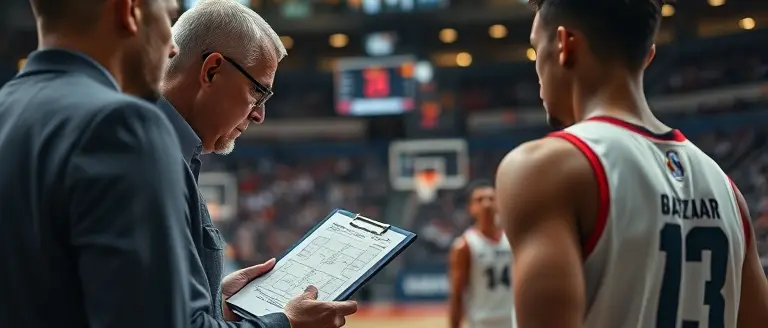
The Lakers vs Thunder series has exposed a profound tactical divide between the two Western Conference contenders. Through three games, the Los Angeles Lakers have struggled to maintain a cohesive defensive identity, particularly during the critical third-quarter stretches where the Oklahoma City Thunder consistently dismantle their schemes. Evidence suggests that the Lakers’ defensive rotation has become increasingly reactive rather than proactive, allowing the Thunder’s high-velocity offense to exploit gaps in transition and pick-and-roll coverage. While the Lakers have shown flashes of competitiveness, their inability to sustain intensity across four quarters has left them in an insurmountable 3-0 deficit.
Defensive Breakdown and Second-Half Regression
A recurring theme in this series is the Lakers’ failure to neutralize the Thunder vs Lakers matchup intensity after the halftime break. The systematic failure is two-fold: poor perimeter containment and ineffective help-side rotations.
- The Third Quarter Collapse: In each game, the Lakers have allowed the Thunder to build momentum through high-efficiency shot-making. The Lakers’ tendency to over-commit on primary ball-handlers has opened up perimeter lanes for shooters.
- Disjointed Execution: Unlike the OKC vs Lakers team chemistry, the Lakers’ defensive assignments have often appeared misaligned, leading to open looks for players like Ajay Mitchell.
- Transition Defense: The Lakers have struggled to stop the Thunder’s fast-break points, a direct consequence of long, contested misses and sluggish recovery to the defensive paint.
The contrast between the two teams is stark. While the Thunder operate with a clear, rhythmic offensive hierarchy, the Lakers have relied heavily on individual isolation scoring, which becomes predictable under heavy playoff pressure. As the Thunder ride a dominant 7-game playoff winning streak, they continue to expose the Lakers’ lack of depth and tactical flexibility. Unless there is a massive schematic shift, the Lakers appear fundamentally unequipped to disrupt the Thunder’s rhythm or close the gap in this one-sided series.
Second-Half Surges: The Thunder’s Blueprint for Victory
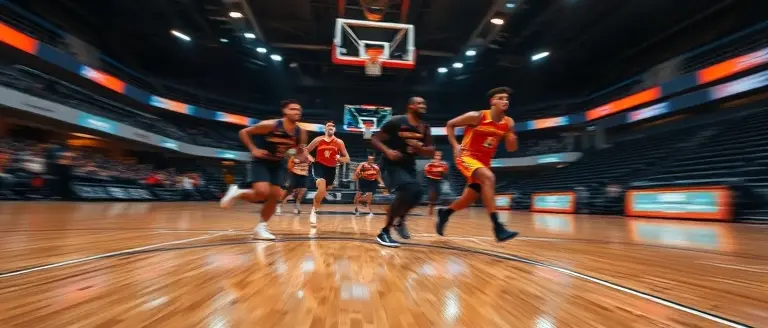
The Oklahoma City Thunder have effectively turned the 2026 Western Conference Semifinals into a clinic on second-half execution. While the Lakers have managed to stay competitive through the first two quarters, the disparity in stamina and tactical discipline becomes glaringly apparent as games progress. This 3-0 series lead is no fluke; it is the direct result of a calculated, high-intensity transition game that forces the aging Lakers roster into unsustainable defensive rotations. By the third quarter, the Thunder’s relentless pace forces the Lakers to commit turnovers, leading to the easy transition points that defined the 131-108 Game 3 blowout.
Tactical Dismantling of the Lakers Defense
The core of the Thunder vs. Lakers narrative centers on Oklahoma City’s ability to punish defensive lapses. Evidence suggests that the Thunder’s depth is their greatest weapon, allowing them to maintain elite pressure for all 48 minutes. When analyzing the okc vs. lakers dynamic, several key tactical factors emerge:
- Transition Efficiency: The Thunder prioritize aggressive leak-outs, forcing the Lakers to scramble defensively, which leads to high-percentage shots and wide-open perimeter looks.
- Mental Fatigue: The Lakers’ inability to secure defensive rebounds in the second half often stems from a lack of physical energy, allowing Oklahoma City second-chance opportunities that effectively break the game open.
- The Ajay Mitchell Factor: The emergence of Ajay Mitchell has provided the Thunder with an unpredictable spark plug off the bench. His career-high 24 points in Game 3 showcased a player who thrives while the opposition is fading, acting as the primary catalyst for the Thunder’s devastating scoring runs.
As the thunder vs. lakers series shifts, it is clear that the Lakers lack the personnel to match the Thunder’s youthful intensity. The lakers are struggling to contain the perimeter speed of their opponents, and without a significant adjustment to their transition defensive scheme, they appear unable to halt the momentum of a team currently riding an impressive 7-game playoff winning streak.
Mastering the Mindset of a Champion
The Lakers’ failure in this series is a masterclass in what happens when mental clarity wavers at the elite level. While Ajay Mitchell and the Thunder thrive on split-second processing and razor-sharp execution, the Lakers have repeatedly succumbed to ‘mental fog,’ leading to catastrophic decision-making in the most critical stretches of these games. Their inability to hold the line during the second half isn’t just a physical shortcoming; it is a deficiency in the sustained cognitive state required to dismantle a disciplined opponent like Oklahoma City.
Just as elite athletes must sustain intense mental focus to close out a game, those of us analyzing complex tactical breakdowns or navigating high-pressure careers need to cut through the noise. This is where The Brain Song becomes an essential tool for your arsenal. By providing a neuroscience-based solution to cognitive fatigue, it sharpens your focus and enhances your learning capacity, allowing you to process information with the same precision that separates champions from the rest of the pack.
Don’t let your own potential suffer from the same lack of focus that plagued the Lakers. Optimize your mental performance to achieve the clarity needed to conquer your own goals, whether in business, sports, or life. Elevate your cognitive state today and see the world with the sharpness of a true strategist.
 Sharpen your focus and optimize your mental performance to better analyze the game—try The Brain Song today.Yes, I Want This Now!