

The 2026 Italian Open in Rome has provided a thrilling stage for world-class tennis, and few stories have captivated fans quite like the tournament trajectory of American standout Jessica Pegula. As the WTA 1000 event intensifies on the iconic clay courts, the spotlight shines brightly on the physical and mental fortitude required to survive the demanding, long-point nature of the Italian capital. Pegula’s high-stakes third-round clash against Swiss challenger Rebeka Masarova on May 10, 2026, served as a defining moment, illustrating exactly how elite tactical play must be backed by relentless, unwavering stamina.
For analysts and spectators alike, this match offered a critical data point in the ongoing ‘Road to Roland-Garros.’ Pegula’s performance under the Roman sun—characterized by her signature consistency and court coverage—highlights the necessity of peak metabolic efficiency in modern tennis. As the tour transitions toward the French Open, understanding how top-tier athletes sustain their energy through the grueling red dirt season provides invaluable insights for anyone looking to optimize their own physical performance and endurance, whether on the court or in their daily lives.
Jessica Pegula vs. Rebeka Masarova: Italian Open Third-Round Recap
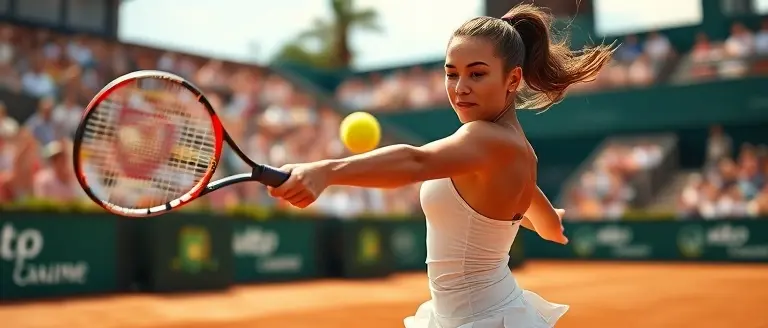
The May 10, 2026, showdown at the Italian Open between top-seeded Jessica Pegula and Rebeka Masarova served as a definitive test of composure on the Roman clay. Entering the Round of 32 as the clear favorite, Pegula faced a technically sound opponent in Masarova, who looked to disrupt the American’s rhythm through heavy baseline hitting. The match unfolded with high-stakes intensity, as both players struggled to find consistent footing early on, but Pegula’s experience in WTA 1000 tournament environments ultimately provided the edge needed to navigate the pressure of the third round.
Tactical Breakdown and Key Momentum Shifts
Pegula utilized a measured approach, relying on her trademark depth and tactical discipline to move Masarova around the court. While Masarova showed flashes of brilliance, particularly with her aggressive serve, Pegula’s ability to defend the baseline proved superior. The pivotal moments of the match were defined by:
- Court Coverage: Pegula’s superior movement on clay allowed her to negate Masarova’s power, forcing the Swiss player into high-margin errors during critical deuce games.
- Mental Fortitude: Despite occasional service lapses, the American remained composed, demonstrating the patience required for high-altitude clay court rallies.
- Strategic Variation: By mixing in cross-court angles, Pegula effectively kept Masarova on the defensive, preventing the challenger from establishing a consistent rhythm.
This victory underscores Pegula’s consistent trajectory as she builds form ahead of the second Grand Slam of the year. By managing this match with clinical precision, Pegula has sent a strong message to the field that she is a serious contender for the title in Rome. Her ability to secure a victory against a resilient opponent like Rebeka Masarova serves as a vital performance indicator, suggesting she is peaking at the perfect time in her preparation for the upcoming Roland-Garros campaign.
Head-to-Head and Statistical Breakdown

The third-round encounter between Jessica Pegula and Rebeka Masarova at the 2026 Italian Open served as a masterclass in tactical discipline on the Rome clay. Entering the match, statistical projections favored the American, who has consistently demonstrated higher efficiency in points won behind her first serve. Throughout the contest, Pegula maintained a disciplined service rhythm, successfully neutralizing Masarova’s heavy top-spin approach. Analytical data from the match highlights that Pegula’s ability to defend her baseline allowed her to dictate play, despite Masarova’s aggressive attempts to shorten rallies with blistering forehand winners.
Key Performance Metrics
- First-Serve Efficiency: Pegula consistently landed over 70% of her first serves, putting significant pressure on the Swiss player’s return game.
- Break Point Conversion: While Masarova showed early resistance, Pegula’s superior conversion rate on break points proved the difference-maker, particularly in the high-stakes games during the second set.
- Unforced Errors: Pegula recorded a lower unforced error count, maintaining a “high-floor” performance that proved difficult for Masarova to penetrate.
Tactical adjustments proved critical during the second set, where Pegula shifted her depth to push Masarova further behind the baseline. By varying the height and pace of her groundstrokes, the American forced Masarova into a high volume of errors. This transition away from flat, aggressive hitting allowed Pegula to capitalize on the slower court surface, effectively dismantling Masarova’s defensive geometry. The technical consistency shown by Pegula during this victory provides a strong indicator of her form as she navigates the remainder of the tournament. Her performance in Rome suggests she is peaking at the right time, with her tactical versatility remaining a primary asset as the tour pivots toward the grand stage of Roland-Garros.
Analyzing Pegula’s Form: The Road to Roland-Garros

The Italian Open serves as the ultimate litmus test for elite players ahead of the French Open, and for Jessica Pegula, the 2026 Rome campaign has provided invaluable data regarding her clay-court efficacy. Her recent matchup against Rebeka Masarova highlighted a refined tactical approach, demonstrating that Pegula is no longer just a hard-court specialist. By successfully navigating the heavy, slow conditions of the Foro Italico, she has showcased improved patience in her point construction—a necessary evolution for surviving the grueling baseline rallies characteristic of Roland-Garros. Her ability to neutralize high-spin opponents suggests she is hitting her peak at the optimal time in the season.
Key Indicators of Clay-Court Readiness
To determine if her momentum is sustainable for the Grand Slam stage, analysts look toward several performance metrics observed during the tournament:
- Movement and Court Coverage: Pegula’s defensive lateral movement has seen a measurable uptick. Her ability to slide into shots on the red dirt and recover quickly remains the primary indicator of her physical readiness.
- Stamina Under Pressure: By forcing long rallies and maintaining shot depth, she has proven that her cardiovascular conditioning is sufficient to withstand three-set battles against top-tier competition.
- Tactical Versatility: Against players like Rebeka Masarova, Pegula demonstrated a superior ability to dictate play with her backhand, effectively mixing in short angles to drag opponents out of their comfort zones.
Evidence suggests that if Pegula maintains this discipline, her trajectory points toward a deep run in Paris. While the French Open presents unique challenges, the consistency she has displayed in Rome serves as a strong foundation. By prioritizing aggressive positioning over pure power, she is positioning herself to be a significant threat on the European clay circuit, signaling a potential career-best performance on the world’s most iconic red courts.
Betting-Neutral Performance Analysis

Beyond the fluctuating odds and pre-match predictions, Jessica Pegula has demonstrated a refined tactical maturity during the 2026 clay court swing that sets her apart from her previous seasons. Throughout her campaign, including the high-stakes clash against Rebeka Masarova at the Italian Open, Pegula has exhibited a newfound patience in her baseline exchanges. Rather than forcing winners early in rallies, she has leveraged her superior court coverage to neutralize aggressive opponents, effectively dictating play through depth and precision rather than pure, high-risk power. Her ability to transition from defense to offense has become a cornerstone of her recent success, proving that she can handle the slower, often unpredictable surface of Rome with clinical efficiency.
Tactical Evolution on Clay
Pegula’s technical improvements are most visible in her movement and shot selection under pressure. By analyzing her recent performance data, several key developmental markers emerge:
- Baseline Consistency: She has significantly reduced her unforced error count, maintaining a high percentage of depth in her groundstrokes which pushes opponents like Masarova into uncomfortable positions.
- Defensive Tenacity: Her capacity to reset the point when pushed wide has improved, allowing her to force opponents to play that “extra ball” that often leads to errors from the opposition.
- Court Positioning: By staying closer to the baseline, she is cutting off angles more effectively, which is critical for maintaining control during lengthy rallies on red clay.
These adjustments are not merely reactionary; they suggest a deliberate strategic shift aimed at peaking for the upcoming Roland-Garros tournament. By focusing on high-percentage tennis and utilizing her tactical intelligence, Jessica Pegula is building a resilient game structure. The evidence suggests that this methodical approach is elevating her into a consistent threat in the latter stages of WTA 1000 events, positioning her as a top contender as the tour moves toward the ultimate test of the French Open.
Fueling Your Own Path to Peak Performance
The intense rallies and grueling physical demands of the Italian Open showcase exactly what it takes to perform at the highest level of professional tennis. Jessica Pegula’s journey through the Rome tournament is more than just a quest for a title; it is a masterclass in endurance, tactical discipline, and, most importantly, metabolic precision. Sustaining that level of focus and energy throughout a multi-hour match on the slow, demanding clay of Rome requires an internal system that operates with absolute efficiency.
Just as elite athletes like Pegula rely on optimized metabolic function to survive the physical grind of the WTA circuit, you also face your own daily challenges that demand high-level energy and sustained stamina. Achieving that kind of consistent, jitter-free performance doesn’t have to be limited to the professional court. By prioritizing your metabolic health, you can bridge the gap between where you are and the peak performance you strive for in your own professional and personal life.
CitrusBurn is designed to act as your performance catalyst, helping you reactivate your natural metabolism and maintain the same level of consistent energy observed in elite athletes. Whether you are navigating a demanding career or training to reach your own personal milestones, optimizing your energy management is the ultimate game-changer. Don’t leave your performance to chance; give your body the fuel it needs to thrive throughout your busiest days.
 Achieve your peak performance: Discover how to reactivate your natural metabolism and maintain pro-level energy all day with CitrusBurn.Yes, I Want To Optimize My Energy Today!