
The 2026 WNBA season opener between the Indiana Fever and the Dallas Wings was far more than a routine tip-off; it was a historic collision of the game’s brightest young superstars. With Caitlin Clark commanding the floor for the Fever and a dynamic Wings roster featuring Paige Bueckers and Azzi Fudd, fans witnessed the rare convergence of the league’s last four No. 1 overall draft picks. As the dust settles at Gainbridge Fieldhouse, the narrative has shifted from pre-game anticipation to a deep-dive analysis of how these generational talents maneuvered through high-pressure defensive schemes and evolved their court vision in real-time.
This matchup serves as a definitive barometer for the 2026 season, highlighting not just individual scoring, but the complex tactical adjustments made by both coaching staffs to counter such immense star power. To truly decode the nuance of these elite performance metrics and understand the trajectory of this evolving rivalry, fans need more than just a box score—they need the cognitive clarity to process every split-second decision that decided the game’s outcome.
The 2026 Season Opener: Wings vs. Fever Match Context
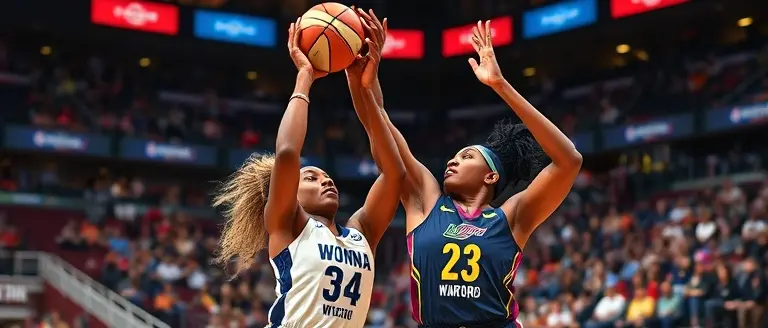
The wings vs fever matchup on May 9, 2026, represented more than just a standard season-opening game; it served as a monumental showcase for the future of professional basketball. Held at the iconic Gainbridge Fieldhouse, this marquee event drew record-setting attention, solidifying its place as the definitive kickoff for the 2026 WNBA season. As fans scrambled to find out where to watch dallas wings vs indiana fever, the game broadcast on ABC proved that the league’s popularity continues to reach unprecedented heights. The atmospheric energy surrounding this fever game was fueled by the rare gathering of elite young talent on a single hardwood floor.
A Historic Convergence of Talent
At the heart of the narrative was a fascinating statistical anomaly: the presence of the last four No. 1 overall draft picks in the WNBA. This convergence of generational prospects transformed a regular-season contest into a high-stakes tactical battleground. Analysts noted that the game provided a perfect baseline for evaluating the trajectory of the league’s most promising stars:
- Caitlin Clark (Indiana Fever): As the primary focal point of the offense, Clark’s playmaking ability remains the driving force for the Fever’s strategic identity.
- The Wings’ Core (Paige Bueckers and Azzi Fudd): The addition of these elite talents to the Dallas roster created a dynamic defensive puzzle for the Fever, pitting two of the most lauded prospects against the league’s established superstars.
- Aliyah Boston: Representing the foundational strength for Indiana, her presence ensured a balanced attack against a highly athletic Dallas frontcourt.
By featuring these specific players, the league effectively highlighted the shift toward a faster, more perimeter-oriented game. This wings vs fever opener set the tone for the entire season, forcing both coaching staffs to adjust their schemes in real-time to counter the high basketball IQ of their opponents. The game was not merely a test of skill but a preview of a potential playoff rivalry, defining the early-season narratives for both franchises.
Star Power Dynamics: Performance vs. Expectations

The 2026 season opener between the Indiana Fever and the Dallas Wings was billed as a historic convergence of talent, featuring the league’s last four No. 1 overall draft picks: Aliyah Boston, Caitlin Clark, Paige Bueckers, and Azzi Fudd. With the global spotlight fixed on Gainbridge Fieldhouse, expectations were sky-high. While the fever game ultimately served as a litmus test for team cohesion, the individual performances offered a fascinating glimpse into how these high-profile stars are adjusting to the evolving tactical landscape of the WNBA.
Efficiency Under Pressure
Caitlin Clark faced suffocating defensive schemes designed specifically to force the ball out of her hands. Despite the physical pressure from the Dallas perimeter defense, Clark demonstrated improved playmaking efficiency compared to her rookie campaign. Evidence suggests that while her raw scoring totals fluctuated due to the intense focus, her ability to dictate the pace of the game remained elite. Key takeaways from the performance include:
- Defensive Gravity: Clark’s presence consistently pulled multiple defenders toward the perimeter, opening up high-percentage lanes for teammates like Boston.
- Tactical Adaptation: Bueckers and Fudd showcased a polished mid-range game that challenged Indiana’s interior rotation, forcing the Fever to adjust their defensive coverage in real-time.
- Roster Synergy: The integration of these stars revealed that offensive schemes are shifting toward a more positionless, guard-centric flow that relies heavily on the decision-making of the league’s top point guards.
The game underscored that superstar status in the modern WNBA is no longer measured solely by individual point totals, but by how effectively a player can draw defensive gravity to create high-value opportunities. As the season progresses, fans tuning in via the official broadcast channels will be watching closely to see if these four marquee names can maintain this level of intensity without burning out under the weight of such massive preseason hype.
Tactical Shift Analysis: How Schemes Evolved

The 2026 season opener between the Indiana Fever and the Dallas Wings showcased a marked evolution in WNBA tactical play, moving significantly away from the predictable sets seen in the 2025 season. Coaching staffs from both sides leaned heavily into high-variance, spacing-centric offenses, designed specifically to leverage the unprecedented talent pool of the “last four No. 1 overall picks.” The Fever game plan focused on a complex read-and-react system centered around Caitlin Clark, forcing the Wings’ defense to communicate through constant off-ball screening actions that rarely allowed for static help-side rotations.
Defensive Coverage and Transition Efficiency
Defensively, the Wings opted for a “blitz-and-recover” strategy against the Caitlin Clark pick-and-roll, a clear adjustment from the drop coverage that proved ineffective in previous matchups. By forcing the ball out of her hands early, the Wings relied on their superior length to contest perimeter shooters. However, this scheme created vulnerability in transition, where the Fever exploited long-rebound opportunities to ignite their break. Key tactical observations from the contest included:
- Aggressive Trapping: The Wings utilized high-side pressure to disrupt the Fever’s initiation phase, forcing the ball to be distributed to secondary playmakers.
- Rotation Flexibility: The Indiana Fever shifted to a more switch-heavy defensive scheme in the second half, effectively neutralizing the isolation rhythm of Paige Bueckers and Azzi Fudd.
- Personnel Rotations: Both teams utilized deeper bench rotations to maintain tempo, indicating a league-wide trend toward high-pace efficiency over traditional post-up dominance.
Ultimately, this wings vs fever clash demonstrated that perimeter-oriented schemes now dictate the rhythm of modern WNBA basketball. The ability of both squads to pivot their defensive identity mid-game suggests a sophisticated level of scouting and real-time adjustments that will define the competitive landscape throughout the remainder of the 2026 campaign.
Trajectory Analysis: What This Means for the 2026 Campaign

The wings vs fever season opener on May 9, 2026, serves as a high-stakes barometer for the remainder of the WNBA season. By pitting four consecutive No. 1 overall draft picks—Aliyah Boston, Caitlin Clark, Paige Bueckers, and Azzi Fudd—against one another, the league has signaled a shift toward a new era of ultra-talented, high-IQ basketball. For the Indiana Fever, this game was a litmus test for how their roster construction evolves to support Clark’s playmaking gravity. Conversely, the Dallas Wings showcased a defensive versatility that suggests they are ready to disrupt established hierarchies in the standings. Analysts are already pointing to this matchup as the foundation for a mid-summer rivalry that could define playoff seeding implications.
Strategic Implications for Team Development
The tactical adjustments observed during this game indicate how these teams will likely approach the 2026 campaign. Coaches are prioritizing rapid transition play, but the efficiency with which these stars operate in half-court sets will determine who survives the grueling summer schedule. Key takeaways from the performance include:
- Chemistry and Rotation: The integration of rookie talent into the established core is moving faster than anticipated, suggesting that team chemistry will be a significant advantage as the league approaches the All-Star break.
- Bench Depth: With such high-profile starters, the impact of bench efficiency in sustaining leads during the second and third quarters remains a critical area for improvement for both organizations.
- Defensive Scheming: Both teams displayed a willingness to experiment with switching defenses, indicating a league-wide trend toward positionless basketball.
Early performance metrics suggest that while the fever game highlights were dominated by individual brilliance, the long-term success of both franchises will hinge on tactical discipline. As the season progresses, expect coaches to double down on the defensive matchups that challenged these stars in the opener. Fans looking for consistent where to watch dallas wings vs indiana fever updates or future rematches should note that the physical intensity observed in this opening game is a preview of the high-octane basketball expected throughout the 2026 summer series.
Master the Complexity of the 2026 Season
The intensity of the Wings vs Fever clash proved that the 2026 WNBA season is defined by high-IQ basketball and rapid-fire tactical adjustments. Understanding the efficiency metrics of stars like Caitlin Clark and Paige Bueckers requires a level of mental acuity that goes beyond casual observation. Just as these athletes rely on elite mental processing speed to execute high-level plays under pressure, your ability to extract actionable insights from complex scouting data depends entirely on your own cognitive sharpness.
If you find yourself struggling to keep up with the rapid pace of modern game analysis, your mind might be clouded by the mental fatigue that plagues even the most dedicated fans. This is where The Brain Song acts as your professional-grade mental accelerator. Designed to clear brain fog and sharpen your focus, it allows you to break down intricate defensive schemes and player efficiency stats with the precision of a head coach. By integrating this tool into your routine, you transform from a spectator into a sharp, insightful analyst capable of mastering the game’s deepest complexities.
It is time to stop watching from the sidelines and start seeing the game for what it truly is—a masterful display of strategy. Sharpen your analytical edge for the 2026 season—try The Brain Song today to boost your focus and master the game’s complexities.
 Sharpen your analytical edge for the 2026 season—try The Brain Song today to boost your focus and master the game’s complexities.Yes, I Want This Now!