
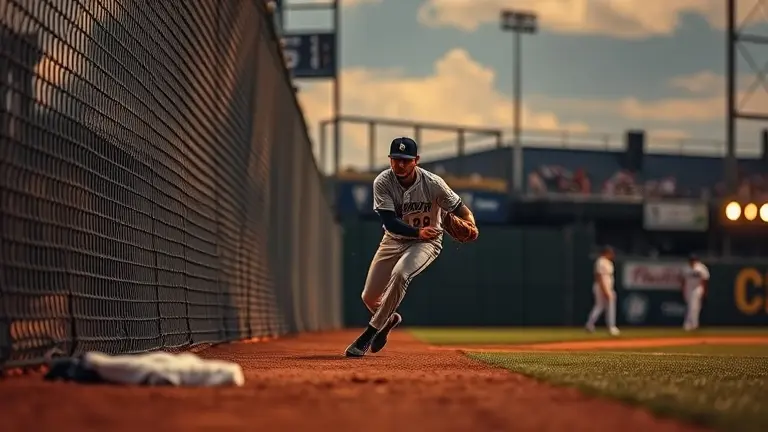
The atmosphere at American Family Field turned somber on Friday, May 8, 2026, when Milwaukee Brewers outfielder Brandon Lockridge collided violently with the outfield wall while chasing a foul ball against the New York Yankees. The immediate impact, which resulted in Lockridge being carted off the field, has sent shockwaves through the organization. With confirmation on May 9 that Lockridge has been placed on the 10-day injured list, manager Pat Murphy is now forced to grapple with a significant roster void, as the injury appears severe enough to keep the outfielder sidelined well beyond the initial recovery window.
As the Brewers adjust to this sudden setback, the focus shifts to a critical ‘next man up’ strategy. With the team already navigating early-season offensive hurdles, the absence of Lockridge necessitates a complete re-evaluation of both defensive assignments and the batting order. For fans and analysts alike, the coming weeks represent a complex puzzle of minor league call-up potential and tactical roster adjustments. To truly understand how Milwaukee will weather this storm, we must look beyond the initial headlines and dive deep into the metrics that will define their success in his absence.
Brandon Lockridge Injury Update: Brewers Place Outfielder on 10-Day IL
The Milwaukee Brewers received difficult news on Saturday morning, May 9, 2026, officially confirming that outfielder Brandon Lockridge has been placed on the 10-day injured list (IL). This roster move follows a distressing scene at the ballpark on Friday, May 8, during a high-stakes contest against the New York Yankees. While attempting to track down a difficult foul ball, Lockridge collided violently with the outfield wall. The impact was severe enough that trainers and medical personnel immediately rushed to the field, and he was eventually carted off to the clubhouse, leaving fans and teammates visibly shaken.
Managerial Insight and Injury Severity
Following the game, Brewers manager Pat Murphy addressed the media with concerns regarding the nature of the injury. Initial assessments confirmed a significant knee injury, and while the team has officially designated it as a 10-day stint, Murphy indicated that the timeline for his return may extend well beyond the minimum requirement. The club is currently exercising caution, but the acknowledgment of a “significant period” of recovery suggests that the medical staff is bracing for a multi-week or potentially month-long absence.
Key details surrounding the current status of the Brewers’ outfielder include:
- Mechanism of Injury: A high-velocity collision with the outfield wall while chasing a foul ball during the May 8 matchup.
- Official Status: Placed on the 10-day IL effective May 9, 2026.
- Outlook: Pat Murphy confirmed the injury to the knee is substantial, necessitating a measured approach to his rehabilitation.
As the organization processes this loss, the front office is evaluating its depth to fill the void left by Lockridge. Given the Brewers’ early-season offensive struggles, losing a key defensive piece further complicates the team’s ability to maintain consistency in the lineup. Fans and fantasy managers alike are now looking toward potential call-ups from the minor leagues to provide the necessary support while Lockridge undergoes his recovery process.
Analyzing the Defensive Impact of Lockridge’s Absence

The loss of Milwaukee Brewers Brandon Lockridge creates a significant vacuum in the outfield, forcing manager Pat Murphy to rethink the team’s defensive alignment. Lockridge was widely regarded for his elite range and reliable glove work, consistently tracking down difficult balls that otherwise would have fallen for extra-base hits. His ability to cover expansive territory allowed the Brewers to maintain an aggressive defensive positioning, which will now require immediate tactical adjustments to maintain the team’s efficiency in the field. Without his specific combination of speed and spatial awareness, the outfield staff must now prioritize more conservative positioning to account for a reduced defensive footprint.
Strategic Adjustments and Defensive Reconfiguration
To mitigate the impact of this injury, the coaching staff will likely rely on a platoon system or shift existing personnel into more versatile roles. The primary concern is replacing his arm strength, which frequently acted as a deterrent for base runners attempting to advance on fly balls or gap hits. To compensate for this, expect to see the following adjustments:
- Increased Lateral Support: The remaining outfielders will need to shade closer to the gaps, necessitating a shift in how the infielders communicate cutoff relays and assist in ball tracking.
- Tactical Defensive Shifts: Murphy may implement more frequent mid-inning defensive substitutions, utilizing speed-focused bench players in late-game scenarios to protect slim leads.
- Minor League Call-up Integration: The organization must evaluate the defensive metrics of current AAA prospects to determine who can best replicate the lateral mobility that characterized Lockridge’s play.
As the team navigates this transition, the emphasis will shift from individual heroics to collective discipline. While the offensive impact of losing Lockridge is notable, the defensive volatility introduced by his absence could prove even more challenging for the Brewers as they push through this difficult stretch of the season. Maintaining a high defensive standard is now the team’s most pressing priority.
Brewers Roster Maneuvers: Potential Call-ups and Replacements
The unfortunate injury sustained by Milwaukee Brewers Brandon Lockridge on May 8, 2026, forces the front office into a challenging “next man up” scenario during a critical stretch of the season. With Lockridge relegated to the 10-day injured list, manager Pat Murphy must balance immediate defensive stability with the need for offensive production, especially given the team’s well-documented early-season struggles at the plate. The Brewers’ organization prides itself on depth, but replacing a versatile outfielder requires a calculated approach to maintaining perimeter defense while avoiding a significant drop-off in production.
Evaluating Triple-A Nashville Prospects
The most logical path for the Milwaukee front office involves looking toward the Triple-A Nashville Sounds roster. Several internal candidates possess the defensive range necessary to navigate the tricky dimensions of the outfield, though they present different profiles:
- Defensive Specialists: The team may opt for a glove-first replacement if they prioritize run prevention during close games. This candidate would likely offer elite speed and track balls effectively but might provide less power in the lineup.
- Offensive-Minded Replacements: If the goal is to spark the bats, the team could call up a prospect with high-contact metrics, even if it entails a slight regression in range or arm strength compared to the high standard set by Lockridge.
- Utility Versatility: There is also the possibility of a tactical shift where the coaching staff elevates a utility player capable of rotating between infield and outfield spots, providing Murphy with more late-game substitution flexibility.
Strategic Trade-offs
Deciding whether to prioritize defense or offense depends largely on the internal assessment of Lockridge’s recovery timeline. If the injury is expected to sideline him beyond the minimum 10 days, the Brewers may lean toward a player who offers long-term projectability. Regardless of the choice, the focus remains on stabilizing the team’s trajectory. The front office must act decisively to ensure that the loss of a key roster piece does not derail the team’s momentum as they navigate the remainder of the series and upcoming schedule.
Adjusting the Batting Order Without Lockridge
The sudden loss of Milwaukee Brewers outfielder Brandon Lockridge creates a tangible void in the team’s offensive production. Prior to his collision with the outfield wall on May 8, 2026, Lockridge had become a vital component of the lineup, providing a specific blend of contact hitting and base-running aggression that kept rallies alive. With manager Pat Murphy now forced to navigate a significant period without his services, the coaching staff must determine how to replicate his on-base percentage and defensive versatility. Early-season reporting from the Milwaukee Journal Sentinel highlighted existing offensive inconsistencies, and losing a key contributor only amplifies the pressure on the remaining core to stabilize the batting order.
Tactical Shifts and Lineup Optimization
To compensate for the absence of Milwaukee Brewers Brandon Lockridge, the team is likely to pivot toward a “next man up” philosophy that emphasizes internal versatility. Strategic adjustments may include:
- Elevating Core Hitters: Expect veterans to move up in the order to ensure high-impact bats receive more plate appearances in critical situations.
- Platoon Splits: The Brewers may utilize a more aggressive platoon strategy, leveraging specific bench pieces to target favorable pitcher matchups that Lockridge previously handled regardless of handedness.
- Heightened Focus on Speed: Since Lockridge provided a consistent threat on the basepaths, other speedy roster members will likely be granted the “green light” to force action and manufacture runs.
The tactical challenge lies in balancing defensive stability with offensive output. While the front office evaluates potential call-ups from the minor leagues, the current roster must address the gap in the middle-to-bottom of the order. Analysts suggest that if the Brewers cannot maintain production, they may need to reorganize the top of the lineup to protect their primary sluggers. Successfully managing this transition will be essential for maintaining momentum in a competitive division, as the team looks to mitigate the impact of this unfortunate injury.
Mastering the Analytical Game
The Milwaukee Brewers are facing a pivotal stretch as they navigate the fallout from Brandon Lockridge’s injury. While the team must recalibrate their defensive positioning and search for internal replacements to stabilize the lineup, the responsibility of tracking these intricate shifts rests on the fans. Staying ahead of the curve in such a volatile season requires more than just passion; it demands a high level of mental sharpness and analytical clarity.
Much like the players on the field who must maintain peak focus to adjust to sudden tactical changes, sports analysts and dedicated fans need to keep their cognitive faculties firing at maximum capacity. Parsing through depth charts, injury reports, and defensive metrics in the wake of this roster setback can lead to mental fatigue, potentially clouding your ability to see the bigger picture of the Brewers’ season.
This is where Audifort becomes an essential tool for the dedicated fan. By supporting cognitive clarity and sensory sharpness, Audifort helps you cut through the noise of daily sports news, allowing you to synthesize complex statistical data with ease. As the Brewers battle to maintain their standing, ensure you have the mental edge required to track their recovery every step of the way. Enhance your ability to process the game and make informed predictions by sharpening your focus today.
 Optimize your analytical focus for the rest of the season; discover how to sharpen your mental clarity here.Sharpen My Analytical Edge Now!