
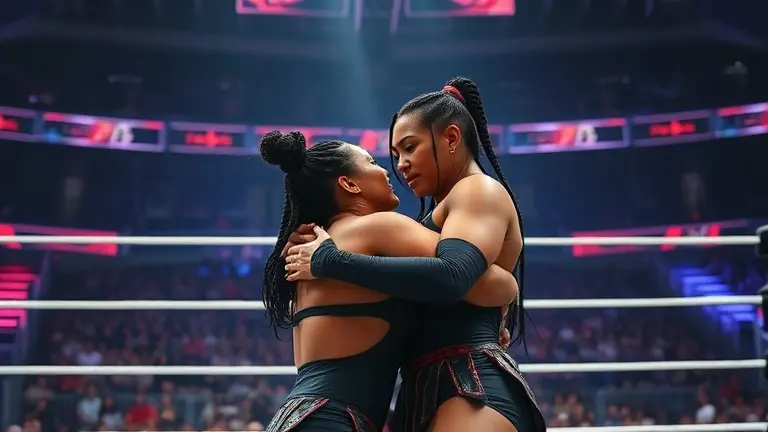
The WWE Backlash 2026 event in Tampa, Florida, became an unexpected battlefield where the scripted world of professional wrestling collided violently with the raw sentiment of the audience. As Iyo Sky secured her victory, the arena was filled not with cheers, but with thunderous “We Want Kairi” chants—a clear, stinging rejection of the recent departure of Kairi Sane. This moment of intense crowd dissent placed management in a precarious position, forcing a high-stakes pivot that would define the rest of the night.
In the aftermath, the shocking and deeply emotional embrace between Iyo Sky and Asuka served as a narrative lifeline. This abrupt character turn left fans and pundits questioning whether this was always part of the long-term plan, or if it was a reactive attempt by WWE to silence the hostility. By analyzing this clash between audience expectation and corporate storytelling, we can uncover the delicate mechanics of how emotional narratives are orchestrated to regain influence over an volatile crowd.
The Backlash in Tampa: WWE’s High-Stakes Clash Between Iyo Sky and Asuka
The atmosphere inside the arena for WWE Backlash 2026 on May 9 was electric, though not necessarily for the reasons the creative team had originally scripted. As Iyo Sky prepared to square off against Asuka in Tampa, Florida, the audience’s attention was dominated by the recent, controversial departure of Kairi Sane. This administrative decision sparked immediate fan unrest, transforming the highly anticipated contest into a focal point for spectator frustration. Throughout the duration of the match, the arena echoed with loud, persistent “We Want Kairi” chants, creating a hostile environment that tested the professional composure of both competitors.
Managing Crowd Hostility and In-Ring Narrative
The match itself served as a complex case study in how modern WWE storytelling navigates real-time audience dissent. Despite the clear distraction caused by the chanting, both Iyo Sky and Asuka delivered a high-caliber technical performance that eventually demanded the crowd’s focus. The backlash results ultimately saw Iyo Sky secure a hard-fought victory, but the true talking point emerged in the immediate aftermath of the bell. In a move that surprised many observers, the two rivals shared an emotional, respectful embrace, effectively signaling a potential shift in their ongoing narrative arc.
Several key factors defined this segment:
- Audience Sentiment: The “We Want Kairi” chants represented a rare, vocalized protest against talent management decisions.
- In-Ring Professionalism: Despite the noise, the match quality remained high, underscoring the veterans’ ability to maintain character focus.
- Character Evolution: The post-match embrace acted as a pivot point, potentially signaling a face turn for Asuka and a resolution to their rivalry.
Whether this emotional conclusion was a long-planned narrative beat or a desperate, improvised attempt to quell the crowd’s anger remains a subject of intense debate among wrestling analysts. Regardless of the intent, the moment at WWE Backlash 2026 demonstrated the unique tension that exists when fan expectations collide with corporate production, leaving the audience to grapple with the juxtaposition of professional storytelling and real-world sentiment.
The ‘We Want Kairi’ Phenomenon: Crowd Influence on WWE Storytelling
The WWE Backlash 2026 event in Tampa served as a stark reminder that modern wrestling fans are no longer passive observers; they are active participants capable of disrupting, or at least re-contextualizing, scripted narratives. The persistent “We Want Kairi” chants during the showdown between Iyo Sky and Asuka highlighted a significant disconnect between management’s booking decisions and the emotional investment of the audience. By publicly vocalizing their disapproval regarding the departure of Kairi Sane, the Tampa crowd effectively transformed a technical wrestling showcase into a meta-commentary on roster management, forcing the performers to navigate a hostile environment that threatened to overshadow their in-ring work.
Crowd Hostility as a Disruptive Force
The vocal protest during this encounter underscores how fan sentiment can influence, and occasionally derail, the intended flow of a high-stakes match. When the audience rejects the primary premise of a segment, it forces a real-time adjustment in how stories are delivered. In this instance:
- The hostility shifted the focus away from the athleticism of Iyo Sky and Asuka, turning the match into a referendum on the company’s recent personnel choices.
- It demonstrated the risks of ignoring fan attachment; when fans feel their favorite stars are being mistreated, they will leverage the live broadcast to demand accountability.
- The pressure placed on the athletes in the ring to maintain professionalism while being drowned out by protest chants remains one of the most difficult hurdles in live sports entertainment.
Ultimately, the emotional post-match embrace between the two competitors appeared to be a strategic pivot. By choosing to transition into a moment of mutual respect, the performers attempted to neutralize the tension and pivot toward a new, potentially face-turn-driven narrative. However, while the hug provided a resolution to their immediate rivalry, it remains debatable whether this creative redirection successfully placated a crowd determined to vocalize their frustration over the loss of Kairi Sane. This event acts as a vital case study in how the WWE must weigh fan loyalty against the necessity of evolving their long-term backlash results and storytelling agendas.
Character Evolution: Did the Post-Match Embrace Change the Narrative?
The WWE Backlash 2026 match between Iyo Sky and Asuka served as a tense battleground, not just for the athletes in the ring, but for the company’s ongoing storytelling strategy. Following the controversial departure of Kairi Sane, the Tampa crowd made their dissatisfaction clear through relentless “We Want Kairi” chants. In the face of this hostility, the eventual post-match embrace between the two performers raised significant questions regarding whether this was a carefully orchestrated character evolution for Asuka or a reactive “damage control” maneuver intended to quell a volatile atmosphere.
Analyzing the Pivot
The emotional conclusion, marked by a heartfelt hug, suggests a calculated effort to transition Asuka into a more sympathetic or face-aligned role. By humanizing the veteran star immediately after she suffered a loss to Iyo Sky, WWE likely hoped to shift the audience’s focus away from administrative frustrations and toward the professional mutual respect between two pillars of the division. However, this narrative pivot faced several hurdles:
- Crowd Disconnect: The persistence of the chants suggests that the emotional finish failed to fully address the audience’s core grievance regarding roster talent management.
- Reactive Storytelling: There is growing speculation that the embrace was a late-stage improvisation designed to neutralize the negative sentiment bubbling within the arena.
- Future Implications: While the move successfully provided a definitive end to their recent rivalry, it remains unclear if this “turn” will resonate long-term or if it will be overshadowed by the ongoing fallout from the recent talent releases.
Ultimately, while the victory for Iyo Sky was the night’s objective result, the post-match sequence stands as a case study in how modern wrestling promotions attempt to navigate live crowd dissent. Whether the embrace signifies a genuine character trajectory or a temporary shield against public outcry, it highlights the increasing tension between fan expectations and executive booking decisions.
Neutralizing the Backlash: Assessing WWE’s Success in Pivot Strategy

The WWE Backlash 2026 event in Tampa served as a high-stakes proving ground for how creative management handles real-time audience rebellion. When fans began raining down “We Want Kairi” chants during the Iyo Sky and Asuka match, it became clear that the departure of Kairi Sane had created a significant disconnect between the booking department and the core audience. The subsequent emotional embrace between Sky and Asuka was a calculated narrative pivot, aimed at shifting the focus from the controversy surrounding a release to the immediate emotional stakes of the in-ring talent. By framing the conclusion as a character-defining moment for Asuka, WWE attempted to force a shift in sentiment, prioritizing internal storytelling over the external frustration of the viewer base.
Evaluating the Efficacy of the Pivot
Whether this strategy succeeded remains a point of contention among industry analysts. To determine if the narrative shift was effective, one must consider two distinct outcomes:
- Distraction vs. Resolution: While the hug provided a polished, televised ending, it failed to address the core grievance of the fans. The chants were a vocal protest against talent management, and a scripted moment of professional respect between Sky and Asuka did little to silence the underlying anger regarding the lack of transparency in Kairi Sane’s exit.
- Character Trajectory: From a creative standpoint, the pivot successfully positioned Asuka in a new light. It signaled a major transition for her persona, potentially insulating her from the backlash by distancing her from the management decisions that sparked the protest.
Ultimately, the match serves as a case study in the limitations of narrative pivots. While WWE was able to close the segment with a sense of finality, the lingering resentment in the Tampa arena proved that when fan frustration is rooted in administrative policy rather than kayfabe storytelling, a simple “face turn” or emotional beat is rarely enough to fully neutralize the dissent. The company managed to salvage the broadcast, but the “We Want Kairi” chants indicate that the audience remains deeply invested in the personal well-being of their favorite stars, often viewing management decisions through a lens of skepticism that no match finish can immediately overwrite.
Decoding the Emotional Scripts of Loyalty
The events at WWE Backlash 2026 revealed more than just a wrestling outcome; they exposed the volatile intersection of fan expectations and narrative control. Whether Iyo Sky’s victory and the subsequent embrace with Asuka were a calculated masterstroke or a desperate reaction to the crowd’s mourning of Kairi Sane remains the subject of intense debate. This tension perfectly illustrates how deeply invested we become in the stories of others—and how we intuitively crave a resolution that feels both earned and emotionally resonant.
Just as WWE writers use specific cues to trigger a shift in crowd emotion or character commitment, psychology shows there are ‘secret signals’ that can trigger similar shifts in real-world romantic dedication. If you’ve ever wondered why certain emotional turns create such lasting impact, you are already thinking like an architect of human connection. The same psychological drivers that dictate a wrestling audience’s loyalty are the levers that build devotion in your own personal life.
By understanding the ‘Hero Instinct,’ you gain access to the subconscious triggers that foster deep, lasting commitment. This isn’t just about reading a script; it’s about mastering the mechanics of how we form bonds and maintain them even when the narrative gets complicated. If you want to understand the triggers behind the ’emotional turns’ we see in the ring and how to apply those psychological insights to your own relationships, discover how the ‘Hero Instinct’ works here.
 If you want to understand the triggers behind the ’emotional turns’ we see in the ring and how to apply those psychological insights to your own relationships, discover how the ‘Hero Instinct’ works here.Unlock The Hero Instinct Today!