
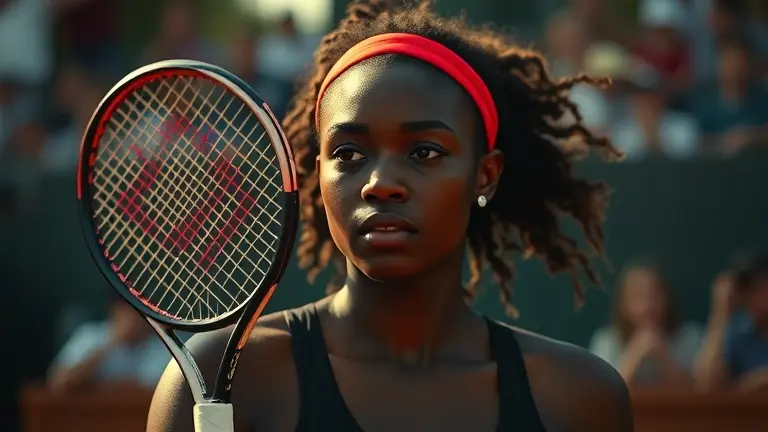
As the 2026 Italian Open unfolds, all eyes are fixed on Coco Gauff, the defending Roland Garros champion. Yet, the story in Rome is moving far beyond the baseline. While spectators hold their breath during her recurring service struggles and double-fault battles, a much larger drama is brewing behind the scenes. Gauff has emerged as the definitive voice for a new generation of players, openly navigating the thin line between athletic technical pressure and the high-stakes politics of a potential Grand Slam boycott over compensation structures.
This is no longer just about forehands and serves; it is about the cognitive burden of leading a movement while attempting to defend a major title. Balancing the tactical demands of the clay-court circuit with the exhausting reality of labor advocacy requires a level of mental fortitude rarely asked of a twenty-two-year-old athlete. As the French Open looms, the question is not just whether Gauff can correct her serve, but whether she can maintain the mental clarity necessary to dominate both the court and the boardroom.
The Pressure of the Crown: Coco Gauff’s 2026 Season at a Crossroads

As the professional tennis circuit pivots toward the late-spring clay-court swing, Coco Gauff finds herself navigating an unprecedented dual challenge. Following her triumphant 2025 campaign, the American superstar is currently operating under the immense scrutiny of being the defending Roland Garros champion. However, her performances at the 2026 Italian Open in Rome have underscored a palpable tension between her technical execution and the weight of her off-court advocacy. While she remains a dominant force on tour, recent matches have revealed recurring struggles with service rhythm and unforced errors, leading to renewed coaching scrutiny regarding her tactical decision-making under pressure.
The Technical and Political Balancing Act
The narrative surrounding Gauff in May 2026 is no longer confined to her baseline brilliance. Alongside world number one Aryna Sabalenka, Gauff has emerged as a vocal proponent for systemic change in professional tennis. By addressing the potential for a Grand Slam boycott, she has moved beyond being solely an athlete, positioning herself as a primary labor advocate. This balancing act creates a complex internal dynamic for the young star:
- Technical Consistency: Recent data from the Rome Masters suggests that her signature serve is experiencing fluctuations, with double-fault issues becoming a recurring point of concern for analysts.
- Labor Leadership: Her public commentary on prize money distribution and athlete compensation structures has ignited critical industry-wide conversations, shifting the focus from match-play to governance.
- Defending the Title: As she prepares to return to Paris, the pressure to replicate her 2025 French Open success is compounded by her new, high-profile role in labor negotiations.
Evidence suggests that this intersection of athletic vulnerability and political influence defines this critical juncture in her career. Whether Gauff can refine her mechanical approach before the French Open while simultaneously carrying the torch for player rights remains the defining storyline of the 2026 season. As she continues to compete in Rome, the tennis world is watching not just for her scorelines, but for how she manages the dual crown of champion and labor leader.
Technical Breakdown: Analyzing the Rome Masters Double-Fault Dilemma
As Coco Gauff navigates the clay courts of the 2026 Italian Open, her service motion has come under intense scrutiny. Recent matches in Rome have highlighted a concerning spike in double faults, a statistical deviation that stands in stark contrast to her 2025 Roland Garros championship run. While Gauff famously captured her maiden major title with a balanced, high-percentage serving strategy, the current clay-court season reveals a tactical shift toward higher-risk, aggressive placements. Evidence suggests this is not merely a mechanical failure, but a conscious attempt to elevate her ceiling before defending her French Open crown.
Mechanics vs. Mindset: Assessing the Serve
The transition from 2025 to 2026 has introduced subtle biomechanical adjustments to her toss and follow-through. By attempting to generate more kick and depth on her second serve, Gauff is pushing the boundaries of her current mechanics. Analysts note that these changes often lead to “dead-ball” situations where her rhythm is disrupted by external pressure.
- Aggressive Second Serves: Data from the Rome Masters indicates Gauff is taking greater risks on second serves, targeting lines rather than safety zones to prevent aggressive returns from top-tier opponents.
- Psychological Load: As a defending champion and a leading voice in labor negotiations, the mental tax on Gauff is unprecedented. Critics argue that her focus on systemic tennis reform may be creating a minor disconnect in her match-day concentration.
- Coaching Considerations: With recurring critiques regarding her decision-making during high-leverage points, Gauff’s team is likely experimenting with a more potent, albeit volatile, service arsenal.
Ultimately, while the double-fault statistics at the Rome Masters are alarming, they appear to be a byproduct of a strategic evolution. Gauff is no longer content with “safe” tennis; she is actively refining her toolkit to ensure she remains the player to beat at the upcoming Roland Garros. Whether this transition stabilizes before the start of the major remains the defining question of her current season.
Beyond the Baseline: Gauff and the Movement for Player Compensation
As Coco Gauff continues to assert her dominance on the world stage, her influence is extending far beyond the clay courts of the Italian Open. Increasingly, the defending Roland Garros champion is leveraging her platform to address systemic economic disparities within professional tennis. Alongside world number one Aryna Sabalenka, Gauff has become a vocal leader in a burgeoning labor-related movement, challenging the current prize money structures at major tournaments. Her public stance regarding the possibility of a player-led boycott of Grand Slam events represents a significant shift in athlete activism, signaling that the sport’s top earners are no longer content with the status quo.
The Economics of Professional Tennis
Gauff’s push for improved compensation is rooted in the reality that, while top-tier stars command massive endorsements, the broader professional circuit faces significant financial instability. Advocacy for better player pay highlights several critical issues:
- Revenue Distribution: Concerns persist over how tournament profits are shared with the athletes who drive global viewership.
- Support for Lower-Ranked Players: Compensation models often fail to account for the exorbitant costs of travel, coaching, and logistics for those outside the top 50.
- Sustainability: Gauff argues that for tennis to remain a professional career path, the financial floor must be raised to ensure long-term viability for all participants.
Timing and Leadership
Why is this happening now? For Coco Gauff, the timing aligns with her maturity as a global icon. As the face of the WTA, she is uniquely positioned to demand change, as she possesses both the competitive accolades and the brand recognition to force conversations with tournament organizers. Her alignment with fellow top players suggests a collective shift toward bargaining power that has been historically absent in tennis. By linking her preparation for the French Open with this advocacy, Gauff is demonstrating that she views her responsibilities as a champion as dual-faceted: winning on the court and fighting for the future of the sport off of it. Whether this pressure leads to concrete policy reforms or remains a focal point for future negotiations, Gauff has successfully brought these labor concerns into the mainstream spotlight.
The Paris Stakes: Defending the Title Amidst Professional Unrest

As Coco Gauff prepares to return to Roland Garros, the pressure of defending her title is now compounded by a dual challenge: refining her technical game and navigating a volatile political landscape within the sport. While she manages the recent scrutiny over her recurring double-fault issues during the 2026 Italian Open, Gauff has simultaneously stepped into the role of a labor advocate. This balancing act is unprecedented for a defending champion, as she navigates the transition from pure athlete to a voice for collective player interests.
The Intersection of Form and Advocacy
The tension between her on-court performance and her public stance regarding a Grand Slam boycott creates a unique narrative heading into the French Open. Evidence suggests that the mental fortitude required to manage high-level labor negotiations may bleed into her match preparation. Key factors currently influencing her trajectory include:
- Technical Refinement: Addressing the “poor decision-making” cited by critics is essential to replicating her 2025 clay-court dominance.
- Collective Bargaining: Her willingness to discuss prize money structures alongside Aryna Sabalenka signals a shift in the player-organizer power dynamic.
- High-Stakes Scrutiny: As the face of the tournament, Gauff’s performance is being watched not just for tennis metrics, but for her ability to compartmentalize external administrative pressure.
If the current friction between top-tier players and tournament organizers reaches a boiling point during the French Open, the impact could be transformative for professional tennis. Gauff stands at the center of this movement, effectively turning the Parisian stage into a platform for institutional change. Whether this advocacy proves to be a distraction or a catalyst for her growth as a leader remains to be seen, but the stakes for her legacy and the sport’s future have never been higher.
Mastering the Mind in High-Stakes Pressure
Coco Gauff’s dual challenge—fixing a technical slump while spearheading a massive labor movement—highlights the extraordinary cognitive load placed on today’s elite athletes. Whether you are facing a Grand Slam final or the relentless pressures of your own professional life, the ability to maintain focus and execute with precision under stress is the ultimate differentiator between success and burnout.
Just as Coco must tune out the noise and optimize her decision-making to secure her legacy, you too require a mechanism to cut through the mental fog of high-performance environments. This is where The Brain Song becomes an essential tool. By utilizing a 12-minute auditory routine designed for peak cognitive endurance, you can mirror the focus and strategic clarity required at the highest levels of competitive play, ensuring that fatigue never clouds your path to achievement.
The Brain Song bridges the gap between raw ambition and tactical performance, helping you maintain the sharpness needed to handle your own high-stakes challenges with the poise of a champion. It is more than just a tool; it is the competitive edge for those who refuse to compromise on their potential.
 Optimize your own cognitive endurance and mental clarity with The Brain Song’s 12-minute auditory routine.Transform My Focus Today