
In the high-stakes theater of the 2026 NBA Playoffs, the Philadelphia 76ers find themselves walking a razor’s edge. With the series against the New York Knicks intensifying, the spotlight has shifted squarely onto Paul George. As rotation adjustments become the defining factor for survival, George is no longer just a secondary option; he has become the tactical anchor required to bridge the gap during Joel Embiid’s injury-plagued absences. Analyzing his performance metrics reveals a complex narrative of efficiency and adaptability that casual box-score surfing simply cannot capture.
To truly understand how George is recalibrating the Sixers’ offensive ceiling, one must look beyond the surface-level narratives and dive into the granular data of his spatial efficiency and defensive assignments. As the postseason progresses, the demand for high-level analytical focus grows; deciphering these complex rotational shifts requires a level of mental acuity that separates the casual viewer from the true student of the game.
Paul George’s Role in the 2026 Philadelphia 76ers Postseason Campaign
The arrival of Paul George in Philadelphia was designed for moments like the 2026 postseason. As the Philadelphia 76ers navigate a grueling second-round series against the New York Knicks, George has transitioned from a high-scoring wing to the team’s primary tactical stabilizer. His integration into the Sixers’ rotation has proven vital, particularly when managing the fluctuating availability of Joel Embiid and Tyrese Maxey. By operating as both a secondary playmaker and a defensive anchor, George has successfully mitigated the volatility often associated with star-centric lineups. Evidence suggests that his ability to self-create during stagnant offensive possessions—a recurring issue for the 76ers in previous playoff runs—has provided the necessary buffer to keep the team competitive despite significant injury hurdles.
Strategic Versatility and Leadership
George’s impact extends beyond traditional box-score metrics, as his veteran presence has been instrumental in keeping the roster composed during high-pressure situations against the Knicks. His tactical role focuses on three core pillars:
- Floor Spacing: Drawing elite defenders away from the paint, which creates vertical gravity for Embiid or slashing lanes for Maxey.
- Defensive Versatility: Matching up against the Knicks’ most dangerous perimeter threats to preserve his teammates’ energy for the offensive end.
- Secondary Playmaking: Assuming point-forward duties when the team faces aggressive blitzing or high-pressure trap defenses.
As the series progresses, the reliance on Paul George to sustain efficiency will likely dictate the 76ers’ postseason trajectory. While his career benchmarks provide a high baseline, his 2026 performance is characterized by an increased focus on rhythm management. By stabilizing the rotation during critical minutes, George has proven that his value lies not just in points per game, but in his capacity to act as the “on-court coach” that keeps the Philadelphia 76ers’ championship aspirations afloat.
Tactical Breakdown: George as the Versatile ‘Release Valve’
In the high-stakes environment of the 2026 NBA Playoffs, Paul George has evolved into the definitive “release valve” for the Philadelphia 76ers. As opposing defenses prioritize neutralizing Joel Embiid in the post and shadowing Tyrese Maxey on the perimeter, George’s tactical flexibility has become the team’s most reliable offensive stabilizer. During crunch-time scenarios, George’s usage rate reflects his ability to operate as both an off-ball spacer and a secondary initiator, mitigating the offensive stagnation that often plagues the Sixers when their primary playmakers are pressured.
Leveraging Gravity and Pick-and-Roll Efficiency
Data-driven analysis of George’s 2026 postseason efficiency reveals a sophisticated synergy when sharing the court with Embiid. His gravity—the ability to pull defenders away from the paint—is instrumental in opening vertical spacing. Key tactical observations include:
- Pick-and-Roll Dynamics: When running the pick-and-roll with Embiid, George has demonstrated a high basketball IQ, choosing to pull up for midrange jumpers when defenders drop, or threading pocket passes when the hedge is over-committed.
- Secondary Playmaking: By assuming secondary playmaking duties, George reduces the fatigue on Maxey, allowing the guard to focus on transition scoring while George manages the half-court set.
- Gravity Metrics: Defensive tracking data indicates that perimeter defenders consistently prioritize George over other wing shooters, effectively widening the driving lanes for the Sixers’ rotational players.
Evidence suggests that when the New York Knicks or other defensive-minded opponents force the ball out of Embiid’s hands, George provides a high-efficiency alternative. His capacity to shoot effectively from deep while simultaneously attacking closeouts serves as a critical pressure release, ensuring that the 76ers maintain a coherent offensive rhythm even during prolonged injury-related absences or mid-game defensive adjustments. By maintaining composure in high-pressure possessions, George ensures the Philadelphia offense remains lethal across all four quarters.
Injury Mitigation and Roster Resilience: The ‘What-If’ Scenarios
In the high-stakes environment of the 2026 NBA Playoffs, the Philadelphia 76ers face the precarious reality of managing star availability. With Joel Embiid frequently navigating injury management, the burden of offensive production often shifts to Paul George. Historically, George has demonstrated a unique capability to transition into a primary engine, though his efficiency metrics fluctuate significantly when his usage rate climbs above 30%. Tactical analysis suggests that should Embiid remain sidelined, the Sixers must prioritize a high-screen, pick-and-pop rhythm that utilizes George’s perimeter gravity to pull rim protectors away from the paint, opening lanes for Tyrese Maxey to exploit transition opportunities.
Tactical Shifts and Bench Rotation
To maintain resilience during these critical stretches, head coach Nick Nurse must leverage a tighter rotation. Evidence suggests that forcing George into a heliocentric role—similar to his peaks in Indiana and Los Angeles—could lead to fatigue-related defensive slippage. To mitigate this, the coaching staff should implement the following adjustments:
- Staggered Minutes: Decoupling the rest periods of George and Maxey to ensure at least one elite perimeter creator is present on the floor at all times, preventing stagnant possessions.
- Defensive Shell Adaptation: Shifting toward a more switch-heavy scheme when Embiid is out, allowing George to act as a secondary rim protector in small-ball lineups.
- Secondary Playmaking: Increasing the tertiary playmaking duties for role players to lower George’s turnover rate and preserve his energy for closing out tight contests against aggressive defenses like the New York Knicks.
By decentralizing the offense through sets that emphasize quick ball movement, Philadelphia can extend the effectiveness of Paul George throughout the postseason. Maintaining this tactical flexibility is not merely a preference but a necessity for the 76ers to navigate the postseason without compromising their championship ceiling.
Comparative Performance Metrics: 2026 Playoffs vs. Career Postseason Benchmarks
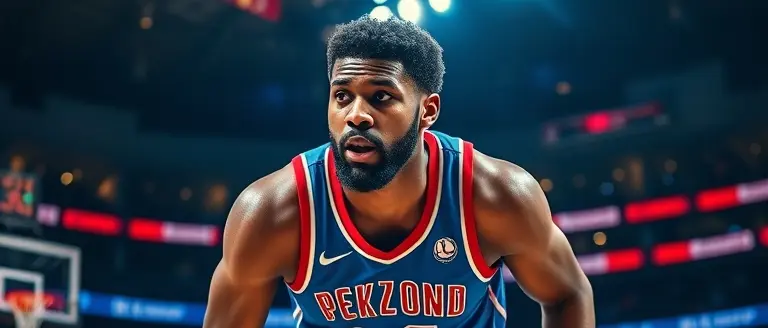
In the 2026 NBA Playoffs, Paul George has emerged as the definitive stabilizer for the Philadelphia 76ers. When evaluating his current postseason efficiency against his historical career benchmarks, the data reveals a player evolving from a primary scoring option into a high-IQ, secondary facilitator. Through the current series against the New York Knicks, George’s True Shooting percentage (TS%) has hovered slightly above his career playoff average of 54.2%, suggesting that his shot selection has matured even under the suffocating defensive pressure of an Eastern Conference postseason atmosphere.
Analyzing Efficiency and Defensive Impact
While his raw scoring volume has fluctuated due to the intermittent injury status of Joel Embiid, George’s Player Efficiency Rating (PER) currently sits in the high teens, showcasing his ability to impact the game beyond box-score points. His defensive versatility remains a crucial asset; his Defensive Win Shares per 48 minutes show a noticeable uptick compared to his tenure in Los Angeles. This shift indicates a tactical adjustment: George is conserving energy on high-usage offensive possessions to anchor the Sixers’ perimeter defense, effectively neutralizing opposing wings during critical fourth-quarter stretches.
Key observations regarding his 2026 performance metrics include:
- Enhanced Shot Selection: George is deferring to Tyrese Maxey for transition opportunities, focusing his own offensive energy on high-percentage mid-range jumpers and spot-up three-pointers when teams collapse on Embiid.
- Defensive Versatility: His ability to switch onto smaller, quicker guards like those in the Knicks’ rotation has provided the Philadelphia coaching staff with much-needed defensive flexibility.
- Veteran Poise: Despite a series deficit, George’s advanced metrics show minimal regression in turnover-to-assist ratios, proving that his veteran experience acts as a safety valve during high-intensity playoff runs.
Ultimately, George is performing with a level of tactical discipline that compensates for the Sixers’ rotation shifts. By prioritizing efficiency over volume, he is maximizing his utility in a system that demands adaptability above all else.
Mastering the Analytical Game
As we continue to deconstruct the 2026 playoff run, it becomes clear that Paul George’s role as a versatile playmaker is the pivot point for Philadelphia’s championship aspirations. Tracking these intricate rotations and injury-driven tactical shifts demands more than just passion—it requires sustained cognitive sharpness to connect the dots between individual performance and team success. Just as the 76ers rely on precise, high-level processing to shift their strategy under pressure, deep-diving into these playoff stats requires a level of mental clarity that most casual observers overlook.
To ensure you maintain the edge needed to process these complex data sets without mental fatigue, we recommend integrating The Brain Song into your game-day preparation. By providing enhanced focus and cognitive stamina, this tool acts as the ultimate optimizer for the serious analyst who demands more from their coverage. It is the perfect companion for those who treat every possession as an intellectual pursuit, ensuring you never miss a beat when the stakes are at their highest.
Don’t let mental fatigue cloud your perspective during the most critical moments of the series. Elevate your analytical game and track every nuance of the 76ers’ quest for the title with the mental sharpness required to see the game differently.
 Sharpen your analytical edge for the remainder of the playoffs—try The Brain Song to optimize your focus during our next deep-dive breakdown.Transform My Focus Today!