
As of August 2026, the United States is witnessing a profound metamorphosis in the nature of civic engagement. From the blistering legislative floor in Tennessee, where maps are being redrawn to consolidate power, to the high-stakes legal battles over student speech in Texas and international diplomatic friction in Rome, the American landscape is defined by a rhythmic surge of resistance. This is not merely a collection of isolated outbursts; it is a complex, reactive ecosystem where federal administrative shifts, such as handgun logistics policy, collide directly with grassroots fury and constitutional scrutiny. The result is a nation caught in a state of perpetual high-intensity dissent.
Navigating these fragmented realities requires more than a casual glance at the headlines. To understand the ‘why’ behind this current wave of activism, we must move beyond the noise and examine the structural triggers of the 2026 climate. For those standing at the intersection of political awareness and active participation, the challenge is no longer just about information gathering—it is about maintaining the cognitive stamina to synthesize a rapidly shifting reality without losing one’s internal compass to the encroaching exhaustion of the digital age.
The Convergence: Why America is Currently at a Protest Flashpoint
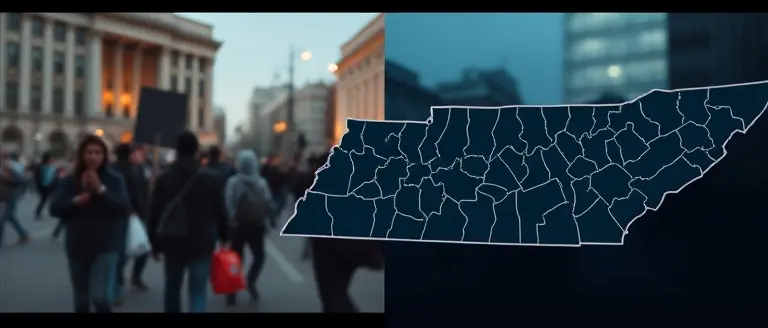
The current surge in protest activity across the United States is not a series of isolated grievances but a systemic reaction to a rapid acceleration in federal and state-level policy shifts. As of August 2026, the American political landscape has become a flashpoint for dissent, driven by a perception that traditional institutional guardrails are weakening. The Tennessee redistricting controversy—characterized by critics as a “9-0 GOP map”—has ignited a firestorm of legislative pushback, signaling a broader crisis of confidence in electoral fairness. This volatility is compounded by administrative policy changes, such as the contentious proposal to permit the mailing of handguns via the USPS. These events are no longer contained within local borders; they are feeding a national narrative of resistance that bridges the gap between state-house activism and federal policy advocacy.
The Anatomy of Escalating Political Volatility
The coalescence of these disparate events reveals a recurring pattern of tension between grassroots movements and established government authorities. Evidence suggests that the intensity of this current wave is fueled by:
- Legislative Overreach: The redistricting efforts in Tennessee have galvanized Democratic opposition, framing state-level maps as a direct challenge to the representative integrity of the federal government.
- Administrative Deregulation: The USPS handgun shipping proposal has prompted multi-state legal challenges from Democratic attorneys general, highlighting a shift toward utilizing the court system as a primary venue for protest.
- Global Optics: The international reception of Secretary of State Marco Rubio in Rome underscores how domestic political polarization now follows US officials abroad, turning foreign soil into an extension of the domestic discourse.
- Judicial Precedent: Ongoing federal litigation, such as the cases stemming from 2024 pro-Palestinian campus protests at the University of Texas, continues to shape the boundaries of constitutional free speech, further radicalizing the debate on what constitutes protected political expression.
This convergence creates a unique feedback loop where each new policy or legal ruling triggers a reactive wave of demonstrations, effectively merging physical street-level activism with sophisticated legal challenges and digital mobilization. As these fronts expand, the American public is witnessing a fundamental restructuring of how dissent is organized and how it confronts the current administration’s active agenda.
Legislative Resistance: The Battle Over Redistricting and Electoral Fairness
The current surge in legislative protest activity in the United States reflects a critical inflection point where state-level power-brokering meets deep-seated public outcry. Nowhere is this dynamic more apparent than in Tennessee, where the recent approval of a new congressional redistricting map—widely characterized as a “9-0 GOP map”—has ignited sustained demonstrations. By consolidating power through hyper-partisan geographic lines, state legislatures are effectively neutralizing competitive districts, a strategy that opponents argue undermines the fundamental mechanics of democratic representation. These protests are not merely spontaneous reactions; they are a direct response to a perceived hardening of political boundaries that leaves minority voices without a functional path to electoral influence.
From Courtroom Precedent to Street-Level Dissent
The escalation of this protest landscape is inextricably linked to recent Supreme Court jurisprudence, which has provided state legislatures with broader latitude to design electoral maps with minimal federal oversight. This judicial shift has emboldened state lawmakers to push the limits of gerrymandering, creating a direct pipeline between high-court rulings and regional political unrest. As legal avenues for challenging these maps narrow, activists have increasingly taken to the capitol floors and city streets, viewing public demonstrations as the final check against legislative overreach.
Key drivers of this movement include:
- Electoral Fairness: The demand for non-partisan redistricting commissions to counter the systemic bias introduced by current GOP-led map-making.
- Democratic Mobilization: State-level Democratic caucuses have moved beyond traditional debate, utilizing physical “lock-arms” demonstrations and filibuster-adjacent tactics to highlight the lack of bipartisan deliberation.
- Constitutional Conflict: The ongoing tension between state sovereign authority and the federal guarantee of representative government, which remains a focal point for civil rights groups involved in these political protests.
Ultimately, these legislative battles represent a broader trend in 2026 where the “state of dissent” is increasingly defined by institutional gridlock. When citizens feel that the legislative process has been structurally captured, the protest becomes a necessary tool to force the issue into the public consciousness, challenging the normalization of map-based political dominance.
Policy Polarization: Handguns, USPS, and Administrative Overreach

The current protest landscape in the United States has expanded beyond traditional street demonstrations, increasingly manifesting as institutional resistance against federal administrative policy. A primary catalyst for this shift is the Trump administration’s proposal to permit the mailing of handguns via the United States Postal Service (USPS). This policy shift has ignited a firestorm of dissent among Democratic attorneys general, who argue that the move undermines state-level public safety regulations and facilitates the interstate flow of untraceable firearms. By leveraging their legal authority, these officials are positioning state-level litigation as the primary check against federal administrative overreach, effectively turning the courtroom into the new front line of the 2026 resistance movement.
Mobilizing the Suburban and Urban Electorate
This policy-driven conflict has galvanized specific voter blocks, particularly in suburban and urban areas where concerns regarding gun violence remain a high-priority issue. Unlike ideological protests that may feel abstract to the average citizen, the potential deregulation of USPS logistics directly touches upon community safety and local law enforcement efficacy.
- Federal vs. State Authority: The dispute highlights a growing constitutional tension as states attempt to block executive agency actions that bypass local firearm ordinances.
- Voter Engagement: Urban and suburban constituents are increasingly participating in the protest discourse by pressuring their state representatives to join multi-state litigation efforts.
- Administrative Precedent: Activists and legal scholars warn that if the USPS successfully implements this rule, it could set a dangerous precedent for bypassing state-based gun control measures through federal channels.
Evidence suggests that this mobilization is not merely reactive; it represents a strategic pivot toward using administrative law to stall controversial executive policies. By framing the USPS handgun proposal as a direct threat to community safety, opponents have successfully translated complex bureaucratic changes into a tangible issue that continues to drive political engagement and public outcry across the nation.
Judicial Precedents and the Future of Campus Dissent
The legal fallout from the 2024 campus movements remains a pivotal battleground for the evolution of student free speech rights. As of August 2026, the federal litigation surrounding pro-Palestinian demonstrations at the University of Texas serves as a litmus test for how the judiciary balances institutional safety with the First Amendment. These proceedings are not merely localized campus disputes; they are foundational cases that will likely define the parameters of legitimate public expression in American universities for the next decade. Legal observers suggest that the outcomes of these trials could formalize a shift toward stricter administrative regulation of time, place, and manner restrictions on private and public campuses alike.
The Evolution of Campus Activism
The 2024 landscape of dissent established a template for modern protest that organizers have continued to refine. While initial actions relied heavily on physical occupations, the current environment has forced a pivot toward sophisticated legal and digital strategies. Key factors currently reshaping this landscape include:
- Heightened Judicial Scrutiny: Recent federal rulings increasingly favor institutional authority, setting a high bar for students claiming constitutional protections for prolonged encampments.
- Constitutional Precedents: The University of Texas case specifically tests whether political speech delivered through non-traditional protest methods warrants the same level of protection as classical assembly.
- Administrative Response: Universities are proactively updating codes of conduct, often citing the 2024 disturbances to justify more aggressive intervention policies before conflicts escalate.
As these legal battles progress, the definition of what constitutes “protected speech” is becoming narrower. The potential for a landmark ruling at the federal level threatens to restrict the tactical repertoire of campus movements, fundamentally altering the “state of dissent” on American soil. Advocates argue that if these judicial trends continue, the future of student activism may be forced away from public squares and into strictly digital or highly regulated institutional channels, effectively cooling the intensity of traditional protest culture on campus.
Maintaining Cognitive Resilience in Turbulent Times
The 2026 protest landscape serves as a potent reminder that civic engagement is as much an intellectual endeavor as it is a physical one. As we analyze the complex interplay between legislative maneuvering and constitutional defense, it becomes clear that staying informed in such a volatile environment demands more than just endurance; it requires a state of heightened clarity. When you are constantly bombarded by polarizing news cycles and the urgent necessity of political vigilance, mental fatigue becomes an unavoidable adversary that threatens your ability to think critically and act with purpose.
Navigating the complexities of this 2026 political landscape requires more than just access to information; it requires the mental clarity to synthesize these fragmented realities without succumbing to the burnout often triggered by constant exposure to volatile news cycles. This is where The Brain Song serves as an essential tool for your intellectual toolkit. By reducing mental fog and providing the cognitive stamina required for sustained critical analysis, this formula acts as a form of ‘cognitive maintenance,’ enabling you to remain an objective and effective participant in the discourse by protecting your most valuable asset: a clear, functioning mind.
By integrating this support into your daily routine, you move from merely reacting to the chaos to actively processing it with a sharpened focus. Whether you are deep-diving into the implications of federal policy shifts or tracking the impact of court decisions on democratic rights, clarity is your ultimate advantage in maintaining the long-term perspective necessary for meaningful change.
 Reclaim your mental edge and maintain your analytical clarity by incorporating The Brain Song into your daily routine.Protect My Mental Clarity Now!