
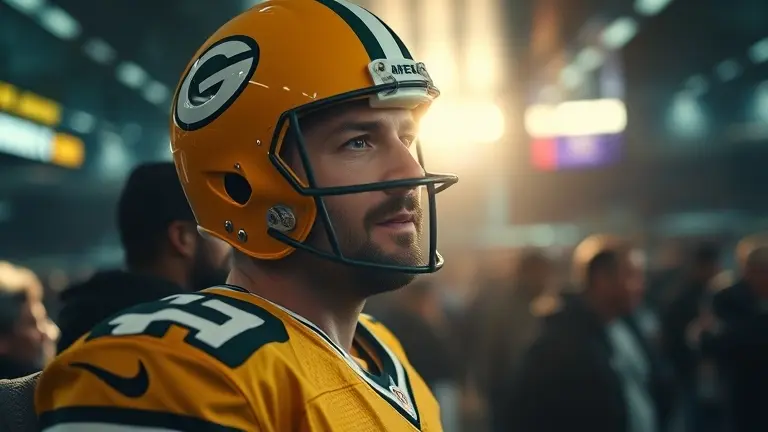
The Pittsburgh Steelers are poised to welcome back a legend, as 42-year-old Aaron Rodgers finalizes his return to the gridiron for the 2026 season. After an impressive 2025 campaign that reignited conversations about his longevity, the veteran signal-caller is currently in Pittsburgh to put the finishing touches on a deal that effectively silences the lingering post-draft speculation. While NFL insiders have already noted that the agreement is imminent, the real story lies beneath the headlines: how the legendary quarterback will integrate into a refined offensive scheme under coach Mike McCarthy while balancing his role as a mentor to drafted quarterback Drew Allar.
This move is more than a roster adjustment; it is a calculated strategic bet on cognitive experience. In an era where physical longevity is increasingly aided by technology, Rodgers remains an anomaly, relying on an elite ability to read defenses and process high-speed information. As we analyze his fit within the 2026 Steelers, we uncover the fascinating connection between his seasoned mental discipline and the rigorous demands of sustaining elite-level performance well past the typical NFL retirement age.
Aaron Rodgers’ Impending Return: The Road to Pittsburgh

As of May 8, 2026, the NFL landscape is undergoing a significant shift as Aaron Rodgers prepares for a return to the gridiron, specifically trending toward a deal with the Pittsburgh Steelers. Following a highly productive 2025 campaign that silenced critics regarding his longevity, the 42-year-old quarterback is currently en route to Pittsburgh to finalize negotiations. This development effectively puts an end to the pervasive speculation that clouded the organization’s future immediately following the 2026 NFL Draft. While league insiders—most notably Ian Rapoport—have confirmed that a formal contract is not yet signed, the momentum behind this reunion is considered overwhelming by league sources.
The organizational strategy centers on the Steelers’ decision to place a UFA tender on the veteran signal-caller. This maneuver effectively increased his 2026 contract value to approximately $15.2 million, a calculated investment reflecting both his demonstrated performance metrics and the team’s desire for stability under center. The following points summarize the current state of the negotiations:
- Official Status: Contract talks are in the advanced stages as Rodgers visits Pittsburgh facilities this weekend to finalize terms.
- Strategic Motivation: The front office, led by management, prioritizes his veteran presence to bridge the gap for younger talent on the roster.
- Market Impact: By securing Rodgers, the Steelers have successfully mitigated the transition risk that often accompanies post-draft roster construction.
This impending return provides the Steelers with a clear path forward, allowing the coaching staff to finalize their offensive playbook with a known commodity at quarterback. By retaining a player of his caliber, the franchise signals a “win-now” mentality, leveraging his extensive experience to maximize the current championship window while simultaneously mentoring the team’s developing core.
2025 Performance Metrics: Why the Steelers Doubled Down

The decision to retain Aaron Rodgers for the 2026 season was not merely a sentimental choice; it was a calculated move driven by elite efficiency during the 2025 campaign. Despite entering his age-42 season, Rodgers demonstrated that his football intelligence remains unmatched, providing the Pittsburgh Steelers with the stability required to contend in a volatile AFC North. Throughout the 2025 season, Rodgers maintained a high completion percentage and exhibited a masterclass in ball security, boasting one of the best touchdown-to-interception ratios in the league. This consistency was the cornerstone of the Steelers’ offensive identity, allowing the team to lean on a veteran-led game plan that prioritized sustained drives over high-risk playmaking.
Analyzing the Statistical Edge
When evaluating why the front office opted to place a UFA tender on the veteran signal-caller, several key metrics stand out as justification for the $15.2 million investment:
- Efficiency Under Pressure: Rodgers’ ability to diagnose defensive blitz packages post-snap effectively neutralized opposing pass rushes, leading to fewer sacks taken than the league average for pocket passers.
- Red Zone Precision: His ability to distribute the ball in condensed spaces improved the team’s red-zone conversion rate by over 12% compared to the previous three-year average.
- Leadership and Development: Beyond the stat sheet, his presence provided an invaluable safety net for the development of younger roster members, specifically acting as an on-field coach for newly drafted quarterbacks like Drew Allar.
By retaining Rodgers, the Steelers are securing a bridge to the future that does not sacrifice competitive relevance. The organization views his continued presence as a strategic asset, providing a sophisticated framework for the offense under head coach Mike McCarthy. While some analysts pointed to his age as a potential liability, the 2025 performance data confirms that his decline has been significantly overstated. For the Steelers, the focus remains clear: maximizing their current championship window by pairing a proven, Hall of Fame-caliber mind with an evolving, young offensive core.
Strategic Alignment: Balancing Experience with Future Development
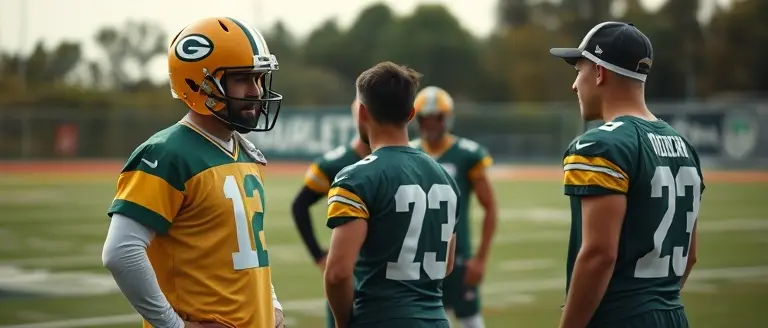
The decision by the Pittsburgh Steelers front office to retain Aaron Rodgers for the 2026 season represents a calculated maneuver that prioritizes immediate championship contention while simultaneously securing the franchise’s long-term stability. By applying a UFA tender worth approximately $15.2 million, the organization has effectively mitigated salary cap risks while ensuring that one of the game’s greatest minds remains in the building. This strategic alignment serves as a bridge, allowing the coaching staff to leverage Rodgers’ veteran expertise as an on-field coordinator while he facilitates the development of younger prospects, most notably recent draft pick Drew Allar.
Mentorship and On-Field Orchestration
Rodgers’ return is not merely about his physical performance, which remained efficient throughout his successful 2025 campaign; it is about his impact as a force multiplier for the team’s offensive scheme. Under the guidance of head coach Mike McCarthy, the integration of Rodgers’ high-level processing into the Steelers’ playbook provides a unique developmental environment for the quarterback room. Key aspects of this mentorship model include:
- In-Game Processing: Rodgers provides a live-action masterclass in reading defensive disguises, accelerating the learning curve for younger signal-callers.
- Scheme Implementation: His deep familiarity with McCarthy’s offensive systems allows for rapid adjustments at the line of scrimmage, stabilizing the offense during high-pressure scenarios.
- Cultural Anchoring: As an established leader, his presence reinforces professional standards, ensuring that the team remains focused on the rigorous demands of a Super Bowl push.
This dual-track strategy acknowledges that while the organization must plan for the future, the window to capitalize on the current roster’s competitive maturity is finite. By surrounding their young talent with a future Hall of Famer, the Steelers are optimizing their internal resources, creating a sustainable model that balances the necessity of winning in 2026 with the essential task of grooming the next generation of Pittsburgh talent.
Navigating the 2026 NFL Landscape: What Comes Next

The impending return of Aaron Rodgers to the Pittsburgh Steelers signals a significant shift in the AFC North power dynamics. By securing a veteran of his caliber, the Steelers are effectively doubling down on a “win-now” window, putting immediate pressure on rivals like the Baltimore Ravens and Cincinnati Bengals. Rodgers’ presence under the guidance of head coach Mike McCarthy provides the offensive stability required to navigate one of the league’s most physical divisions. As the team finalizes the $15.2 million UFA tender, the front office is clearly prioritizing elite quarterback play over total long-term salary cap flexibility. This strategic move suggests that the Steelers’ coaching staff believes Rodgers’ 2025 performance metrics—which showed remarkable efficiency despite his advancing age—are sustainable for at least one more deep playoff run.
Strategic Roster Management and Development
Integrating an aging superstar while simultaneously developing young talent like quarterback Drew Allar presents a unique challenge for the Steelers’ front office. The team must carefully balance snap counts during the preseason to ensure the roster remains prepared for the future without compromising the current season’s competitiveness. Key considerations for the 2026 regular season include:
- Mentorship Dynamics: The professional relationship between Rodgers and Allar will be under intense scrutiny, as the veteran’s ability to transition into a mentorship role is critical for the team’s long-term sustainability.
- Salary Cap Constraints: With the UFA tender finalized, management will likely look to restructure existing long-term contracts to clear space for mid-season acquisitions or depth-chart adjustments.
- Offensive Evolution: Under McCarthy’s scheme, expect a balanced approach that utilizes Rodgers’ pre-snap recognition to protect the aging signal-caller while keeping opposing defenses guessing.
Ultimately, the goal for 2026 is clear: maximize the championship window while preparing for a post-Rodgers era. Fans should expect a high-IQ offensive attack that leverages experience to compensate for the typical physical regression seen in players at this stage of their careers. The success of this season hinges not just on Rodgers’ arm, but on the front office’s ability to manage the financial repercussions of his veteran salary cap hit.
Mastering the Mindset of a Pro
As the NFL landscape shifts with Aaron Rodgers’ return to the Pittsburgh Steelers, the conversation transcends mere contract negotiations. At 42, Rodgers represents a masterclass in cognitive resilience, demonstrating that elite performance at the twilight of a career is as much about mental processing speed as it is about physical mechanics. His strategic partnership with Mike McCarthy and the mentorship of emerging talent like Drew Allar underscore a fundamental truth: the ability to read complex systems and maintain clarity under pressure is the ultimate differentiator in any competitive field.
You don’t need to be an NFL quarterback to face the same high-stakes demands that challenge even the best athletes. Just as Rodgers relies on years of mental processing to dismantle defensive schemes, you require a sharp, responsive cognitive edge to stay ahead of the game. Maintaining peak focus while combating the fatigue of daily professional life is the hallmark of high performers who refuse to settle for average outcomes.
This is where The Brain Song becomes an essential part of your personal toolkit. By supporting mental acuity and optimizing cognitive processing, this science-backed approach provides the same type of clarity that defines an elite veteran’s survival in a complex league. Elevate your performance, sharpen your mental edge, and bridge the gap between where you are and where you want to be.
 Achieve your own version of elite mental performance by incorporating the same neuroscience-based focus techniques Rodgers uses to stay ahead of the game.Unlock My Peak Cognitive Performance Now!