
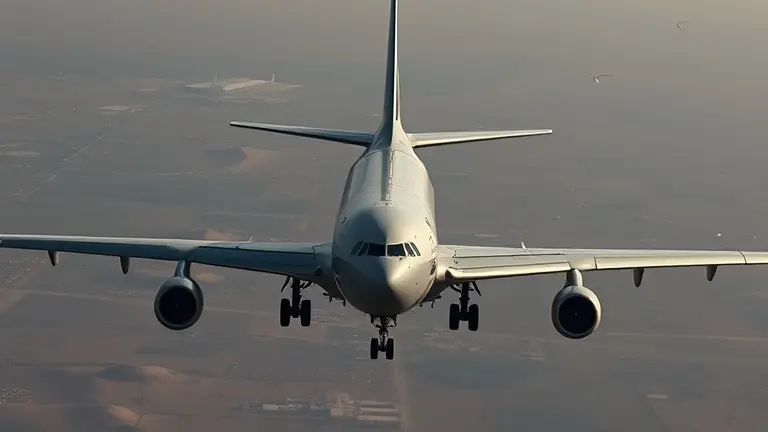
On May 5, 2026, a surge of speculation hit digital platforms regarding a US military plane emergency in Qatar. The incident, involving a KC-135 Stratotanker—frequently referred to as the Air Force’s premier ‘flying gas station’—triggered immediate concern as the aircraft lost tracking signals shortly after departing from Al Dhafra Air Base. While social media quickly erupted with theories ranging from mechanical failure to regional security escalations, it is essential to distinguish between standard aviation safety protocols and unsubstantiated rumors.
Understanding the facts behind this event is crucial for any reader looking to navigate today’s geopolitical landscape. As we await official confirmation from US CENTCOM regarding the status of the Stratotanker, it is important to recognize that an ‘in-flight emergency’ is a formal aviation status intended to prioritize aircraft safety, and not inherently an indicator of hostile action or disaster. In a media environment filled with conflicting reports, maintaining a clear and analytical perspective is the most reliable way to stay informed.
,slug:
Fact Check: The US KC-135 Incident Over Qatar
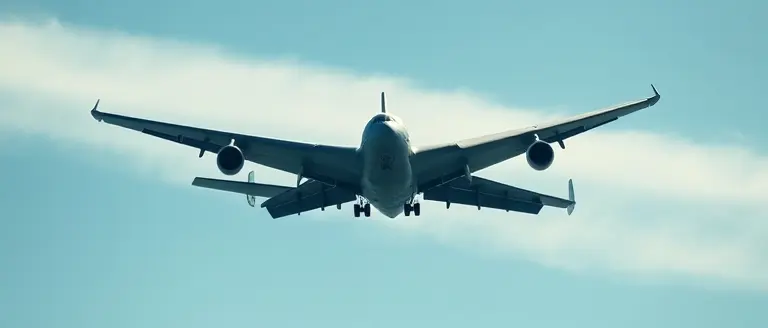
On May 5, 2026, reports surfaced regarding a US military plane emergency over Qatar, specifically involving a KC-135 Stratotanker. The aircraft, frequently referred to in aviation circles as a “flying gas station” due to its primary role in aerial refueling, departed from Al Dhafra Air Base in the United Arab Emirates (UAE) before encountering operational difficulties. The incident gained significant traction after flight tracking data indicated that the aircraft had lost signals while operating in the regional corridor, prompting a declaration of an in-flight emergency.
Understanding the Technical Context
It is essential to distinguish between a standard in-flight emergency and the sensationalized claims circulating on social media platforms. In aviation, declaring an emergency is a routine procedural step taken by pilots when they encounter mechanical issues, sensor failures, or navigation concerns that require priority handling by Air Traffic Control (ATC). Key points regarding the current status include:
- Standard Protocol: Declaring an emergency allows the flight crew to receive priority clearance and directs ground teams to prepare for potential unscheduled landings or technical interventions.
- Signal Loss: The disappearance of a transponder signal does not automatically imply a crash or a hostile act. Often, such occurrences are the result of equipment malfunctions or a intentional transition to secure military communication channels that are not visible to civilian flight-tracking websites.
- Regional Context: While users online have attempted to link this event to broader geopolitical tensions in Iraq or Iran, there is currently no evidence to suggest this incident is related to anything beyond a localized mechanical or technical issue.
Currently, official channels such as US CENTCOM have not released a confirmation regarding the outcome, leading to a period of speculation. Experts emphasize that until verified data is released, it is critical to treat rumors linking this to combat operations with extreme skepticism. The focus remains on standard safety protocols, as military assets like the KC-135 frequently transit this area for routine training and logistical support missions.
Understanding ‘In-Flight Emergency’ Protocols
In the context of the recent us military plane emergency qatar reports, it is essential to distinguish between standard aviation safety procedures and signs of a catastrophic incident. An “in-flight emergency” is a formal designation utilized by aircrews to communicate that they require priority handling from Air Traffic Control (ATC). Contrary to common speculation, declaring an emergency is not an admission of a crash or hostile interference; rather, it is a proactive safety measure intended to ensure the aircraft receives immediate attention, clear flight paths, and priority access to landing facilities.
Technical Definitions and Signal Loss
When news outlets report on a KC-135 Stratotanker losing signals, it is often misinterpreted by the public as the aircraft “going missing” or disappearing. In technical terms, this frequently refers to a loss of transponder data or ADS-B tracking, which can occur due to equipment malfunctions, electronic interference, or power-management protocols within the cockpit. Pilots may intentionally switch off transponders for tactical reasons or due to onboard electrical issues that necessitate a flight deck reset.
Key factors to consider when analyzing these situations include:
- Priority Handling: Declaring an emergency grants the crew immediate priority for vectors and altitude changes, clearing surrounding airspace to prevent mid-air collisions.
- Mechanical Redundancy: Military aircraft like the KC-135 possess multiple communication and navigation systems. A “lost signal” on public tracking sites rarely reflects the actual communication capabilities between the flight crew and ground command centers.
- Standard Safety Protocols: Procedures are strictly governed to protect the crew and the asset, often involving early preventative landings if an instrument fluctuates outside of safety parameters.
Evidence suggests that when a US military asset declares an emergency in a sensitive region like the Persian Gulf, the action is predominantly driven by mechanical caution or precautionary navigation. By prioritizing safety over schedule, aircrews ensure they can troubleshoot minor anomalies on the ground rather than risking complex operations in a high-traffic or politically sensitive corridor. Relying on verified CENTCOM updates is vital to separating these routine safety maneuvers from speculative reports of regional escalations.
The Role of US CENTCOM in Regional Monitoring

The United States Central Command (CENTCOM) serves as the primary combatant command responsible for overseeing military operations across the Middle East, Central Asia, and parts of South Asia. Given the high density of strategic assets in the region—including the KC-135 Stratotanker involved in the recent us military plane emergency qatar incident—CENTCOM is tasked with maintaining operational security while managing public transparency. When an aircraft experiences a technical anomaly, CENTCOM protocols prioritize crew safety and navigation coordination over immediate public disclosure, a process that frequently leads to the emergence of speculative reports on social media platforms.
Distinguishing Standard Protocols from Crises
In scenarios where a military aircraft loses contact or signals, observers often mistake standard safety procedures for geopolitical escalations. It is vital to understand that an “in-flight emergency” is a technical designation used by pilots to gain priority in air traffic control, which does not necessarily indicate a hostile act or a catastrophic loss of the vessel. Misinterpretations often arise because:
- Operational Sensitivity: Military communication channels are highly encrypted; civilian flight trackers may lose sight of these aircraft during routine maneuvers, leading to false claims that a plane has gone “missing.”
- Logistical Complexity: A refueling mission originating from the Al Dhafra Air Base involves complex transit through international and regional airspaces, where minor transponder fluctuations are occasionally reported as major incidents.
- Information Voids: Until official military channels issue a statement, gaps in data are often filled by unverified rumors that ignore established aviation safety protocols.
To ensure accuracy, the public should rely exclusively on official CENTCOM press releases or authorized defense briefings. Relying on fragmented, real-time tracking data without the context of verified military statements can lead to unnecessary alarm. When analyzing reports regarding a us military plane emergency qatar, always seek confirmation through primary military sources, as these organizations are the only entities capable of distinguishing between routine mechanical maintenance and actual security threats.
Why Geopolitical Sensitivity Fuels Misinformation

The heightened state of alert surrounding a us military plane emergency qatar incident is a direct byproduct of the complex security environment in the Middle East. Because the Persian Gulf remains a theater of frequent strategic posturing, any sudden disruption in communications or unexpected emergency declarations involving a KC-135 Stratotanker—a critical logistical asset—is immediately viewed through a lens of potential escalation. When signals are lost mid-flight in such a highly monitored corridor, the digital void is often filled with speculation that connects routine mechanical malfunctions to larger geopolitical narratives involving Iraq, Iran, or ongoing regional naval activities.
The tendency to conflate standard aviation safety protocols with military brinkmanship often stems from a lack of immediate context. It is essential to recognize the following factors that drive this cycle of misinformation:
- Strategic Geographic Context: The airspace near Qatar and the UAE is densely populated with military, commercial, and reconnaissance traffic, making any anomaly appear significant to observers using flight-tracking software.
- The “Black Box” of Real-Time Information: When official channels are silent during the initial minutes of an emergency, social media users frequently attempt to crowd-source “proof” by linking unrelated events, which creates a distorted reality.
- Technical Misinterpretation: The general public often struggles to distinguish between a transponder failure (a common mechanical or signal issue) and an actual combat-related threat or hostile engagement.
To navigate this landscape, audiences should prioritize updates from US CENTCOM or vetted defense journalism outlets. Distinguishing between an operational emergency—which is a frequent necessity in high-tempo military aviation—and a geopolitical crisis requires patience. Relying on unverified social media threads regarding a us military plane emergency qatar report often accelerates the spread of false alarms, obscuring the facts in favor of sensationalist conjecture. Always look for official confirmation before concluding that a technical alert signifies a broader shift in regional stability.
Achieving Clarity in an Age of Information Overload
In the wake of reports concerning the US military plane emergency near Qatar, separating verified defense protocols from social media speculation is a challenge for any attentive observer. What remains clear is that the term ’emergency’ often signals routine safety measures, not necessarily a crisis. Navigating these dense, rapidly evolving geopolitical narratives requires more than just news updates; it demands a high level of mental acuity and the ability to process complex data without falling victim to confusion.
In an era of rapid news cycles and overwhelming misinformation, maintaining mental sharpness is as essential as the facts themselves. When you are sifting through technical jargon and conflicting reports, mental fog is your greatest obstacle. That is why we recommend The Brain Song. By acting as a cognitive stabilizer, this program helps you filter through the digital noise, ensuring your analytical processes remain efficient and focused even when high-stakes events keep you tethered to your screen.
This is your opportunity to upgrade how you interact with the world’s most complex information. By sharpening your focus and reducing mental fatigue, you move from passive information consumption to active, critical understanding. It is time to equip your mind with the tools it needs to stay ahead of the curve.
 Optimize your ability to process complex information and stay sharp with this 12-minute neuroscience-based routine.Yes, I Want This Now!