
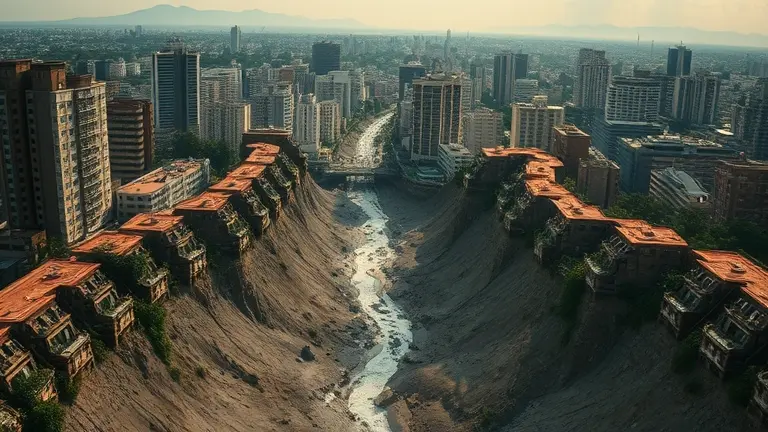
From the vantage point of space, the sprawling metropolis of Mexico City appears as a titan of urban endurance. However, beneath the satellite imagery provided by NASA’s NISAR mission lies a sobering reality: the city is quite literally collapsing into its own history. Built upon the soft, porous remains of an ancient lake bed, the capital is subsiding at an alarming rate of over 0.5 inches per month. This isn’t merely a geological curiosity; it is an existential crisis manifesting in the cracked foundations of subway lines and the catastrophic failure of water distribution networks.
The root of this disaster is the aggressive, century-long extraction of groundwater that once supported the city’s growth, now leaving a hollow, unstable void beneath our feet. As the soil compacts, the infrastructure that keeps the city alive is being torn apart, exacerbating a severe water shortage that leaves working-class families bearing the brunt of the decay. This article investigates the intersection of geological collapse and resource mismanagement, exploring how the very ground residents walk on has become a primary driver of the city’s escalating water war.
The NASA Radar Reveal: Why Mexico City is Subsiding at Record Rates

Recent analysis derived from cutting-edge NISAR satellite monitoring has provided a harrowing look at the water crisis in Mexico City, confirming that the metropolis is sinking at a rate exceeding 0.5 inches per month. This geological collapse, which aggregates to nearly 10 inches annually in specific high-risk zones, is no longer a distant theoretical concern but a documented reality visible from space. As NASA radar data illustrates, the city is effectively compressing under its own weight, a direct consequence of its location atop a highly compressible, ancient clay-rich lake bed.
The Mechanics of Geological Collapse
The primary driver of this phenomenon is the over-extraction of groundwater from the underlying aquifer. For over a century, the city has treated this subterranean resource as an infinite supply, failing to account for the structural integrity of the soil above.
- Compaction Process: When water is pumped from the aquifer, the pore pressure decreases, causing the fine-grained clay particles to collapse and lock together, leading to permanent soil compaction.
- Irreversible Damage: Once this geological structure settles, the land loses its ability to hold water, creating a vicious cycle of scarcity and subsidence.
- Infrastructure Failure: The sinking is not uniform. Differential settlement—where one side of a building or pipeline sinks faster than the other—is actively tearing apart the city’s water distribution networks.
This structural instability acts as the silent catalyst for current infrastructure failures. As the ground shifts, critical water pipes are subjected to unprecedented stress, leading to frequent ruptures that exacerbate the water scarcity already plaguing the region. By quantifying these shifts through satellite precision, experts are now able to map how the city’s groundwater depletion impacts correlate directly with the zones suffering the most frequent utility outages. Understanding that the very foundation of the city is settling provides a sobering context for why the Mexico City water crisis remains so difficult to resolve; the city is quite literally sinking beneath the weight of its own historical reliance on an exhausted aquifer.
The Aquifer as a Sponge: Understanding Soil Compaction and Groundwater Depletion

To understand why Mexico City is sinking, one must view the subterranean landscape as a giant, water-saturated sponge. The city rests upon the desiccated remains of ancient lake beds characterized by highly compressible clay layers. When these clays are full of water, they maintain their volume and support the weight of the urban sprawl above. However, decades of aggressive groundwater extraction have effectively “wringed out” this sponge. As municipal wells draw water from the aquifer to meet the demands of a massive population, the fluid pressure that once propped up the clay particles disappears. Without that hydraulic support, the heavy, overlying layers of soil collapse into the voids left behind, resulting in permanent land subsidence.
The Mechanics of Irreversible Collapse
This geological process is largely irreversible. Once the clay layers undergo compaction, they lose their porosity, meaning the aquifer’s ability to store future water is fundamentally diminished. This creates a vicious cycle: as the storage capacity shrinks, the city is forced to drill deeper or tap into more distant sources, which in turn leads to further instability. The impact of this phenomenon on the water crisis in Mexico City is twofold:
- Infrastructure Destruction: As the ground settles unevenly, the city’s rigid piping networks are subjected to intense shearing forces, leading to frequent ruptures and massive water loss before the supply ever reaches the tap.
- Reduced Recharge: The compaction of the subsurface reduces the land’s permeability, making it increasingly difficult for rainwater to infiltrate and naturally replenish the groundwater reserves, even during the wet season.
Recent analysis of NISAR satellite monitoring data confirms that some areas are sinking at rates exceeding 0.5 inches per month. This sinking isn’t merely a visual curiosity seen from space; it is a structural failure that compromises the integrity of foundations, roads, and critical utility corridors. By treating the aquifer as a finite, rapidly depleting resource, the city has inadvertently altered its very foundation, turning the ground beneath millions of residents into a source of ongoing socio-economic vulnerability. Addressing the groundwater depletion impacts requires more than just conservation; it necessitates a complete rethink of urban water management before the landscape becomes uninhabitable.
Infrastructure in Peril: The Link Between Urban Subsidence and Water Scarcity
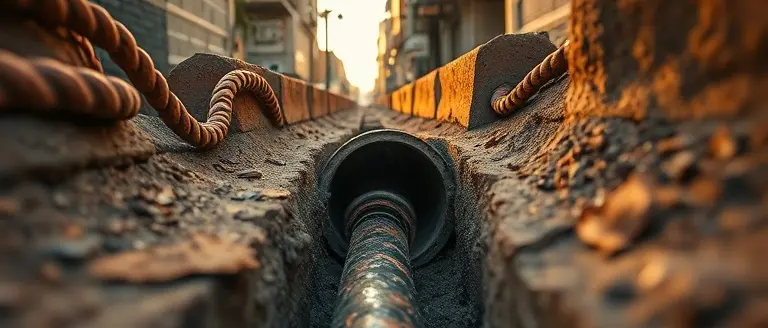
The water crisis in Mexico City is not merely a shortage of supply; it is a structural failure driven by the geological instability of the basin. As the city continues its downward trend—sinking at rates exceeding 0.5 inches per month in some sectors—the rigid underground pipe network is being subjected to unprecedented mechanical stress. When the clay-rich soil of the ancient lake bed compacts due to excessive groundwater extraction, the shifting earth physically pulls, twists, and snaps critical water mains. This creates a feedback loop where the city’s primary lifeblood is lost before it even reaches residents’ taps.
The Vicious Cycle of Leakage and Extraction
Engineers and urban planners are grappling with a paradox: the more the ground sinks, the more the infrastructure fails, and the more the city must rely on deep-well pumping to compensate for the massive volume of water lost to leaks. Evidence suggests that a significant percentage of the treated water in the metropolitan area is wasted through these subterranean fractures. This creates an unsustainable reliance on the already depleted aquifer, which further accelerates the rate of subsidence.
- Systemic Leaks: Thousands of cracked pipes result in an estimated 40% loss of water supply, forcing the city to compensate by increasing extraction from the aquifer.
- Soil Compaction: The depletion of the aquifer removes the hydraulic pressure that supports the soil, leading to irreversible land subsidence that destroys the structural integrity of water distribution hubs.
- Infrastructure Debt: Repairing localized ruptures has become a temporary, high-cost solution, as the ground beneath the pipes remains in a constant state of flux.
Breaking this cycle requires moving beyond reactive patching toward a fundamental redesign of how water is stored and transported. Without significant investment in water recycling and managed aquifer recharge, the groundwater depletion impacts will continue to turn the city’s sinking foundation into a permanent crisis for the population.
Paths to Resilience: Can Mexico City Adapt Before the Point of No Return?

The geological reality of a water crisis in Mexico City is compounded by the fact that the urban foundation—a former lake bed—is literally collapsing due to long-term groundwater depletion. Urban planners and geologists argue that the city is nearing a critical threshold where infrastructure damage may become irreversible. To pivot away from this trajectory, the metropolitan area must move beyond reactive repairs and embrace radical, systemic interventions. Current strategies gaining traction among experts focus on mimicking natural hydrological cycles to stabilize the soil and secure the city’s future.
Structural Interventions and Sustainable Water Solutions
Experts suggest a multi-tiered approach is essential for achieving long-term urban subsidence mitigation. These solutions focus on reducing the reliance on the underlying aquifer while simultaneously addressing the city’s extreme water scarcity:
- Large-Scale Rainwater Harvesting: Mexico City receives significant seasonal rainfall, yet the majority of this water is lost to drainage systems. Implementing city-wide, decentralized harvesting programs could capture millions of gallons, reducing the daily demand on groundwater reserves.
- Managed Aquifer Recharge (MAR): By treating wastewater to high safety standards and injecting it back into the aquifer, authorities could theoretically slow the compaction of the clay-rich soils. This “sponge” effect is vital to preventing further sinking.
- Controlled Urban Expansion: Strict zoning and development regulations are necessary to alleviate the pressure on existing water infrastructure. Expanding on stable, non-compressed geological zones can help shift the center of gravity for the city’s growing population.
While these interventions are technically feasible, their success hinges on political will and massive public investment. Without a transition to circular water management, the physical degradation of the subway systems and distribution pipelines will continue to outpace repair efforts, making the fight against the sinking city a race against time. The consensus among professionals is clear: the era of unchecked extraction is over, and the city’s survival depends on treating every drop of water as a finite, precious asset.
Taking Command of Your Home’s Resilience
The geological instability of Mexico City is a systemic challenge that will require decades of municipal reform, yet the structural strain on our individual homes is an immediate, daily reality. As the shifting ground puts unprecedented pressure on residential foundations, pipes, and walls, waiting for broad-scale infrastructure fixes is no longer a viable strategy for the average citizen. Residents must transition from passive observers of urban decay to proactive stewards of their own living environments.
This is where personal preparedness meets technical capability. While the city navigates its macro-level water crisis, you can take control of your domestic structural integrity by mastering the art of precise, reliable home repair. Ted’s Woodworking offers the essential toolkit for this mission, providing a massive database of foolproof construction plans that enable you to reinforce your property against the stresses of a subsiding landscape. By having professional-grade blueprints at your fingertips, you can address structural weaknesses before they become expensive failures, turning a sense of helplessness into a concrete, actionable defense for your home.
Equipping yourself with the right knowledge and structural guidance is the most effective way to safeguard your future in a changing city. Start building your home’s resilience today with the resources that provide the technical certainty you need to protect what matters most.
 Equip yourself with the professional blueprints needed to strengthen your home against the shifting landscape—start your first project with Ted’s Woodworking today.Secure My DIY Plans Now!