

The market landscape shifted dramatically on May 5, 2026, as AMD shattered expectations with a $10.3 billion revenue report and an EPS of $1.37. As the stock surged by double digits, the immediate adrenaline of an earnings beat quickly gave way to a deeper, more critical question: is this rally a sustainable leap into a new AI-dominated future, or is it merely an overextended reaction to hype? Investors are currently caught between the euphoria of CEO Lisa Su’s bullish data-center guidance and the sobering reality of intensifying competition.
Parsing this volatility requires more than just glancing at a ticker symbol. To truly determine whether to hold or pivot, you must look past the 15% jump and analyze the long-term mechanics of AMD’s AI product roadmap for H2 2026. In a market where every basis point matters, your ability to synthesize complex earnings data against historical performance is the difference between a calculated investment and a reactive mistake.
Q1 2026 Earnings Recap: Why AMD Stock Surged 15%

The AMD stock price witnessed a historic breakout on May 5, 2026, as the company shattered Wall Street projections during its Q1 2026 earnings release. Investors responded with immediate, high-volume buying, driving the stock value up approximately 12-15% during the trading session. This rally was underpinned by a headline revenue figure of $10.3 billion, alongside a robust EPS of $1.37. Both metrics comfortably eclipsed consensus analyst estimates, signaling that AMD is effectively converting its aggressive product roadmap into tangible fiscal success.
The Catalyst: Data Center Dominance
The primary engine behind this market enthusiasm was the staggering 57% year-over-year growth in the Data Center segment. During the AMD earnings call, CEO Lisa Su provided crucial commentary that alleviated investor concerns regarding the company’s competitive position in the AI sector. Her insights focused on the “accelerating AI demand,” specifically highlighting that demand for high-performance data-center chips is not just sustained but expanding across hyperscale cloud providers.
Key takeaways from the Q1 performance include:
- Revenue Outperformance: Achieving $10.3 billion validates the company’s manufacturing scalability in the face of supply chain pressures.
- Profitability Milestones: An EPS of $1.37 demonstrates efficient operational management and higher margin realization from newer product lines.
- Strategic AI Roadmap: Lisa Su’s emphasis on AI chip supply availability for the remainder of 2026 suggests a long-term runway for sustained revenue growth.
This market reaction confirms that investors are prioritizing structural growth in AI hardware over short-term macroeconomic noise. While the immediate price surge reflects an enthusiastic market response to the earnings beat, the data suggests that AMD has solidified its role as a essential provider in the infrastructure layer of the artificial intelligence boom. By beating expectations on both top and bottom lines, AMD has effectively recalibrated the market’s growth expectations for the coming quarters.
Valuation Check: Is the Current AMD Rally Sustainable?

The 12-15% surge in AMD stock following the Q1 2026 earnings release has prompted a critical reassessment of the company’s current valuation. With a reported $10.3 billion in revenue and an EPS of $1.37, the market is clearly reacting to AMD’s ability to convert AI demand into tangible bottom-line results. However, investors must distinguish between a sentiment-driven spike and a fundamental repricing. The current valuation appears supported by the 57% year-over-year growth in the Data Center segment, which signals that AMD is successfully capturing market share from incumbents. If the current growth trajectory for AI-specific silicon continues through H2 2026, the current AMD stock price may be viewed by long-term holders as a base for further expansion rather than a near-term ceiling.
Assessing the Growth Premium
To determine if the rally is overextended, analysts are looking closely at forward-looking P/E ratio shifts and the sustainability of the Data Center segment. Key factors influencing this outlook include:
- Supply Chain Execution: CEO Lisa Su’s commentary during the AMD earnings call regarding supply availability suggests that revenue gains are limited more by production capacity than by a lack of customer demand.
- Operating Leverage: As higher-margin AI chips become a larger percentage of the sales mix, profit margins are expected to expand, potentially justifying the current premium multiple.
- Competitive Moat: AMD’s software ecosystem progress is a critical indicator of long-term stickiness. Evidence suggests that enterprise adoption is accelerating as companies seek alternatives to single-vendor dependencies.
While sector volatility remains a risk, the gap between analyst expectations and AMD’s actual delivery creates a compelling case for growth. Investors should monitor future guidance, as any contraction in demand for hyperscaler infrastructure would be the primary catalyst for a correction. Ultimately, the current valuation reflects high confidence in AMD’s roadmap, provided that the company maintains its current execution velocity in the coming quarters.
Competitive Landscape: AMD vs. Semiconductor Rivals
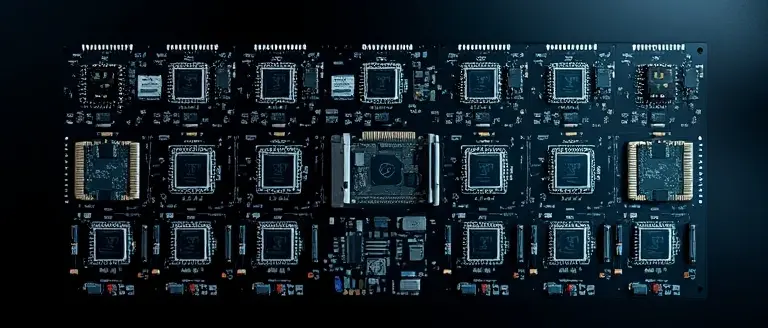
The Q1 2026 financial results have solidified AMD as a primary challenger in the high-performance computing market. Reporting $10.3 billion in revenue, the company has effectively translated its R&D investments into tangible market share. When compared to the broader semiconductor index, this performance highlights a significant shift in how institutional investors view the AMD stock price in the wake of the latest AMD earnings call. While competitors continue to grapple with supply chain constraints and margin compression, AMD’s 57% year-over-year growth in the Data Center segment underscores a superior execution strategy, particularly in scaling AI-specific silicon.
Market Positioning and Revenue Trajectory
Historically, AMD’s quarterly performance was characterized by seasonal volatility. However, the current $10.3 billion revenue milestone represents a structural pivot toward consistent enterprise-grade demand. Unlike rivals that remain heavily tethered to cyclical consumer electronics, AMD has strategically leaned into the AI hardware sector, creating a buffer against broader market downturns. The following factors differentiate their current competitive standing:
- Data Center Dominance: The 57% growth rate significantly outperforms many established semiconductor peers who reported flat or single-digit growth in the same period.
- Operating Margin Resilience: Despite aggressive R&D spending to maintain a lead in AI chip architecture, AMD’s EPS of $1.37 confirms that the company is successfully monetizing its roadmap.
- Supply Chain Agility: By diversifying foundry partnerships, AMD has managed to mitigate risks that have historically hampered competitors during periods of high demand.
The recent 12-15% jump in AMD stock serves as a market validation of these efforts. Investors tracking the AMD earnings date and subsequent guidance are noting that CEO Lisa Su’s focus on H2 2026 AI product availability provides a clear, defensible roadmap that many of its closest rivals currently lack. For retail investors, the data suggests that AMD is no longer just “catching up” to incumbents but is instead setting the pace for innovation in the AI hardware race.
The Road Ahead: Lisa Su’s AI Roadmap for H2 2026

Following the robust Q1 2026 results, the AMD earnings call served as a critical platform for CEO Lisa Su to outline a clear, aggressive trajectory for the second half of the year. Investors closely tracking the AMD stock price should note that the company is transitioning from a period of experimental AI deployment to high-volume production scale-up. Dr. Su emphasized that the supply chain constraints that previously hampered rapid scaling are easing, allowing for a significant ramp-up in the production of next-generation AI-specific silicon. This strategic shift is designed to capture a larger share of the burgeoning data center market, where revenue growth has already surged by an impressive 57% year-over-year.
Strategic Priorities for H2 2026
The roadmap articulated during the call signals that AMD is doubling down on its “AI Everywhere” initiative, with several key milestones set for the remainder of the year:
- Production Scaling: AMD plans to increase the manufacturing capacity for its high-performance AI accelerators, ensuring they can meet the massive backlog of enterprise and hyperscaler orders.
- Ecosystem Expansion: Beyond hardware, the company is prioritizing the maturity of its software stack to lower the barrier to entry for developers, effectively locking in customers who require seamless integration with existing data center infrastructures.
- Advanced Chip Architectures: The roadmap confirms the rollout of specialized, power-efficient processors designed to handle the increasing complexity of generative AI workloads, which is expected to bolster margins in Q3 and Q4.
For retail investors evaluating AMD stock, this guidance suggests that the recent market enthusiasm is rooted in fundamental product visibility. By focusing on both supply-side efficiency and software-driven ecosystem lock-in, AMD is positioning itself to maintain its competitive edge against sector incumbents. If the execution in H2 remains consistent with current guidance, the company’s ability to turn these technological advantages into sustained revenue growth will be the primary catalyst for future valuation appreciation.
Sharpening Your Edge in Volatile Markets
Ultimately, while AMD’s Q1 results demonstrate formidable strength in the data-center segment, the sustainability of this growth depends on execution throughout the remainder of 2026. Investors who succeed in this environment are those who move beyond surface-level reporting to conduct deep, objective analysis of product availability and sector competition. The volatility we see today is not just a trend—it is a test of your analytical discipline.
Just as AMD’s long-term success relies on its processing power, your ability to parse through complex financial data depends entirely on your own cognitive performance. When the data gets dense and the market gets erratic, brain fog is the enemy of profit. The Brain Song is designed as a cognitive optimization tool specifically for serious market participants, providing the mental clarity needed to dissect complex earnings calls and long-term projections with precision.
By integrating this unique auditory routine into your daily research, you move from passive consumption of financial news to active, high-level investment strategy. Don’t let fatigue cloud your judgment during the next critical earnings cycle; reclaim your focus and make every analysis count.
 Optimize your research capacity and sharpen your focus before the next earnings cycle by integrating this 12-minute auditory routine into your daily market prep.Yes, I Want This Now!