
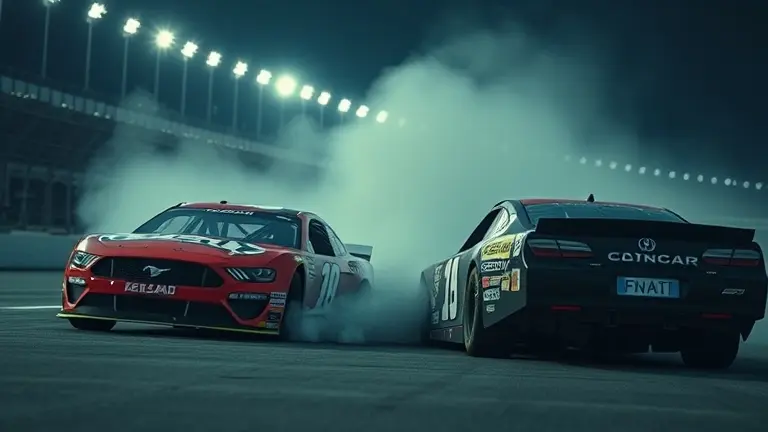
Ryan Preece finds himself at the center of a brewing storm in the NASCAR Cup Series following a high-profile, aggressive collision with Ty Gibbs at Texas Motor Speedway. The incident on lap 102 was not merely a racing deal; it was a flashpoint that exposed the growing ‘no-break’ mentality defining the modern grid. Preece’s vocal frustration, explicitly calling Gibbs an ‘idiot,’ highlights the simmering intensity of a rivalry that threatens to escalate as the season progresses. Beyond the headlines of track-side verbal confrontations, however, lies a more systemic narrative: the profound professional pressure mounting on Preece and the RFK Racing organization as they navigate the treacherous landscape of the current charter market.
This collision comes at a defining moment for Preece, whose career stability is inextricably linked to the complex, high-stakes ‘silly season’ negotiations surrounding RFK Racing’s charter security. While fans remain captivated by the immediate emotion of the crash, the real story is one of technical precision, organizational strategy, and the thin line between a career breakthrough and a total mechanical failure. In an environment where every millisecond counts, the lack of a solid, long-term structural plan can be just as disastrous for a racing team as a faulty suspension setup is for a driver.
The Texas Tussle: Breaking Down the Ryan Preece and Ty Gibbs Incident
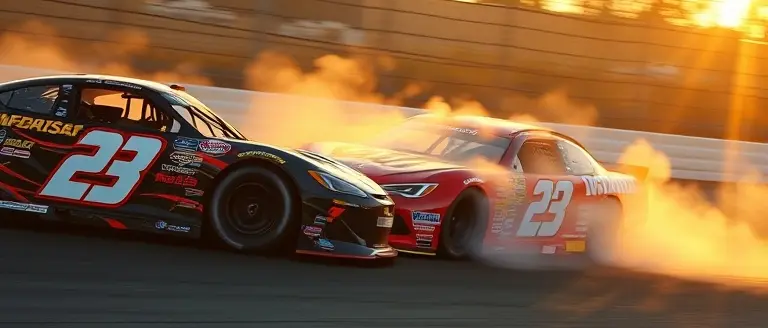
The tension at Texas Motor Speedway reached a boiling point on May 3, 2026, during the NASCAR Cup Series race, marking a significant escalation in the ongoing rivalry between Ryan Preece and Ty Gibbs. The flashpoint occurred on lap 102, a moment that quickly transitioned from competitive racing to a high-profile on-track collision. As both drivers battled for position, contact was initiated that sent Gibbs spinning across the track, drawing immediate scrutiny from fans and officials alike.
Anatomy of the Conflict
The incident was defined not just by the mechanical consequences of the crash, but by the raw, unfiltered aftermath captured via team radio and broadcast feeds. Preece, visibly frustrated, did not mince words regarding the incident. His decision to label Gibbs an “idiot” served as a lightning rod for social media discourse, underscoring the “no-break” mentality that has come to define Preece’s aggressive driving style in recent seasons.
- The Lap 102 Collision: A tactical battle for position that resulted in a forced spin, highlighting the high-stakes environment at Texas Motor Speedway.
- The Radio Outburst: Preece’s vocal criticism of Gibbs signaled a deepening personal divide, emphasizing that the veteran driver is no longer willing to yield to the younger rising star.
- Aggressive Stylings: Both drivers have earned reputations for a “win-at-all-costs” approach, which naturally creates friction when competing for the same lane.
Observers note that this confrontation is symptomatic of a larger narrative within the sport: the clash between established veterans fighting for their livelihoods and an aggressive new guard. For Preece, who is navigating a complex period of career uncertainty regarding his status at RFK Racing, the refusal to back down is perhaps as much about professional survival as it is about the specific race dynamics. This viral moment has effectively turned a standard mid-race spin into a defining chapter of the 2026 season, keeping both drivers at the center of the NASCAR conversation.
Beyond the Track: The Volatile Nature of Modern NASCAR Rivalries
The high-profile collision between Ryan Preece and Ty Gibbs at Texas Motor Speedway on May 3, 2026, serves as a poignant case study for the intensifying aggression currently defining the NASCAR Cup Series. When Preece labeled Gibbs an “idiot” following their lap 102 altercation, he wasn’t merely venting post-race frustration; he was signaling a shift toward a “no-break” mentality that has become increasingly common in the Next Gen car era. This style of racing, where inches separate victory from catastrophic failure, has turned minor track contact into significant professional rivalries.
The Amplification of Driver Conflict
Social media platforms have fundamentally altered how fans engage with these on-track disputes. In previous eras, a driver’s frustration was confined to the garage area or post-race interviews broadcast by major networks. Today, high-definition replays and immediate social media clips ensure that every verbal confrontation and bumper-to-bumper incident receives global scrutiny within minutes. This rapid amplification serves several purposes:
- Heightened Accountability: Drivers now operate under a 24/7 microscope, where every move is dissected by analysts and fans alike.
- Narrative Building: Incidents like the Preece-Gibbs clash provide fuel for “silly season” speculation, influencing public perception regarding a driver’s temperament and marketability.
- Evolving Rivalries: Historical feuds were often built over full seasons; modern rivalries, however, can ignite and peak in a single afternoon, forcing drivers like Preece to balance competitive fire with the necessity of maintaining a professional image.
While the raw emotion displayed at Texas resonates with fans seeking authenticity, it also underscores the immense pressure mounting on veteran drivers. As the industry faces shifting dynamics—such as the ongoing search for stability at RFK Racing—every on-track move carries heavier stakes. For Preece, the ability to manage these volatile encounters will be just as critical as his performance on the leaderboard, as the industry continues to prioritize drivers who can navigate both the track and the inevitable media fallout.
RFK Racing’s Charter Dilemma and the Stakes for Ryan Preece
The recent on-track intensity displayed by Ryan Preece at Texas Motor Speedway arrives at a precarious time for his career trajectory and the organizational stability of RFK Racing. Behind the scenes, the team is navigating a grueling “silly season” challenge: a high-stakes search for additional NASCAR charters. In the current Cup Series business model, a charter is the bedrock of a team’s financial security, guaranteeing entry into every race and providing a significant slice of the sport’s revenue pie. With supply strictly limited, RFK Racing—led by Brad Keselowski and Chris Buescher—finds itself in a complex negotiation environment where acquisition costs are soaring and available slots are nearly non-existent.
The Impact of Charter Scarcity on Driver Security
The lack of a finalized charter expansion directly influences the internal pressure felt by drivers like Preece. For an organization aiming to solidify its multi-car footprint, every race outcome carries weight beyond the checkered flag. The mechanics of the charter system create a “have and have-not” dynamic that leaves drivers without long-term contractual certainty vulnerable to market shifts.
Key factors currently straining the RFK Racing roster include:
- Asset Valuation: The skyrocketing price of existing charters makes it difficult for teams to justify expansion without guaranteed sponsorship backing.
- Contractual Leverage: Without a confirmed charter, the ability to extend or sign drivers remains in a state of flux, forcing athletes to prove their value through high-aggression performances.
- Operational Risk: If RFK Racing fails to secure the necessary infrastructure, the team’s long-term competitive ceiling is hindered, directly affecting the future options available to Preece, Keselowski, and Buescher.
As Preece continues to navigate his tenure under this corporate cloud, his aggressive on-track persona may be viewed as a double-edged sword. While it demonstrates competitive fire, the NASCAR paddock is currently prioritizing consistency and sponsor appeal—two qualities that rely heavily on the stability provided by secure charter ownership. Whether Preece remains a pillar of the RFK project depends as much on the team’s ability to navigate the boardroom as it does on his performance in the driver’s seat.
Career Crossroads: Evaluating Ryan Preece’s Future Options
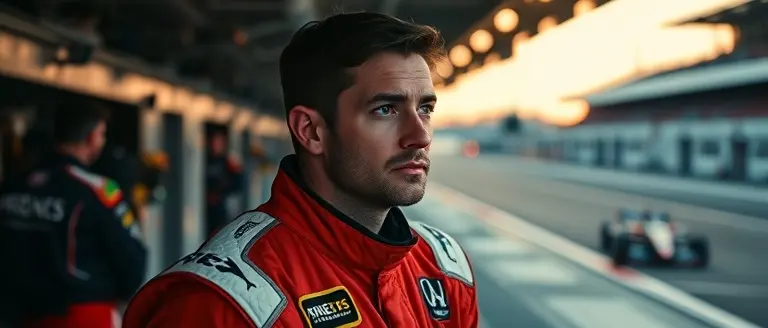
The recent on-track hostility between Ryan Preece and Ty Gibbs at Texas Motor Speedway has amplified the spotlight on Preece during a pivotal moment in his professional tenure. As RFK Racing navigates a precarious charter hunt, the instability surrounding the team’s long-term lineup creates a volatile environment for its drivers. With industry reports indicating that RFK Racing is struggling to secure the necessary charters to maintain its current driver roster, Preece finds himself at a significant career crossroads. His aggressive “no-break” mentality—while perhaps an asset in terms of racing intensity—raises questions about his standing in a driver market that increasingly prioritizes stability and long-term sponsorship compatibility.
Strategic Implications for Preece’s Career
Evaluating potential landing spots requires a deep dive into the intersection of performance metrics and the broader NASCAR charter dynamics. Should his time with RFK Racing conclude, Preece must demonstrate that his aggressive driving style can translate into consistent top-tier finishes rather than just headline-grabbing incidents. Potential avenues for his future include:
- Mid-tier competitive teams: Organizations looking for a “hard-nosed” driver to elevate their weekend intensity.
- Part-time or niche entries: Utilizing his technical background to serve as a development driver for emerging teams.
- The Xfinity Series transition: A return to a series where his experience level could make him a championship favorite.
Evidence suggests that the current “silly season” environment is tighter than in previous years, placing immense pressure on drivers to minimize extracurricular confrontations. While Preece remains a highly talented competitor, his path forward will likely depend on his ability to align his on-track persona with the strategic needs of team ownership. Whether he remains a staple of the NASCAR Cup Series or shifts his focus to alternative racing categories will be one of the most closely watched narratives of the coming months, contingent heavily on the resolution of the charter shortage currently gripping the sport’s upper echelon.
Mastering the Blueprint for Success
The fiery confrontation between Ryan Preece and Ty Gibbs at Texas Motor Speedway is more than just a viral clip; it is a symptom of the high-stakes pressure defining the 2026 NASCAR season. Whether it is a driver fighting for a career-defining charter at RFK Racing or a project falling apart in the garage, the difference between success and disaster always boils down to one thing: the quality of your plan. In the chaotic world of professional racing, a team without a solid blueprint for their future faces irrelevance, and in your workshop, attempting a project without a proven design leads to nothing but wasted time and materials.
Just as a professional racing team demands absolute technical accuracy to survive on the track, you deserve the same level of precision in your creative endeavors. When you stop relying on trial-and-error and start utilizing a master-level framework, you elevate your work from amateur to expert. We believe that true craftsmanship requires the same dedication to structural integrity that a crew chief demands from a race car.
This is why we recommend Ted’s Woodworking. It provides you with a comprehensive library of over 16,000 professional-grade plans that eliminate the guesswork, ensuring that every project you undertake is built to last with industrial-strength reliability. By integrating these expert blueprints into your workflow, you guarantee success on your very first attempt, allowing you to focus on the craft rather than the constant frustration of avoidable mistakes.
 Stop guessing and start building with precision; get your complete library of professional woodworking blueprints and ensure every project is built to last.Get My Professional Blueprint Library Now!